
📊 Key Financial Highlights
🏦 Asset Quality: A Major Positive
📈 Loan and Deposit Growth
🛡️ Capital and Profitability
✅ Strengths to Watch
⚠️ Risks and Concerns
🔎 Investor Outlook: What Comes Next?
Overall assessment:
Conclusion:
- Net Profit: ₹5,175 crore, up 8.4% YoY from ₹4,774 crore and 6.6% QoQ from ₹4,856 crore.
- Net Interest Income (NII): ₹11,005 crore, increasing 20.4% YoY and 7.7% QoQ. Strong core interest income remains the major positive.
- Net Interest Margin (NIM): Improved to 2.55%, compared with 2.50% a year ago and 2.52% in the previous quarter.
- Interest Income: ₹35,159 crore, up 11.5% YoY, while interest expenses increased 7.8%. This favourable gap supported NII growth.
- Operating Profit: ₹8,758 crore, up only 2.0% YoY. The relatively modest increase despite strong NII growth highlights pressure on other income.
- Non-Interest Income: ₹5,772 crore, down 18.2% YoY. Lower treasury income and reduced recoveries from written-off accounts weighed on performance.
- Provisions: ₹3,583 crore, down 6.1% YoY and 5.2% QoQ, providing some support to profitability.
🏦 Asset Quality: A Major Positive
- Gross NPA: Improved to 1.33%, against 2.35% a year ago and 1.57% in Q1 FY27.
- Net NPA: Declined to 0.30%, compared with 0.54% a year ago and 0.36% in the previous quarter.
- Provision Coverage Ratio (PCR): Increased to 95.34%, from 93.59% a year ago. This provides a strong provision buffer against recognised bad loans.
- Credit Cost: 0.47%, down from 0.68% a year ago.
- Slippage Ratio: 0.15%, compared with 0.19% a year ago. Continued monitoring is necessary to confirm that fresh bad loans remain under control.
📈 Loan and Deposit Growth
- Global Advances: ₹13.75 lakh crore, up 19.5% YoY and 6.3% QoQ.
- Global Deposits: ₹16.97 lakh crore, up 13.1% YoY and 5.3% QoQ.
- Domestic Advances: Grew 17.0% YoY to ₹12.65 lakh crore, demonstrating strong credit demand.
- Domestic Deposits: Increased 11.0% YoY to ₹15.48 lakh crore, growing more slowly than advances.
- Retail Credit: Expanded 31.6% YoY, while RAM (Retail, Agriculture and MSME) credit grew 21.0%. Retail lending is an important growth driver.
- Credit-Deposit Ratio: Rose to 81.01%, from 76.72% a year ago. This indicates that loans are expanding faster than the deposit base and could increase funding pressure.
- CASA Ratio: Around 29%, below the bank’s FY27 guidance of 30–32%. CASA deposits grew only 4.9% YoY, making deposit mobilisation and funding costs important areas to watch.
🛡️ Capital and Profitability
- Capital Adequacy Ratio (CRAR): 17.19%, compared with 16.20% a year ago and 17.17% in Q1 FY27.
- Common Equity Tier 1 (CET1): 12.80%, higher than 12.21% a year ago but slightly below 12.91% in the previous quarter.
- Return on Assets (RoA): 1.05%, compared with 1.10% a year ago.
- Return on Equity (RoE): 18.47%, against 20.00% a year ago.
- Cost-to-Income Ratio: Improved to 47.80% from 49.03% in Q1 FY27, although it remains above the 46.97% recorded a year ago.
✅ Strengths to Watch
- Strong double-digit NII growth and a modest improvement in NIM.
- Continued reduction in gross and net NPAs.
- High provision coverage and low credit costs.
- Healthy capital adequacy and robust growth in advances.
- Retail, agriculture and MSME lending provide multiple avenues for expansion.
⚠️ Risks and Concerns
- Treasury income and overall non-interest income remain weak.
- Operating profit growth is much slower than NII growth.
- Advances are growing faster than deposits, pushing up the credit-deposit ratio.
- CASA remains below management’s target, increasing the importance of deposit mobilisation.
- The slight decline in CET1 and lower RoA/RoE versus last year merit monitoring.
🔎 Investor Outlook: What Comes Next?
- Bullish trigger: Sustained NII growth, stable margins, continued NPA improvement and stronger deposit mobilisation could support earnings momentum.
- Key monitorable: Whether operating profit begins to grow more consistently with NII and treasury income stabilises.
- Risk trigger: Persistent weakness in non-interest income, rising deposit costs or deterioration in asset quality could limit earnings growth.
Overall assessment:
- Fundamentally constructive, with improving core income and asset quality.
- However, funding mix and other-income volatility remain important constraints.
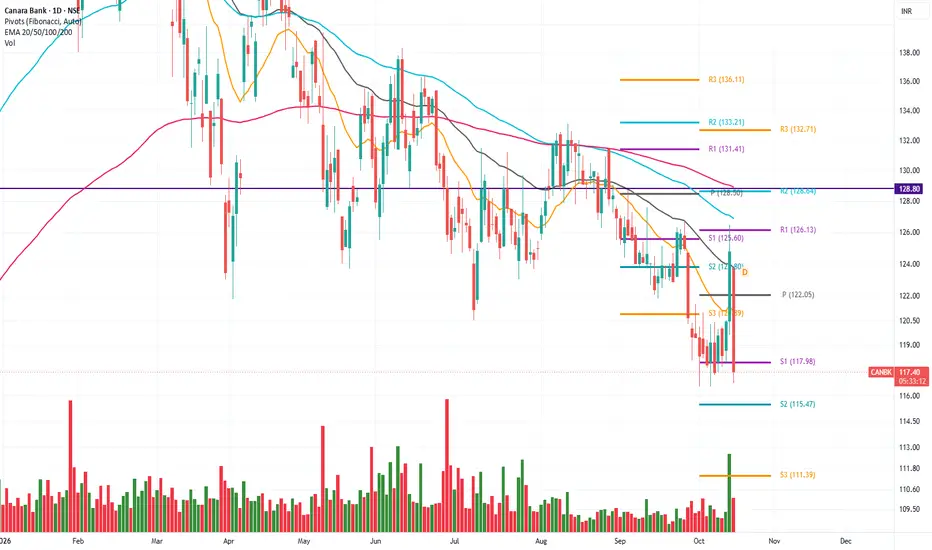
- The quarterly numbers alone do not establish whether the stock is attractively valued at its current market price.
Conclusion:
- Canara Bank’s Q2 FY27 results show a healthier asset-quality profile and strong core interest income.
- Investors should now focus on the sustainability of margins, deposit growth and operating profitability rather than net profit growth alone.

Penafian
Maklumat dan penerbitan adalah tidak bertujuan, dan tidak membentuk, nasihat atau cadangan kewangan, pelaburan, dagangan atau jenis lain yang diberikan atau disahkan oleh TradingView. Baca lebih dalam Terma Penggunaan.
Penafian
Maklumat dan penerbitan adalah tidak bertujuan, dan tidak membentuk, nasihat atau cadangan kewangan, pelaburan, dagangan atau jenis lain yang diberikan atau disahkan oleh TradingView. Baca lebih dalam Terma Penggunaan.