
ETH/USD — Recovery Slows Near Resistance, Support Defense Becomes the Next Key Test
1. Market Overview
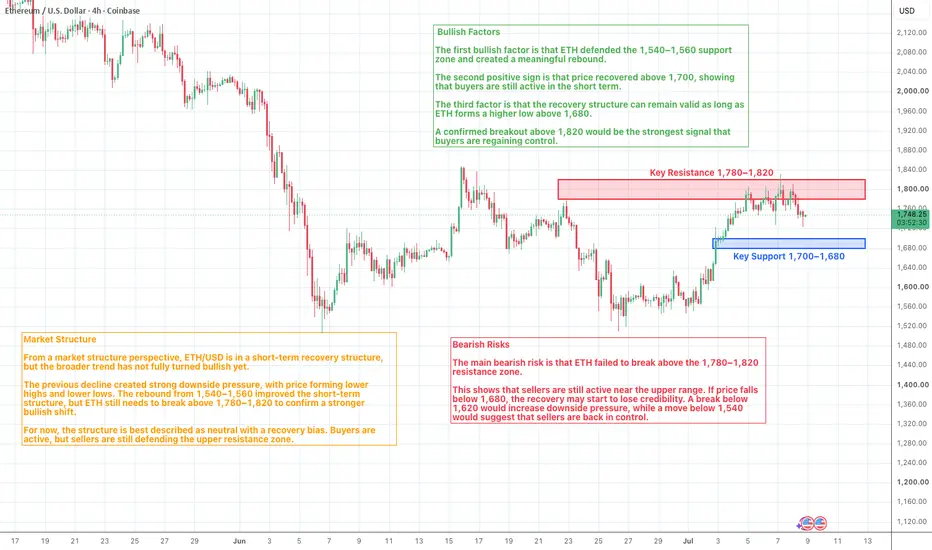
ETH/USD is currently trading around the 1,740–1,750 area after recovering from the lower support zone near 1,540–1,560. The rebound was strong enough to push price back toward the 1,780–1,820 resistance zone, but buyers have not been able to create a confirmed breakout yet.
The latest price action shows that bullish momentum is slowing near resistance. ETH is no longer in the same strong recovery phase as before, and the market is now testing whether buyers can defend the pullback. The next reaction around 1,700–1,680 will be important for deciding whether the recovery continues or fades.
2. Market Structure
From a market structure perspective, ETH/USD is in a short-term recovery structure, but the broader trend has not fully turned bullish yet.
The previous decline created strong downside pressure, with price forming lower highs and lower lows. The rebound from 1,540–1,560 improved the short-term structure, but ETH still needs to break above 1,780–1,820 to confirm a stronger bullish shift.
For now, the structure is best described as neutral with a recovery bias. Buyers are active, but sellers are still defending the upper resistance zone.
3. Daily / 4H Multi-Timeframe View
On the 4H timeframe, ETH is showing a recovery attempt after forming a local bottom near 1,540–1,560. Price has moved higher, but the latest pullback from 1,780–1,820 suggests that buyers are losing short-term momentum.
From the broader daily perspective, ETH still needs more confirmation. The recovery from the lows is constructive, but price remains below major reaction zones. This means the daily structure is not fully bullish yet.
In short, the 4H chart shows a recovery phase, while the daily view still requires a confirmed breakout above resistance.
4. Key Resistance
1,780–1,820
This is the immediate resistance zone. ETH recently slowed down around this area, so buyers need to break and hold above it to confirm stronger recovery momentum.
1,860–1,900
If ETH breaks above 1,820, this becomes the next upside target zone. Sellers may still react here because it is close to the next previous reaction area.
1,950–2,000
This is the major psychological and structural resistance zone. A sustained move above 2,000 would significantly improve the bullish outlook.
5. Key Support
1,700–1,680
This is the nearest key support zone. Holding above this area would keep the current recovery structure alive.
1,650–1,620
This is the next important support zone. If ETH breaks below 1,680, this area may become the next buyer defense zone.
1,560–1,540
This is the recent bottom area. A clean break below this zone would suggest that the recovery structure has failed.
6. Momentum & Volatility Check
Momentum is currently improving from the lows, but it is starting to weaken near resistance.
The rebound from 1,540–1,560 showed that selling pressure had slowed, but the rejection around 1,780–1,820 confirms that buyers still need more strength. Volatility remains active, which means ETH may continue to move sharply between support and resistance until a clear breakout or breakdown appears.
Above 1,820, momentum may improve.
Below 1,680, bearish pressure may return.
7. Bullish Factors
The first bullish factor is that ETH defended the 1,540–1,560 support zone and created a meaningful rebound.
The second positive sign is that price recovered above 1,700, showing that buyers are still active in the short term.
The third factor is that the recovery structure can remain valid as long as ETH forms a higher low above 1,680.
A confirmed breakout above 1,820 would be the strongest signal that buyers are regaining control.
8. Bearish Risks
The main bearish risk is that ETH failed to break above the 1,780–1,820 resistance zone.
This shows that sellers are still active near the upper range. If price falls below 1,680, the recovery may start to lose credibility. A break below 1,620 would increase downside pressure, while a move below 1,540 would suggest that sellers are back in control.
9. Bullish Scenario
If ETH holds above 1,700–1,680 and breaks above 1,780–1,820 with confirmation, buyers may push price toward 1,860–1,900.
If momentum continues and ETH holds above 1,900, the next major target would be 1,950–2,000.
A sustained move above 2,000 would confirm a stronger recovery structure and improve the broader bullish outlook.
10. Bearish Scenario
If ETH fails to hold 1,680, short-term bearish pressure may return.
In that case, price could move lower toward 1,650–1,620. If this zone breaks, ETH may retest 1,560–1,540.
A clean break below 1,540 would weaken the recovery structure and suggest that the recent rebound was only a corrective move within the broader bearish trend.
11. Market Sentiment
Market sentiment is currently neutral with a cautious recovery bias.
Buyers have clearly reacted from the lower support area, but ETH has not yet broken above the key resistance zone. This means the market is no longer fully bearish, but it is not strongly bullish either.
Above 1,820, recovery momentum may strengthen.
Below 1,680, bearish pressure may return.
12. Trading Plan Style Summary
Plan:
- Above 1,820: recovery momentum may strengthen.
- Between 1,680 and 1,820: consolidation may continue.
- Below 1,680: short-term bearish pressure may increase.
- Below 1,540: the recovery structure may fail.
The key area to watch is 1,700–1,680. If buyers defend this zone, ETH may attempt another breakout. If this support fails, sellers may push price back toward the recent lows.
13. Interactive Question
Will ETH defend the 1,680–1,700 support zone and break above 1,820? Or will sellers push price back toward 1,620–1,560?
Please share your view below.
1. Market Overview
ETH/USD is currently trading around the 1,740–1,750 area after recovering from the lower support zone near 1,540–1,560. The rebound was strong enough to push price back toward the 1,780–1,820 resistance zone, but buyers have not been able to create a confirmed breakout yet.
The latest price action shows that bullish momentum is slowing near resistance. ETH is no longer in the same strong recovery phase as before, and the market is now testing whether buyers can defend the pullback. The next reaction around 1,700–1,680 will be important for deciding whether the recovery continues or fades.
2. Market Structure
From a market structure perspective, ETH/USD is in a short-term recovery structure, but the broader trend has not fully turned bullish yet.
The previous decline created strong downside pressure, with price forming lower highs and lower lows. The rebound from 1,540–1,560 improved the short-term structure, but ETH still needs to break above 1,780–1,820 to confirm a stronger bullish shift.
For now, the structure is best described as neutral with a recovery bias. Buyers are active, but sellers are still defending the upper resistance zone.
3. Daily / 4H Multi-Timeframe View
On the 4H timeframe, ETH is showing a recovery attempt after forming a local bottom near 1,540–1,560. Price has moved higher, but the latest pullback from 1,780–1,820 suggests that buyers are losing short-term momentum.
From the broader daily perspective, ETH still needs more confirmation. The recovery from the lows is constructive, but price remains below major reaction zones. This means the daily structure is not fully bullish yet.
In short, the 4H chart shows a recovery phase, while the daily view still requires a confirmed breakout above resistance.
4. Key Resistance
1,780–1,820
This is the immediate resistance zone. ETH recently slowed down around this area, so buyers need to break and hold above it to confirm stronger recovery momentum.
1,860–1,900
If ETH breaks above 1,820, this becomes the next upside target zone. Sellers may still react here because it is close to the next previous reaction area.
1,950–2,000
This is the major psychological and structural resistance zone. A sustained move above 2,000 would significantly improve the bullish outlook.
5. Key Support
1,700–1,680
This is the nearest key support zone. Holding above this area would keep the current recovery structure alive.
1,650–1,620
This is the next important support zone. If ETH breaks below 1,680, this area may become the next buyer defense zone.
1,560–1,540
This is the recent bottom area. A clean break below this zone would suggest that the recovery structure has failed.
6. Momentum & Volatility Check
Momentum is currently improving from the lows, but it is starting to weaken near resistance.
The rebound from 1,540–1,560 showed that selling pressure had slowed, but the rejection around 1,780–1,820 confirms that buyers still need more strength. Volatility remains active, which means ETH may continue to move sharply between support and resistance until a clear breakout or breakdown appears.
Above 1,820, momentum may improve.
Below 1,680, bearish pressure may return.
7. Bullish Factors
The first bullish factor is that ETH defended the 1,540–1,560 support zone and created a meaningful rebound.
The second positive sign is that price recovered above 1,700, showing that buyers are still active in the short term.
The third factor is that the recovery structure can remain valid as long as ETH forms a higher low above 1,680.
A confirmed breakout above 1,820 would be the strongest signal that buyers are regaining control.
8. Bearish Risks
The main bearish risk is that ETH failed to break above the 1,780–1,820 resistance zone.
This shows that sellers are still active near the upper range. If price falls below 1,680, the recovery may start to lose credibility. A break below 1,620 would increase downside pressure, while a move below 1,540 would suggest that sellers are back in control.
9. Bullish Scenario
If ETH holds above 1,700–1,680 and breaks above 1,780–1,820 with confirmation, buyers may push price toward 1,860–1,900.
If momentum continues and ETH holds above 1,900, the next major target would be 1,950–2,000.
A sustained move above 2,000 would confirm a stronger recovery structure and improve the broader bullish outlook.
10. Bearish Scenario
If ETH fails to hold 1,680, short-term bearish pressure may return.
In that case, price could move lower toward 1,650–1,620. If this zone breaks, ETH may retest 1,560–1,540.
A clean break below 1,540 would weaken the recovery structure and suggest that the recent rebound was only a corrective move within the broader bearish trend.
11. Market Sentiment
Market sentiment is currently neutral with a cautious recovery bias.
Buyers have clearly reacted from the lower support area, but ETH has not yet broken above the key resistance zone. This means the market is no longer fully bearish, but it is not strongly bullish either.
Above 1,820, recovery momentum may strengthen.
Below 1,680, bearish pressure may return.
12. Trading Plan Style Summary
Plan:
- Above 1,820: recovery momentum may strengthen.
- Between 1,680 and 1,820: consolidation may continue.
- Below 1,680: short-term bearish pressure may increase.
- Below 1,540: the recovery structure may fail.
The key area to watch is 1,700–1,680. If buyers defend this zone, ETH may attempt another breakout. If this support fails, sellers may push price back toward the recent lows.
13. Interactive Question
Will ETH defend the 1,680–1,700 support zone and break above 1,820? Or will sellers push price back toward 1,620–1,560?
Please share your view below.

Wyłączenie odpowiedzialności
Informacje i publikacje nie stanowią i nie powinny być traktowane jako porady finansowe, inwestycyjne, tradingowe ani jakiekolwiek inne rekomendacje dostarczane lub zatwierdzone przez TradingView. Więcej informacji znajduje się w Warunkach użytkowania.
Wyłączenie odpowiedzialności
Informacje i publikacje nie stanowią i nie powinny być traktowane jako porady finansowe, inwestycyjne, tradingowe ani jakiekolwiek inne rekomendacje dostarczane lub zatwierdzone przez TradingView. Więcej informacji znajduje się w Warunkach użytkowania.