
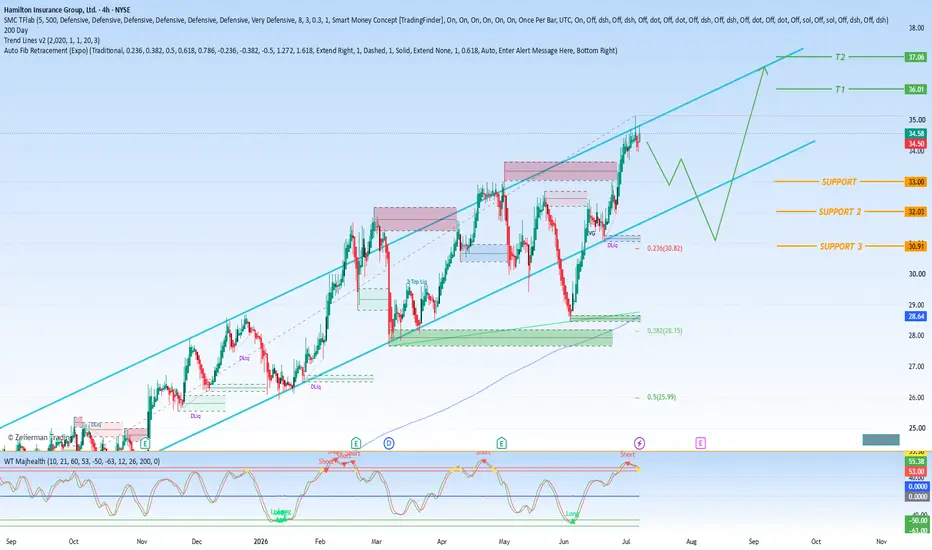
Hamilton Insurance Group (NYSE: HG) presents a somewhat paradoxical picture for investors navigating the complex landscape of global specialty insurance and reinsurance markets. Established in 2013, the company has steadily built a diversified and geographically dispersed operational framework that spans four distinct countries and operates through three separate underwriting platforms. This multi-jurisdictional presence encompasses the prestigious Lloyd's of London market, the European insurance hub of Ireland, the tax-advantaged reinsurance center of Bermuda, and the vast and competitive United States insurance sector. This strategic dispersion was ostensibly designed to provide the company with a balanced risk profile, allowing it to tap into diverse premium pools and regulatory environments while mitigating exposure to any single regional economic downturn or catastrophic event. However, despite this sophisticated global architecture and the inherent benefits of geographic diversification, the company's near-term growth prospects have failed to generate significant enthusiasm among market participants, resulting in a subdued perception of its investment appeal.
Uninspiring Growth Trajectory: The Challenge of Flat Demand
Perhaps the most significant factor contributing to the tempered market sentiment surrounding Hamilton Insurance Group is the company's decidedly unremarkable forward-looking financial outlook. According to current projections and consensus estimates, the company's sales are anticipated to remain essentially flat over the next twelve months, implying a notable deceleration from the more dynamic growth trends observed over the preceding two-year period. This anticipated stagnation in top-line performance raises legitimate questions about the company's ability to sustain its historical momentum and capture additional market share in an increasingly competitive and commoditized insurance landscape. For growth-oriented investors who typically seek out companies with expanding revenue streams and accelerating market penetration, the prospect of flat sales presents a considerable deterrent, as it suggests that the company may have reached a temporary plateau in its business cycle. This demand slowdown is particularly noteworthy given the broader industry context, where many specialty insurers have capitalized on hardening market conditions and rising premium rates to deliver robust revenue expansion.
The Silver Lining: Impressive Market Share Gains and Historical Performance
Notwithstanding the prevailing concerns about near-term growth stagnation, there exists a compelling counter-narrative that warrants careful consideration by discerning investors. A significant bright spot within Hamilton Insurance Group's otherwise unremarkable financial picture is the company's demonstrated ability to substantially increase its market share throughout the current underwriting cycle. This achievement is particularly impressive when viewed against the backdrop of an intensely competitive environment where established incumbents fiercely guard their positions. Over the past three years, the company has delivered exceptional annual revenue growth of 24.4%, a figure that dramatically outpaces the industry average and underscores the effectiveness of its underwriting strategy, distribution partnerships, and customer acquisition initiatives. Such a remarkable growth trajectory indicates that Hamilton Insurance Group has successfully carved out a meaningful niche for itself, attracting new clients and expanding its portfolio of insured risks even as larger competitors struggled to maintain similar expansion rates. This historical performance serves as a testament to the company's operational agility and its ability to identify and exploit underserved market segments where it can deploy its capital and expertise to generate superior returns. While the current flat sales forecast may temper expectations, the company's established track record suggests that it possesses the underlying capabilities and market positioning to potentially reaccelerate growth once favorable conditions reemerge or its strategic initiatives gain further traction.
Strategic Positioning and Future Considerations
Ultimately, the lack of excitement surrounding Hamilton Insurance Group reflects a classic tension between near-term uncertainty and long-term potential. The company's extensive global footprint and diversified underwriting platforms provide a solid foundation for sustained profitability, and its proven ability to capture market share during competitive periods demonstrates a resilient and adaptable business model. However, the projected flat sales for the coming year serve as a sobering reminder that the insurance industry is inherently cyclical and subject to external factors such as catastrophic loss events, interest rate fluctuations, and changing regulatory frameworks. For prospective investors, the decision to engage with Hamilton Insurance Group will likely hinge on their investment horizon and risk tolerance. Patient, value-oriented investors may view the current lull as a temporary phase preceding a subsequent growth wave, particularly if the company successfully executes on new business development initiatives or expands into emerging risk categories such as cyber insurance, climate-related coverage, or parametric solutions. Conversely, those seeking immediate top-line acceleration may find the stock less appealing until clearer evidence of renewed revenue momentum emerges. As always, thorough due diligence and a careful evaluation of the company's strategic priorities, competitive positioning, and financial health remain essential prerequisites for any informed investment decision in this intriguing yet unglamorous corner of the global insurance market.
Uninspiring Growth Trajectory: The Challenge of Flat Demand
Perhaps the most significant factor contributing to the tempered market sentiment surrounding Hamilton Insurance Group is the company's decidedly unremarkable forward-looking financial outlook. According to current projections and consensus estimates, the company's sales are anticipated to remain essentially flat over the next twelve months, implying a notable deceleration from the more dynamic growth trends observed over the preceding two-year period. This anticipated stagnation in top-line performance raises legitimate questions about the company's ability to sustain its historical momentum and capture additional market share in an increasingly competitive and commoditized insurance landscape. For growth-oriented investors who typically seek out companies with expanding revenue streams and accelerating market penetration, the prospect of flat sales presents a considerable deterrent, as it suggests that the company may have reached a temporary plateau in its business cycle. This demand slowdown is particularly noteworthy given the broader industry context, where many specialty insurers have capitalized on hardening market conditions and rising premium rates to deliver robust revenue expansion.
The Silver Lining: Impressive Market Share Gains and Historical Performance
Notwithstanding the prevailing concerns about near-term growth stagnation, there exists a compelling counter-narrative that warrants careful consideration by discerning investors. A significant bright spot within Hamilton Insurance Group's otherwise unremarkable financial picture is the company's demonstrated ability to substantially increase its market share throughout the current underwriting cycle. This achievement is particularly impressive when viewed against the backdrop of an intensely competitive environment where established incumbents fiercely guard their positions. Over the past three years, the company has delivered exceptional annual revenue growth of 24.4%, a figure that dramatically outpaces the industry average and underscores the effectiveness of its underwriting strategy, distribution partnerships, and customer acquisition initiatives. Such a remarkable growth trajectory indicates that Hamilton Insurance Group has successfully carved out a meaningful niche for itself, attracting new clients and expanding its portfolio of insured risks even as larger competitors struggled to maintain similar expansion rates. This historical performance serves as a testament to the company's operational agility and its ability to identify and exploit underserved market segments where it can deploy its capital and expertise to generate superior returns. While the current flat sales forecast may temper expectations, the company's established track record suggests that it possesses the underlying capabilities and market positioning to potentially reaccelerate growth once favorable conditions reemerge or its strategic initiatives gain further traction.
Strategic Positioning and Future Considerations
Ultimately, the lack of excitement surrounding Hamilton Insurance Group reflects a classic tension between near-term uncertainty and long-term potential. The company's extensive global footprint and diversified underwriting platforms provide a solid foundation for sustained profitability, and its proven ability to capture market share during competitive periods demonstrates a resilient and adaptable business model. However, the projected flat sales for the coming year serve as a sobering reminder that the insurance industry is inherently cyclical and subject to external factors such as catastrophic loss events, interest rate fluctuations, and changing regulatory frameworks. For prospective investors, the decision to engage with Hamilton Insurance Group will likely hinge on their investment horizon and risk tolerance. Patient, value-oriented investors may view the current lull as a temporary phase preceding a subsequent growth wave, particularly if the company successfully executes on new business development initiatives or expands into emerging risk categories such as cyber insurance, climate-related coverage, or parametric solutions. Conversely, those seeking immediate top-line acceleration may find the stock less appealing until clearer evidence of renewed revenue momentum emerges. As always, thorough due diligence and a careful evaluation of the company's strategic priorities, competitive positioning, and financial health remain essential prerequisites for any informed investment decision in this intriguing yet unglamorous corner of the global insurance market.

Wyłączenie odpowiedzialności
Informacje i publikacje nie stanowią i nie powinny być traktowane jako porady finansowe, inwestycyjne, tradingowe ani jakiekolwiek inne rekomendacje dostarczane lub zatwierdzone przez TradingView. Więcej informacji znajduje się w Warunkach użytkowania.
Wyłączenie odpowiedzialności
Informacje i publikacje nie stanowią i nie powinny być traktowane jako porady finansowe, inwestycyjne, tradingowe ani jakiekolwiek inne rekomendacje dostarczane lub zatwierdzone przez TradingView. Więcej informacji znajduje się w Warunkach użytkowania.