
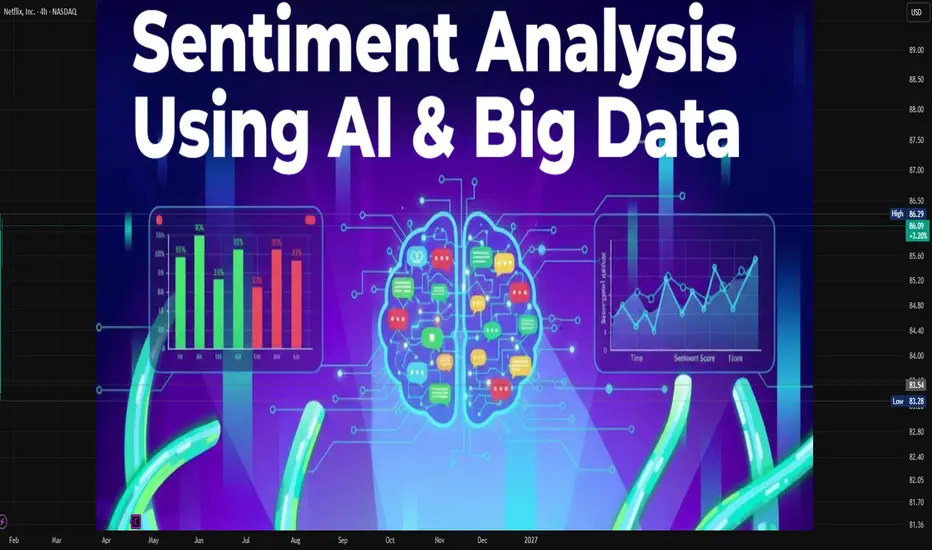
Concept of Sentiment Analysis
At its core, sentiment analysis aims to classify data into emotional categories such as positive, negative, or neutral. More advanced systems go beyond simple polarity and detect emotions like happiness, anger, fear, trust, or anticipation. AI-driven sentiment analysis does not just identify what people are talking about but also how they feel about it. This makes it a crucial tool for businesses, governments, financial markets, and researchers.
Role of AI in Sentiment Analysis
AI is the backbone of modern sentiment analysis. Traditional rule-based systems relied on predefined dictionaries of positive and negative words, which were limited and often inaccurate. AI, particularly Machine Learning (ML) and Deep Learning (DL), has transformed this field by enabling models to learn patterns directly from data.
Natural Language Processing (NLP), a branch of AI, allows machines to understand human language. Techniques such as tokenization, part-of-speech tagging, named entity recognition, and semantic analysis help models interpret context, sarcasm, slang, and linguistic variations. Advanced models like transformers and large language models can understand sentiment even when it is implicit or context-dependent.
AI also supports multilingual sentiment analysis, enabling global organizations to analyze sentiments across different languages and cultures without manual translation.
Big Data as the Foundation
Big Data refers to datasets characterized by high volume, velocity, and variety. Sentiment analysis depends heavily on Big Data because emotions and opinions are scattered across millions of data points. Social media platforms, e-commerce websites, financial news feeds, and IoT-generated data continuously stream information that must be captured, stored, and processed in real time.
Big Data technologies such as distributed databases, cloud storage, and parallel processing frameworks allow sentiment analysis systems to scale efficiently. They make it possible to analyze historical data for long-term trends as well as real-time data for immediate insights.
Integration of AI and Big Data
The real power of sentiment analysis emerges when AI and Big Data work together. Big Data provides the raw material—massive, diverse datasets—while AI provides the intelligence to interpret them. AI models are trained on large datasets to improve accuracy, adapt to changing language patterns, and reduce bias.
For example, in real-time sentiment analysis, streaming data pipelines ingest live tweets or news updates, while AI models instantly analyze sentiment and generate insights. This integration is especially valuable in fast-moving domains like financial markets or crisis management.
Applications of Sentiment Analysis
Business and Marketing
Companies use sentiment analysis to understand customer opinions about products, services, and brands. By analyzing reviews, social media comments, and feedback surveys, businesses can identify strengths, weaknesses, and emerging issues. This helps in product development, brand reputation management, and personalized marketing strategies.
Financial Markets
In trading and investment, sentiment analysis plays a critical role. AI systems analyze news articles, earnings reports, social media chatter, and analyst opinions to gauge market sentiment. Positive or negative sentiment often influences stock prices, volatility, and trading volumes. Hedge funds and algorithmic traders increasingly rely on sentiment-driven signals to gain an edge.
Politics and Public Policy
Governments and political organizations use sentiment analysis to understand public opinion on policies, elections, and social issues. By analyzing speeches, media coverage, and social platforms, policymakers can assess public response and adjust communication strategies accordingly.
Customer Support and Service
Sentiment analysis helps organizations monitor customer emotions during interactions such as emails, chats, and call transcripts. AI systems can flag highly negative sentiments in real time, allowing human agents to intervene and improve customer satisfaction.
Healthcare and Social Research
In healthcare, sentiment analysis is used to study patient feedback, mental health indicators, and public responses to health campaigns. Researchers analyze online discussions to understand stress levels, emotional well-being, and societal trends.
Advanced Sentiment Analysis Techniques
Modern sentiment analysis goes beyond basic classification. Aspect-based sentiment analysis identifies sentiment toward specific features, such as battery life or customer service. Emotion detection recognizes nuanced feelings rather than simple polarity. Multimodal sentiment analysis combines text, audio, and visual data to provide deeper emotional insights, such as analyzing facial expressions alongside spoken words.
AI models continuously improve through reinforcement learning and feedback loops, adapting to new slang, cultural shifts, and evolving language usage.
Challenges and Limitations
Despite its advancements, sentiment analysis faces several challenges. Sarcasm, irony, and ambiguous language can mislead AI models. Cultural and regional differences affect how emotions are expressed, making global sentiment analysis complex. Data quality and bias are also major concerns, as models trained on biased datasets can produce skewed results.
Privacy and ethical considerations are increasingly important. Organizations must ensure responsible data usage, transparency, and compliance with data protection regulations when analyzing user-generated content.
Future of Sentiment Analysis
The future of sentiment analysis lies in deeper contextual understanding and real-time intelligence. As AI models become more sophisticated and Big Data infrastructure more powerful, sentiment analysis will move from descriptive insights to predictive and prescriptive intelligence. Systems will not only detect sentiment but also forecast emotional trends and recommend actions.
Integration with generative AI, voice analysis, and emotional AI will further expand its scope, enabling machines to understand human emotions more naturally and accurately.
Conclusion
Sentiment analysis using AI and Big Data has become an essential tool in the modern data-driven world. By combining massive datasets with intelligent algorithms, organizations can decode human emotions at scale and transform raw opinions into actionable insights. While challenges remain, continuous advancements in AI, Big Data, and ethical frameworks are shaping sentiment analysis into a more accurate, responsible, and impactful technology for the future.
At its core, sentiment analysis aims to classify data into emotional categories such as positive, negative, or neutral. More advanced systems go beyond simple polarity and detect emotions like happiness, anger, fear, trust, or anticipation. AI-driven sentiment analysis does not just identify what people are talking about but also how they feel about it. This makes it a crucial tool for businesses, governments, financial markets, and researchers.
Role of AI in Sentiment Analysis
AI is the backbone of modern sentiment analysis. Traditional rule-based systems relied on predefined dictionaries of positive and negative words, which were limited and often inaccurate. AI, particularly Machine Learning (ML) and Deep Learning (DL), has transformed this field by enabling models to learn patterns directly from data.
Natural Language Processing (NLP), a branch of AI, allows machines to understand human language. Techniques such as tokenization, part-of-speech tagging, named entity recognition, and semantic analysis help models interpret context, sarcasm, slang, and linguistic variations. Advanced models like transformers and large language models can understand sentiment even when it is implicit or context-dependent.
AI also supports multilingual sentiment analysis, enabling global organizations to analyze sentiments across different languages and cultures without manual translation.
Big Data as the Foundation
Big Data refers to datasets characterized by high volume, velocity, and variety. Sentiment analysis depends heavily on Big Data because emotions and opinions are scattered across millions of data points. Social media platforms, e-commerce websites, financial news feeds, and IoT-generated data continuously stream information that must be captured, stored, and processed in real time.
Big Data technologies such as distributed databases, cloud storage, and parallel processing frameworks allow sentiment analysis systems to scale efficiently. They make it possible to analyze historical data for long-term trends as well as real-time data for immediate insights.
Integration of AI and Big Data
The real power of sentiment analysis emerges when AI and Big Data work together. Big Data provides the raw material—massive, diverse datasets—while AI provides the intelligence to interpret them. AI models are trained on large datasets to improve accuracy, adapt to changing language patterns, and reduce bias.
For example, in real-time sentiment analysis, streaming data pipelines ingest live tweets or news updates, while AI models instantly analyze sentiment and generate insights. This integration is especially valuable in fast-moving domains like financial markets or crisis management.
Applications of Sentiment Analysis
Business and Marketing
Companies use sentiment analysis to understand customer opinions about products, services, and brands. By analyzing reviews, social media comments, and feedback surveys, businesses can identify strengths, weaknesses, and emerging issues. This helps in product development, brand reputation management, and personalized marketing strategies.
Financial Markets
In trading and investment, sentiment analysis plays a critical role. AI systems analyze news articles, earnings reports, social media chatter, and analyst opinions to gauge market sentiment. Positive or negative sentiment often influences stock prices, volatility, and trading volumes. Hedge funds and algorithmic traders increasingly rely on sentiment-driven signals to gain an edge.
Politics and Public Policy
Governments and political organizations use sentiment analysis to understand public opinion on policies, elections, and social issues. By analyzing speeches, media coverage, and social platforms, policymakers can assess public response and adjust communication strategies accordingly.
Customer Support and Service
Sentiment analysis helps organizations monitor customer emotions during interactions such as emails, chats, and call transcripts. AI systems can flag highly negative sentiments in real time, allowing human agents to intervene and improve customer satisfaction.
Healthcare and Social Research
In healthcare, sentiment analysis is used to study patient feedback, mental health indicators, and public responses to health campaigns. Researchers analyze online discussions to understand stress levels, emotional well-being, and societal trends.
Advanced Sentiment Analysis Techniques
Modern sentiment analysis goes beyond basic classification. Aspect-based sentiment analysis identifies sentiment toward specific features, such as battery life or customer service. Emotion detection recognizes nuanced feelings rather than simple polarity. Multimodal sentiment analysis combines text, audio, and visual data to provide deeper emotional insights, such as analyzing facial expressions alongside spoken words.
AI models continuously improve through reinforcement learning and feedback loops, adapting to new slang, cultural shifts, and evolving language usage.
Challenges and Limitations
Despite its advancements, sentiment analysis faces several challenges. Sarcasm, irony, and ambiguous language can mislead AI models. Cultural and regional differences affect how emotions are expressed, making global sentiment analysis complex. Data quality and bias are also major concerns, as models trained on biased datasets can produce skewed results.
Privacy and ethical considerations are increasingly important. Organizations must ensure responsible data usage, transparency, and compliance with data protection regulations when analyzing user-generated content.
Future of Sentiment Analysis
The future of sentiment analysis lies in deeper contextual understanding and real-time intelligence. As AI models become more sophisticated and Big Data infrastructure more powerful, sentiment analysis will move from descriptive insights to predictive and prescriptive intelligence. Systems will not only detect sentiment but also forecast emotional trends and recommend actions.
Integration with generative AI, voice analysis, and emotional AI will further expand its scope, enabling machines to understand human emotions more naturally and accurately.
Conclusion
Sentiment analysis using AI and Big Data has become an essential tool in the modern data-driven world. By combining massive datasets with intelligent algorithms, organizations can decode human emotions at scale and transform raw opinions into actionable insights. While challenges remain, continuous advancements in AI, Big Data, and ethical frameworks are shaping sentiment analysis into a more accurate, responsible, and impactful technology for the future.

Powiązane publikacje
Wyłączenie odpowiedzialności
Informacje i publikacje nie stanowią i nie powinny być traktowane jako porady finansowe, inwestycyjne, tradingowe ani jakiekolwiek inne rekomendacje dostarczane lub zatwierdzone przez TradingView. Więcej informacji znajduje się w Warunkach użytkowania.
Powiązane publikacje
Wyłączenie odpowiedzialności
Informacje i publikacje nie stanowią i nie powinny być traktowane jako porady finansowe, inwestycyjne, tradingowe ani jakiekolwiek inne rekomendacje dostarczane lub zatwierdzone przez TradingView. Więcej informacji znajduje się w Warunkach użytkowania.