
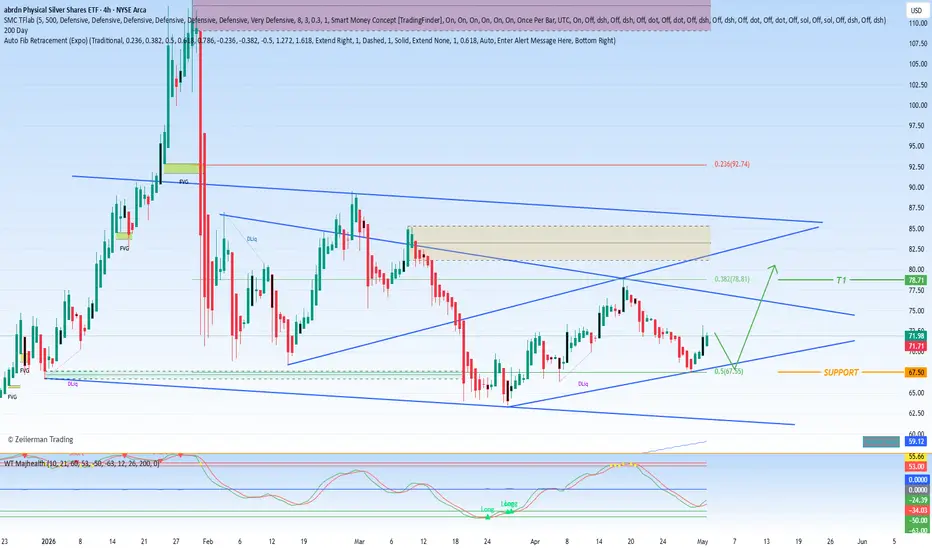
When concerns about inflation intensify or stock markets lose momentum, investors often turn their attention to silver as a time-tested safe haven. The abrdn Silver ETF Trust (NYSE: SIVR) provides one of the most direct and efficient ways to gain exposure to silver’s price movements without the complications of storing physical metal or managing futures contracts. By holding actual silver bullion in secure vaults, the fund gives investors a simple, transparent link to the commodity’s spot market. Still, the central question for investors is whether SIVR’s lower costs and structure make it a smarter hedging tool compared to its larger rival, the iShares Silver Trust (NYSEARCA: SLV).
The Role of SIVR in a Portfolio
SIVR is designed to mirror the daily fluctuations in silver’s spot price, providing pure exposure to the metal itself rather than to the shares of mining or refining companies that might be influenced by factors other than silver prices. This makes SIVR particularly attractive to investors who want to use silver as a portfolio diversifier or inflation hedge. Because silver often behaves differently from stocks and bonds, adding it to a portfolio can help moderate risk during periods of economic uncertainty or rising consumer prices.
Silver also benefits from its dual nature as both a monetary asset and an industrial commodity. Over the past year, these characteristics combined to produce striking gains. SIVR climbed an impressive 139%, riding the momentum of resurgent industrial demand in areas such as electric vehicles, solar panels, and electronics, alongside a wave of investment-driven buying as inflation worries and a weaker U.S. dollar drew capital into precious metals. The interplay between silver’s industrial uses and its safe-haven appeal amplified price swings, sending both the physical metal and the ETF sharply higher.
How SIVR Compares to Its Larger Rival
One of SIVR’s strongest selling points is its cost efficiency. The ETF carries an expense ratio of 0.30%, which is about 40% lower than the category heavyweight SLV. For long-term investors, this difference adds up: on a $10,000 investment, SIVR saves roughly $20 annually, and those savings compound over time to create meaningful cost advantages for buy-and-hold portfolios. Both SIVR and SLV closely track the price of silver because they are physically backed by bullion, so their performance is nearly identical.
The distinction lies mainly in scale and liquidity. SLV, as the much larger fund, holds several times more assets under management—providing tighter bid-ask spreads, greater trading volume, and enhanced price stability during sharp market swings. These liquidity advantages benefit traders or large institutional investors who value execution speed. For smaller, long-term investors, however, SIVR’s fee advantage may outweigh those considerations, especially since daily tracking differences have been minimal.
Understanding the Tradeoffs
Silver’s volatility is both its appeal and its challenge. The metal’s price can fluctuate far more sharply than typical equity indices, and SIVR reflects that turbulence one-for-one. In early February 2026, for example, SIVR tumbled 7% in a single week as global risk appetite shifted. Such reversals highlight the need for investors to maintain conviction during bouts of price weakness and to size silver positions appropriately within a broader portfolio context.
Liquidity can also be an issue during volatile periods. SIVR’s smaller asset base means that trading volumes may thin out in stress conditions, causing wider bid-ask spreads that increase transaction costs for active traders. For investors who buy and hold the ETF over longer horizons, this is a minor inconvenience, but short-term traders should approach SIVR’s lower liquidity with caution.
In addition, SIVR produces no yield—unlike stocks with dividends or bonds with interest payments, silver holdings don’t generate ongoing income. All returns depend on changes in silver prices, which means periods of flat or negative performance are not uncommon. Investors should therefore treat SIVR as a tactical position or inflation hedge, rather than a core portfolio asset.
Bottom Line
The abrdn Silver ETF Trust (SIVR) occupies a valuable niche for investors seeking direct, low-cost access to physical silver. Its efficiency makes it a compelling alternative to SLV, particularly for those focused on long-term cost savings. However, silver’s inherent volatility, lack of income, and SIVR’s moderate liquidity require investors to approach with discipline and a clear strategy.
For diversified portfolios, a modest allocation to SIVR can serve as both a defensive hedge against inflation and a tactical bet on industrial demand growth—a way to benefit from silver’s unusual dual role as both a critical industrial material and a centuries-old store of value.
The Role of SIVR in a Portfolio
SIVR is designed to mirror the daily fluctuations in silver’s spot price, providing pure exposure to the metal itself rather than to the shares of mining or refining companies that might be influenced by factors other than silver prices. This makes SIVR particularly attractive to investors who want to use silver as a portfolio diversifier or inflation hedge. Because silver often behaves differently from stocks and bonds, adding it to a portfolio can help moderate risk during periods of economic uncertainty or rising consumer prices.
Silver also benefits from its dual nature as both a monetary asset and an industrial commodity. Over the past year, these characteristics combined to produce striking gains. SIVR climbed an impressive 139%, riding the momentum of resurgent industrial demand in areas such as electric vehicles, solar panels, and electronics, alongside a wave of investment-driven buying as inflation worries and a weaker U.S. dollar drew capital into precious metals. The interplay between silver’s industrial uses and its safe-haven appeal amplified price swings, sending both the physical metal and the ETF sharply higher.
How SIVR Compares to Its Larger Rival
One of SIVR’s strongest selling points is its cost efficiency. The ETF carries an expense ratio of 0.30%, which is about 40% lower than the category heavyweight SLV. For long-term investors, this difference adds up: on a $10,000 investment, SIVR saves roughly $20 annually, and those savings compound over time to create meaningful cost advantages for buy-and-hold portfolios. Both SIVR and SLV closely track the price of silver because they are physically backed by bullion, so their performance is nearly identical.
The distinction lies mainly in scale and liquidity. SLV, as the much larger fund, holds several times more assets under management—providing tighter bid-ask spreads, greater trading volume, and enhanced price stability during sharp market swings. These liquidity advantages benefit traders or large institutional investors who value execution speed. For smaller, long-term investors, however, SIVR’s fee advantage may outweigh those considerations, especially since daily tracking differences have been minimal.
Understanding the Tradeoffs
Silver’s volatility is both its appeal and its challenge. The metal’s price can fluctuate far more sharply than typical equity indices, and SIVR reflects that turbulence one-for-one. In early February 2026, for example, SIVR tumbled 7% in a single week as global risk appetite shifted. Such reversals highlight the need for investors to maintain conviction during bouts of price weakness and to size silver positions appropriately within a broader portfolio context.
Liquidity can also be an issue during volatile periods. SIVR’s smaller asset base means that trading volumes may thin out in stress conditions, causing wider bid-ask spreads that increase transaction costs for active traders. For investors who buy and hold the ETF over longer horizons, this is a minor inconvenience, but short-term traders should approach SIVR’s lower liquidity with caution.
In addition, SIVR produces no yield—unlike stocks with dividends or bonds with interest payments, silver holdings don’t generate ongoing income. All returns depend on changes in silver prices, which means periods of flat or negative performance are not uncommon. Investors should therefore treat SIVR as a tactical position or inflation hedge, rather than a core portfolio asset.
Bottom Line
The abrdn Silver ETF Trust (SIVR) occupies a valuable niche for investors seeking direct, low-cost access to physical silver. Its efficiency makes it a compelling alternative to SLV, particularly for those focused on long-term cost savings. However, silver’s inherent volatility, lack of income, and SIVR’s moderate liquidity require investors to approach with discipline and a clear strategy.
For diversified portfolios, a modest allocation to SIVR can serve as both a defensive hedge against inflation and a tactical bet on industrial demand growth—a way to benefit from silver’s unusual dual role as both a critical industrial material and a centuries-old store of value.

Wyłączenie odpowiedzialności
Informacje i publikacje nie stanowią i nie powinny być traktowane jako porady finansowe, inwestycyjne, tradingowe ani jakiekolwiek inne rekomendacje dostarczane lub zatwierdzone przez TradingView. Więcej informacji znajduje się w Warunkach użytkowania.
Wyłączenie odpowiedzialności
Informacje i publikacje nie stanowią i nie powinny być traktowane jako porady finansowe, inwestycyjne, tradingowe ani jakiekolwiek inne rekomendacje dostarczane lub zatwierdzone przez TradingView. Więcej informacji znajduje się w Warunkach użytkowania.