
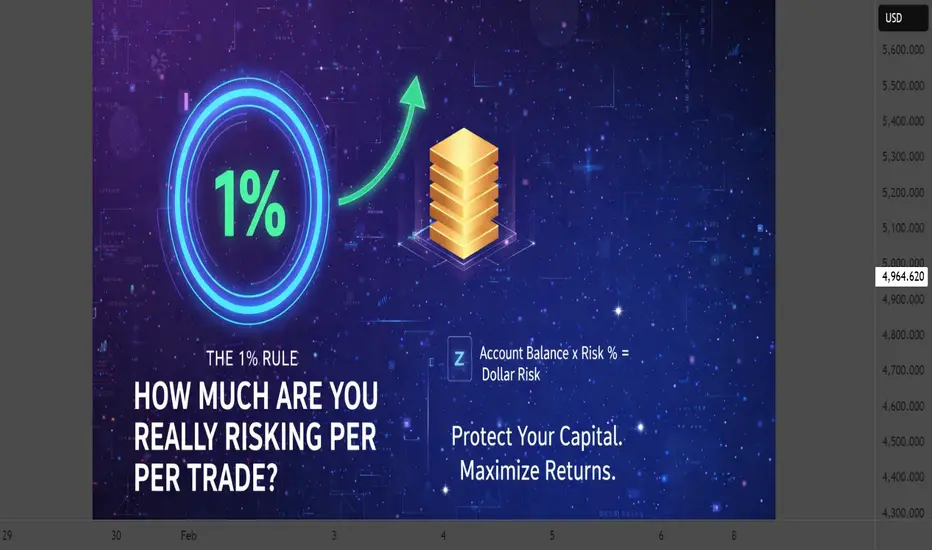
How Much Are You Really Risking Per Trade? | The 1% Rule Explained
Most traders focus on entries and targets, but the real difference between consistent traders and losing traders is risk management. The most important question is not how much you can make, but how much you can afford to lose per trade.
The 1% risk rule is a widely used capital protection method. It means risking only 1% of your total account balance on a single trade, regardless of the setup or confidence level.
Why Risk Management Matters More Than Strategy
Even the best trading strategy can fail if risk is not controlled. Large losses create emotional pressure, leading to overtrading, revenge trades, and poor decisions. By limiting risk, traders stay objective and allow probability to work over time.
A small, controlled loss keeps you in the game. A large loss can end it.
How to Calculate Your Risk Per Trade
Formula:
Account Balance × Risk % = Dollar Risk
Example:
Account Balance: $10,000
Risk per trade: 1%
Maximum loss per trade: $100
Your position size should always be adjusted so that if your stop loss is hit, you only lose that amount.
Why the 1% Rule Works
Protects trading capital
Reduces emotional stress
Prevents account drawdowns
Allows long-term consistency
Supports compounding growth
Professional traders focus on survival first, profits second.
Common Mistakes Traders Make
Increasing risk after a loss
Risking more on “high-confidence” trades
Ignoring stop loss placement
Focusing on profits instead of preservation
These mistakes usually lead to blown accounts, especially in volatile markets like Gold (XAUUSD).
Final Thoughts
You don’t need to win every trade to be profitable. You only need discipline, patience, and controlled risk. Mastering how much you risk per trade is the foundation of professional trading.
Protect your capital first. Profits follow discipline.
Most traders focus on entries and targets, but the real difference between consistent traders and losing traders is risk management. The most important question is not how much you can make, but how much you can afford to lose per trade.
The 1% risk rule is a widely used capital protection method. It means risking only 1% of your total account balance on a single trade, regardless of the setup or confidence level.
Why Risk Management Matters More Than Strategy
Even the best trading strategy can fail if risk is not controlled. Large losses create emotional pressure, leading to overtrading, revenge trades, and poor decisions. By limiting risk, traders stay objective and allow probability to work over time.
A small, controlled loss keeps you in the game. A large loss can end it.
How to Calculate Your Risk Per Trade
Formula:
Account Balance × Risk % = Dollar Risk
Example:
Account Balance: $10,000
Risk per trade: 1%
Maximum loss per trade: $100
Your position size should always be adjusted so that if your stop loss is hit, you only lose that amount.
Why the 1% Rule Works
Protects trading capital
Reduces emotional stress
Prevents account drawdowns
Allows long-term consistency
Supports compounding growth
Professional traders focus on survival first, profits second.
Common Mistakes Traders Make
Increasing risk after a loss
Risking more on “high-confidence” trades
Ignoring stop loss placement
Focusing on profits instead of preservation
These mistakes usually lead to blown accounts, especially in volatile markets like Gold (XAUUSD).
Final Thoughts
You don’t need to win every trade to be profitable. You only need discipline, patience, and controlled risk. Mastering how much you risk per trade is the foundation of professional trading.
Protect your capital first. Profits follow discipline.

Powiązane publikacje
Wyłączenie odpowiedzialności
Informacje i publikacje nie stanowią i nie powinny być traktowane jako porady finansowe, inwestycyjne, tradingowe ani jakiekolwiek inne rekomendacje dostarczane lub zatwierdzone przez TradingView. Więcej informacji znajduje się w Warunkach użytkowania.
Powiązane publikacje
Wyłączenie odpowiedzialności
Informacje i publikacje nie stanowią i nie powinny być traktowane jako porady finansowe, inwestycyjne, tradingowe ani jakiekolwiek inne rekomendacje dostarczane lub zatwierdzone przez TradingView. Więcej informacji znajduje się w Warunkach użytkowania.