
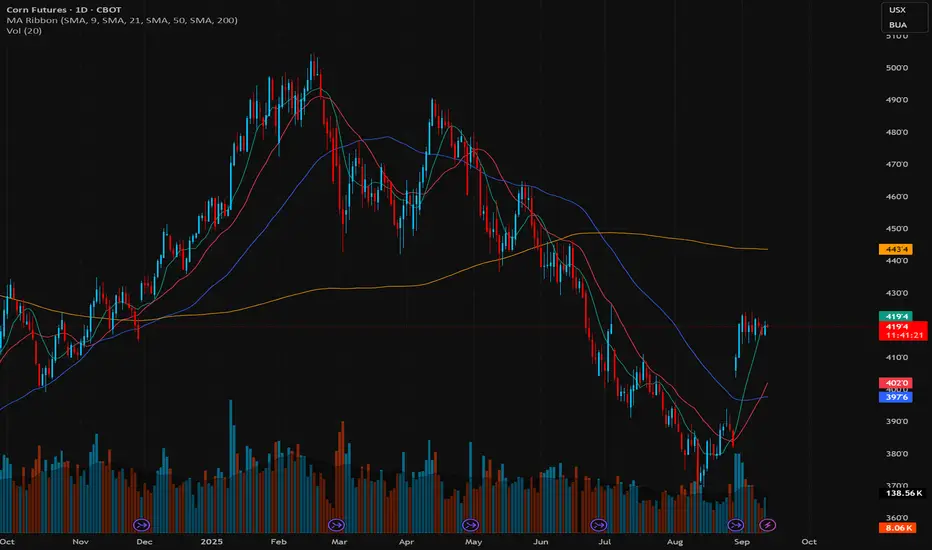
📌 When is Corn in High Demand & How Does It Cycle Internationally?
Corn demand follows a seasonal and geographical cycle based on harvest seasons, global weather patterns, livestock feed demand, and ethanol production. Smart traders can rotate between corn-producing nations and their related stocks to profit from month-to-month price cycles.
🔹 1. When is Corn Demand Highest? (Bullish for Corn Prices & Stocks)
✅ Q3-Q4 (August – November) → U.S. Harvest Season & Export Surge
The U.S. is the largest corn producer (~35% of global supply).
After harvest, exports peak as major buyers (China, Mexico, Japan) purchase new supplies.
Corn prices tend to be highest in August-October before harvest completion.
📌 Example:
August 2021: Drought fears + high ethanol demand pushed corn to $7.50 per bushel.
✅ Q1-Q2 (January – June) → South American Corn Season (Brazil & Argentina)
Brazil (2nd largest producer) harvests corn in March-May (Safrinha season).
Argentina’s harvest peaks between February-April.
If South America faces droughts or floods, corn prices spike.
📌 Example:
2023: Argentina’s corn suffered drought → Global corn prices rallied 20%.
✅ Year-Round Demand Drivers:
1️⃣ Livestock Feed Demand (Peaks in Winter) → Q4-Q1 Boost
Cattle, poultry, and pork require corn-based feed.
High demand in winter months (Q4-Q1) when animals need extra feed.
2️⃣ Ethanol Demand (Peaks in Summer) → Q2-Q3 Boost
40% of U.S. corn is used for ethanol production.
Gasoline demand peaks in summer, boosting ethanol & corn demand.
📌 Example:
2022: Ethanol demand surge → Corn hit $8 per bushel in summer.
🔹 2. How Corn Production Cycles from Nation to Nation (Month-to-Month Trade Strategy)
Corn rotates in a global cycle, allowing traders to switch from one producer to another month by month.
Month Primary Corn Producer Trade Focus (Buy Stocks/ETFs)
Jan-Feb Argentina 🇦🇷 (Early Harvest) Buy AGRO (Adecoagro), CRESY (Cresud)
Mar-Apr Argentina 🇦🇷 & Brazil 🇧🇷 (Peak Harvest) Buy BG (Bunge), ADM (Archer Daniels Midland)
May-Jun Brazil 🇧🇷 (Safrinha Harvest) Buy BG (Bunge), AGRO (Adecoagro)
Jul-Aug U.S. 🇺🇸 (Growing Season – Weather Risk) Buy CORN ETF, CARGILL (Private), ADM
Sep-Oct U.S. 🇺🇸 (Harvest Season) Buy MOS (Mosaic), NTR (Nutrien – Fertilizer)
Nov-Dec U.S. 🇺🇸 & South America 🇦🇷🇧🇷 (Planting) Buy DE (John Deere), AGCO (Agricultural Equipment)
📌 Example:
May 2023: Brazil’s Safrinha crop had record output → Bunge (BG) stock surged 15%.
🔹 3. Best Corn Producer Stocks to Trade Internationally
To profit from corn’s cyclic production, traders should rotate investments between these key stocks:
🌎 U.S. Corn-Related Stocks
✅ Archer Daniels Midland (ADM) – Major global corn trader.
✅ Bunge (BG) – Leading U.S. exporter, strong in Brazil.
✅ Mosaic (MOS) – Fertilizer supplier (benefits from rising corn planting).
✅ Nutrien (NTR) – Largest global supplier of potash (key for corn yields).
📌 Best Time to Buy: July-October (U.S. Harvest & Peak Demand).
🌎 Brazil & Argentina Corn Stocks
✅ Adecoagro (AGRO) – Argentinian agriculture firm (corn & ethanol).
✅ Cresud (CRESY) – Major Argentinian farmland owner (corn, soy).
✅ São Martinho (SMTO3.SA) – Brazilian corn & sugarcane giant.
✅ Bunge (BG) – Strong presence in Brazil’s corn & soybean markets.
📌 Best Time to Buy: January-June (South American Harvest & Exports).
🌎 Fertilizer & Agricultural Machinery Stocks
✅ John Deere (DE) – Sells farming equipment for corn production.
✅ AGCO (AGCO) – Provides tractors & grain equipment.
✅ CF Industries (CF) – Top nitrogen fertilizer supplier for corn.
📌 Best Time to Buy: November-February (Planting Season).
📌 Conclusion: Best Corn Trading Strategy
✅ Buy U.S. Corn Stocks (ADM, BG, MOS) from July to October (Harvest & Ethanol Demand).
✅ Buy South American Corn Stocks (AGRO, CRESY, BG) from January to June (Brazil & Argentina Harvest).
✅ Rotate into Fertilizer & Equipment Stocks (DE, AGCO, CF) in November-February (Corn Planting Season).
Seasonality:
Corn futures have been noted to perform better during the months of January, February, April, May, October, November, and December than during the months of July, August, and September (Summer).
Agriculture futures offer a vast array of hedging and speculative opportunities, and Corn is one of the most highly traded commodities globally. Also known as maize, corn is widely cultivated in countless varieties throughout the world. Corn futures trading requires in-depth knowledge of the commodity, as well as a thoroughly researched futures strategy.
The corn market is, of course, heavily dependent on the corn yield and harvest. According to information available on the web, the World Agricultural Supply and Demand Estimate (WASDE) publishes an estimated crop yield of corn and this obviously makes a huge impact on the price of corn. The organization makes a pretty good forecast of the crops.
Corn Strategy:
Trading Rules
Long corn futures at the close of March.
Close the long position and sell short at the close of May.
Cover the short position and go long at the close of September.
Close the long position and sell short at the close of February.
Note: Longing is easier than shorting.
News:
The factors that move the corn market include weather conditions in the major growing regions and key corn production and supply reports, such as the USDA World Agricultural Supply and Demand Estimate (WASDE) Report, the USDA Prospective Planting Report, Grain Stocks Reports, and Crop Production Reports. Another factor is the lower demand from China.
Corn demand follows a seasonal and geographical cycle based on harvest seasons, global weather patterns, livestock feed demand, and ethanol production. Smart traders can rotate between corn-producing nations and their related stocks to profit from month-to-month price cycles.
🔹 1. When is Corn Demand Highest? (Bullish for Corn Prices & Stocks)
✅ Q3-Q4 (August – November) → U.S. Harvest Season & Export Surge
The U.S. is the largest corn producer (~35% of global supply).
After harvest, exports peak as major buyers (China, Mexico, Japan) purchase new supplies.
Corn prices tend to be highest in August-October before harvest completion.
📌 Example:
August 2021: Drought fears + high ethanol demand pushed corn to $7.50 per bushel.
✅ Q1-Q2 (January – June) → South American Corn Season (Brazil & Argentina)
Brazil (2nd largest producer) harvests corn in March-May (Safrinha season).
Argentina’s harvest peaks between February-April.
If South America faces droughts or floods, corn prices spike.
📌 Example:
2023: Argentina’s corn suffered drought → Global corn prices rallied 20%.
✅ Year-Round Demand Drivers:
1️⃣ Livestock Feed Demand (Peaks in Winter) → Q4-Q1 Boost
Cattle, poultry, and pork require corn-based feed.
High demand in winter months (Q4-Q1) when animals need extra feed.
2️⃣ Ethanol Demand (Peaks in Summer) → Q2-Q3 Boost
40% of U.S. corn is used for ethanol production.
Gasoline demand peaks in summer, boosting ethanol & corn demand.
📌 Example:
2022: Ethanol demand surge → Corn hit $8 per bushel in summer.
🔹 2. How Corn Production Cycles from Nation to Nation (Month-to-Month Trade Strategy)
Corn rotates in a global cycle, allowing traders to switch from one producer to another month by month.
Month Primary Corn Producer Trade Focus (Buy Stocks/ETFs)
Jan-Feb Argentina 🇦🇷 (Early Harvest) Buy AGRO (Adecoagro), CRESY (Cresud)
Mar-Apr Argentina 🇦🇷 & Brazil 🇧🇷 (Peak Harvest) Buy BG (Bunge), ADM (Archer Daniels Midland)
May-Jun Brazil 🇧🇷 (Safrinha Harvest) Buy BG (Bunge), AGRO (Adecoagro)
Jul-Aug U.S. 🇺🇸 (Growing Season – Weather Risk) Buy CORN ETF, CARGILL (Private), ADM
Sep-Oct U.S. 🇺🇸 (Harvest Season) Buy MOS (Mosaic), NTR (Nutrien – Fertilizer)
Nov-Dec U.S. 🇺🇸 & South America 🇦🇷🇧🇷 (Planting) Buy DE (John Deere), AGCO (Agricultural Equipment)
📌 Example:
May 2023: Brazil’s Safrinha crop had record output → Bunge (BG) stock surged 15%.
🔹 3. Best Corn Producer Stocks to Trade Internationally
To profit from corn’s cyclic production, traders should rotate investments between these key stocks:
🌎 U.S. Corn-Related Stocks
✅ Archer Daniels Midland (ADM) – Major global corn trader.
✅ Bunge (BG) – Leading U.S. exporter, strong in Brazil.
✅ Mosaic (MOS) – Fertilizer supplier (benefits from rising corn planting).
✅ Nutrien (NTR) – Largest global supplier of potash (key for corn yields).
📌 Best Time to Buy: July-October (U.S. Harvest & Peak Demand).
🌎 Brazil & Argentina Corn Stocks
✅ Adecoagro (AGRO) – Argentinian agriculture firm (corn & ethanol).
✅ Cresud (CRESY) – Major Argentinian farmland owner (corn, soy).
✅ São Martinho (SMTO3.SA) – Brazilian corn & sugarcane giant.
✅ Bunge (BG) – Strong presence in Brazil’s corn & soybean markets.
📌 Best Time to Buy: January-June (South American Harvest & Exports).
🌎 Fertilizer & Agricultural Machinery Stocks
✅ John Deere (DE) – Sells farming equipment for corn production.
✅ AGCO (AGCO) – Provides tractors & grain equipment.
✅ CF Industries (CF) – Top nitrogen fertilizer supplier for corn.
📌 Best Time to Buy: November-February (Planting Season).
📌 Conclusion: Best Corn Trading Strategy
✅ Buy U.S. Corn Stocks (ADM, BG, MOS) from July to October (Harvest & Ethanol Demand).
✅ Buy South American Corn Stocks (AGRO, CRESY, BG) from January to June (Brazil & Argentina Harvest).
✅ Rotate into Fertilizer & Equipment Stocks (DE, AGCO, CF) in November-February (Corn Planting Season).
Seasonality:
Corn futures have been noted to perform better during the months of January, February, April, May, October, November, and December than during the months of July, August, and September (Summer).
Agriculture futures offer a vast array of hedging and speculative opportunities, and Corn is one of the most highly traded commodities globally. Also known as maize, corn is widely cultivated in countless varieties throughout the world. Corn futures trading requires in-depth knowledge of the commodity, as well as a thoroughly researched futures strategy.
The corn market is, of course, heavily dependent on the corn yield and harvest. According to information available on the web, the World Agricultural Supply and Demand Estimate (WASDE) publishes an estimated crop yield of corn and this obviously makes a huge impact on the price of corn. The organization makes a pretty good forecast of the crops.
Corn Strategy:
Trading Rules
Long corn futures at the close of March.
Close the long position and sell short at the close of May.
Cover the short position and go long at the close of September.
Close the long position and sell short at the close of February.
Note: Longing is easier than shorting.
News:
The factors that move the corn market include weather conditions in the major growing regions and key corn production and supply reports, such as the USDA World Agricultural Supply and Demand Estimate (WASDE) Report, the USDA Prospective Planting Report, Grain Stocks Reports, and Crop Production Reports. Another factor is the lower demand from China.

Wyłączenie odpowiedzialności
Informacje i publikacje nie stanowią i nie powinny być traktowane jako porady finansowe, inwestycyjne, tradingowe ani jakiekolwiek inne rekomendacje dostarczane lub zatwierdzone przez TradingView. Więcej informacji znajduje się w Warunkach użytkowania.
Wyłączenie odpowiedzialności
Informacje i publikacje nie stanowią i nie powinny być traktowane jako porady finansowe, inwestycyjne, tradingowe ani jakiekolwiek inne rekomendacje dostarczane lub zatwierdzone przez TradingView. Więcej informacji znajduje się w Warunkach użytkowania.