
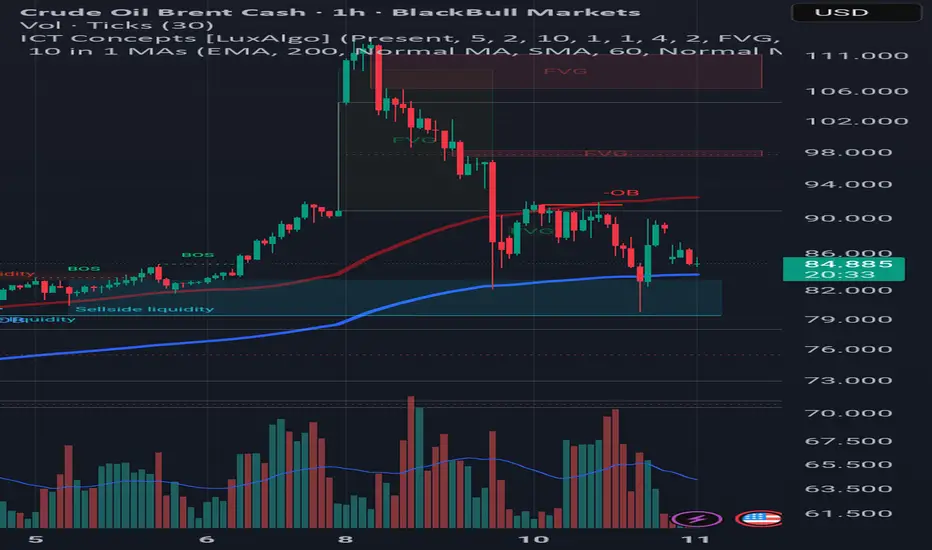
Legal Manipulation”: How the Paper Oil Market Masks the Real Supply Crisis
The Financial System Behind Oil Pricing
In theory, commodity markets are supposed to reflect the balance between real supply and real demand. When supply is threatened, prices should rise quickly. When supply collapses, prices should explode higher.
But today’s oil market operates very differently. The price most people see on their screens is not determined by barrels being loaded onto tankers. Instead, it is driven primarily by a massive web of financial contracts traded by banks, hedge funds, and institutional players.
The result is a system where the “paper oil market” dominates the physical oil market, allowing large financial players—often called smart money—to influence prices in ways that frequently leave retail investors on the wrong side of the trade.
Some critics describe this system as a legal form of market manipulation: not illegal, but structurally designed to favor large institutional traders over smaller participants.
A Global Supply Chokepoint Under Stress
The Strait of Hormuz is one of the most strategically important energy corridors on the planet.
Roughly 20% of the world’s oil supply normally flows through this narrow channel between Iran and Oman.
Any disruption to this route should logically send oil prices sharply higher. A chokepoint controlling such a large portion of global supply represents one of the biggest systemic risks in the energy market.
Yet at times when tensions rise or shipping activity drops dramatically, oil prices have not always reflected the severity of the situation. That disconnect highlights the growing influence of financial markets over physical energy markets.
The Rise of “Paper Oil”
The global oil price is largely set through derivatives trading tied to benchmarks like:
West Texas Intermediate Crude Oil
Brent Crude Oil
These benchmarks trade heavily on exchanges such as the Chicago Mercantile Exchange and the Intercontinental Exchange.
But here’s the key point:
Most of these trades never result in the delivery of physical oil.
Instead, traders buy and sell contracts representing oil that may never actually change hands. In many cases, dozens of “paper barrels” are traded for every real barrel produced or consumed.
This massive leverage allows financial markets to dominate price discovery.
Why Critics Call It “Legal Manipulation”
Institutional traders have tools that retail traders simply do not. They can:
deploy billions of dollars in capital
hedge across multiple asset classes
influence short-term liquidity in futures markets
When large players build massive positions in derivatives markets, their trades can temporarily move prices regardless of what is happening in the physical oil supply chain.
Retail investors watching charts may believe they are reacting to real-world fundamentals. In reality, they may be reacting to positioning shifts by large institutions.
This is why some critics describe the system as a legalized structure that advantages institutional money.
Retail traders often end up reacting to price moves after they have already been engineered by larger participants.
Retail as Exit Liquidity
One of the most controversial aspects of modern markets is the idea of exit liquidity.
In simple terms, large institutions frequently need liquidity when they close large positions. Retail traders, reacting to sudden price movements or news headlines, can unintentionally provide that liquidity.
The sequence often looks like this:
Large funds accumulate positions quietly
News or volatility triggers a visible price move
Retail traders chase the move
Institutions close their positions into that momentum
This dynamic exists across many markets—from equities to crypto—and critics argue it is particularly visible in commodities.
The Physical Market Tells the Real Story
While derivatives dominate price discovery, the physical oil market still operates on real constraints:
tanker availability
shipping routes
refinery demand
storage levels
geopolitical risk
When physical supply tightens enough, those constraints eventually force prices to adjust regardless of financial positioning.
History has shown that when real supply shortages become severe—when tankers stop moving or inventories collapse—the paper market cannot suppress prices indefinitely.
At that point, the physical market begins to dictate reality again.
The Bottom Line
Modern oil pricing is shaped by a financial system where derivatives trading far outweighs the actual exchange of physical barrels.
Supporters argue this structure provides liquidity and efficient hedging for producers and consumers. Critics argue it allows powerful financial players to influence prices in ways that retail traders struggle to compete with.
The tension between the paper market and the physical market remains one of the most controversial issues in global commodities.
And when geopolitical shocks threaten real supply, the central question becomes:
How long can financial markets diverge from physical reality before the price of oil is forced to catch up?
The Financial System Behind Oil Pricing
In theory, commodity markets are supposed to reflect the balance between real supply and real demand. When supply is threatened, prices should rise quickly. When supply collapses, prices should explode higher.
But today’s oil market operates very differently. The price most people see on their screens is not determined by barrels being loaded onto tankers. Instead, it is driven primarily by a massive web of financial contracts traded by banks, hedge funds, and institutional players.
The result is a system where the “paper oil market” dominates the physical oil market, allowing large financial players—often called smart money—to influence prices in ways that frequently leave retail investors on the wrong side of the trade.
Some critics describe this system as a legal form of market manipulation: not illegal, but structurally designed to favor large institutional traders over smaller participants.
A Global Supply Chokepoint Under Stress
The Strait of Hormuz is one of the most strategically important energy corridors on the planet.
Roughly 20% of the world’s oil supply normally flows through this narrow channel between Iran and Oman.
Any disruption to this route should logically send oil prices sharply higher. A chokepoint controlling such a large portion of global supply represents one of the biggest systemic risks in the energy market.
Yet at times when tensions rise or shipping activity drops dramatically, oil prices have not always reflected the severity of the situation. That disconnect highlights the growing influence of financial markets over physical energy markets.
The Rise of “Paper Oil”
The global oil price is largely set through derivatives trading tied to benchmarks like:
West Texas Intermediate Crude Oil
Brent Crude Oil
These benchmarks trade heavily on exchanges such as the Chicago Mercantile Exchange and the Intercontinental Exchange.
But here’s the key point:
Most of these trades never result in the delivery of physical oil.
Instead, traders buy and sell contracts representing oil that may never actually change hands. In many cases, dozens of “paper barrels” are traded for every real barrel produced or consumed.
This massive leverage allows financial markets to dominate price discovery.
Why Critics Call It “Legal Manipulation”
Institutional traders have tools that retail traders simply do not. They can:
deploy billions of dollars in capital
hedge across multiple asset classes
influence short-term liquidity in futures markets
When large players build massive positions in derivatives markets, their trades can temporarily move prices regardless of what is happening in the physical oil supply chain.
Retail investors watching charts may believe they are reacting to real-world fundamentals. In reality, they may be reacting to positioning shifts by large institutions.
This is why some critics describe the system as a legalized structure that advantages institutional money.
Retail traders often end up reacting to price moves after they have already been engineered by larger participants.
Retail as Exit Liquidity
One of the most controversial aspects of modern markets is the idea of exit liquidity.
In simple terms, large institutions frequently need liquidity when they close large positions. Retail traders, reacting to sudden price movements or news headlines, can unintentionally provide that liquidity.
The sequence often looks like this:
Large funds accumulate positions quietly
News or volatility triggers a visible price move
Retail traders chase the move
Institutions close their positions into that momentum
This dynamic exists across many markets—from equities to crypto—and critics argue it is particularly visible in commodities.
The Physical Market Tells the Real Story
While derivatives dominate price discovery, the physical oil market still operates on real constraints:
tanker availability
shipping routes
refinery demand
storage levels
geopolitical risk
When physical supply tightens enough, those constraints eventually force prices to adjust regardless of financial positioning.
History has shown that when real supply shortages become severe—when tankers stop moving or inventories collapse—the paper market cannot suppress prices indefinitely.
At that point, the physical market begins to dictate reality again.
The Bottom Line
Modern oil pricing is shaped by a financial system where derivatives trading far outweighs the actual exchange of physical barrels.
Supporters argue this structure provides liquidity and efficient hedging for producers and consumers. Critics argue it allows powerful financial players to influence prices in ways that retail traders struggle to compete with.
The tension between the paper market and the physical market remains one of the most controversial issues in global commodities.
And when geopolitical shocks threaten real supply, the central question becomes:
How long can financial markets diverge from physical reality before the price of oil is forced to catch up?

การนำเสนอที่เกี่ยวข้อง
คำจำกัดสิทธิ์ความรับผิดชอบ
ข้อมูลและบทความไม่ได้มีวัตถุประสงค์เพื่อก่อให้เกิดกิจกรรมทางการเงิน, การลงทุน, การซื้อขาย, ข้อเสนอแนะ หรือคำแนะนำประเภทอื่น ๆ ที่ให้หรือรับรองโดย TradingView อ่านเพิ่มเติมใน ข้อกำหนดการใช้งาน
การนำเสนอที่เกี่ยวข้อง
คำจำกัดสิทธิ์ความรับผิดชอบ
ข้อมูลและบทความไม่ได้มีวัตถุประสงค์เพื่อก่อให้เกิดกิจกรรมทางการเงิน, การลงทุน, การซื้อขาย, ข้อเสนอแนะ หรือคำแนะนำประเภทอื่น ๆ ที่ให้หรือรับรองโดย TradingView อ่านเพิ่มเติมใน ข้อกำหนดการใช้งาน