
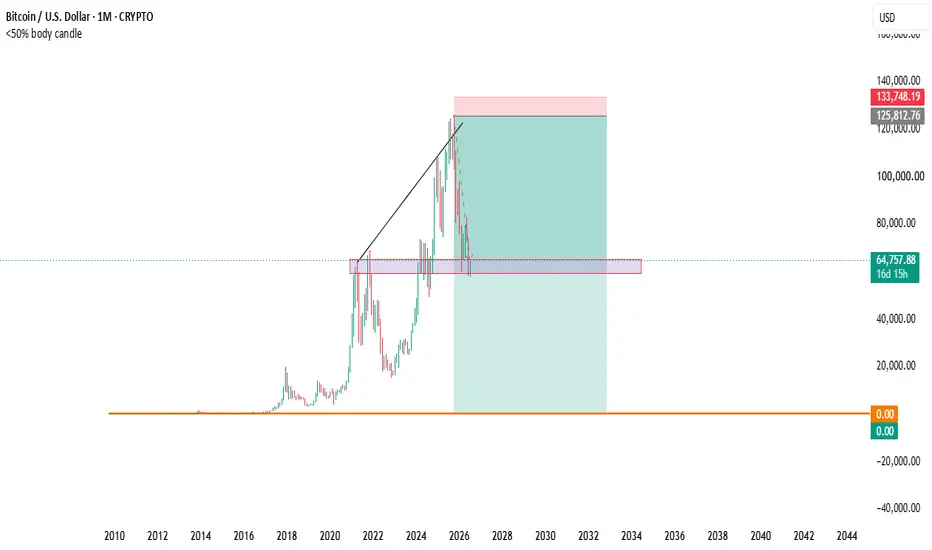
This is a thought experiment, not a market forecast.
Every financial asset trades above zero because the market continues to assign it economic value. That value may come from future earnings, cash flows, legal claims, industrial use, or the confidence that others will continue to accept it.
Bitcoin differs from traditional financial assets. It does not generate cash flows for holders, distribute dividends, or represent a claim on an issuing company or government. Its value emerges from a combination of network effects.
So what would have to happen for Bitcoin to reach $0?
Not just another bear market, a complete loss of economic value, but keep in mind price is the outcome, Not The Cause
A common misconception is that markets fall because buyers disappear.
They do not.
Every trade requires both a buyer and a seller. When Bitcoin falls from $100,000 to $80,000, buyers still exist, they simply believe the asset is worth less than before. Sellers lower their asking prices until the market finds a new equilibrium
This process is called price discovery, and it has defined every Bitcoin correction.
A price of $0 represents something fundamentally different.
It would mean the market has reached a point where participants no longer believe the network has enough utility, security, liquidity, or future value to justify paying anything for it.
Bitcoin's Previous Confidence Cycles

Bitcoin has survived extreme drawdowns because demand eventually returned. A move to $0 would require the market to permanently lose that demand.
The Five Pillars of Bitcoin's Value
Bitcoin's market value is determined by more than its fixed supply. Demand depends on whether participants continue to value the network's utility, security, liquidity, and future potential.
Five pillars support that value.
1. Utility
An asset needs to solve a problem.
Bitcoin's utility comes from its ability to provide a decentralised settlement network, a scarce digital asset, and a system that operates without relying on a central authority.
If fewer people find those functions valuable, demand weakens, scarcity alone cannot create value. A rare object nobody wants is still worthless.
2. Liquidity
Markets require participants willing to buy and sell.
Liquidity allows large amounts of capital to enter and exit efficiently. It creates confidence because investors know they can transact without dramatically moving price.
If liquidity deteriorates, spreads widen, volatility increases, and fewer participants are willing to commit capital. A weaker market becomes harder to recover.
3. Security
Bitcoin's network is secured through mining.
Miners invest in hardware and electricity because they are rewarded economically for validating transactions and protecting the blockchain.
If prices remain below the cost structure of miners for an extended period, weaker operators exit and network participation declines. Bitcoin's difficulty adjustment helps the network adapt, but it cannot create economic incentives where no value exists.
4. Confidence
Markets are built on expectations.
Investors hold assets because they believe those assets will continue to have value in the future.
Bitcoin's confidence comes from millions of participants: individuals, institutions, developers, miners, and businesses, if that confidence gradually deteriorates, capital leaves and demand weakens.
5. Scarcity
Bitcoin's fixed supply is one of its defining characteristics.
However, scarcity by itself does not create value.
Gold is valuable because scarcity combines with thousands of years of demand, industrial use, and cultural acceptance.
Bitcoin's scarcity matters because participants believe the network provides something worth owning.
Without demand, scarcity means very little.

Bitcoin's value depends on multiple interconnected pillars. A collapse toward zero would require a breakdown across the entire system.
How Assets Actually Reach Zero
Assets rarely become worthless because of a single event. They usually fail through a chain of reinforcing weaknesses.
A possible extreme scenario would begin with a prolonged decline in confidence.
Institutions reduce exposure, Liquidity weakens, Trading activity decreases, Mining becomes less profitable, Weaker operators exit and Businesses built around the ecosystem struggle, Capital leaves, Confidence deteriorates further.
Each stage reinforces the next.
The important point is that price is not the first thing to break, the economic foundation supporting the price breaks first.
Could Governments Really Step In?
Governments could respond to the financial consequences of a Bitcoin collapse, but they could not simply restore its value, Central banks can provide liquidity to banking systems. Governments can support regulated institutions during periods of financial stress.
bitcoin alone has no authority capable of forcing demand, a government can intervene when an institution faces a liquidity problem, it cannot solve a problem of declining demand for an asset.
Governments could reduce broader financial damage.
Why Bitcoin Has Not Yet Reached Zero
Bitcoin has experienced multiple periods where confidence was severely damaged.
Each cycle was different, but one thing remained consistent:
*The market eventually found participants who believed Bitcoin still had economic value.
*Developers continued building.
*Miners continued operating.
*Users continued transacting.
*Investors continued allocating capital.
The network survived because at least one of its value pillars remained intact
put together by : Pako Phutietsile as currencynerd
Every financial asset trades above zero because the market continues to assign it economic value. That value may come from future earnings, cash flows, legal claims, industrial use, or the confidence that others will continue to accept it.
Bitcoin differs from traditional financial assets. It does not generate cash flows for holders, distribute dividends, or represent a claim on an issuing company or government. Its value emerges from a combination of network effects.
So what would have to happen for Bitcoin to reach $0?
Not just another bear market, a complete loss of economic value, but keep in mind price is the outcome, Not The Cause
A common misconception is that markets fall because buyers disappear.
They do not.
Every trade requires both a buyer and a seller. When Bitcoin falls from $100,000 to $80,000, buyers still exist, they simply believe the asset is worth less than before. Sellers lower their asking prices until the market finds a new equilibrium
This process is called price discovery, and it has defined every Bitcoin correction.
A price of $0 represents something fundamentally different.
It would mean the market has reached a point where participants no longer believe the network has enough utility, security, liquidity, or future value to justify paying anything for it.
Bitcoin's Previous Confidence Cycles
Bitcoin has survived extreme drawdowns because demand eventually returned. A move to $0 would require the market to permanently lose that demand.
The Five Pillars of Bitcoin's Value
Bitcoin's market value is determined by more than its fixed supply. Demand depends on whether participants continue to value the network's utility, security, liquidity, and future potential.
Five pillars support that value.
1. Utility
An asset needs to solve a problem.
Bitcoin's utility comes from its ability to provide a decentralised settlement network, a scarce digital asset, and a system that operates without relying on a central authority.
If fewer people find those functions valuable, demand weakens, scarcity alone cannot create value. A rare object nobody wants is still worthless.
2. Liquidity
Markets require participants willing to buy and sell.
Liquidity allows large amounts of capital to enter and exit efficiently. It creates confidence because investors know they can transact without dramatically moving price.
If liquidity deteriorates, spreads widen, volatility increases, and fewer participants are willing to commit capital. A weaker market becomes harder to recover.
3. Security
Bitcoin's network is secured through mining.
Miners invest in hardware and electricity because they are rewarded economically for validating transactions and protecting the blockchain.
If prices remain below the cost structure of miners for an extended period, weaker operators exit and network participation declines. Bitcoin's difficulty adjustment helps the network adapt, but it cannot create economic incentives where no value exists.
4. Confidence
Markets are built on expectations.
Investors hold assets because they believe those assets will continue to have value in the future.
Bitcoin's confidence comes from millions of participants: individuals, institutions, developers, miners, and businesses, if that confidence gradually deteriorates, capital leaves and demand weakens.
5. Scarcity
Bitcoin's fixed supply is one of its defining characteristics.
However, scarcity by itself does not create value.
Gold is valuable because scarcity combines with thousands of years of demand, industrial use, and cultural acceptance.
Bitcoin's scarcity matters because participants believe the network provides something worth owning.
Without demand, scarcity means very little.
Bitcoin's value depends on multiple interconnected pillars. A collapse toward zero would require a breakdown across the entire system.
How Assets Actually Reach Zero
Assets rarely become worthless because of a single event. They usually fail through a chain of reinforcing weaknesses.
A possible extreme scenario would begin with a prolonged decline in confidence.
Institutions reduce exposure, Liquidity weakens, Trading activity decreases, Mining becomes less profitable, Weaker operators exit and Businesses built around the ecosystem struggle, Capital leaves, Confidence deteriorates further.
Each stage reinforces the next.
The important point is that price is not the first thing to break, the economic foundation supporting the price breaks first.
Could Governments Really Step In?
Governments could respond to the financial consequences of a Bitcoin collapse, but they could not simply restore its value, Central banks can provide liquidity to banking systems. Governments can support regulated institutions during periods of financial stress.
bitcoin alone has no authority capable of forcing demand, a government can intervene when an institution faces a liquidity problem, it cannot solve a problem of declining demand for an asset.
Governments could reduce broader financial damage.
Why Bitcoin Has Not Yet Reached Zero
Bitcoin has experienced multiple periods where confidence was severely damaged.
Each cycle was different, but one thing remained consistent:
*The market eventually found participants who believed Bitcoin still had economic value.
*Developers continued building.
*Miners continued operating.
*Users continued transacting.
*Investors continued allocating capital.
The network survived because at least one of its value pillars remained intact
put together by : Pako Phutietsile as currencynerd

การนำเสนอที่เกี่ยวข้อง
คำจำกัดสิทธิ์ความรับผิดชอบ
ข้อมูลและบทความไม่ได้มีวัตถุประสงค์เพื่อก่อให้เกิดกิจกรรมทางการเงิน, การลงทุน, การซื้อขาย, ข้อเสนอแนะ หรือคำแนะนำประเภทอื่น ๆ ที่ให้หรือรับรองโดย TradingView อ่านเพิ่มเติมใน ข้อกำหนดการใช้งาน
การนำเสนอที่เกี่ยวข้อง
คำจำกัดสิทธิ์ความรับผิดชอบ
ข้อมูลและบทความไม่ได้มีวัตถุประสงค์เพื่อก่อให้เกิดกิจกรรมทางการเงิน, การลงทุน, การซื้อขาย, ข้อเสนอแนะ หรือคำแนะนำประเภทอื่น ๆ ที่ให้หรือรับรองโดย TradingView อ่านเพิ่มเติมใน ข้อกำหนดการใช้งาน