
Stop Loss Basics: Why Round Numbers Get Your Stop Hunted
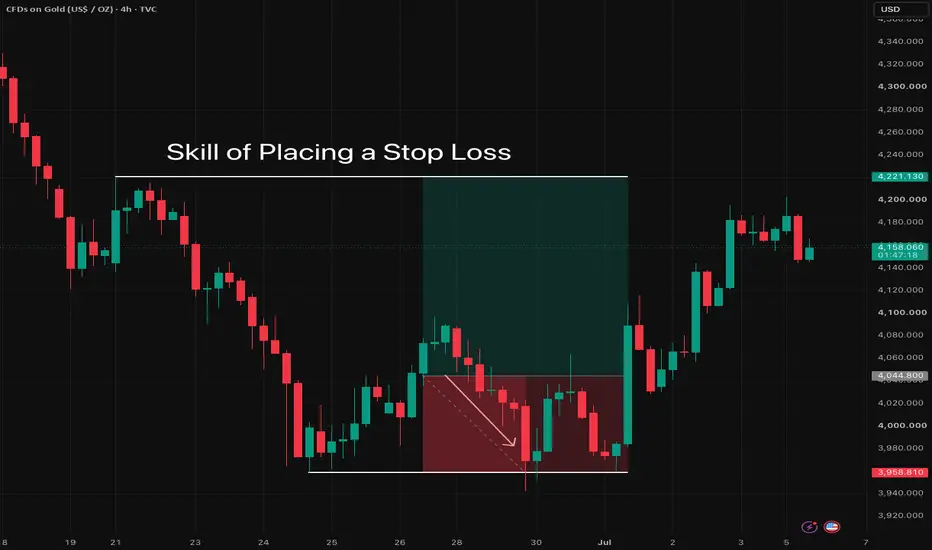
Most traders set a stop loss at a round number. They buy Bitcoin and stop out at 100,000, or sell and protect at 90,000. That is exactly where the order gets swept. Price pierces the level, takes out the stops clustered there, then turns back the way the trader expected. The stop was not wrong about direction, only about location.
A stop loss is a decision about where to hide liquidity, not just a number that caps a loss. Research on how stop orders cluster and trigger explains why the obvious spot is the worst one.
What Is a Stop Loss?
A stop loss is a resting order that closes your position automatically once price reaches a level you set in advance. On a long it sits below your entry, on a short above. When price touches it, the order goes live and you are out.
Strip away the jargon and the stop loss meaning is simple: it is the price at which you admit the trade has failed, set before emotion can talk you out of it. The hard part is placement, far enough to survive noise but close enough to keep the loss small. Get it wrong and the protective order becomes the reason you lose.

A stop loss closes the position automatically at the preset level. On a long it sits below entry, on a short above.
How a Stop Loss Order Works
A stop loss order waits off the book until price reaches your trigger, then fires as one of two types.
Stop Loss vs Stop Limit
The stop loss vs stop limit choice is about what you fear more, a bad fill or no fill. A market stop sends a market order at the trigger. A stop limit sends a limit order at a price you set.
Market Stop
Stop Limit
For volatile crypto, the market stop is the safer default: staying trapped in a crash beats a few points of slippage.
What Is a Trailing Stop Loss?
A trailing stop loss moves with price in your favor and never against you. You set a distance, say 5 percent, and the stop follows the trade's high by that amount. If price rises, the stop ratchets up. If price falls, it stays put, locking in gains without you touching the chart.
A worked example: you buy at 100 and set a 10 percent trailing stop, so it starts at 90. Price runs to 130, the stop trails up to 117, then price reverses and you exit at 117, keeping most of the move. A 2001 to 2021 study of US exchange traded funds found that wider trailing stops, around one to one and a half standard deviations of price, beat tight ones even after costs. Set it too tight and choppy price knocks you out on noise.

A trailing stop ratchets up as price rises and holds flat on pullbacks, locking in gains until a reversal hits it.
Where to Place a Stop Loss
Three honest methods, each answering a different question.
The strongest approach combines all three: a structural level, ATR room, sized to your percent rule.
The Round Number Trap
Now the reason the obvious stop fails. Carol Osler, studying the order book of a large foreign exchange bank in work published in the Journal of Finance, found that stop loss and take profit orders cluster heavily at round numbers, with almost 10 percent of all orders at rates ending in double zero. The triggers are asymmetric: take profit orders fire as price approaches a round number, producing bounces, while stop loss orders fire just after price crosses it, accelerating the move into a cascade.
That cascade is documented. In a Federal Reserve Bank of New York study of high frequency exchange rates, Osler showed that stop loss orders catalyze self reinforcing cascades. One case from the data: dollar yen broke 130.50, triggering stop selling, broke 130, triggering more, and once under 129.80 fell to 129.40 within seconds. Every stop on a round number fed the next one.
The lesson is direct. A stop sitting exactly at 100,000 on Bitcoin is inside the cluster that gets swept first. Place it a clear distance past the level, beyond where the sweep exhausts itself, and you survive the run when price reverses. The round number is not a wall. It is the trap door.

Price pierces the round number, sweeps the stops clustered there, then reverses. A stop on the level is taken; a stop beyond the sweep survives.
When Stops Help and When They Hurt
A stop loss is not free protection. The framework of Kaminski and Lo in the Journal of Financial Markets showed that if prices follow a random walk, a simple stop loss always lowers your expected return, since you cut trades that on average recover. The same work found that when returns trend, stops add value: applied to US equities from 1950 to 2004, certain rules added 50 to 100 basis points per month during stop-out periods. Stops earn their keep in trending markets and bleed you in choppy ones, so read the regime before trusting the stop.
A stop loss is a location decision, not a number. Tie it to structure, give it volatility room, size it to a fixed share of the account, and keep it off the round numbers where everyone else has hidden theirs. The market does not hunt your stop because it knows you. It hunts the cluster, and the only defense is to not be standing in it.
A stop loss is a decision about where to hide liquidity, not just a number that caps a loss. Research on how stop orders cluster and trigger explains why the obvious spot is the worst one.
What Is a Stop Loss?
A stop loss is a resting order that closes your position automatically once price reaches a level you set in advance. On a long it sits below your entry, on a short above. When price touches it, the order goes live and you are out.
Strip away the jargon and the stop loss meaning is simple: it is the price at which you admit the trade has failed, set before emotion can talk you out of it. The hard part is placement, far enough to survive noise but close enough to keep the loss small. Get it wrong and the protective order becomes the reason you lose.
A stop loss closes the position automatically at the preset level. On a long it sits below entry, on a short above.
How a Stop Loss Order Works
A stop loss order waits off the book until price reaches your trigger, then fires as one of two types.
Stop Loss vs Stop Limit
The stop loss vs stop limit choice is about what you fear more, a bad fill or no fill. A market stop sends a market order at the trigger. A stop limit sends a limit order at a price you set.
Market Stop
- Fires as: market order at the trigger
- Fill certainty: very high, fills almost always
- Price risk: can fill well past your level on a fast move (slippage)
- Best for: volatile assets, where being out beats the exact price
Stop Limit
- Fires as: limit order at the price you set
- Fill certainty: not guaranteed, can be skipped on a gap
- Price risk: never worse than your limit, but you may stay trapped
- Best for: calm, liquid markets where you set the exit
For volatile crypto, the market stop is the safer default: staying trapped in a crash beats a few points of slippage.
What Is a Trailing Stop Loss?
A trailing stop loss moves with price in your favor and never against you. You set a distance, say 5 percent, and the stop follows the trade's high by that amount. If price rises, the stop ratchets up. If price falls, it stays put, locking in gains without you touching the chart.
A worked example: you buy at 100 and set a 10 percent trailing stop, so it starts at 90. Price runs to 130, the stop trails up to 117, then price reverses and you exit at 117, keeping most of the move. A 2001 to 2021 study of US exchange traded funds found that wider trailing stops, around one to one and a half standard deviations of price, beat tight ones even after costs. Set it too tight and choppy price knocks you out on noise.
A trailing stop ratchets up as price rises and holds flat on pullbacks, locking in gains until a reversal hits it.
Where to Place a Stop Loss
Three honest methods, each answering a different question.
- By structure. Place it beyond a support or resistance zone, on the far side of the level your trade depends on. If price closes through that zone, the idea is dead.
- By volatility (ATR). Use the Average True Range, from Welles Wilder's 1978 book New Concepts in Technical Trading Systems, to set the stop one and a half to three ATR away. Volatile assets get more room, calm ones less.
- By percent of account. Decide the most you will lose, often one to two percent, then size the position so the stop distance equals that risk. Here the stop sets the size.
The strongest approach combines all three: a structural level, ATR room, sized to your percent rule.
The Round Number Trap
Now the reason the obvious stop fails. Carol Osler, studying the order book of a large foreign exchange bank in work published in the Journal of Finance, found that stop loss and take profit orders cluster heavily at round numbers, with almost 10 percent of all orders at rates ending in double zero. The triggers are asymmetric: take profit orders fire as price approaches a round number, producing bounces, while stop loss orders fire just after price crosses it, accelerating the move into a cascade.
That cascade is documented. In a Federal Reserve Bank of New York study of high frequency exchange rates, Osler showed that stop loss orders catalyze self reinforcing cascades. One case from the data: dollar yen broke 130.50, triggering stop selling, broke 130, triggering more, and once under 129.80 fell to 129.40 within seconds. Every stop on a round number fed the next one.
The lesson is direct. A stop sitting exactly at 100,000 on Bitcoin is inside the cluster that gets swept first. Place it a clear distance past the level, beyond where the sweep exhausts itself, and you survive the run when price reverses. The round number is not a wall. It is the trap door.
Price pierces the round number, sweeps the stops clustered there, then reverses. A stop on the level is taken; a stop beyond the sweep survives.
When Stops Help and When They Hurt
A stop loss is not free protection. The framework of Kaminski and Lo in the Journal of Financial Markets showed that if prices follow a random walk, a simple stop loss always lowers your expected return, since you cut trades that on average recover. The same work found that when returns trend, stops add value: applied to US equities from 1950 to 2004, certain rules added 50 to 100 basis points per month during stop-out periods. Stops earn their keep in trending markets and bleed you in choppy ones, so read the regime before trusting the stop.
A stop loss is a location decision, not a number. Tie it to structure, give it volatility room, size it to a fixed share of the account, and keep it off the round numbers where everyone else has hidden theirs. The market does not hunt your stop because it knows you. It hunts the cluster, and the only defense is to not be standing in it.

คำจำกัดสิทธิ์ความรับผิดชอบ
ข้อมูลและบทความไม่ได้มีวัตถุประสงค์เพื่อก่อให้เกิดกิจกรรมทางการเงิน, การลงทุน, การซื้อขาย, ข้อเสนอแนะ หรือคำแนะนำประเภทอื่น ๆ ที่ให้หรือรับรองโดย TradingView อ่านเพิ่มเติมใน ข้อกำหนดการใช้งาน
คำจำกัดสิทธิ์ความรับผิดชอบ
ข้อมูลและบทความไม่ได้มีวัตถุประสงค์เพื่อก่อให้เกิดกิจกรรมทางการเงิน, การลงทุน, การซื้อขาย, ข้อเสนอแนะ หรือคำแนะนำประเภทอื่น ๆ ที่ให้หรือรับรองโดย TradingView อ่านเพิ่มเติมใน ข้อกำหนดการใช้งาน