
Opendoor's Meteoric Rise Faces a Reality Check: Why Caution is Warranted Despite Strategic Shifts
Opendoor Technologies (OPEN) is capturing headlines with a remarkable stock surge of 294% in 2025, driven by a radical strategic pivot under new CEO Kaz Nejatian. The company is aggressively shifting from a traditional "house flipper" model to a technology-powered, high-velocity transaction platform. By leveraging AI to slash home assessment times and streamline operations, Opendoor has nearly doubled its weekly acquisition rate while cutting costs dramatically. Management's bold path to profitability by late 2026 and Nejatian's proven track record from Shopify have fueled investor optimism, suggesting the recent rally may have further room to run.
However, beneath this compelling narrative of transformation lie persistent and significant risks that threaten to undermine its progress. A closer examination of the fundamentals reveals several red flags that suggest the stock's explosive gains may be premature, exposing investors to substantial downside from current levels.
Three Core Vulnerabilities Threatening the "Opendoor 2.0" Story
The Critical Demand Shortfall: Falling Volume Amidst Rising Acquisitions
While Opendoor touts accelerated home acquisitions, the most telling metric—homes actually sold—paints a concerning picture. In its latest quarter, the company sold only 2,568 homes, continuing a two-year trend of average annual declines of 16.2%. This divergence between buying and selling implies either weak end-market demand, increasing competition, or potential inventory mismatches. For a business whose new model relies on "flow and speed," an inability to monetize acquisitions rapidly creates a fundamental bottleneck. To move this stagnant volume, Opendoor may be forced to lower prices or increase marketing spend, both of which would directly compress margins and hinder the very profitability it seeks.
A Looming Cash Flow Crisis
Ultimately, sustainable businesses are built on cash flow, not just accounting adjustments or strategic visions. Analysts project a alarming reversal for Opendoor: its free cash flow margin, a healthy 18.8% over the past year, is expected to plummet to negative 3.6% in the coming year. This transition from cash generation to cash consumption is a critical warning sign. It indicates that the costs of funding inventory, technology investments, and operations are likely to outpace the cash earned from sales. For a company in a capital-intensive industry, a burning cash furnace is a direct threat to its operational autonomy and survival.
A Precarious Financial Structure: Debt, Losses, and Restricted Options
Opendoor's balance sheet compounds its operational risks. The company carries a substantial $1.79 billion in debt against $962 million in cash, a concerning ratio for any firm, but particularly one reporting deeply negative EBITDA of -$89 million over the last twelve months. This combination of high debt and persistent losses is a classic danger zone. It raises the specter of insolvency if market conditions deteriorate and limits the company's ability to secure additional financing on favorable terms. Should credit agencies downgrade its debt, the cost of capital would rise sharply, creating a vicious cycle that could strangle growth and force the company into distress sales of assets.
Technical Levels Highlight the Severe Downside Risk
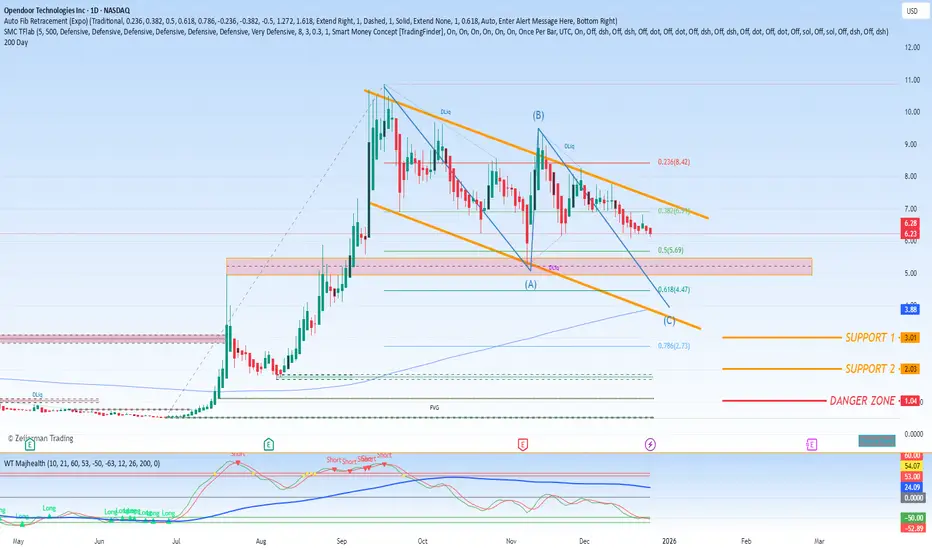
The fundamental vulnerabilities are mirrored in the stock's technical risk profile. From its current price near $6.50, the downside appears significantly larger than the immediate upside. Two critical support zones loom far below:
The First Support Zone at $3.00: This level represents a decline of over 50% from current prices and would likely correspond to a market reassessment of the company's growth premium as execution challenges mount.
The Second Support Zone at $2.00: A fall to this area, a drop of nearly 70%, would indicate a severe breakdown in investor confidence, potentially triggered by a quarterly cash burn worse than feared or a deterioration in the housing market.
The Danger Zone at $1.00: This level is critical; breaching it would signal existential threats to the business model and raise serious questions about the company's long-term viability as a going concern.
Final Judgment: Spectating, Not Participating
While we applaud Opendoor's innovative ambitions and serve-as-you-go model, the investment case at this juncture is fraught with asymmetry skewed toward risk. The stock's forward price-to-sales ratio of 1.1x may appear modest, but it prices in a future of profitable, high-velocity execution that the current fundamentals—declining sales volume, impending cash burn, and a leveraged balance sheet—do not yet support.
The potential upside from a flawless execution of "Opendoor 2.0" is now overshadowed by the very real possibility of a steep decline toward the $3.00 or even $2.00 support zones if operational or macroeconomic headwinds intensify. Given the combination of cyclical market exposure, high execution risk, and a precarious financial foundation, we believe the prudent action is to cheer for Opendoor's transformation from the sidelines, rather than expose a portfolio to its volatile and uncertain path forward.
Opendoor Technologies (OPEN) is capturing headlines with a remarkable stock surge of 294% in 2025, driven by a radical strategic pivot under new CEO Kaz Nejatian. The company is aggressively shifting from a traditional "house flipper" model to a technology-powered, high-velocity transaction platform. By leveraging AI to slash home assessment times and streamline operations, Opendoor has nearly doubled its weekly acquisition rate while cutting costs dramatically. Management's bold path to profitability by late 2026 and Nejatian's proven track record from Shopify have fueled investor optimism, suggesting the recent rally may have further room to run.
However, beneath this compelling narrative of transformation lie persistent and significant risks that threaten to undermine its progress. A closer examination of the fundamentals reveals several red flags that suggest the stock's explosive gains may be premature, exposing investors to substantial downside from current levels.
Three Core Vulnerabilities Threatening the "Opendoor 2.0" Story
The Critical Demand Shortfall: Falling Volume Amidst Rising Acquisitions
While Opendoor touts accelerated home acquisitions, the most telling metric—homes actually sold—paints a concerning picture. In its latest quarter, the company sold only 2,568 homes, continuing a two-year trend of average annual declines of 16.2%. This divergence between buying and selling implies either weak end-market demand, increasing competition, or potential inventory mismatches. For a business whose new model relies on "flow and speed," an inability to monetize acquisitions rapidly creates a fundamental bottleneck. To move this stagnant volume, Opendoor may be forced to lower prices or increase marketing spend, both of which would directly compress margins and hinder the very profitability it seeks.
A Looming Cash Flow Crisis
Ultimately, sustainable businesses are built on cash flow, not just accounting adjustments or strategic visions. Analysts project a alarming reversal for Opendoor: its free cash flow margin, a healthy 18.8% over the past year, is expected to plummet to negative 3.6% in the coming year. This transition from cash generation to cash consumption is a critical warning sign. It indicates that the costs of funding inventory, technology investments, and operations are likely to outpace the cash earned from sales. For a company in a capital-intensive industry, a burning cash furnace is a direct threat to its operational autonomy and survival.
A Precarious Financial Structure: Debt, Losses, and Restricted Options
Opendoor's balance sheet compounds its operational risks. The company carries a substantial $1.79 billion in debt against $962 million in cash, a concerning ratio for any firm, but particularly one reporting deeply negative EBITDA of -$89 million over the last twelve months. This combination of high debt and persistent losses is a classic danger zone. It raises the specter of insolvency if market conditions deteriorate and limits the company's ability to secure additional financing on favorable terms. Should credit agencies downgrade its debt, the cost of capital would rise sharply, creating a vicious cycle that could strangle growth and force the company into distress sales of assets.
Technical Levels Highlight the Severe Downside Risk
The fundamental vulnerabilities are mirrored in the stock's technical risk profile. From its current price near $6.50, the downside appears significantly larger than the immediate upside. Two critical support zones loom far below:
The First Support Zone at $3.00: This level represents a decline of over 50% from current prices and would likely correspond to a market reassessment of the company's growth premium as execution challenges mount.
The Second Support Zone at $2.00: A fall to this area, a drop of nearly 70%, would indicate a severe breakdown in investor confidence, potentially triggered by a quarterly cash burn worse than feared or a deterioration in the housing market.
The Danger Zone at $1.00: This level is critical; breaching it would signal existential threats to the business model and raise serious questions about the company's long-term viability as a going concern.
Final Judgment: Spectating, Not Participating
While we applaud Opendoor's innovative ambitions and serve-as-you-go model, the investment case at this juncture is fraught with asymmetry skewed toward risk. The stock's forward price-to-sales ratio of 1.1x may appear modest, but it prices in a future of profitable, high-velocity execution that the current fundamentals—declining sales volume, impending cash burn, and a leveraged balance sheet—do not yet support.
The potential upside from a flawless execution of "Opendoor 2.0" is now overshadowed by the very real possibility of a steep decline toward the $3.00 or even $2.00 support zones if operational or macroeconomic headwinds intensify. Given the combination of cyclical market exposure, high execution risk, and a precarious financial foundation, we believe the prudent action is to cheer for Opendoor's transformation from the sidelines, rather than expose a portfolio to its volatile and uncertain path forward.

คำจำกัดสิทธิ์ความรับผิดชอบ
ข้อมูลและบทความไม่ได้มีวัตถุประสงค์เพื่อก่อให้เกิดกิจกรรมทางการเงิน, การลงทุน, การซื้อขาย, ข้อเสนอแนะ หรือคำแนะนำประเภทอื่น ๆ ที่ให้หรือรับรองโดย TradingView อ่านเพิ่มเติมใน ข้อกำหนดการใช้งาน
คำจำกัดสิทธิ์ความรับผิดชอบ
ข้อมูลและบทความไม่ได้มีวัตถุประสงค์เพื่อก่อให้เกิดกิจกรรมทางการเงิน, การลงทุน, การซื้อขาย, ข้อเสนอแนะ หรือคำแนะนำประเภทอื่น ๆ ที่ให้หรือรับรองโดย TradingView อ่านเพิ่มเติมใน ข้อกำหนดการใช้งาน