
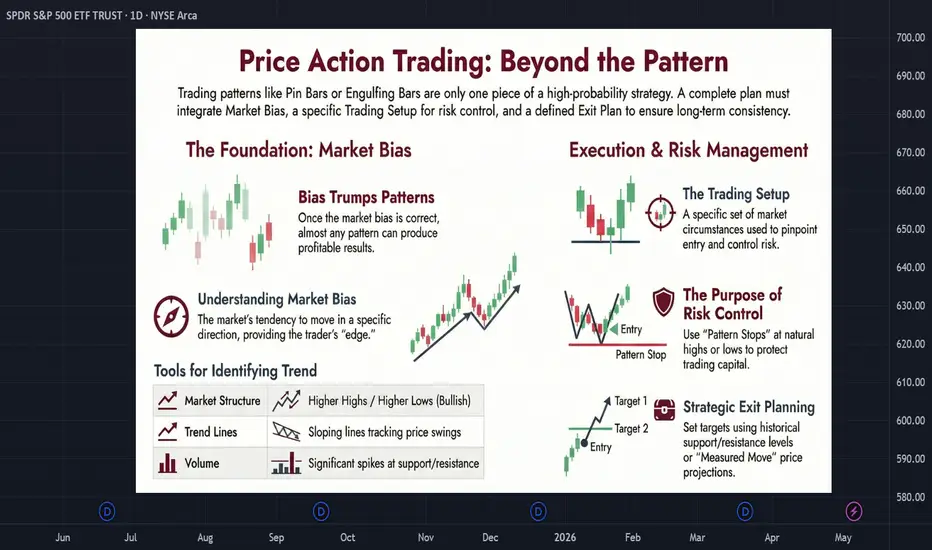
🔥Price Action Trading: Beyond the Pattern🔥
Many traders focus on individual candlestick patterns as if they contain predictive power on their own.
In isolation, they do not.
A pattern is only meaningful when viewed within the surrounding market structure. Context determines whether a signal is valid.
📌 THE ILLUSION OF PATTERN PRECISION
Candlestick recognition is often seen as the core of price action trading. Pin bars, engulfing candlesticks, and reversal patterns are studied extensively, yet performance are doomed to be inconsistent, especially when applied mechanically.
The issue is not the pattern itself, but the assumption that the price pattern is everything. A pattern without context is meaningless on a chart.
Real consistency comes from understanding:
A setup is only a trigger and not a complete strategy.
🧭 MARKET BIAS IS THE REAL EDGE
The dominant driver of performance is market bias. All traders must admit the existence of market bias. Without a bias, all movements are random and in that case, there is no reason to trade for profit.
It refers to the underlying directional pressure of the market, defined by structure, momentum, and higher time frame flow.
When bias is correct, even simple setups can perform well. When bias is incorrect, even high-quality patterns fail.
Example observation:
A basic two-bar reversal (here referring to any bearish candlestick followed immediately by a bullish one, entry order assumed to be a buy stop above the bullish candlestick) during a pullback performs effectively when aligned with a bullish environment, despite lacking additional filters.

The conclusion is consistent:
Key principle:
⚙️ SETUPS AS RISK DEFINITIONS, NOT ENTRY TRIGGERS
Setups are often misunderstood as predictive tools.
In professional application, they serve to define risk by structure.
A setup provides:
Without a setup, there is no objective reference for stop placement.
Let's continue with the same chart example shown above. For a bullish two-bar reversal, the lowest point of the pattern defines the level of invalidation. If price breaches that level, our original trading thesis is no longer valid.

Change your perspective and see price patterns as risk control mechanisms, not mere entry signals.
This transforms our trading approach from reckless prediction into controlled risk exposure.
📊 BUILDING MARKET BIAS THROUGH STRUCTURE
Bias is not assumed. It is constructed from multiple layers of information.
A sound framework typically includes:
Each component reinforces or challenges the others. The key is when multiple tools align, because that is when bias becomes reliable.
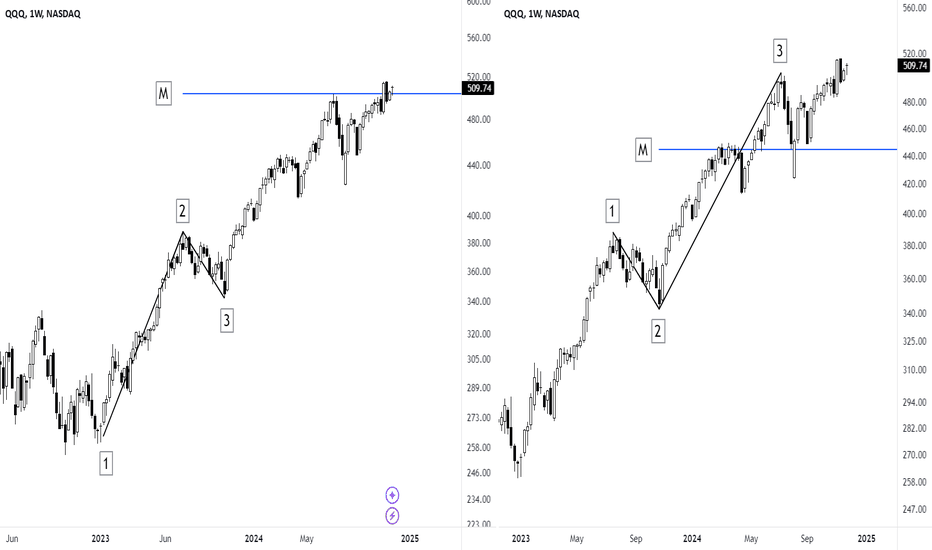
🔍 THE LOGIC OF MEASURED MOVES
Another often neglected aspect is that exit strategy is as important as entry logic.
In trending environments where historical S/R levels are lacking, projected targets become necessary.
Measured moves provide a structured method for forecasting continuation. On a basic level, they are typically derived from a prior impulse leg and projected using a 100% extension framework. This excellent tutorial explains this concept in-depth:
Trade dynamics involve a clear trade-off:
Neither is superior. Each applies under different conditions.
The key requirement is consistency in execution once selected.
🧠 STRATEGIES ARE PERSONAL SYSTEMS
No strategy is universally optimal. Performance depends on alignment between method and trader behavior.
A system that works mechanically may still fail if it conflicts with a trader's psychological tolerance.
Core considerations include:
A strategy is only viable if it can be executed consistently during adverse conditions, not just favorable ones. This is because trading edge exists narrowly at the intersection of system and behavior.
📉 COMMON FAILURE POINT: CONTEXT MISALIGNMENT
Many losses attributed to “bad setups” are actually the result of context mismatch.
For example, a valid pattern traded against higher time frame structure often underperforms regardless of its formation quality.
Key diagnostic questions:
Most failures occur when setup logic is incompatible with the contextual logic.
📈 A REPEATABLE PRICE ACTION FRAMEWORK
A systematic approach reduces ambiguity:
This process ensures that execution follows a planned approach rather than impulse.
📌 FINAL TAKEAWAY
The key lesson is simple. Candlestick patterns do not generate edge in isolation. Edge emerges from context, structure, and disciplined execution.
Core principles:
The shift from pattern recognition to contextual analysis is foundational.
Before focusing on the price pattern, evaluate the environment it appears in.
Many traders focus on individual candlestick patterns as if they contain predictive power on their own.
In isolation, they do not.
A pattern is only meaningful when viewed within the surrounding market structure. Context determines whether a signal is valid.
📌 THE ILLUSION OF PATTERN PRECISION
Candlestick recognition is often seen as the core of price action trading. Pin bars, engulfing candlesticks, and reversal patterns are studied extensively, yet performance are doomed to be inconsistent, especially when applied mechanically.
The issue is not the pattern itself, but the assumption that the price pattern is everything. A pattern without context is meaningless on a chart.
Real consistency comes from understanding:
- Where the pattern forms
- What market condition is present
- Whether the market structure supports continuation or reversal
A setup is only a trigger and not a complete strategy.
🧭 MARKET BIAS IS THE REAL EDGE
The dominant driver of performance is market bias. All traders must admit the existence of market bias. Without a bias, all movements are random and in that case, there is no reason to trade for profit.
It refers to the underlying directional pressure of the market, defined by structure, momentum, and higher time frame flow.
When bias is correct, even simple setups can perform well. When bias is incorrect, even high-quality patterns fail.
Example observation:
A basic two-bar reversal (here referring to any bearish candlestick followed immediately by a bullish one, entry order assumed to be a buy stop above the bullish candlestick) during a pullback performs effectively when aligned with a bullish environment, despite lacking additional filters.
The conclusion is consistent:
Performance is driven more by market bias than by pattern quality.
Key principle:
- Correct bias increases probability of success across all setups
- Incorrect bias degrades even the strongest price patterns
⚙️ SETUPS AS RISK DEFINITIONS, NOT ENTRY TRIGGERS
Setups are often misunderstood as predictive tools.
In professional application, they serve to define risk by structure.
A setup provides:
- A clear invalidation point
- A structured entry framework
- A predefined risk amount
Without a setup, there is no objective reference for stop placement.
Let's continue with the same chart example shown above. For a bullish two-bar reversal, the lowest point of the pattern defines the level of invalidation. If price breaches that level, our original trading thesis is no longer valid.
Change your perspective and see price patterns as risk control mechanisms, not mere entry signals.
This transforms our trading approach from reckless prediction into controlled risk exposure.
📊 BUILDING MARKET BIAS THROUGH STRUCTURE
Bias is not assumed. It is constructed from multiple layers of information.
A sound framework typically includes:
- Market structure — swing highs and lows defining direction
- Trend analysis — slope and persistence of movement
- Support and resistance — zones of prior reaction
- Volume behavior — confirmation of participation and rejection
- Higher time frame alignment — dominant directional context
Each component reinforces or challenges the others. The key is when multiple tools align, because that is when bias becomes reliable.
🔍 THE LOGIC OF MEASURED MOVES
Another often neglected aspect is that exit strategy is as important as entry logic.
In trending environments where historical S/R levels are lacking, projected targets become necessary.
Measured moves provide a structured method for forecasting continuation. On a basic level, they are typically derived from a prior impulse leg and projected using a 100% extension framework. This excellent tutorial explains this concept in-depth:
Trade dynamics involve a clear trade-off:
- Historical levels offer higher probability but limited extension
- Measured moves offer extended targets but require holding through volatility
Neither is superior. Each applies under different conditions.
The key requirement is consistency in execution once selected.
🧠 STRATEGIES ARE PERSONAL SYSTEMS
No strategy is universally optimal. Performance depends on alignment between method and trader behavior.
A system that works mechanically may still fail if it conflicts with a trader's psychological tolerance.
Core considerations include:
- Decision speed required by the method
- Tolerance for drawdowns
- Comfort with win-rate variability
- Ability to follow rules under pressure
A strategy is only viable if it can be executed consistently during adverse conditions, not just favorable ones. This is because trading edge exists narrowly at the intersection of system and behavior.
📉 COMMON FAILURE POINT: CONTEXT MISALIGNMENT
Many losses attributed to “bad setups” are actually the result of context mismatch.
For example, a valid pattern traded against higher time frame structure often underperforms regardless of its formation quality.
Key diagnostic questions:
- Was the trade aligned with dominant bias?
- Was the setup located within supportive structure?
- Was volatility regime compatible with the approach?
Most failures occur when setup logic is incompatible with the contextual logic.
📈 A REPEATABLE PRICE ACTION FRAMEWORK
A systematic approach reduces ambiguity:
- Define market bias first (using your preferred method)
- Identify key structural zones (support and resistance)
- Wait for setup formation within aligned context
- Confirm invalidation level before entry (i.e. the price pattern)
- Define target using structure or measured move logic
- Execute without deviation from plan
This process ensures that execution follows a planned approach rather than impulse.
📌 FINAL TAKEAWAY
The key lesson is simple. Candlestick patterns do not generate edge in isolation. Edge emerges from context, structure, and disciplined execution.
Core principles:
- Bias determines whether setups have validity
- Setups define risk, not prediction
- Structure is more important than formation quality
- Measured moves provide objective exit logic
- Consistency requires alignment between strategy and trader behavior
The shift from pattern recognition to contextual analysis is foundational.
Before focusing on the price pattern, evaluate the environment it appears in.

Price action | Founder of Trading Setups Review | tradingsetupsreview.com/ | Author of Day Trading With Price Action
คำจำกัดสิทธิ์ความรับผิดชอบ
ข้อมูลและบทความไม่ได้มีวัตถุประสงค์เพื่อก่อให้เกิดกิจกรรมทางการเงิน, การลงทุน, การซื้อขาย, ข้อเสนอแนะ หรือคำแนะนำประเภทอื่น ๆ ที่ให้หรือรับรองโดย TradingView อ่านเพิ่มเติมใน ข้อกำหนดการใช้งาน
Price action | Founder of Trading Setups Review | tradingsetupsreview.com/ | Author of Day Trading With Price Action
คำจำกัดสิทธิ์ความรับผิดชอบ
ข้อมูลและบทความไม่ได้มีวัตถุประสงค์เพื่อก่อให้เกิดกิจกรรมทางการเงิน, การลงทุน, การซื้อขาย, ข้อเสนอแนะ หรือคำแนะนำประเภทอื่น ๆ ที่ให้หรือรับรองโดย TradingView อ่านเพิ่มเติมใน ข้อกำหนดการใช้งาน