Short
TON Sell Setup: Fakeout Peak & Potential Downside Sweep
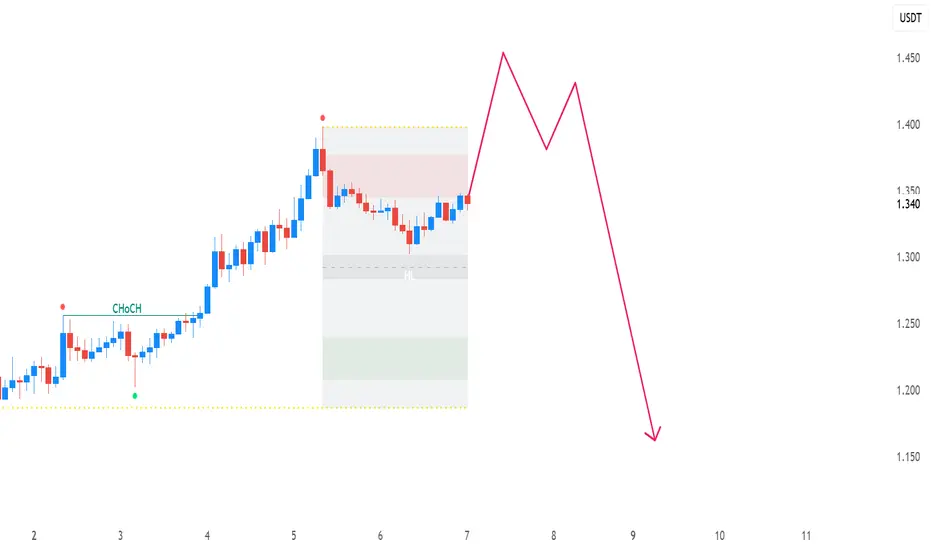
TON is showing early signs of exhaustion after a strong bullish run. Following the parabolic move toward 1.400, the market has entered a sideways consolidation, signaling a pause in buying pressure and a buildup for potential selling activity.
Key Sell-Side Observations
Trend Shift Potential: The Change of Character (CHoCH) from the earlier rally indicates that momentum could be vulnerable near peak zones. Price hovering around 1.341 suggests a buildup of latent selling pressure as participants position for a potential reversal.
Liquidity Trigger: Price projections toward 1.450 may attract breakout buyers, creating a liquidity sweep. This setup often precedes rapid sell-side reactions once bullish momentum fails to sustain.
Momentum Divergence: Indicators of slowing upward moves, such as elongated wicks or lower-volume pushes, hint at impending retracement or reversal on the sell side.
Probable Sell Phases
Liquidity Inducement: A push toward 1.450 draws in breakout buyers and creates concentrated liquidity.
Secondary Hesitation: A lower high forms near 1.420, marking weakening bullish pressure.
Downward Acceleration: Rapid sell-off unfolds, targeting internal liquidity gaps around 1.150 – 1.200, as the market flushes trapped long positions.
Market Behavior to Watch
Exhaustion Signs: Candlestick wicks, reduced momentum, or consolidation breakouts failing to extend can signal sell-side dominance.
Stop-Run Opportunities: Initial price spikes above peak levels often precede sharp downward moves. Monitoring these areas can provide early entry points for short positioning.
Liquidity Reactions: Watch how the market responds near projected highs; a failure to sustain bullish momentum may accelerate the sell-side cascade.
Summary
TON’s current structure presents a high-probability sell-side scenario: a potential fakeout at highs, followed by a secondary peak and a rapid downward sweep. Traders focusing on the sell side should watch for momentum exhaustion, liquidity sweeps, and secondary lower highs to confirm entry opportunities.
Key Sell-Side Observations
Trend Shift Potential: The Change of Character (CHoCH) from the earlier rally indicates that momentum could be vulnerable near peak zones. Price hovering around 1.341 suggests a buildup of latent selling pressure as participants position for a potential reversal.
Liquidity Trigger: Price projections toward 1.450 may attract breakout buyers, creating a liquidity sweep. This setup often precedes rapid sell-side reactions once bullish momentum fails to sustain.
Momentum Divergence: Indicators of slowing upward moves, such as elongated wicks or lower-volume pushes, hint at impending retracement or reversal on the sell side.
Probable Sell Phases
Liquidity Inducement: A push toward 1.450 draws in breakout buyers and creates concentrated liquidity.
Secondary Hesitation: A lower high forms near 1.420, marking weakening bullish pressure.
Downward Acceleration: Rapid sell-off unfolds, targeting internal liquidity gaps around 1.150 – 1.200, as the market flushes trapped long positions.
Market Behavior to Watch
Exhaustion Signs: Candlestick wicks, reduced momentum, or consolidation breakouts failing to extend can signal sell-side dominance.
Stop-Run Opportunities: Initial price spikes above peak levels often precede sharp downward moves. Monitoring these areas can provide early entry points for short positioning.
Liquidity Reactions: Watch how the market responds near projected highs; a failure to sustain bullish momentum may accelerate the sell-side cascade.
Summary
TON’s current structure presents a high-probability sell-side scenario: a potential fakeout at highs, followed by a secondary peak and a rapid downward sweep. Traders focusing on the sell side should watch for momentum exhaustion, liquidity sweeps, and secondary lower highs to confirm entry opportunities.
การซื้อขายยังคงดำเนินอยู่

การนำเสนอที่เกี่ยวข้อง
คำจำกัดสิทธิ์ความรับผิดชอบ
ข้อมูลและบทความไม่ได้มีวัตถุประสงค์เพื่อก่อให้เกิดกิจกรรมทางการเงิน, การลงทุน, การซื้อขาย, ข้อเสนอแนะ หรือคำแนะนำประเภทอื่น ๆ ที่ให้หรือรับรองโดย TradingView อ่านเพิ่มเติมใน ข้อกำหนดการใช้งาน
การนำเสนอที่เกี่ยวข้อง
คำจำกัดสิทธิ์ความรับผิดชอบ
ข้อมูลและบทความไม่ได้มีวัตถุประสงค์เพื่อก่อให้เกิดกิจกรรมทางการเงิน, การลงทุน, การซื้อขาย, ข้อเสนอแนะ หรือคำแนะนำประเภทอื่น ๆ ที่ให้หรือรับรองโดย TradingView อ่านเพิ่มเติมใน ข้อกำหนดการใช้งาน