

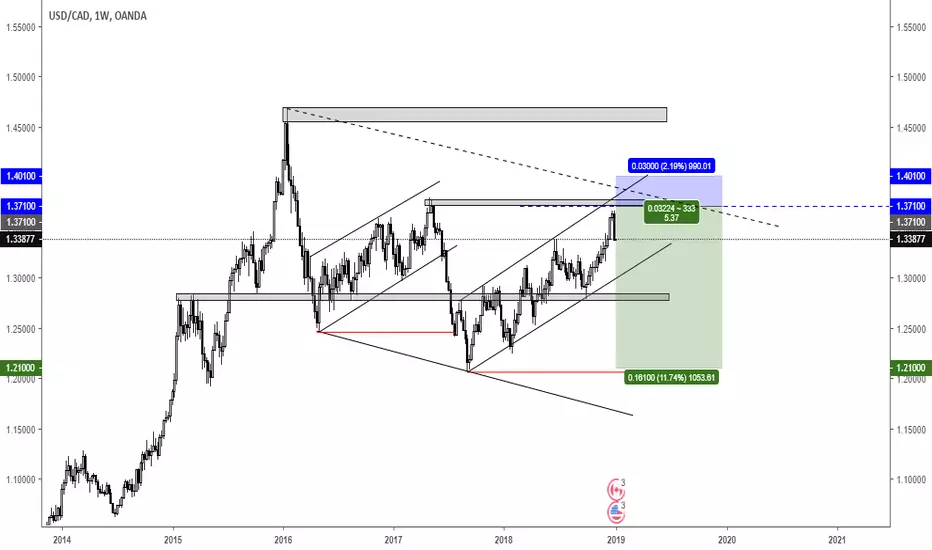
First NFP report of 2019 released last friday. Here is my analysis on USDCAD following the release...
January 2019
Average Hourly Earnings
Prev: 27.37
Actual: 27.48
Change: +0.4%
YTD change: +3.2%
---------------------------------
Income increases -> Spending increases (Demand increases) ->
Disposable income = average income - taxes
If manufacturing increases to meet demand -> Job opportunities increases
If demand increases but manufacturing doesn't -> Price increases
Price increases -> Inflation increases
NFP Jan 2019:
312k employment increase + 0.4% average hourly earnings increase + US Manufacturing PMI yearly low at 53.8 ->
-> Demand-pull inflation (Supply can't keep up with demand, which leads to prices and inflation increases) ->
-> An increase in inflation leads to a devaluing of the nations currency -> Weaker USD -> USDCAD decreases
January 2019
Average Hourly Earnings
Prev: 27.37
Actual: 27.48
Change: +0.4%
YTD change: +3.2%
---------------------------------
Income increases -> Spending increases (Demand increases) ->
Disposable income = average income - taxes
If manufacturing increases to meet demand -> Job opportunities increases
If demand increases but manufacturing doesn't -> Price increases
Price increases -> Inflation increases
NFP Jan 2019:
312k employment increase + 0.4% average hourly earnings increase + US Manufacturing PMI yearly low at 53.8 ->
-> Demand-pull inflation (Supply can't keep up with demand, which leads to prices and inflation increases) ->
-> An increase in inflation leads to a devaluing of the nations currency -> Weaker USD -> USDCAD decreases

คำจำกัดสิทธิ์ความรับผิดชอบ
ข้อมูลและบทความไม่ได้มีวัตถุประสงค์เพื่อก่อให้เกิดกิจกรรมทางการเงิน, การลงทุน, การซื้อขาย, ข้อเสนอแนะ หรือคำแนะนำประเภทอื่น ๆ ที่ให้หรือรับรองโดย TradingView อ่านเพิ่มเติมใน ข้อกำหนดการใช้งาน
คำจำกัดสิทธิ์ความรับผิดชอบ
ข้อมูลและบทความไม่ได้มีวัตถุประสงค์เพื่อก่อให้เกิดกิจกรรมทางการเงิน, การลงทุน, การซื้อขาย, ข้อเสนอแนะ หรือคำแนะนำประเภทอื่น ๆ ที่ให้หรือรับรองโดย TradingView อ่านเพิ่มเติมใน ข้อกำหนดการใช้งาน