
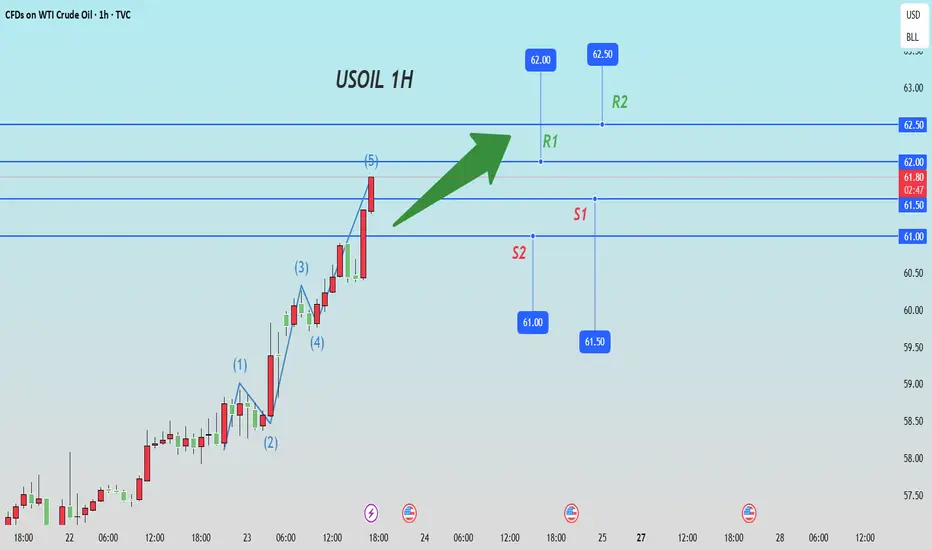
"Demand and Sentiment" With crude oil prices currently stabilizing at $61.50, instead of obsessing over "whether supply is excessive," it’s better to focus on three more direct signals supporting a long position. These signals lie in changes in demand and market sentiment, and they are actually more closely aligned with short-term price movements:
1. "Unexpected Recovery" on the Demand Side
Previously, there were widespread concerns that "oil consumption would not pick up," but recent data has sent a reversal signal: Last week, the U.S. refinery utilization rate rose from 85% to 88% (the higher a refinery's operating rate, the more oil it consumes). Moreover, China has just rolled out a "stable growth plan for the petrochemical industry," which requires guaranteed supply of refined oil products in the fourth quarter—this directly drives up demand for crude oil purchases. More crucially, U.S. crude oil inventories unexpectedly decreased by 2.8 million barrels (compared to the original expectation of a 500,000-barrel increase). This is equivalent to "more oil being consumed than produced," and such a demand recovery will directly prop up oil prices.
2. Market Sentiment Shifting from "Bearish" to "Neutral, Then Bullish"
Previously, when oil prices were below $60, 80% of traders were taking short positions (expecting prices to fall). But the situation has changed now: Over the past three days, the volume of funds flowing into long positions has increased by 30%, and even small and medium-sized traders have started following the trend to enter the market. A more obvious sign is that in the past, oil prices would be pushed down by a flood of sell orders once they rose to $59.8, but now there are plenty of buy orders to absorb pressure at $60.50. This shows that the market's view on oil prices has changed—it’s no longer the case that "traders sell as soon as prices rise."
3. Short-Term Funds "Piling In" to Support Prices
The world’s largest crude oil ETF (equivalent to a fund where investors pool money to invest in crude oil) has seen a net inflow of $1.2 billion over the past three days—the largest single-week inflow since the start of this year. Additionally, some short-term funds on Wall Street are also quietly increasing their crude oil holdings. These funds are not entering the market for long-term investments; they are simply betting on a short-term rise in oil prices. Their buying activity will directly push oil prices upward, and at the very least, prevent a sharp short-term drop.
Crude Oil Trading Strategy for Today
usoil @buy61.00-61.50
tp:62-62.5
sl:59.5
1. "Unexpected Recovery" on the Demand Side
Previously, there were widespread concerns that "oil consumption would not pick up," but recent data has sent a reversal signal: Last week, the U.S. refinery utilization rate rose from 85% to 88% (the higher a refinery's operating rate, the more oil it consumes). Moreover, China has just rolled out a "stable growth plan for the petrochemical industry," which requires guaranteed supply of refined oil products in the fourth quarter—this directly drives up demand for crude oil purchases. More crucially, U.S. crude oil inventories unexpectedly decreased by 2.8 million barrels (compared to the original expectation of a 500,000-barrel increase). This is equivalent to "more oil being consumed than produced," and such a demand recovery will directly prop up oil prices.
2. Market Sentiment Shifting from "Bearish" to "Neutral, Then Bullish"
Previously, when oil prices were below $60, 80% of traders were taking short positions (expecting prices to fall). But the situation has changed now: Over the past three days, the volume of funds flowing into long positions has increased by 30%, and even small and medium-sized traders have started following the trend to enter the market. A more obvious sign is that in the past, oil prices would be pushed down by a flood of sell orders once they rose to $59.8, but now there are plenty of buy orders to absorb pressure at $60.50. This shows that the market's view on oil prices has changed—it’s no longer the case that "traders sell as soon as prices rise."
3. Short-Term Funds "Piling In" to Support Prices
The world’s largest crude oil ETF (equivalent to a fund where investors pool money to invest in crude oil) has seen a net inflow of $1.2 billion over the past three days—the largest single-week inflow since the start of this year. Additionally, some short-term funds on Wall Street are also quietly increasing their crude oil holdings. These funds are not entering the market for long-term investments; they are simply betting on a short-term rise in oil prices. Their buying activity will directly push oil prices upward, and at the very least, prevent a sharp short-term drop.
Crude Oil Trading Strategy for Today
usoil @buy61.00-61.50
tp:62-62.5
sl:59.5

คำจำกัดสิทธิ์ความรับผิดชอบ
ข้อมูลและบทความไม่ได้มีวัตถุประสงค์เพื่อก่อให้เกิดกิจกรรมทางการเงิน, การลงทุน, การซื้อขาย, ข้อเสนอแนะ หรือคำแนะนำประเภทอื่น ๆ ที่ให้หรือรับรองโดย TradingView อ่านเพิ่มเติมใน ข้อกำหนดการใช้งาน
คำจำกัดสิทธิ์ความรับผิดชอบ
ข้อมูลและบทความไม่ได้มีวัตถุประสงค์เพื่อก่อให้เกิดกิจกรรมทางการเงิน, การลงทุน, การซื้อขาย, ข้อเสนอแนะ หรือคำแนะนำประเภทอื่น ๆ ที่ให้หรือรับรองโดย TradingView อ่านเพิ่มเติมใน ข้อกำหนดการใช้งาน