
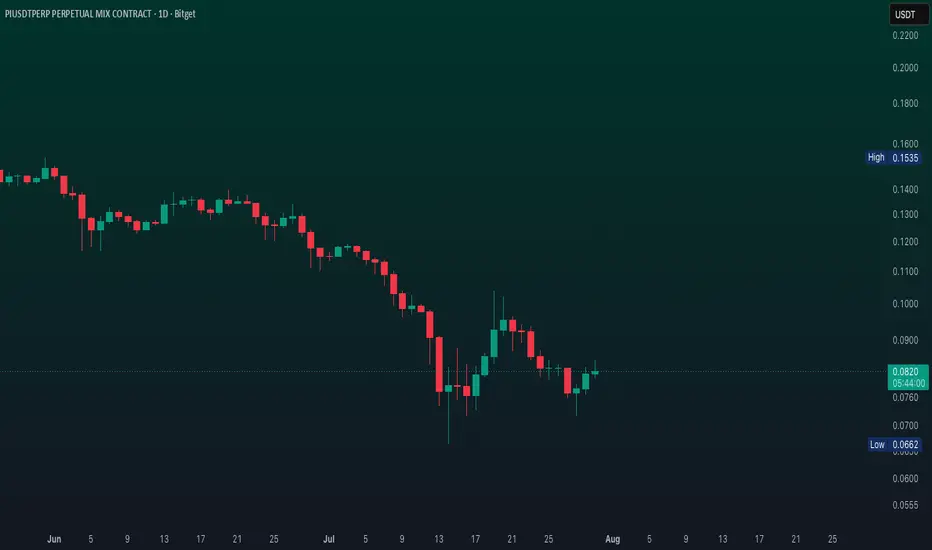
The  PI Core Team has set an August 11 deadline for Mainnet node operators to upgrade to Protocol 26, the ninth in a planned series. This mandatory update is billed as a major step toward greater decentralization, improved network performance, and expanded developer support before the final Protocol 27. This is a neutral-to-bullish catalyst for PI because it demonstrates continued technical progress essential for network maturity. However, its price impact may be limited without a concurrent surge in user demand or utility. The immediate 6-7% price bounce on July 30 shows the market is responsive to concrete development milestones. Pi Network disclosed it paid roughly 1.1 million validators to complete 526 million identity-verification tasks, confirming about 18 million identities. The total payout was ~26.6 million PI tokens, worth about $2.05 million at current prices, resulting in micro-payments of roughly $0.0039 per task. This is a mixed development for PI. It bullishly highlights the network's massive, operational human infrastructure for privacy-focused validation—a unique asset being marketed to AI companies. Bearishly, the extremely low per-task economics raise questions about the sustainable commercial value of this workforce and its ability to generate meaningful demand for the PI token. The outlook is further clouded by a scheduled unlock of 128 million PI tokens in August, which could add significant sell-side pressure if not met with robust demand. Pi Network is currently defined by a clash between tangible technical progress and persistent economic headwinds. While the Protocol 26 upgrade validates development momentum, the token's value is constrained by micro-valued validation work and looming supply unlocks. Will the network's massive human infrastructure evolve from a proof-of-concept into a driver of genuine token utility?
PI Core Team has set an August 11 deadline for Mainnet node operators to upgrade to Protocol 26, the ninth in a planned series. This mandatory update is billed as a major step toward greater decentralization, improved network performance, and expanded developer support before the final Protocol 27. This is a neutral-to-bullish catalyst for PI because it demonstrates continued technical progress essential for network maturity. However, its price impact may be limited without a concurrent surge in user demand or utility. The immediate 6-7% price bounce on July 30 shows the market is responsive to concrete development milestones. Pi Network disclosed it paid roughly 1.1 million validators to complete 526 million identity-verification tasks, confirming about 18 million identities. The total payout was ~26.6 million PI tokens, worth about $2.05 million at current prices, resulting in micro-payments of roughly $0.0039 per task. This is a mixed development for PI. It bullishly highlights the network's massive, operational human infrastructure for privacy-focused validation—a unique asset being marketed to AI companies. Bearishly, the extremely low per-task economics raise questions about the sustainable commercial value of this workforce and its ability to generate meaningful demand for the PI token. The outlook is further clouded by a scheduled unlock of 128 million PI tokens in August, which could add significant sell-side pressure if not met with robust demand. Pi Network is currently defined by a clash between tangible technical progress and persistent economic headwinds. While the Protocol 26 upgrade validates development momentum, the token's value is constrained by micro-valued validation work and looming supply unlocks. Will the network's massive human infrastructure evolve from a proof-of-concept into a driver of genuine token utility?İşlem aktif
PI Network's Core Team partnered with the Fabric Foundation's RoboPay, an on-chain system that enables AI agents to autonomously hire and pay robots. This integration allows tens of millions of Pi holders to use PI tokens to pay for real-world robotic services, such as grocery delivery, property security, and industrial inspections. This is bullish for PI because it provides a tangible, novel utility that could drive long-term demand if the services gain adoption. However, the impact on price is not immediate, as the robot services are not yet live for the public. The Pi Core Team is deploying Protocol 26 across the Pi Mainnet. This is described as a major milestone leading to the final planned upgrade, Protocol 27. Node operators must update their software by August 11 or risk being disconnected from the network. This is a neutral-to-bullish technical development. Successful upgrades demonstrate ongoing project development and network health, which can build investor confidence. The deadline creates a near-term focal point for the community. Pi Network is scheduled to unlock approximately 775.8 million PI tokens by the end of 2026, with a significant batch of 127.96 million tokens set for August alone. This will steadily increase the circulating supply. This is a strong bearish counterweight to positive news. The consistent influx of new tokens creates persistent sell-side pressure, which has been a key factor in PI's 90-day price decline of over 50%. Sustained price appreciation will require demand to outpace this scheduled supply inflation. Pi Network is actively building utility through partnerships like RoboPay while advancing its core protocol, but these efforts are set against a formidable backdrop of large, scheduled token unlocks. Will real-world adoption generate enough demand to absorb the increasing supply?
Feragatname
Bilgiler ve yayınlar, TradingView tarafından sağlanan veya onaylanan finansal, yatırım, alım satım veya diğer türden tavsiye veya öneriler anlamına gelmez ve teşkil etmez. Kullanım Koşulları bölümünde daha fazlasını okuyun.
Feragatname
Bilgiler ve yayınlar, TradingView tarafından sağlanan veya onaylanan finansal, yatırım, alım satım veya diğer türden tavsiye veya öneriler anlamına gelmez ve teşkil etmez. Kullanım Koşulları bölümünde daha fazlasını okuyun.