
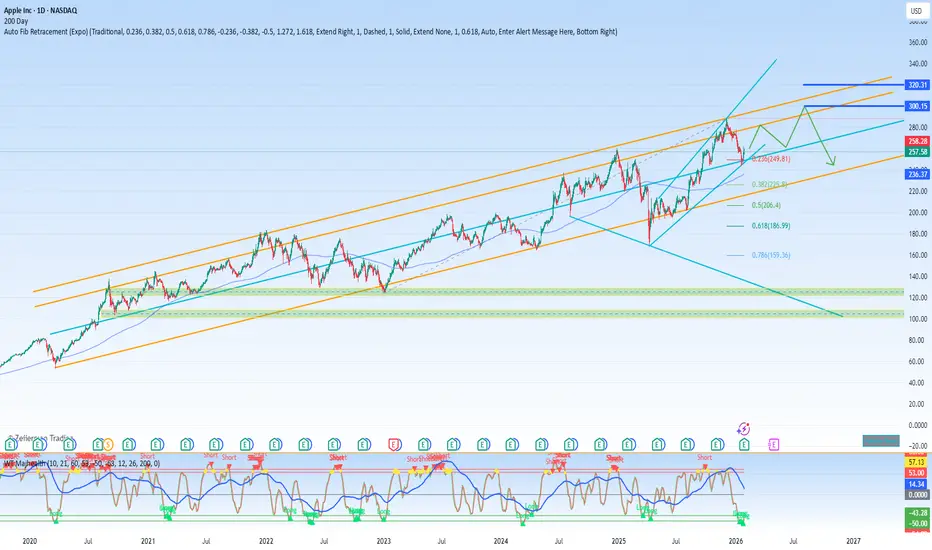
Based on Apple's Q1 2026 earnings report, the company has delivered a performance that can be characterized as a powerful "iPhone Renaissance," driven by explosive growth in critical international markets, particularly China. This success comes amid a narrative of perceived lag in artificial intelligence (AI), suggesting a strategic divergence where hardware execution and ecosystem strength are currently outpacing the market's fixation on AI features.
Analysis of Key Performance Drivers:
1. The iPhone's Record-Breaking Resurgence:
The iPhone is undeniably the core engine of this quarter's success. With revenue soaring to $85 billion (a 23% year-over-year increase), it shattered its own records. This was not a broad-based upgrade cycle but a targeted success story for the iPhone 17 and 17 Pro, indicating that Apple's product innovation—likely in areas like camera technology, battery life, or design—resonated profoundly with consumers. The narrative of "unprecedented demand" and "all-time records across every geographic segment" underscores a product-led recovery.
2. The Remarkable China Reversal:
The most significant narrative shift is in Greater China, where sales surged 38% to $25.5 billion. CEO Tim Cook's declaration that this was the "best iPhone quarter in history" in the region decisively counters previous concerns about Apple's declining relevance in the face of intense local competition. Key indicators of this success include:
Record Installed Base: Reaching an all-time high in both Greater China and mainland China, suggesting successful market penetration beyond just new sales.
Strong Retail Traffic: "Strong double-digit" growth in store traffic year-over-year, pointing to robust consumer interest and engagement.
This performance demonstrates Apple's enduring brand power and its ability to reignite growth in its most scrutinized market through compelling products.
3. Strategic Diversification in Growth Markets (India):
Apple is systematically building its second major growth pillar in India. The company set all-time revenue records across multiple product categories (iPhone, Mac, iPad) and services in the country. Cook's specific reference to India as the world's second-largest smartphone market highlights a deliberate and successful strategy to replicate its China playbook—cultivating a premium brand image and expanding its ecosystem in a massive, emerging market.
4. Broad-Based Geographical Strength:
The growth was not isolated. Significant increases in the Americas (up to $58.5B) and Europe (up to $38.1B) confirm a global uplift. This universal performance reinforces the strength of the iPhone 17 cycle and suggests macroeconomic or consumer spending trends are favorable to Apple's premium positioning.
Strategic Context and Market Narrative:
The AI Paradox vs. Hardware Execution:
A central tension in Apple's story is the contrast between Wall Street's anxiety over its perceived slow AI rollout and the overwhelming consumer demand for its core hardware. As analyst Thomas Monteiro noted, the market may be "overly fixated on splashy AI" while consumers are prioritizing "execution, pricing discipline, and ecosystem reliability." Apple's partnership with Google's Gemini for Siri and the promise of a "more personalized Siri" in 2026 show a pragmatic, partnership-driven approach to AI, rather than a race to launch first-party foundational models. This quarter proves that, for now, superior hardware and ecosystem integration remain Apple's primary competitive moat.
Financial Fortitude and Future Roadmap:
The record $143.8 billion in total revenue and earnings beat provide Apple with immense financial fuel. This allows it to:
Weather AI Investment: Fund its substantial, long-term R&D investments in AI, silicon, and new product categories (like the rumored 2026 folding phone) without immediate pressure to show returns.
Strategic Flexibility: Maintain pricing discipline and avoid desperate moves to chase AI headlines.
Conclusion and Forward Outlook:
Apple's Q1 2026 results represent a masterclass in leveraging its core strengths. The company has successfully executed a product-led revival in its most important hardware line, simultaneously silencing doubts in China and accelerating its strategy in India. While the AI question remains a critical long-term challenge, this quarter demonstrates that Apple's fundamentals—iconic product design, a sticky global ecosystem, and premium brand loyalty—can drive monumental financial results independently.
The road ahead will involve balancing this hardware momentum with the imperative to meaningfully integrate AI across its devices and services. The anticipated folding phone launch and the evolution of Siri will be key tests. However, for the immediate future, Apple has reaffirmed that its product cycle and international market execution are powerful forces capable of delivering historic growth.
Analysis of Key Performance Drivers:
1. The iPhone's Record-Breaking Resurgence:
The iPhone is undeniably the core engine of this quarter's success. With revenue soaring to $85 billion (a 23% year-over-year increase), it shattered its own records. This was not a broad-based upgrade cycle but a targeted success story for the iPhone 17 and 17 Pro, indicating that Apple's product innovation—likely in areas like camera technology, battery life, or design—resonated profoundly with consumers. The narrative of "unprecedented demand" and "all-time records across every geographic segment" underscores a product-led recovery.
2. The Remarkable China Reversal:
The most significant narrative shift is in Greater China, where sales surged 38% to $25.5 billion. CEO Tim Cook's declaration that this was the "best iPhone quarter in history" in the region decisively counters previous concerns about Apple's declining relevance in the face of intense local competition. Key indicators of this success include:
Record Installed Base: Reaching an all-time high in both Greater China and mainland China, suggesting successful market penetration beyond just new sales.
Strong Retail Traffic: "Strong double-digit" growth in store traffic year-over-year, pointing to robust consumer interest and engagement.
This performance demonstrates Apple's enduring brand power and its ability to reignite growth in its most scrutinized market through compelling products.
3. Strategic Diversification in Growth Markets (India):
Apple is systematically building its second major growth pillar in India. The company set all-time revenue records across multiple product categories (iPhone, Mac, iPad) and services in the country. Cook's specific reference to India as the world's second-largest smartphone market highlights a deliberate and successful strategy to replicate its China playbook—cultivating a premium brand image and expanding its ecosystem in a massive, emerging market.
4. Broad-Based Geographical Strength:
The growth was not isolated. Significant increases in the Americas (up to $58.5B) and Europe (up to $38.1B) confirm a global uplift. This universal performance reinforces the strength of the iPhone 17 cycle and suggests macroeconomic or consumer spending trends are favorable to Apple's premium positioning.
Strategic Context and Market Narrative:
The AI Paradox vs. Hardware Execution:
A central tension in Apple's story is the contrast between Wall Street's anxiety over its perceived slow AI rollout and the overwhelming consumer demand for its core hardware. As analyst Thomas Monteiro noted, the market may be "overly fixated on splashy AI" while consumers are prioritizing "execution, pricing discipline, and ecosystem reliability." Apple's partnership with Google's Gemini for Siri and the promise of a "more personalized Siri" in 2026 show a pragmatic, partnership-driven approach to AI, rather than a race to launch first-party foundational models. This quarter proves that, for now, superior hardware and ecosystem integration remain Apple's primary competitive moat.
Financial Fortitude and Future Roadmap:
The record $143.8 billion in total revenue and earnings beat provide Apple with immense financial fuel. This allows it to:
Weather AI Investment: Fund its substantial, long-term R&D investments in AI, silicon, and new product categories (like the rumored 2026 folding phone) without immediate pressure to show returns.
Strategic Flexibility: Maintain pricing discipline and avoid desperate moves to chase AI headlines.
Conclusion and Forward Outlook:
Apple's Q1 2026 results represent a masterclass in leveraging its core strengths. The company has successfully executed a product-led revival in its most important hardware line, simultaneously silencing doubts in China and accelerating its strategy in India. While the AI question remains a critical long-term challenge, this quarter demonstrates that Apple's fundamentals—iconic product design, a sticky global ecosystem, and premium brand loyalty—can drive monumental financial results independently.
The road ahead will involve balancing this hardware momentum with the imperative to meaningfully integrate AI across its devices and services. The anticipated folding phone launch and the evolution of Siri will be key tests. However, for the immediate future, Apple has reaffirmed that its product cycle and international market execution are powerful forces capable of delivering historic growth.

免責聲明
這些資訊和出版物並非旨在提供,也不構成TradingView提供或認可的任何形式的財務、投資、交易或其他類型的建議或推薦。請閱讀使用條款以了解更多資訊。