
Chapter 6 — Why Many ICT Traders Fail in Execution (Even With “Correct” Concepts)
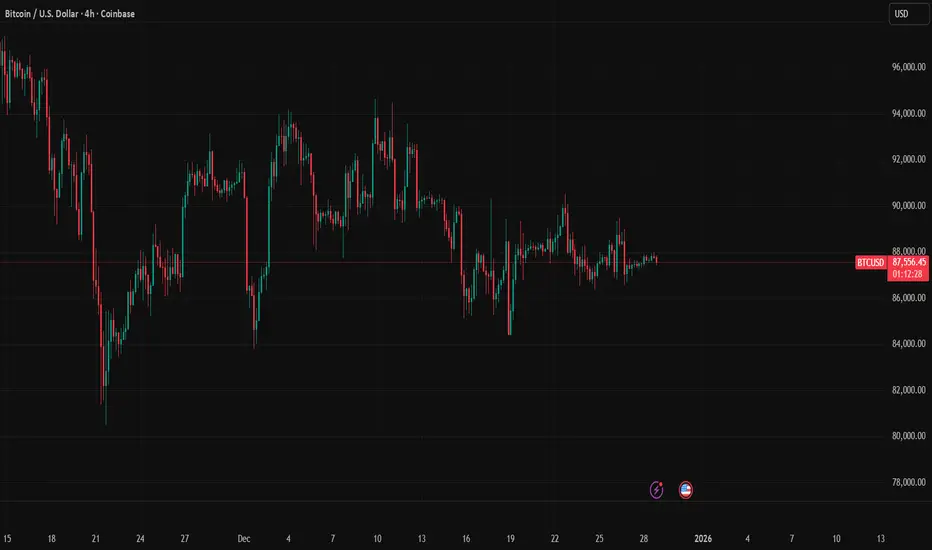
Chart reference: BTCUSD 4H — the perfect example of concepts being correct, but execution being inconsistent.
Most ICT traders don’t fail because they don’t know OB / FVG / Liquidity / MSS.
They fail because they treat those labels as entries, instead of treating them as execution conditions.
This BTCUSD 4H environment is exactly where that mistake gets exposed: multiple swings, repeated wick traps, range behavior, and mid-range noise. If you don’t have acceptance + invalidation rules, you get chopped even when your bias is “right.”
1) Order Block Misuse: “I Found an OB, So I Entered”
The common mistake
Traders mark an OB and treat it as a guaranteed reversal zone.
Why it fails (especially on this chart)
In a choppy 4H environment, price will:
tap an OB,
wick through it,
re-enter it,and continue to the next liquidity pool.
So the OB becomes a reaction area, not a permission slip.
The correct execution rule
An OB is valid only after at least one of these happens:
Displacement away from the zone (real intent, not a weak drift)
Acceptance confirmation (close back above/below the level that matters)
Liquidity condition is satisfied (a sweep / raid occurs first)
Execution takeaway:
OB is where you pay attention, not where you blindly buy/sell.
2) Liquidity Misinterpretation: Confusing “Magnet” With “Reversal”
The common mistake
“Equal highs = sell zone” or “equal lows = buy zone.”
What liquidity really is
Liquidity is a target (a magnet), not automatically a reversal point.
On this BTCUSD 4H, you can see repeated behavior:
price runs a prior swing (or equal highs/lows),
grabs stops,
then either continues or mean-reverts depending on acceptance.
The correct execution rule
After a liquidity sweep, your job is not to “predict reversal.”
Your job is to ask:
Did price ACCEPT beyond the sweep, or REJECT and return?
Acceptance = closes holding outside the old range
Rejection = wick sweep + close back inside range
Execution takeaway:
Liquidity tells you where price wants to go. Acceptance tells you whether it stays there.
3) Timeframe Conflict: HTF Bias Dies on LTF Noise
The common mistake
Traders mix timeframes emotionally:
HTF says “bullish”
LTF prints a bearish candle
they flip, then re-flip, then revenge trade.
This BTCUSD 4H sequence is full of “both sides look valid” moments. That’s where timeframe discipline matters.
The correct execution rule (simple and brutal)
HTF = Map
MTF = Permission
LTF = Execution timing
If HTF is ranging, then LTF trend entries become low-quality unless you are at range extremes with acceptance/rejection proof.
Execution takeaway:
If HTF is range, your default state is WAIT — not “find more setups.”
4) No Acceptance Rule: Trading Wicks Instead of Closes
The common mistake
Entering because of:
a wick into FVG,
a touch of OB,
a “looks like rejection” candle mid-formation.
Why it fails on this BTCUSD 4H
This chart shows classic “wick drama”:
sharp wicks above resistance,
sharp wicks below support,
then price returns to the mean.
If you trade wicks without acceptance, you’re trading stop-hunts, not structure.
The correct execution rule
Define acceptance in writing. Examples:
“4H candle close above range high” (bullish acceptance)
“4H candle close back inside range after sweep” (rejection confirmation)
“Break + retest hold” (continuation permission)
Execution takeaway:
Wicks reveal intent. Closes grant permission.
5) No Invalidation Rule: “Where Exactly Am I Wrong?”
The common mistake
Stop-loss is placed:
“somewhere below the OB,”
or “below the wick,”
without structural logic.
The correct approach
Invalidation must be:
beyond the level that breaks your trade idea, not beyond your comfort.
In this BTCUSD 4H chop, structural invalidation is the only thing that prevents death by a thousand cuts.
A professional invalidation question:
If price reaches X, is my model still valid or not?
If you can’t answer that in one sentence, you’re not ready to execute.
Execution takeaway:
No invalidation = no trade. Because you can’t manage what you can’t define.
6) FVG / Imbalance Over-Fetish: “It Must Fill, So I Enter”
The common mistake
Assuming every imbalance must be filled in your direction, right now.
Why it fails
In ranges, imbalances fill both ways as price mean-reverts.
So “FVG fill” becomes a trap if you don’t anchor it to:
HTF context,
liquidity objective,
acceptance rule.
Execution takeaway:
FVG is not a signal. It’s a context tool. Use it only with permission.
7) The Real Killer: Trading Mid-Range (Where R:R Looks Good But Probability Is Poor)
On this chart, the market repeatedly oscillates around the mean area (roughly the mid-zone of the recent 4H range).
That is where:
entries feel “cheap,”
stops feel “tight,”
and probability is worst.
High-quality execution zones are usually:
range low after sweep + rejection confirmation
range high after sweep + rejection confirmation
breakout + acceptance + retest hold
Everything else is often noise.
Execution takeaway:
Good traders wait for location. Great traders wait for location + acceptance.
The Chapter 6 Execution Model (Practical Rules)
Use this as the “no-excuses” execution gate:
Context — Trend or Range on 4H?
Location — Are we at an extreme or mid-range?
Liquidity — Was a stop pool raided or not?
Acceptance — Did we close with permission?
Invalidation — Where is the idea proven wrong?
Execution — Enter only after 1–5 are aligned
Management — Reduce risk after confirmation, not before
If steps 3–5 are missing: WAIT.
How MARAL Helps in This Exact Situation (BTCUSD 4H “Chop + Wick Traps + Range”)
This chart is the kind of environment where ICT concepts still “exist,” but execution fails because permission is unclear. MARAL’s value here is simple:
It does not try to predict direction.
It standardizes when to trade, when to wait, and how to manage after entry.
1) MARAL prevents mid-range entries
Problem on this chart: price spends long time around the mean (mid of the 4H range).
ICT traders keep taking OB/FVG touches inside the middle → chopped.
How MARAL helps
MARAL treats mid-range as low-quality location unless acceptance confirms a break.
Default state becomes WAIT until price reaches range edges or prints a clear acceptance break.
Result: fewer trades, higher signal-to-noise.
2) MARAL separates liquidity sweep from reversal permission
Problem: traders see a sweep and immediately fade it.
But sweep can lead to continuation if acceptance holds beyond it.
How MARAL helps
MARAL forces a binary question: Did we get acceptance or rejection?
Rejection: sweep + close back inside → reversal permission improves
Acceptance: close holds outside → do not fade; wait for retest/continuation
Result: you stop fighting continuation moves.
3) MARAL standardizes acceptance rules (close-based permission)
Problem: wicks look like “confirmation,” but closes decide. This chart has many wick traps.
How MARAL helps
MARAL requires close-based permission to activate execution:
“4H close reclaiming a key level” for longs
“4H close losing a key level” for shorts
If it’s only wicks, MARAL keeps you in WAIT.
Result: no more “entered early, got wicked.”
4) MARAL forces a clean invalidation point (where exactly am I wrong?)
Problem: ICT traders place stops emotionally (“below OB”) without defining model failure.
How MARAL helps
Every setup must have a single invalidation line:
If price breaches it and closes/holds → idea invalid
If invalidation isn’t clear → MARAL blocks the trade.
Result: stops become structural, not hopeful.
5) MARAL reduces timeframe conflict
Problem: HTF bias vs LTF noise → flip-flop entries.
How MARAL helps
MARAL uses the chain:
HTF = Map (range or trend?)
MTF = Permission (acceptance event?)
LTF = Execution timing (entry precision only after permission)
If HTF is range (like here), MARAL will naturally push you toward:
range extremes + sweep + rejection
or
breakout + acceptance + retest
Result: fewer impulsive LTF trades against the HTF environment.
6) MARAL adds post-entry management clarity (the missing part for most ICT traders)
Problem: Even after a good entry, traders don’t know:
when to reduce risk,
when to hold,
when to exit early.
How MARAL helps (in this market type)
After permission + entry, MARAL structure typically becomes:
Protect phase: once acceptance confirms, reduce exposure / move risk to safer state
Hold phase: if structure holds and price respects the reclaimed level
Exit phase: if acceptance fails, momentum weakens, or price re-enters the range
Result: you stop turning winners into losers in chop.
MARAL “Decision Ladder” for This Chart (Simple)
Use this exact ladder on BTCUSD 4H:
Is 4H trending or ranging? (here: range / mixed)
Are we at range extreme or mid? (mid = WAIT)
Was liquidity swept at an extreme?
Did we get rejection OR acceptance? (close-based)
Define invalidation (one level)
Only then execute
Manage by acceptance health (hold / protect / exit)
One marketing-ready line (for your chapter)
“ICT gives concepts. MARAL gives the execution law.”
In this BTCUSD 4H environment, MARAL’s biggest edge is not entries — it’s trade permission + invalidation + post-entry control, which is exactly where most traders fail.
Find below “MARAL vs Typical ICT Execution” comparison section
MARAL vs Typical ICT Execution (Practical, Not Theoretical)
1) Role of Order Blocks
Typical ICT Execution
Order Block treated as a direct entry trigger
Entry often taken on first touch
Little differentiation between reaction and permission
MARAL Execution
Order Block treated as a location filter
Entry allowed only after displacement + acceptance
OB defines where to observe, not where to execute
2) Liquidity Interpretation
Typical ICT Execution
Liquidity sweep assumed to mean reversal
Equal highs/lows faded without confirmation
MARAL Execution
Liquidity defined as a target, not a bias
Reversal only after rejection (sweep + close back inside)
Acceptance beyond liquidity cancels fade bias
3) Acceptance Logic
Typical ICT Execution
Wick reactions often considered confirmation
Entries taken during candle formation
MARAL Execution
Acceptance defined strictly by candle close behavior
Wicks signal intent; closes grant permission
No close = no execution
4) Timeframe Alignment
Typical ICT Execution
HTF bias mixed emotionally with LTF signals
Frequent bias flipping during consolidation
MARAL Execution
Fixed hierarchy:
HTF = Context / Map
MTF = Permission
LTF = Execution timing only
Range HTF automatically restricts mid-range trading
5) Invalidation Discipline
Typical ICT Execution
Stop-loss placed “below OB” or “below wick”
Invalidation often unclear or emotional
MARAL Execution
One predefined invalidation level per idea
Invalidation represents model failure, not discomfort
If invalidation is undefined → trade is blocked
6) FVG / Imbalance Usage
Typical ICT Execution
FVG treated as a signal (“it must fill”)
Direction assumed without context
MARAL Execution
FVG used as contextual pathway, not permission
Requires liquidity + acceptance alignment
Ignored in mid-range or low-quality volatility
7) Trade Location Filtering
Typical ICT Execution
Trades taken throughout the range
R:R optimized, probability often ignored
MARAL Execution
Mid-range classified as low-quality location
Priority given to range extremes or acceptance breaks
WAIT is a valid and enforced state
8) Post-Entry Management
Typical ICT Execution
Focus ends after entry
Exit decisions become emotional
MARAL Execution
Trade state tracked after entry:
Protect → Hold → Exit
Management based on acceptance health and structure
Early exit allowed when acceptance degrades
9) Trader Behavior Outcome
Typical ICT Execution
High activity, inconsistent results
Overtrading in chop environments
MARAL Execution
Lower trade frequency, higher clarity
Consistency driven by execution gating, not prediction
Closing message for the chapter -6
ICT concepts are powerful — but concepts alone don’t produce consistency.
Consistency comes from standardized execution:
OB is not an entry. It’s a zone that requires proof.
Liquidity is not a reversal. It’s a target that needs acceptance logic.
Timeframes don’t mix emotionally. They align structurally.
Wicks don’t give permission. Closes do.
No invalidation = no professionalism.
Chapter 7 — How MARAL Supports Traders in Live Markets
Execution Discipline, Risk Control, and Greed Management (Educational Framework) coming soon.
Note : This chapter is written purely for education — to explain why execution fails in live markets even when traders correctly understand ICT concepts such as Order Blocks, Liquidity, Fair Value Gaps, and Market Structure. The goal is not to criticize ICT, but to highlight execution gaps that commonly appear under real-time market pressure.
#ICT #SmartMoney #TradingEducation #TradingPsychology #MarketStructure #OrderBlocks #Liquidity #FairValueGap #RiskManagement #TradingDiscipline #PriceAction #BTCUSD

MARAL Execution Workflow, Long & Short Permission , Dynamic risk mapper & Deep Candle Intelligence
Context → Liquidity Event → Displacement → Structure Shift → POI Confirmation → Risk Clearance (Discretionary | Educational)
Context → Liquidity Event → Displacement → Structure Shift → POI Confirmation → Risk Clearance (Discretionary | Educational)
免責聲明
這些資訊和出版物並非旨在提供,也不構成TradingView提供或認可的任何形式的財務、投資、交易或其他類型的建議或推薦。請閱讀使用條款以了解更多資訊。