
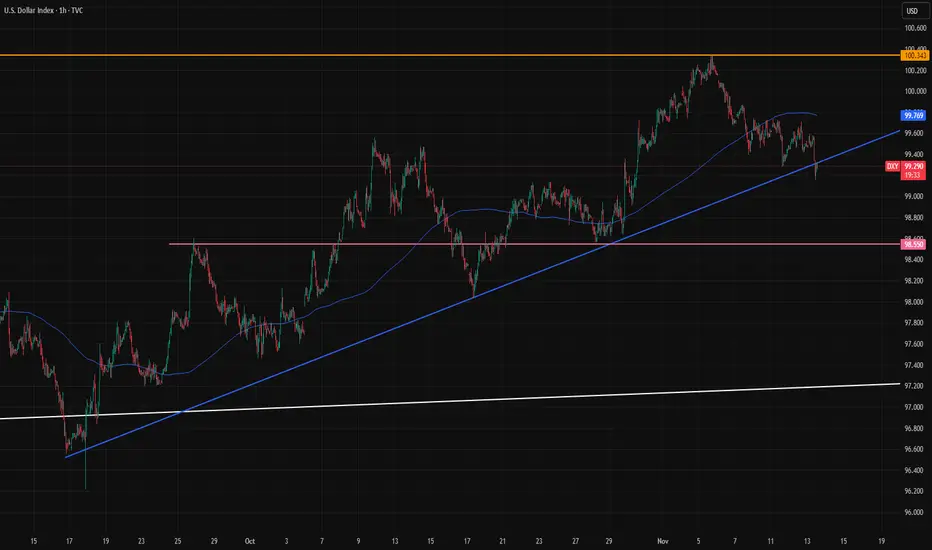
US shutdown ended after 43 days and set a new record. During the shutdown, a lot of economic data could not be released, and the lack of government spending caused a limited liquidity shortage. Now that the shutdown has ended, what is next for the US dollar?
US economy is expected to be hit by the shutdown in the fourth quarter. The impact is estimated to be around 1.5 percent on an already weakening economy. Over the last 25 years, annualized quarterly GDP growth has averaged 2.3 percent. Since 2021, US GDP rose above this average on a yearly basis. GDP was 2.8 percent in 2024, and this year it is expected to fall to 1.9 percent, below the long-term average, and it could drop further because of the shutdown. Growth in 2026 is also expected to be weak, with a forecast of only 1.8 percent.
While GDP is weakening, inflation forecasts still point to a near 3 percent pace, which is somewhat high in our view. This will keep the FED busy. Inflation implies a weaker currency unless supported by high rates. The FED has a dual mandate and cannot overlook the weakening GDP and softening labor market, so despite elevated inflation risks, rate cuts will continue. This will put ongoing pressure on the dollar, at least first half of 2026.
Dollar performance cannot be assessed without considering the euro, since 57.6 percent of the dollar index is tied to it. The eurozone is also expected to stay below its 25-year average growth rate of 1.32 percent. A 1.10 percent GDP rate with inflation below 2 percent is acceptable for the ECB. While the FED will be cutting rates, the ECB will likely hold, as Lagarde said in the latest press conference: “We are in a magnificent place.”
For the short term, the dollar is about to break its trend channel to the downside. Economic data from the US is expected to come in very weak. With expectations of weak data and easing liquidity problems, short-term downward pressure could push the index to 98.55 first. Below that initial support, the selloff could deepen. However, the long-term trend from 2011 is still holding(white trend).
US economy is expected to be hit by the shutdown in the fourth quarter. The impact is estimated to be around 1.5 percent on an already weakening economy. Over the last 25 years, annualized quarterly GDP growth has averaged 2.3 percent. Since 2021, US GDP rose above this average on a yearly basis. GDP was 2.8 percent in 2024, and this year it is expected to fall to 1.9 percent, below the long-term average, and it could drop further because of the shutdown. Growth in 2026 is also expected to be weak, with a forecast of only 1.8 percent.
While GDP is weakening, inflation forecasts still point to a near 3 percent pace, which is somewhat high in our view. This will keep the FED busy. Inflation implies a weaker currency unless supported by high rates. The FED has a dual mandate and cannot overlook the weakening GDP and softening labor market, so despite elevated inflation risks, rate cuts will continue. This will put ongoing pressure on the dollar, at least first half of 2026.
Dollar performance cannot be assessed without considering the euro, since 57.6 percent of the dollar index is tied to it. The eurozone is also expected to stay below its 25-year average growth rate of 1.32 percent. A 1.10 percent GDP rate with inflation below 2 percent is acceptable for the ECB. While the FED will be cutting rates, the ECB will likely hold, as Lagarde said in the latest press conference: “We are in a magnificent place.”
For the short term, the dollar is about to break its trend channel to the downside. Economic data from the US is expected to come in very weak. With expectations of weak data and easing liquidity problems, short-term downward pressure could push the index to 98.55 first. Below that initial support, the selloff could deepen. However, the long-term trend from 2011 is still holding(white trend).

免責聲明
這些資訊和出版物並非旨在提供,也不構成TradingView提供或認可的任何形式的財務、投資、交易或其他類型的建議或推薦。請閱讀使用條款以了解更多資訊。