
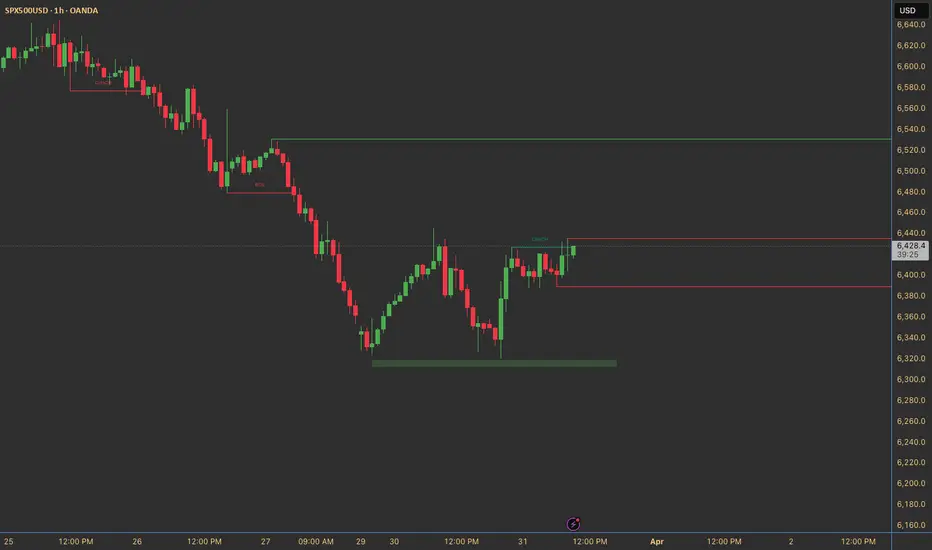
Going into NY open, price is sitting inside the premarket high/low range on the 1H timeframe.
Higher timeframe structure is still bearish — lower highs, continuation legs, and price trading below key EMAs. That gives us a directional lean, but not a reason to force a trade early.
Right now this is a compression phase. Liquidity is building inside the range.
The plan is simple: let price show its hand at the open, then react.
Scenario 1 (more likely):
Given the current structure, a break below the premarket low has higher probability. If we get a clean break and acceptance below, I’ll be looking for continuation into prior lows and liquidity below. Ideally, this comes with a small pullback or lower timeframe confirmation before entry.
Scenario 2:
If price breaks above the premarket high, I’m not chasing it immediately. Most of the time these become traps. I’ll be watching for weak continuation or a shift back below the range to look for shorts.
Scenario 3 (less likely but valid):
If price breaks above and actually holds — building higher lows above the range — then structure starts to shift. That’s when longs become valid targeting the next areas of liquidity above.
Key idea:
No trade inside the range. That’s where most get chopped.
We’re not predicting — we’re reacting.
Let the open create direction, then align with it.
Higher timeframe structure is still bearish — lower highs, continuation legs, and price trading below key EMAs. That gives us a directional lean, but not a reason to force a trade early.
Right now this is a compression phase. Liquidity is building inside the range.
The plan is simple: let price show its hand at the open, then react.
Scenario 1 (more likely):
Given the current structure, a break below the premarket low has higher probability. If we get a clean break and acceptance below, I’ll be looking for continuation into prior lows and liquidity below. Ideally, this comes with a small pullback or lower timeframe confirmation before entry.
Scenario 2:
If price breaks above the premarket high, I’m not chasing it immediately. Most of the time these become traps. I’ll be watching for weak continuation or a shift back below the range to look for shorts.
Scenario 3 (less likely but valid):
If price breaks above and actually holds — building higher lows above the range — then structure starts to shift. That’s when longs become valid targeting the next areas of liquidity above.
Key idea:
No trade inside the range. That’s where most get chopped.
We’re not predicting — we’re reacting.
Let the open create direction, then align with it.

免責聲明
這些資訊和出版物並非旨在提供,也不構成TradingView提供或認可的任何形式的財務、投資、交易或其他類型的建議或推薦。請閱讀使用條款以了解更多資訊。
免責聲明
這些資訊和出版物並非旨在提供,也不構成TradingView提供或認可的任何形式的財務、投資、交易或其他類型的建議或推薦。請閱讀使用條款以了解更多資訊。