
✨ Whale DCA Pro Lite on XLMUSDT
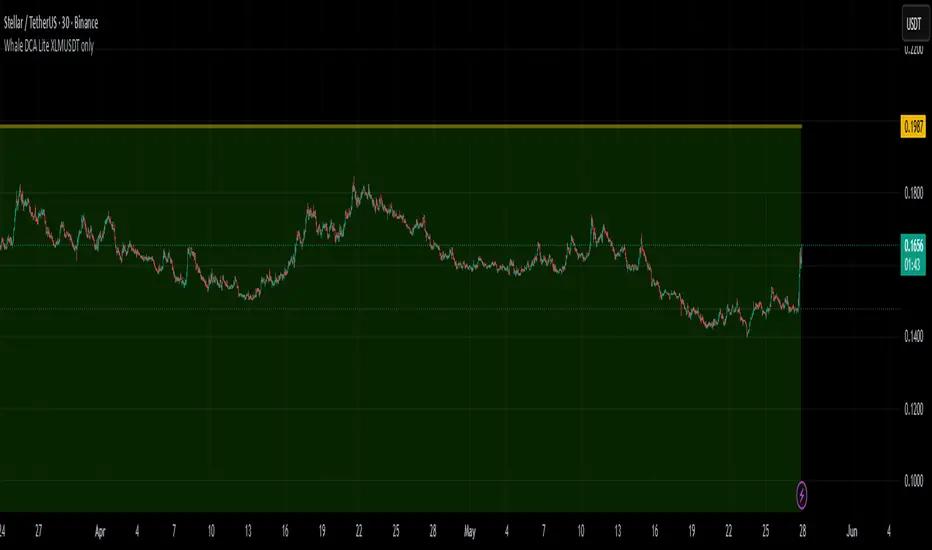
XLM is currently showing strong upside momentum and moving closer to the take-profit zone defined by the Whale DCA Pro strategy. This is a good moment to explain how the Lite version works in the public XLMUSDT script.
🎯 Not a constant signal stream — only selective setups
Whale DCA Pro is an algorithmic swing strategy built around rare but meaningful setups, not around posting signals every day. It does not try to react to every small move. Instead, the algorithm waits until the market builds the full combination of conditions it needs before giving a clear entry.
Once those conditions align, the strategy opens one structured trade and then manages it toward a predefined exit zone. The idea is simple: fewer trades, more selectivity, more discipline.
🧠 Virtual DCA logic, one real entry
Inside the code, the strategy models a virtual DCA grid — as if the position were being averaged across several internal levels. But in actual use, this does not become a chain of manual buy orders.
Instead:
all calculations happen inside the algorithm
the trader sees only one final entry signal
that signal appears only when all final-level conditions are satisfied
So the Lite version on XLM shows a different way to use DCA logic: not by chasing price with multiple entries, but by waiting for one optimal entry point.
📈 Why XLM is a useful public example
The public XLMUSDT version works as a preview of how the strategy behaves. It lets you observe how the system reacts across different market phases and how it handles trend continuation after entry. In that sense, the current XLM move is a useful live example of the strategy doing what it is designed to do: wait, enter with structure, and follow the plan.
As price moves closer to the take-profit zone, it becomes easier to see that this approach is not about emotional trading or impulsive averaging. It is about letting the setup fully form first, then acting once the conditions are already in place.
👀 Look at the earlier periods too
If you want to understand the logic better, do not focus only on the current move. Scroll back and study how the strategy behaved on earlier XLM periods as well.
That is where the Lite version becomes most useful:
you can see how entries were formed in the past
you can compare different market environments
you can better understand the rhythm of the strategy
The goal is not to catch every move. The goal is to stay aligned with a structured process.
⚠️ Note
This Lite version is meant to demonstrate the logic of the strategy on XLMUSDT in a simple public format. It is a framework for observing how the system behaves, not a promise of future results.
XLM is currently showing strong upside momentum and moving closer to the take-profit zone defined by the Whale DCA Pro strategy. This is a good moment to explain how the Lite version works in the public XLMUSDT script.
🎯 Not a constant signal stream — only selective setups
Whale DCA Pro is an algorithmic swing strategy built around rare but meaningful setups, not around posting signals every day. It does not try to react to every small move. Instead, the algorithm waits until the market builds the full combination of conditions it needs before giving a clear entry.
Once those conditions align, the strategy opens one structured trade and then manages it toward a predefined exit zone. The idea is simple: fewer trades, more selectivity, more discipline.
🧠 Virtual DCA logic, one real entry
Inside the code, the strategy models a virtual DCA grid — as if the position were being averaged across several internal levels. But in actual use, this does not become a chain of manual buy orders.
Instead:
all calculations happen inside the algorithm
the trader sees only one final entry signal
that signal appears only when all final-level conditions are satisfied
So the Lite version on XLM shows a different way to use DCA logic: not by chasing price with multiple entries, but by waiting for one optimal entry point.
📈 Why XLM is a useful public example
The public XLMUSDT version works as a preview of how the strategy behaves. It lets you observe how the system reacts across different market phases and how it handles trend continuation after entry. In that sense, the current XLM move is a useful live example of the strategy doing what it is designed to do: wait, enter with structure, and follow the plan.
As price moves closer to the take-profit zone, it becomes easier to see that this approach is not about emotional trading or impulsive averaging. It is about letting the setup fully form first, then acting once the conditions are already in place.
👀 Look at the earlier periods too
If you want to understand the logic better, do not focus only on the current move. Scroll back and study how the strategy behaved on earlier XLM periods as well.
That is where the Lite version becomes most useful:
you can see how entries were formed in the past
you can compare different market environments
you can better understand the rhythm of the strategy
The goal is not to catch every move. The goal is to stay aligned with a structured process.
⚠️ Note
This Lite version is meant to demonstrate the logic of the strategy on XLMUSDT in a simple public format. It is a framework for observing how the system behaves, not a promise of future results.

免責聲明
這些資訊和出版物並非旨在提供,也不構成TradingView提供或認可的任何形式的財務、投資、交易或其他類型的建議或推薦。請閱讀使用條款以了解更多資訊。
免責聲明
這些資訊和出版物並非旨在提供,也不構成TradingView提供或認可的任何形式的財務、投資、交易或其他類型的建議或推薦。請閱讀使用條款以了解更多資訊。