
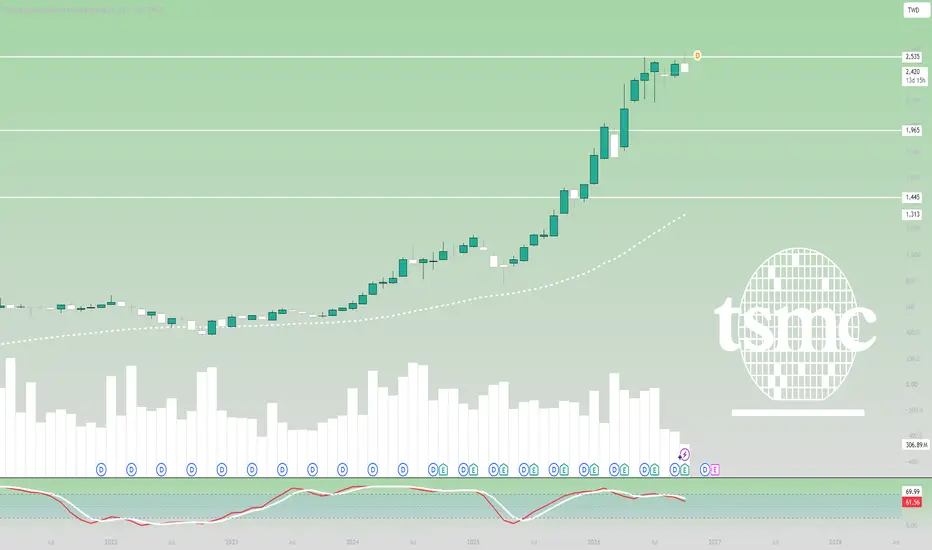
Taiwan Semiconductor (TSMC) is ramping up investment at a level few companies can match. Its capital spending is set to rise from $41 billion in 2025 to $60 billion to $64 billion in 2026. Total spending between 2026 and 2028 is also expected to substantially exceed the amount invested over the previous three years
CEO C.C. Wei is determined to make the most of the opportunity rather than let competitors take a share of the business
“We have no intention to leave food on the table for others, and we want to capture every piece of business possible.”
TSMC's latest results help explain that confidence. Q3 revenue jumped 41% year over year to $46.7 billion, while operating margin reached nearly 59%. The company is growing more profitable even as it prepares for the biggest manufacturing expansion in its history
Q3 by the numbers
Income statement:
Revenue rose 41% year over year to $46.7 billion, beating the top end of guidance by $900 million. Gross margin came in at 66%, down 1 percentage point from the previous quarter
Operating margin reached 59%, up 8 percentage points year over year
EPS per ADR increased 69% year over year in local currency to $4.60.
Cash flow:
Free cash flow margin reached 32%, up 18 percentage points year over year
Balance sheet:
Cash and marketable securities totaled approximately $126 billion
Interest bearing debt stood at around $32 billion.
Guidance:
Management raised its full year 2026 revenue growth forecast to approximately 44% in U.S. dollars, compared with its previous outlook of slightly above 40%. For Q4, TSMC expects revenue of $52.3 billion to $54.3 billion. At the midpoint, that would represent 58% year over year growth, signaling a significant acceleration
What does this tell us about TSMC?
🤖 AI demand continues to exceed expectations
TSMC had previously projected annual revenue growth in the mid to high 50% range for AI accelerators through 2029. Now, Wei believes even that ambitious target could turn out to be too low
“The demand is extremely robust. We did not see any sign of slowdown. Whether it is a high 50 CAGR, it does not matter. It probably will be higher.”
The opportunity also extends beyond GPUs. TSMC's forecasts exclude traditional CPUs and networking chips, both of which are benefiting from the growing use of AI agents. Its revenue mix reflects this shift. High Performance Computing (HPC) now generates 68% of total revenue, compared with just 42% three years ago
🏗️ TSMC is preparing to capture as much demand as possible
The company isn't blindly relying on customer forecasts when deciding how much capacity to build. Management evaluates customers' financial strength, visits data center construction sites, and checks whether sufficient electricity is available before committing additional manufacturing capacity
These steps help explain why TSMC is comfortable investing tens of billions of dollars in facilities that can take years to complete. They also highlight an important risk for the wider AI industry: infrastructure spending depends on customers having the financial resources and physical capacity to follow through on their plans
⚙️ Staying ahead technologically comes with higher costs
TSMC's 2nm process already accounts for 8% of wafer revenue, and production capacity is expected to more than double by 2027. Combined with continued investment in advanced packaging and 3nm manufacturing, this strengthens its position as the leading choice for customers developing increasingly complex chips
However, that technological progress isn't free. The initial 2nm production ramp contributed to a sequential decline in gross margin. Overseas expansion will create additional pressure, with international factories expected to reduce the company's consolidated gross margin by 3 to 4 percentage points over the next few years
💰 How much higher can TSMC's profitability go?
Operating margin has climbed to nearly 59%, even as the company increases investment and absorbs higher manufacturing costs. Asked about its long term profit potential, Wei offered a confident but measured response:
“There is no ceiling for TSMC’s profitability. But a dramatic increase will not happen overnight either.”
TSMC's technological advantage and limited manufacturing capacity give it significant pricing power. Still, the outlook isn't equally strong across the entire semiconductor industry. Management noted that rising component costs and macroeconomic uncertainty are weighing on price sensitive consumer markets
TSMC is benefiting from a powerful combination of AI demand, advanced manufacturing technology, and strong profitability. Its willingness to invest heavily suggests management believes the current growth opportunity has plenty of room to expand
The key question is how much of that demand will translate into sustainable profits as production costs rise and overseas factories come online.. TSMC enters 2027 with considerable momentum in AI, but investors should remember that the broader semiconductor market remains uneven. The company looks well positioned to benefit from continued AI investment, although maintaining its margins while expanding at this scale will be a challenge.

Bài đăng liên quan
Thông báo miễn trừ trách nhiệm
Thông tin và các ấn phẩm này không nhằm mục đích, và không cấu thành, lời khuyên hoặc khuyến nghị về tài chính, đầu tư, giao dịch hay các loại khác do TradingView cung cấp hoặc xác nhận. Đọc thêm tại Điều khoản Sử dụng.
Bài đăng liên quan
Thông báo miễn trừ trách nhiệm
Thông tin và các ấn phẩm này không nhằm mục đích, và không cấu thành, lời khuyên hoặc khuyến nghị về tài chính, đầu tư, giao dịch hay các loại khác do TradingView cung cấp hoặc xác nhận. Đọc thêm tại Điều khoản Sử dụng.