
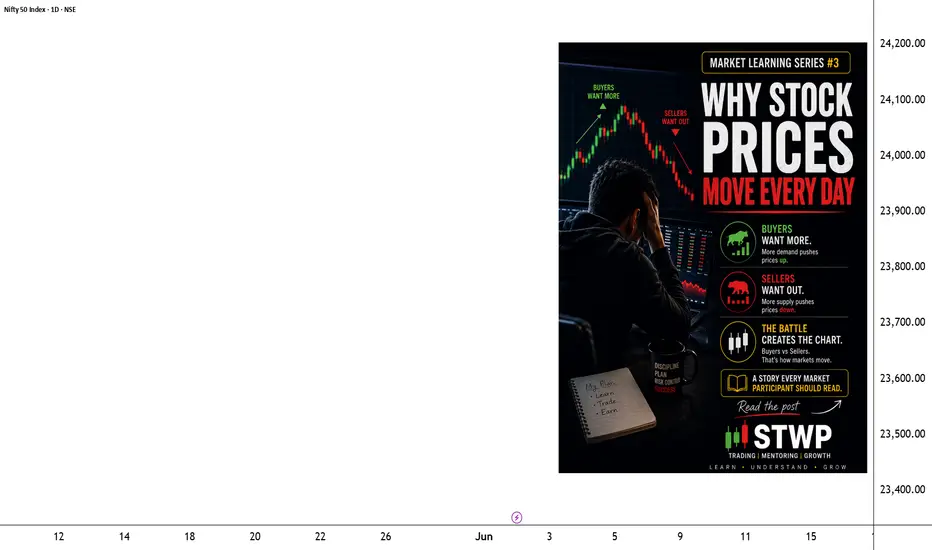
Why Stock Prices Move Every Day
A beginner once asked a simple question:
"If a company is exactly the same today as it was yesterday, why did its stock price move?"
It seems like a simple question.
But the answer reveals how markets truly work.
━━━━━━━━━━━━━━━━━━━
Imagine a popular concert.
There are only 100 tickets available.
Suddenly, 1,000 people want to attend.
What happens?
The value of those tickets rises.
Now imagine the opposite.
The concert is no longer popular.
Many people want to sell their tickets, but very few want to buy.
The value falls.
The stock market works in a similar way.
━━━━━━━━━━━━━━━━━━━
📈 The Simple Truth
Stock prices move because buyers and sellers constantly disagree on value.
When more people want to buy than sell, prices tend to move higher.
When more people want to sell than buy, prices tend to move lower.
This constant battle creates every candle you see on a chart.
━━━━━━━━━━━━━━━━━━━
🔍 What Creates More Buyers?
Many factors can increase demand:
• Strong company earnings
• Positive business developments
• Industry growth
• Institutional buying
• Positive market sentiment
• Future expectations
Notice something important.
Prices often move because of expectations about the future, not just today's reality.
━━━━━━━━━━━━━━━━━━━
📉 What Creates More Sellers?
Selling pressure may increase because of:
• Weak earnings
• Negative news
• Economic uncertainty
• Profit booking
• Institutional exits
• Fear and panic
Markets are influenced not only by facts but also by emotions.
━━━━━━━━━━━━━━━━━━━
⚠️ The Mistake Many Beginners Make
Many new traders search for a single reason behind every move.
Sometimes there isn't one.
A stock can rise because:
• Buyers are confident.
• Institutions are accumulating.
• Traders expect future growth.
Similarly, a good company can still see its stock decline if expectations change.
━━━━━━━━━━━━━━━━━━━
💡 Think Like The Market
The market is not trying to determine what a company is worth today.
The market is constantly trying to estimate what that company may be worth tomorrow.
That is why prices move even when nothing appears to have changed.
━━━━━━━━━━━━━━━━━━━
🎯 STWP Learning Note
Every candle on a chart tells a story.
Not a story about certainty.
A story about buyers and sellers expressing different opinions.
The side with greater conviction usually moves the price.
━━━━━━━━━━━━━━━━━━━
📌 Final Thought
The next time you see a stock move sharply, don't ask:
"Why did the stock move?"
Ask:
"Who became more aggressive today—the buyers or the sellers?"
That simple shift in thinking can completely change how you view the market.
A beginner once asked a simple question:
"If a company is exactly the same today as it was yesterday, why did its stock price move?"
It seems like a simple question.
But the answer reveals how markets truly work.
━━━━━━━━━━━━━━━━━━━
Imagine a popular concert.
There are only 100 tickets available.
Suddenly, 1,000 people want to attend.
What happens?
The value of those tickets rises.
Now imagine the opposite.
The concert is no longer popular.
Many people want to sell their tickets, but very few want to buy.
The value falls.
The stock market works in a similar way.
━━━━━━━━━━━━━━━━━━━
📈 The Simple Truth
Stock prices move because buyers and sellers constantly disagree on value.
When more people want to buy than sell, prices tend to move higher.
When more people want to sell than buy, prices tend to move lower.
This constant battle creates every candle you see on a chart.
━━━━━━━━━━━━━━━━━━━
🔍 What Creates More Buyers?
Many factors can increase demand:
• Strong company earnings
• Positive business developments
• Industry growth
• Institutional buying
• Positive market sentiment
• Future expectations
Notice something important.
Prices often move because of expectations about the future, not just today's reality.
━━━━━━━━━━━━━━━━━━━
📉 What Creates More Sellers?
Selling pressure may increase because of:
• Weak earnings
• Negative news
• Economic uncertainty
• Profit booking
• Institutional exits
• Fear and panic
Markets are influenced not only by facts but also by emotions.
━━━━━━━━━━━━━━━━━━━
⚠️ The Mistake Many Beginners Make
Many new traders search for a single reason behind every move.
Sometimes there isn't one.
A stock can rise because:
• Buyers are confident.
• Institutions are accumulating.
• Traders expect future growth.
Similarly, a good company can still see its stock decline if expectations change.
━━━━━━━━━━━━━━━━━━━
💡 Think Like The Market
The market is not trying to determine what a company is worth today.
The market is constantly trying to estimate what that company may be worth tomorrow.
That is why prices move even when nothing appears to have changed.
━━━━━━━━━━━━━━━━━━━
🎯 STWP Learning Note
Every candle on a chart tells a story.
Not a story about certainty.
A story about buyers and sellers expressing different opinions.
The side with greater conviction usually moves the price.
━━━━━━━━━━━━━━━━━━━
📌 Final Thought
The next time you see a stock move sharply, don't ask:
"Why did the stock move?"
Ask:
"Who became more aggressive today—the buyers or the sellers?"
That simple shift in thinking can completely change how you view the market.

STWP | Mentor & Demand-Supply Specialist |
Empowering traders through structured learning |
simpletradewithpatience.com
wa.me/message/6IOPHGOXMGZ4N1
Educational Only
Empowering traders through structured learning |
simpletradewithpatience.com
wa.me/message/6IOPHGOXMGZ4N1
Educational Only
Thông báo miễn trừ trách nhiệm
Thông tin và các ấn phẩm này không nhằm mục đích, và không cấu thành, lời khuyên hoặc khuyến nghị về tài chính, đầu tư, giao dịch hay các loại khác do TradingView cung cấp hoặc xác nhận. Đọc thêm tại Điều khoản Sử dụng.
STWP | Mentor & Demand-Supply Specialist |
Empowering traders through structured learning |
simpletradewithpatience.com
wa.me/message/6IOPHGOXMGZ4N1
Educational Only
Empowering traders through structured learning |
simpletradewithpatience.com
wa.me/message/6IOPHGOXMGZ4N1
Educational Only
Thông báo miễn trừ trách nhiệm
Thông tin và các ấn phẩm này không nhằm mục đích, và không cấu thành, lời khuyên hoặc khuyến nghị về tài chính, đầu tư, giao dịch hay các loại khác do TradingView cung cấp hoặc xác nhận. Đọc thêm tại Điều khoản Sử dụng.