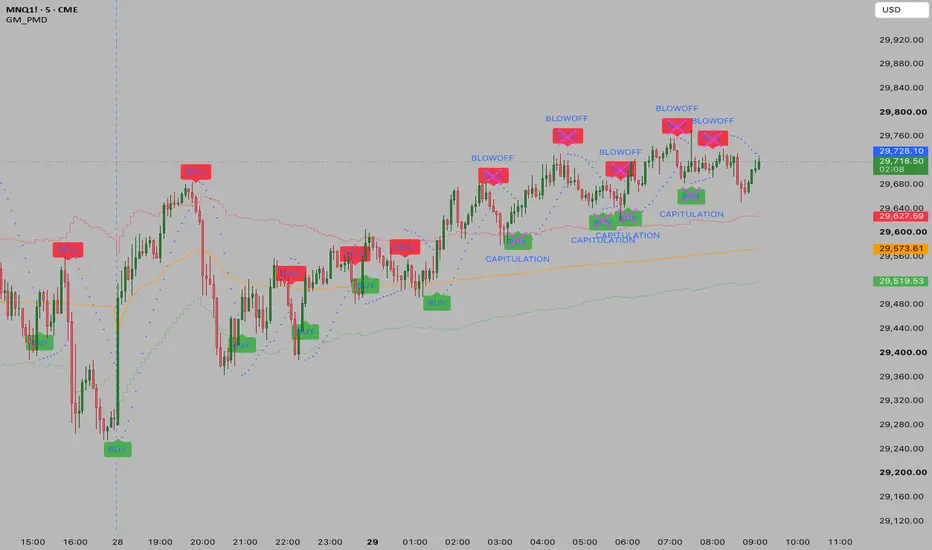
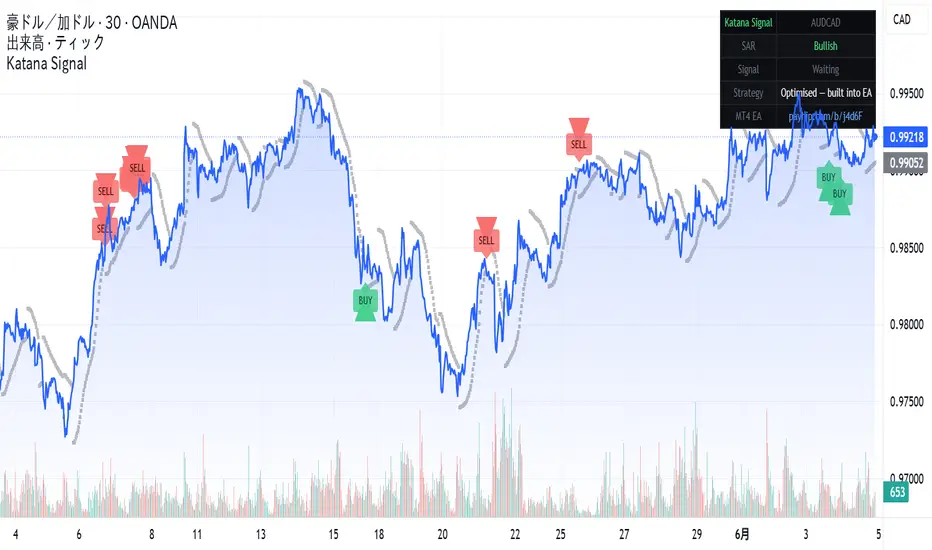
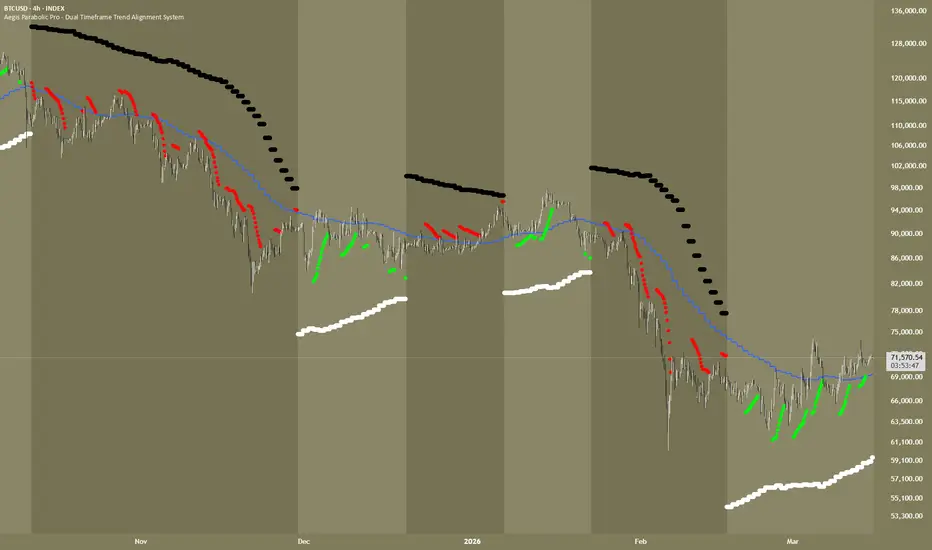
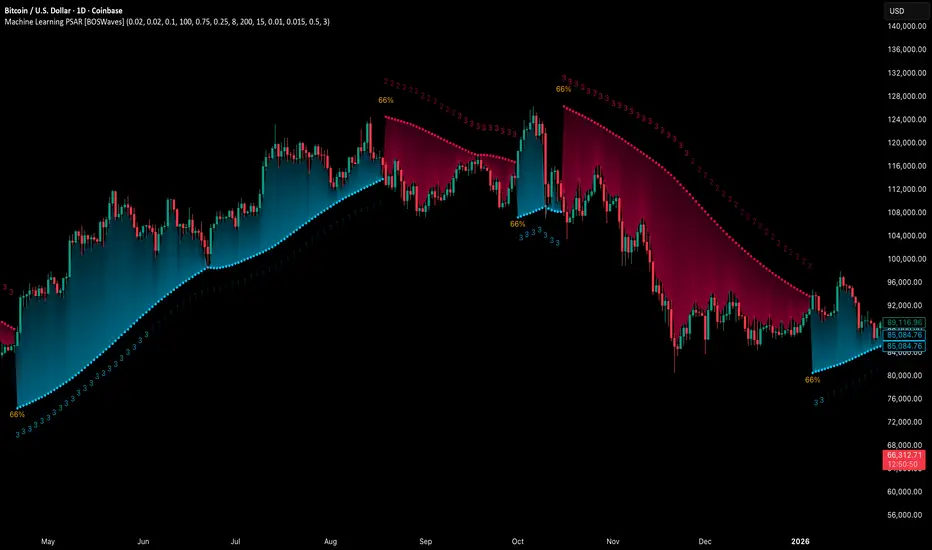
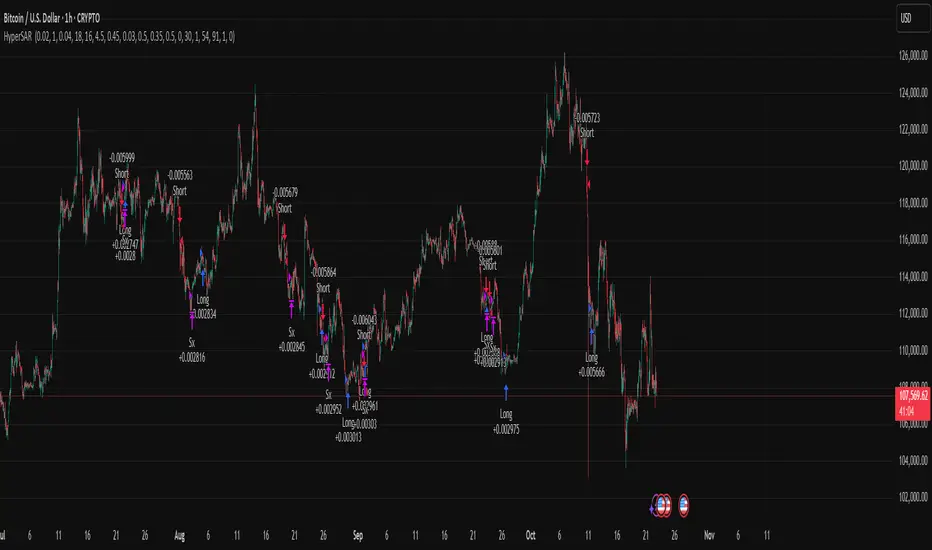
DAO GAM Reversal StructureBX Reversal Structure - Adaptive Top and Bottom is a market-structure indicator designed to identify potential horizontal reversal structures formed by two significant swing areas, referred to as A and B.
The indicator analyzes both top structures and bottom structures.
For a top structure, the script looks for an upward price phase followed by a meaningful rejection. It uses the high and close of the final bullish anchor candle to define a price zone around the swing high.
For a bottom structure, the logic is reversed. The script looks for a downward price phase followed by a meaningful recovery and uses the low and close of the final bearish anchor candle to define the swing-low zone.
When two valid zones, A and B, share an overlapping price area, the script attempts to determine a horizontal reference level called X.
The X level is selected so that it remains within the common price area of A and B while avoiding the interior of candle bodies located between the two structures. Wick interaction with X is permitted.
This approach is intended to distinguish meaningful horizontal market structures from simple price equality between two isolated swing points.
Main concepts
The indicator evaluates several structural conditions, including:
Minimum price movement into and away from each swing.
A minimum number of candles forming the directional phase before and after the swing.
Overlap between the price zones of A and B.
Candle-body interaction between A and B.
Separation between the two swing areas.
Distance and spacing between A and B.
Additional interactions with the X level after the structure is formed.
The indicator can detect:
Top structures: potential resistance or reversal structures.
Bottom structures: potential support or reversal structures.
Adaptive mode
The indicator includes an adaptive mode based on ATR (Average True Range).
Instead of relying exclusively on fixed price distances, ATR-based thresholds can automatically scale according to the volatility of the current symbol and timeframe.
This allows the indicator to be tested on different markets and timeframes, including forex, metals, cryptocurrencies, indices and other instruments available on TradingView.
A manual mode is also available for users who prefer fixed parameter values.
A, B and X
A represents the first qualified swing structure.
B represents a later qualified swing structure that shares a valid price area with A.
X is the horizontal reference level calculated from the overlapping zones of A and B.
Additional qualified interactions with the same level may be displayed as C, D, E or subsequent touches.
For top structures, X acts as a horizontal resistance reference.
For bottom structures, X acts as a horizontal support reference.
Line behavior
After a valid A-B structure is detected, the X line is extended to the right.
The visual line stops when a future candle body reaches the X level. Candle wicks alone do not necessarily stop the line.
The script may also generate a CHECK condition when price moves a specified distance beyond X within the configured monitoring period.
These signals indicate that the predefined structural condition has occurred; they are not automatic trading orders.
How to use
Users can apply the indicator directly to a chart and choose between:
AUTO (ATR): parameters adapt to current market volatility.
MANUAL: price-distance parameters are entered manually.
Because volatility and market structure differ significantly between instruments and timeframes, users should evaluate the parameters on the specific market they intend to analyze.
The indicator is intended primarily as a market-structure visualization and research tool. It can be combined with independent analysis of trend, volatility, liquidity, risk management and broader market context.
Original concept
The central idea of this indicator is that a horizontal resistance or support structure should not necessarily be defined by two identical highs or lows.
Instead, each swing is represented as a price zone between the close and the extreme of its anchor candle.
The indicator searches for the common price area between two qualifying zones and then determines a horizontal level that respects candle-body structure between them.
This zone-overlap and candle-body approach is the main structural concept used by the script.
Limitations
This indicator does not predict future market direction and does not guarantee that a detected support or resistance structure will produce a reversal.
Pivot-based structures require subsequent candles for confirmation, so signals are identified only after sufficient market data becomes available.
ATR adaptation improves portability between instruments and timeframes, but no single parameter configuration can provide identical behavior across all markets.
Low-liquidity instruments, gaps, unusually volatile market conditions and different data feeds may produce different results.
Historical structures should not be interpreted as evidence of future profitability.
Users should independently evaluate the indicator and apply appropriate risk management before making trading decisions.
Chỉ báo