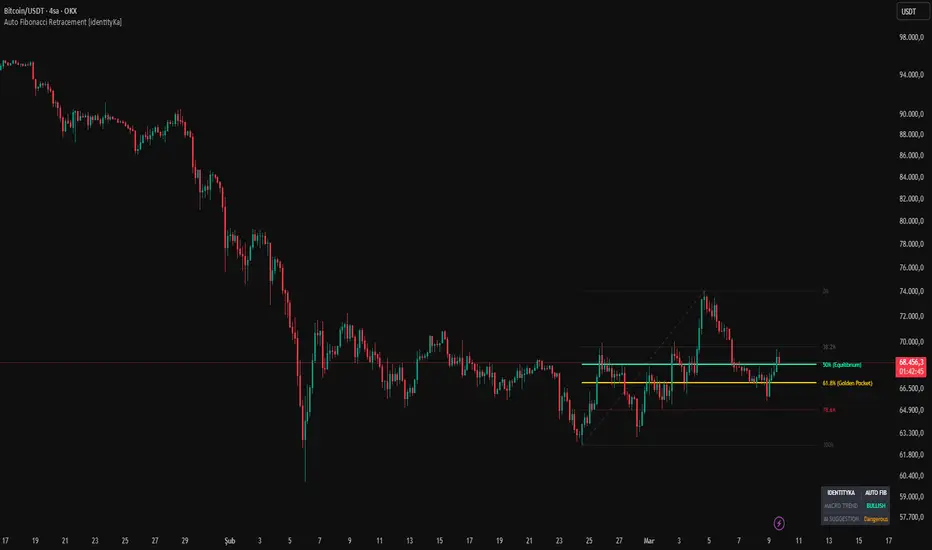
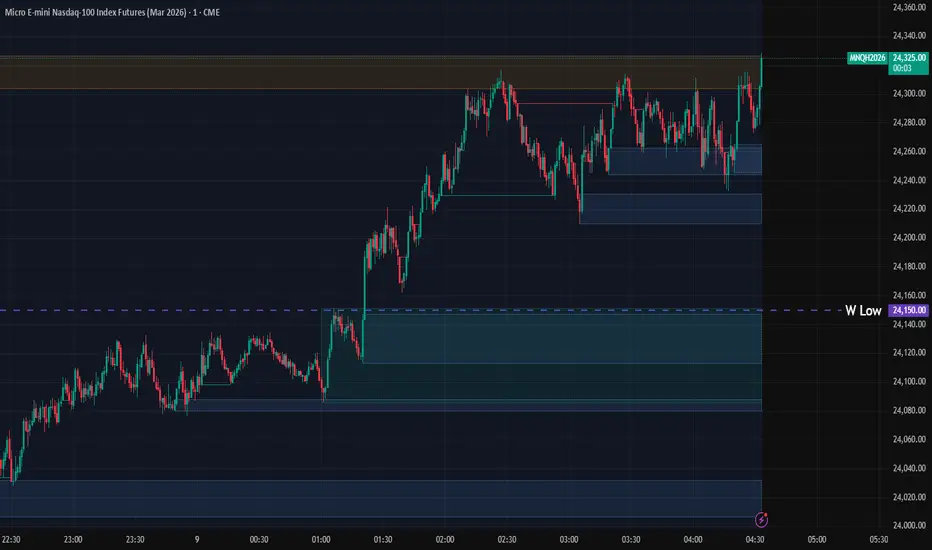
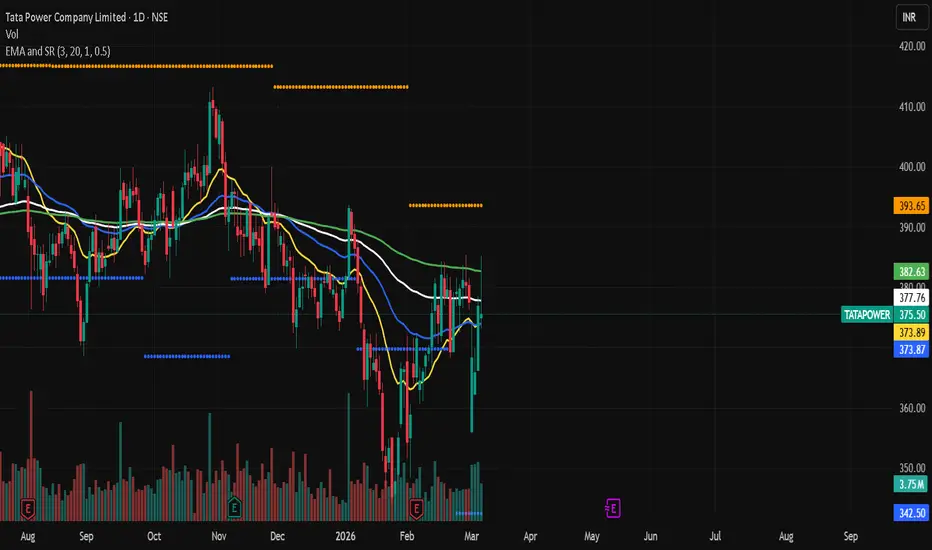
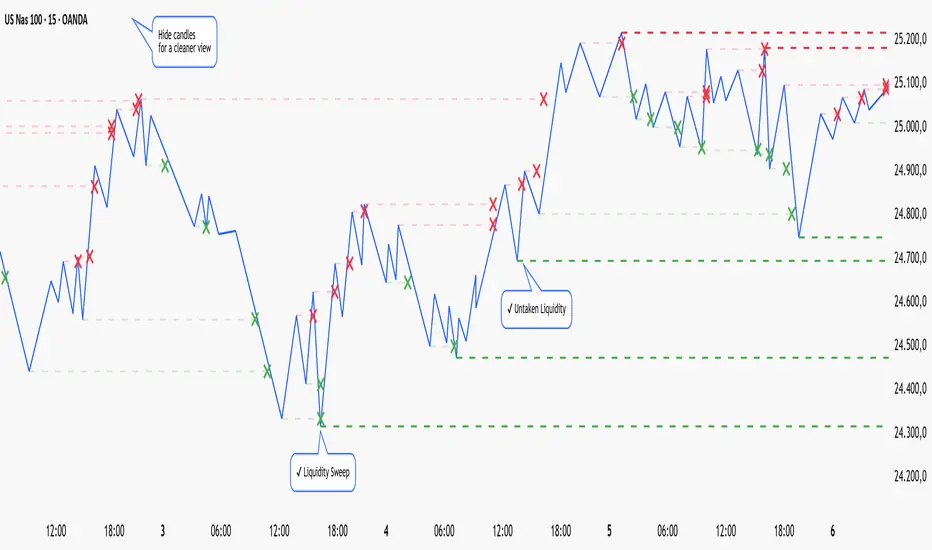
QML FTB with Quality Score [Malibu]QML FTB with Quality Score
Overview
QML FTB with Quality Score is an open-source market structure indicator designed to detect Quasimodo (QML) reversal formations and highlight potential First Touch Back (FTB) reaction levels after a confirmed break of structure.
The script is built to be selective rather than frequent. Instead of displaying every possible QML pattern, it filters structure through multiple confluence factors and ranks each setup with a normalized Quality Score. The goal is to help traders focus on cleaner and more meaningful reaction zones rather than treating all reversal structures as equal.
What this indicator does
This indicator scans price action for bullish and bearish Quasimodo formations, confirms the related market structure break, and projects the corresponding left-shoulder area as a potential reaction level.
In practical terms, it is a structure-based reversal and reaction-zone tool that can assist with:
- market structure shifts
- support and resistance transitions
- break-of-structure confirmation
- liquidity-driven reversal analysis
- filtered first-touch retest opportunities
Why this indicator can be useful
Raw QML detection can become noisy because many structures may appear valid at first glance, but not all of them carry the same quality. This script attempts to solve that problem by combining pattern detection with context-based filtering.
Instead of only drawing a shape, it asks additional questions:
- Was the structure break strong enough?
- Is momentum aligned?
- Is there RSI divergence?
- Is there Fair Value Gap confluence?
- Was liquidity swept before the reversal?
- Is the level still fresh and untouched?
That layered process is what makes the script more selective and more practical for traders who prefer structured filtering over raw pattern frequency.
How it works
The script uses a ZigZag-style swing engine to track meaningful highs and lows in price structure. Based on those swings, it evaluates whether the sequence forms a valid Quasimodo transition.
Bullish structure:
- price forms a lower low
- price then breaks the prior key high
- the previous shoulder area becomes the projected bullish QML / FTB level
Bearish structure:
- price forms a higher high
- price then breaks the prior key low
- the previous shoulder area becomes the projected bearish QML / FTB level
Once the structure is identified, the setup can be refined through optional confluence filters. The script then calculates a Quality Score and prints the confirmed level only after bar close.
Filtering logic
1) Body Break Filter
This filter requires the break of structure to happen with candle body confirmation rather than wick-only penetration. Its purpose is to reduce weak or cosmetic breaks and focus on clearer structural shifts.
2) Momentum Filter (EMA)
This filter checks whether the setup is aligned with the broader directional bias using an EMA-based trend condition. Bullish setups are generally stronger when price is positioned in bullish momentum context, while bearish setups are generally stronger when price is positioned in bearish momentum context.
3) RSI Divergence Filter
This filter looks for momentum exhaustion. For bullish setups, it checks whether price pushes lower while RSI fails to confirm that weakness. For bearish setups, it checks the opposite. This is the strictest filter and is meant to isolate higher-selectivity reversal conditions.
4) FVG Confluence
This filter checks whether the projected QML level aligns with a Fair Value Gap area. The aim is to add imbalance context and identify zones where inefficient price delivery may support a reaction.
5) Liquidity Sweep Filter
This filter checks whether the head of the QML structure swept prior liquidity before the reversal. It is meant to capture structural traps and stop-hunt style behavior before a turn.
6) Freshness (FTB) Filter
This filter removes levels that have already been touched or used. Its goal is to keep the focus on first-touch reaction opportunities rather than repeatedly tested zones.
Quality Score logic
The script ranks each setup using a normalized Quality Score.
Current score components:
- RSI Divergence: +30
- FVG Confluence: +25
- Liquidity Sweep: +25
- EMA Momentum Alignment: +20
The total score is normalized according to the filters that are currently active, then displayed as a percentage. This allows the indicator to remain usable even when traders prefer a lighter or stricter filter stack.
What it plots on the chart
The indicator can display:
- a thick horizontal QML entry level
- optional dashed ZigZag structure lines
- bullish and bearish QML labels
- a Quality Score percentage
- an additional symbol when RSI divergence is present
The visual design is intentionally simple so the underlying structure remains readable on chart.
Inputs
ZigZag Sensitivity (default: 13)
Controls how sensitive the swing detection is.
- Lower values produce more swing points and more signals, but also more noise.
- Higher values reduce signal frequency and generally improve selectivity, but can introduce more lag.
Body Break Filter (default: true)
Requires structure breaks to happen with body confirmation.
- Usually lowers signal count
- Usually improves reliability
- Best kept enabled in noisier conditions
Momentum Filter / EMA Filter (default: true)
Restricts setups to those aligned with EMA direction.
- Reduces counter-trend signals
- Makes the script more selective
- Generally improves quality in directional markets
EMA Period (default: 50)
Defines the trend filter length.
- Lower values make the filter more responsive
- Higher values make it smoother and slower
RSI Divergence Filter (default: false)
Allows only setups that also show RSI divergence.
- This is the strictest filter
- Strongly reduces signal frequency
- Best used when only higher-selectivity reversal setups are desired
FVG Confluence (default: true)
Requires the level to align with Fair Value Gap context.
- Filters out some otherwise valid patterns
- Can improve contextual quality in imbalanced markets
Liquidity Sweep Filter (default: true)
Requires evidence of liquidity interaction at the head of the structure.
- Helps isolate trap-like reversal conditions
- Adds selectivity around structural extremes
Freshness (FTB) Filter (default: true)
Rejects previously tested levels.
- Keeps the focus on first-touch setups
- Useful for traders who prefer untouched zones
Line Length (bars) (default: 25)
Controls how far the projected QML level is extended to the right.
- This is a visual setting
- It does not change the signal logic
Which settings matter most
The three most important inputs are:
- ZigZag Sensitivity
- Body Break Filter
- Freshness (FTB) Filter
These settings have the biggest impact on how noisy, selective, and practical the final output becomes.
Suggested usage styles
Balanced / default use
For most users, the default settings are the best place to start. They are designed to provide a practical balance between signal frequency and selectivity.
More aggressive use
For traders who want more setups:
- reduce ZigZag Sensitivity toward 8–10
- consider disabling EMA Filter
- consider disabling FVG Confluence
This can increase opportunity count, but it also increases noise and false positives.
More conservative use
For traders who want fewer but stronger setups:
- keep Body Break Filter enabled
- keep Freshness Filter enabled
- enable RSI Divergence Filter
- focus more on higher-score setups, especially 80%+
This creates a much stricter selection process.
Timeframe behavior
This indicator is generally better suited to M15, H1, H4, and Daily charts.
Suggested sensitivity behavior:
- M15 to H1: 13 to 21 is usually more stable
- H4 to Daily: 8 to 13 is often more responsive without becoming overly delayed
Timeframe notes:
- On M1 and M5, low sensitivity settings can produce excessive noise and weak structure breaks.
- In lower timeframes, Body Break confirmation becomes much more important.
- On higher timeframes, very high sensitivity values can reduce opportunities too much and may introduce unnecessary delay.
Market conditions
The script tends to behave more cleanly in liquid markets where structure is clearer, such as:
- crypto majors
- forex majors
- index products
- other actively traded instruments
In very thin or highly irregular markets, the structural quality of setups may degrade.
Why this indicator may be preferred over simpler alternatives
This script is not intended to be just a basic ZigZag visualizer or a simple Quasimodo marker.
Its main differentiator is the way it combines multiple layers of structure validation into one ranked workflow:
- structure recognition
- body-based break confirmation
- momentum alignment
- divergence context
- FVG context
- liquidity sweep context
- freshness filtering
- normalized quality scoring
Instead of showing every possible shape, it tries to separate weaker structural patterns from more meaningful ones.
What makes this script different
The individual concepts used here are known market-structure concepts, but the practical value of the script comes from how they are combined.
Its distinguishing contribution is the orchestration layer:
- the Quality Score model
- the multi-filter ranking process
- the first-touch freshness workflow
- the compact integration of structure, momentum, liquidity, and imbalance into one decision-support tool
In other words, the script is built on generic market-structure concepts, but its filtering and ranking workflow is specific to this implementation.
How to use it in practice
A common workflow is:
- wait for a level to be confirmed
- monitor the first return into that level
- use the score and filter context to judge whether the setup deserves attention
- avoid treating every printed level as a guaranteed reversal
Many users will find it most useful as a structured decision-support tool rather than as a standalone entry engine.
Technical behavior
- Signals are confirmed on bar close.
- Confirmed levels remain fixed after printing.
- The script does not rely on request.security() in the described signal logic.
- No lookahead-based behavior is used in the signal confirmation process.
- The latest developing pivot may evolve while structure is still forming, but confirmed outputs are only printed after confirmation.
Alerts
The script includes on-close alerts when a new bullish or bearish QML level is confirmed.
Alert messages can include contextual details such as:
- direction
- Quality Score
- divergence state
Limitations
This script is a technical analysis tool, not a prediction engine.
Please keep in mind:
- sideways conditions can generate weaker structural setups
- very low timeframes can create more noise and false breaks
- news-driven volatility can invalidate technical levels quickly
- very low ZigZag Sensitivity settings can make ordinary pullbacks look more important than they really are
- no indicator can guarantee that price will react from every marked level
For that reason, the script is best used as a structured analysis tool rather than as a certainty model.
Chỉ báo