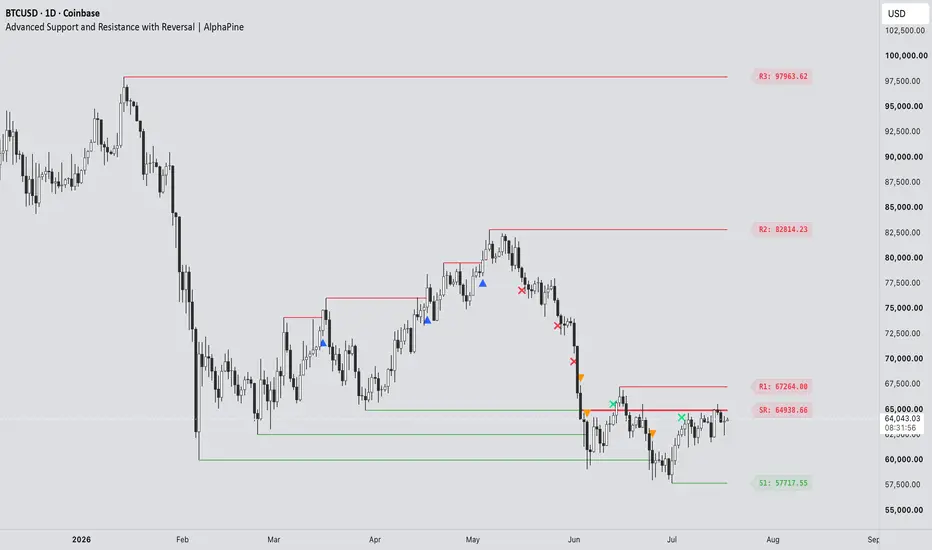
Precision Bedrock [MohaveTrader]Precision Bedrock is an open-source market structure indicator that combines adaptive trend rails, structural equilibrium, rail-sourced support and resistance zones, and contextual reversal warnings into a single framework. Rather than accumulating historical levels, Bedrock continuously maintains the structure that remains relevant to current price action.
━━━━━━━━━━━━━━━━━━━━━━━━━━
WHY BEDROCK IS DIFFERENT
━━━━━━━━━━━━━━━━━━━━━━━━━━
Most support/resistance tools draw a level and leave it there. The market moves; the level does not, and the chart slowly fills with lines that no longer matter.
Bedrock treats market structure as something living. Zones are born from rail extremes and confirmed by price rejection. They move through a defined lifecycle that includes testing, confirmation, merging, role reversal, and eventual retirement as the market evolves. The result is a chart focused on the structural levels that remain relevant as price evolves.
━━━━━━━━━━━━━━━━━━━━━━━━━━
THE RAIL & EQUILIBRIUM ENGINE
━━━━━━━━━━━━━━━━━━━━━━━━━━
Upper and lower rails track the recent extremes over a lookback that adapts to your chart's timeframe. They define the channel the zones are sourced from and the directional context the reversal logic reads against, running under the hood rather than as a plotted line.
Between the rails sits the equilibrium: a smoothed, adaptive midline that reads where price is balancing within the channel. It is the reference the reversal logic measures turns against — a curl or slope shift in the equilibrium is often where building pressure first shows up.
━━━━━━━━━━━━━━━━━━━━━━━━━━
STRUCTURAL ZONES
━━━━━━━━━━━━━━━━━━━━━━━━━━
Zones are sourced from the rails, not from raw pivots. A rail printing a new extreme arms a candidate; a close-based pullback of a configurable ATR distance away from that extreme commits it into a zone, keeping zones anchored to structure the market actually stepped away from. Each zone is an ATR-width band — the rail extreme is the outer edge, extending inward toward price — so the level has the thickness real reactions occur across.
Every zone moves through a lifecycle:
• Active — a confirmed level, drawn as Support or Resistance.
• Testing — price has entered the band; the label reads Testing until the test resolves.
• Confirmed hold — after a set number of consecutive closes back outside the inner edge, the test counts and the level's respected-touch strength increases.
• Broken — a confirmed close beyond the outer edge, or price walking far past and staying away, retires the level.
• Role reversal — a broken level can flip its role in place (support becomes resistance, or the reverse) a limited number of times, rather than spawning a duplicate.
Overlapping same-side zones collapse into a single structural area, reducing duplicate levels and chart clutter. Distant zones are hidden but retained, reappearing if price returns; a per-side cap and a broken-level fade keep the chart clean. Labels show the role and mid price (for example, "Support 6.04"), and an optional Full Zone History mode lengthens each box back to where the level first formed. All zone logic runs on confirmed bars and draws at the live edge — historical levels do not repaint.
━━━━━━━━━━━━━━━━━━━━━━━━━━
REVERSAL WARNING DOTS
━━━━━━━━━━━━━━━━━━━━━━━━━━
A reversal warning dot marks a bar where pressure is building against the current trend near a rail extreme. It appears only when several conditions align on the same bar: the trend is intact and not already changing, price is on the appropriate side of the equilibrium, price is near the relevant rail, either the equilibrium is turning or the bar itself is a rejection, and a weighted reversal score clears its threshold. A cooldown prevents clusters on the same swing. The score blends multiple structural and momentum components, so no single feature alone fires a dot.
A dot is an early, contextual warning, not a trade signal. It flags that a turn is being pressured; it does not confirm one. Each dot's tooltip prints its reversal score and the rail-break level a close beyond which would confirm the turn.
━━━━━━━━━━━━━━━━━━━━━━━━━━
CANDLE COLORING
━━━━━━━━━━━━━━━━━━━━━━━━━━
Optional candle coloring displays bullish bars in green and bearish bars in red, to keep the chart readable against the zone bands and dots. It is a simple directional recolor and encodes no state. For the cleanest display, hide the chart’s native candle body, border, and wick colors when this option is enabled.
━━━━━━━━━━━━━━━━━━━━━━━━━━
CHOP SUPPRESSION
━━━━━━━━━━━━━━━━━━━━━━━━━━
An optional filter, off by default, suppresses reversal dots when momentum is unusually weak or the momentum state is changing repeatedly. It remains optional because quiet or thin markets can still produce legitimate reversal pressure.
━━━━━━━━━━━━━━━━━━━━━━━━━━
HOW TO USE IT
━━━━━━━━━━━━━━━━━━━━━━━━━━
Bedrock is context and structure for your own methodology, not a signal service:
• Read the zones as a map of where price may react, and plan your own entries, stops, and scale-outs around them.
• Use the rails and equilibrium for directional context as price approaches a zone.
• Treat a reversal warning dot as an early heads-up to tighten attention on an open position — remembering that a dot is a warning, not a confirmed turn.
• Watch how a level's touch history and lifecycle develop to gauge which zones have earned respect on your instrument.
Alert conditions are included for bullish and bearish reversal warnings, carrying the ticker and timeframe.
Bedrock pairs naturally with tools that add a different lens on the same price — volume profile, VWAP, and momentum or market-structure tools. It does not predict prices or guarantee outcomes: its zones and warnings are analytical structures, not recommendations to buy or sell. You remain solely responsible for every trading decision.
━━━━━━━━━━━━━━━━━━━━━━━━━━
CREDITS & LICENSE
━━━━━━━━━━━━━━━━━━━━━━━━━━
Precision Bedrock is released under the Mozilla Public License 2.0.
The adaptive trend rail, equilibrium, and reversal framework is derived from Adaptive Trend Rails by NICK789, used under the MPL 2.0. Original framework © NICK789.
Structural zones, lifecycle management, reversal scoring, candle coloring, and other Bedrock-specific functionality are original work by MohaveTrader. The momentum-state component of the reversal score is adapted from the author's open-source Precision Price Gamma (PGamma).
Chỉ báo