Candle Intent Map [AGPro Series]Candle Intent Map
🧠 Core Idea
Does this candle show initiative, absorption, rejection, indecision, or a real shift in intent?
📌 Overview / What it does
Candle Intent Map is a candle behavior and market reaction tool designed to read the internal message of price candles beyond simple bullish or bearish color.
The script evaluates body pressure, wick reaction, close location, volume context, short follow-through, and recent intent changes to classify whether the market is showing initiative, absorption, rejection, indecision, or an intent shift.
It produces compact labels, a visible intent pressure zone, right-side context tags, and a clean AG Pro panel. It does not predict price, automate decisions, or promise that a candle pattern will continue.
🎯 Purpose & Design Philosophy
This script was built because many candlestick tools stop at basic pattern recognition.
A candle is not only a shape. It is a relationship between body commitment, wick reaction, volume participation, close location, and what happens immediately after that candle forms.
Candle Intent Map helps traders who want to read candle quality, initiative pressure, reaction zones, and follow-through context without turning the chart into a crowded pattern scanner.
⚡ Why This Script Is Different
Most candle tools focus on named formations such as engulfing candles, pin bars, doji candles, or simple color changes.
This script does NOT treat every candle pattern as an automatic signal.
Instead, it studies whether the candle has enough internal pressure, reaction quality, volume context, and follow-through to deserve attention.
The goal is not to label more candles. The goal is to label the candles that tell a clearer market story.
⚙️ Methodology
1. Context Detection
The script measures body-to-range ratio, upper wick pressure, lower wick pressure, close location, and relative volume participation.
2. Intent Classification
Candles are classified into initiative, absorption, rejection, indecision, or intent shift conditions based on body pressure, wick behavior, and directional commitment.
3. Reaction Evaluation
The script builds a reaction-quality score using body strength, wick reaction, close placement, volume context, and short follow-through behavior.
4. Visual Output
The strongest current candle intent context is mapped as a visible intent zone, compact event labels, right-side state tags, and a structured AG Pro panel.
🗺️ How to Read the Chart
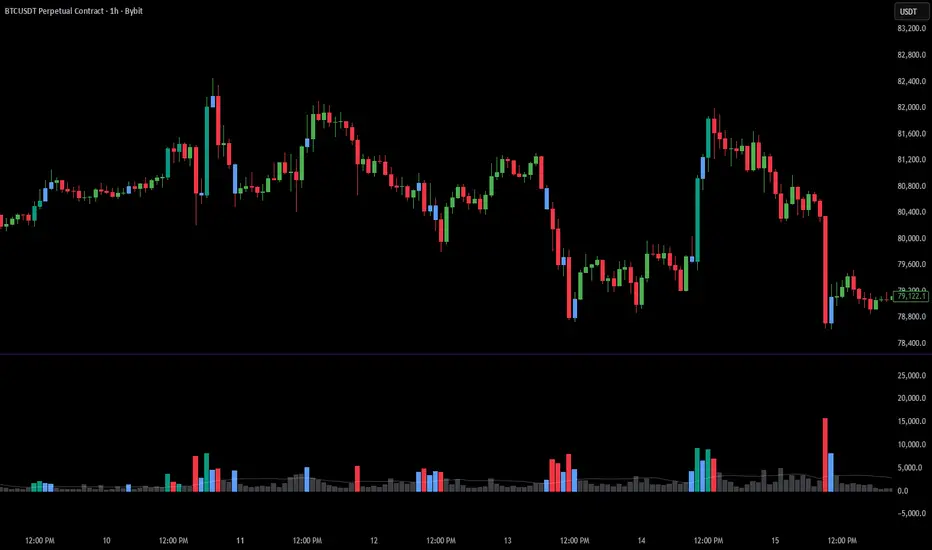
Zones represent the most recent candle intent pressure area.
Labels show important candle intent events such as bullish intent, bearish intent, absorption, rejection, indecision, or intent shift.
Colors separate constructive pressure, defensive pressure, neutral reaction, and absorption-style behavior.
The panel summarizes current intent, direction, body pressure, wick reaction, follow-through, quality score, and next context.
🚦 Signals & States
• BULL INTENT → bullish body pressure with meaningful close location and participation
• BEAR INTENT → bearish body pressure with meaningful close location and participation
• ABSORPTION → strong reaction behavior with compressed body and meaningful volume
• LOWER REJECT → lower wick reaction suggesting downside rejection
• UPPER REJECT → upper wick reaction suggesting upside rejection
• INDECISION → low body commitment with balanced wick behavior
• INTENT SHIFT → recent candle intent changes direction with enough pressure to matter
🔔 Alerts Logic
Alerts trigger when the script detects bullish candle intent, bearish candle intent, candle absorption, or candle intent shift.
These alerts are attention markers only. They highlight a candle context that may deserve review, not a trade instruction.
🧩 Confluence Logic
The strongest context appears when candle body pressure, wick reaction, close location, volume participation, and follow-through point in the same direction.
When these components align, the candle intent quality score becomes stronger.
📊 When to Use
• During active trend continuation phases
• Around reaction zones and pullback areas
• Near support, resistance, VWAP, or liquidity references
• When evaluating whether a candle has real participation behind it
• When comparing initiative candles against absorption or rejection candles
⚠️ When NOT to Use
• Extremely illiquid markets
• Very noisy low-timeframe environments
• News-driven candles with abnormal spreads
• Symbols with unreliable volume data
• Situations where broader market context is ignored
🎛️ Key Inputs
• Volume Context Length → controls the relative volume comparison window
• Follow-Through Length → controls how short-term continuation is measured
• Initiative Body Ratio → changes how strict the initiative candle filter is
• Reaction Wick Ratio → changes how strict wick-based rejection and absorption filters are
• Visible Zone Bars → controls how much of the recent chart the intent zone covers
• Label and Panel Font Size → controls visual readability
🖥️ Interface & Visual Design
The interface is designed to stay clean, readable, and publication-friendly.
The chart focuses on one main intent zone, compact event labels, right-side context tags, and a structured panel.
The visual hierarchy is intentional: zone first, current state second, historical intent events third.
🧪 Practical Usage Workflow
1. Read the panel to understand the current candle intent state
2. Check the intent zone and its position relative to price
3. Review recent labels to understand whether initiative, absorption, or rejection has dominated
4. Compare the quality score with current follow-through
5. Interpret the output inside broader market context
🔍 Interpretation Guidelines
A strong intent label does not mean price must continue.
A rejection label does not mean reversal is guaranteed.
An absorption label means the candle structure showed reaction and participation, but confirmation still depends on the following market behavior.
The best interpretation comes from combining candle intent with structure, liquidity, volatility, and timeframe context.
🚫 What This Script Is NOT
This script is not a prediction engine.
It is not financial advice.
It is not an auto-trading system.
It does not provide guaranteed buy or sell signals.
It does not replace risk management or independent analysis.
⚠️ Limitations & Transparency
Candlestick interpretation changes across timeframes.
Volume quality may differ between markets and exchanges.
Fast volatility expansion can make recent candle intent less stable.
Low-liquidity conditions may create misleading wick or body readings.
Users should always interpret outputs within broader market context.
🧠 Market Context Notes
Candle intent is most useful when combined with structure, liquidity, trend quality, volatility, and acceptance behavior.
One candle rarely tells the whole story. The value comes from understanding whether candle pressure is supported or rejected by what comes next.
🧾 Use Case Examples
When price reaches a known support area and the script prints a lower rejection label with improving quality, the trader can study whether downside pressure is being rejected.
When a strong body candle prints with high quality and follow-through, the trader can evaluate whether initiative pressure is entering the market.
When absorption appears inside a range, the trader can watch whether trapped pressure develops or fades.
🧱 System Philosophy
Candle Intent Map is part of the AGPro Series approach: clean visual tools that focus on market context, reaction quality, and decision support rather than prediction claims.
The script is designed to make candle behavior easier to read while keeping the trader responsible for interpretation.
🔐 Non-Promise Statement
No script can know the future.
No candle label guarantees continuation or reversal.
This tool provides structured visual context only.
📉 Risk Disclosure
Trading involves risk.
Market conditions can change quickly.
All decisions remain the responsibility of the user.
This script does not provide financial advice or guaranteed trading outcomes.
📚 Educational Note
Use this script as an educational and analytical companion for studying candle behavior, reaction quality, and short-term intent context.
Chỉ báo