
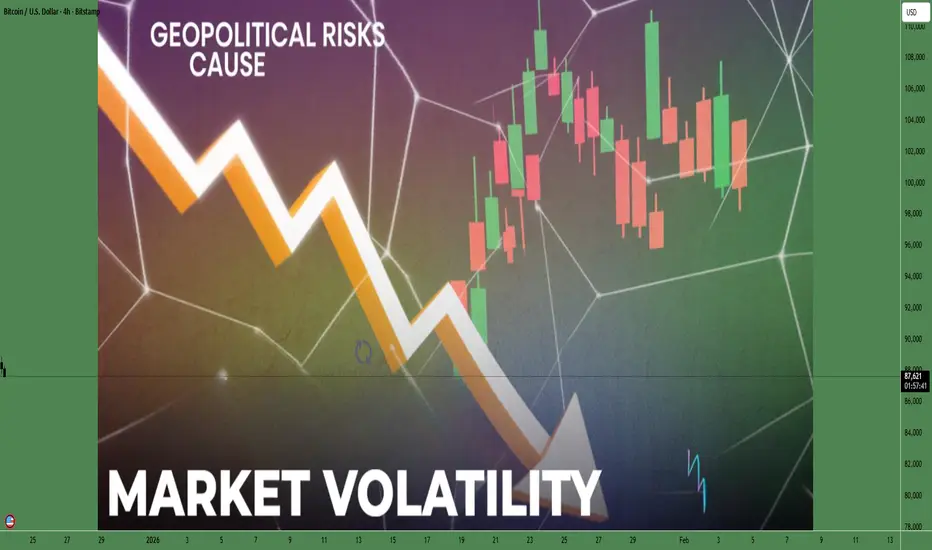
Geopolitical risk refers to the uncertainty and instability arising from political events, international conflicts, diplomatic tensions, trade disputes, sanctions, wars, terrorism, and changes in government policies across countries. In an increasingly interconnected global economy, geopolitical developments in one region can rapidly spill over into global financial markets. As a result, geopolitical risk has become one of the most powerful and unpredictable drivers of market volatility, affecting equities, bonds, commodities, currencies, and even cryptocurrencies.
Understanding the Link Between Geopolitics and Markets
Financial markets thrive on stability, predictability, and confidence. Geopolitical events disrupt these conditions by introducing uncertainty about future economic outcomes. When investors are unable to accurately assess risks or forecast returns due to political instability, they tend to react emotionally—often selling riskier assets and moving capital toward safer investments. This sudden shift in investor behavior leads to sharp price movements, higher volatility, and sometimes prolonged market turbulence.
Markets are forward-looking by nature. Even the expectation of a geopolitical event—such as a potential war, sanctions, or breakdown of trade negotiations—can trigger volatility well before the event actually occurs. This makes geopolitical risk particularly dangerous, as markets may overreact to rumors, media headlines, or speculative assessments.
Types of Geopolitical Events That Trigger Volatility
Several forms of geopolitical risk have historically caused significant market disruptions:
Wars and Military Conflicts: Armed conflicts directly impact global supply chains, energy markets, and investor confidence. Wars often lead to spikes in oil, gold, and defense stocks, while equities and emerging market assets may decline sharply.
Trade Wars and Economic Sanctions: Trade disputes between major economies can disrupt global commerce, raise inflation, and reduce corporate profits. Tariffs and sanctions increase uncertainty for multinational companies, leading to stock market volatility.
Political Instability and Regime Changes: Coups, revolutions, contested elections, or sudden policy shifts can destabilize domestic markets and cause capital flight, especially in developing economies.
Terrorism and Security Threats: Major terrorist attacks often trigger immediate market sell-offs due to fear and uncertainty, particularly in travel, tourism, and financial sectors.
Diplomatic Tensions: Breakdown in diplomatic relations between powerful nations can affect currency markets, defense stocks, and global investor sentiment.
Impact on Different Asset Classes
Geopolitical risk does not affect all markets equally. Its impact varies across asset classes:
Equity Markets: Stock markets usually react negatively to rising geopolitical tensions. Higher uncertainty leads to lower risk appetite, reduced valuations, and sharp intraday swings. Defensive sectors like utilities and consumer staples may outperform, while cyclical sectors suffer.
Bond Markets: Government bonds of stable economies often benefit from “flight-to-safety” behavior. Yields fall as investors seek protection, while bonds from politically unstable regions face rising yields and falling prices.
Commodities: Commodities are highly sensitive to geopolitical risk. Oil prices often surge during Middle East tensions, while gold tends to rise as a safe-haven asset. Agricultural and industrial commodities may also face supply disruptions.
Currency Markets: Safe-haven currencies such as the US dollar, Swiss franc, and Japanese yen usually strengthen during geopolitical crises, while currencies of emerging markets and conflict-affected regions weaken sharply.
Cryptocurrencies: Although sometimes viewed as alternative safe assets, cryptocurrencies often experience heightened volatility during geopolitical shocks due to speculative behavior and liquidity concerns.
Investor Psychology and Volatility Amplification
Geopolitical risk amplifies volatility largely through investor psychology. Fear, uncertainty, and herd behavior play a crucial role in market reactions. News headlines, social media, and 24/7 global media coverage intensify emotional responses, often leading to exaggerated price movements. Algorithmic and high-frequency trading systems further accelerate volatility by reacting instantly to geopolitical news triggers.
In many cases, markets initially overreact to geopolitical events, followed by partial recoveries once the situation becomes clearer. However, prolonged or escalating conflicts can lead to sustained volatility and long-term repricing of assets.
Role of Globalization and Interconnected Markets
Globalization has magnified the impact of geopolitical risk on financial markets. Modern supply chains span multiple countries, meaning disruptions in one region can affect production, inflation, and earnings worldwide. Financial institutions are also deeply interconnected, allowing shocks to spread rapidly across borders. This interconnectedness ensures that geopolitical risk is no longer a local issue—it is a global market concern 🌐.
Risk Management and Strategic Implications
For investors and traders, understanding geopolitical risk is essential for effective risk management. Diversification across asset classes, regions, and sectors helps reduce exposure to political shocks. Hedging strategies using options, commodities like gold, or safe-haven currencies can also mitigate downside risk. Long-term investors often benefit from maintaining discipline and avoiding panic-driven decisions during geopolitical crises.
From a policy perspective, central banks and governments closely monitor geopolitical developments, as they can influence inflation, growth, and financial stability. In extreme cases, geopolitical shocks may prompt emergency monetary or fiscal interventions to stabilize markets.
Conclusion
Geopolitical risk is a persistent and unavoidable feature of global financial markets. By disrupting economic stability, altering investor sentiment, and triggering rapid capital flows, geopolitical events are a major cause of market volatility. As global political dynamics continue to evolve—with rising multipolar tensions, trade fragmentation, and regional conflicts—markets are likely to experience frequent bouts of uncertainty and sharp price swings.
For market participants, the key lies not in predicting geopolitical events—which is often impossible—but in understanding their potential impact and preparing resilient investment strategies. In an era where politics and markets are deeply intertwined, geopolitical risk will remain one of the most powerful forces shaping financial market volatility 📊⚠️.
Understanding the Link Between Geopolitics and Markets
Financial markets thrive on stability, predictability, and confidence. Geopolitical events disrupt these conditions by introducing uncertainty about future economic outcomes. When investors are unable to accurately assess risks or forecast returns due to political instability, they tend to react emotionally—often selling riskier assets and moving capital toward safer investments. This sudden shift in investor behavior leads to sharp price movements, higher volatility, and sometimes prolonged market turbulence.
Markets are forward-looking by nature. Even the expectation of a geopolitical event—such as a potential war, sanctions, or breakdown of trade negotiations—can trigger volatility well before the event actually occurs. This makes geopolitical risk particularly dangerous, as markets may overreact to rumors, media headlines, or speculative assessments.
Types of Geopolitical Events That Trigger Volatility
Several forms of geopolitical risk have historically caused significant market disruptions:
Wars and Military Conflicts: Armed conflicts directly impact global supply chains, energy markets, and investor confidence. Wars often lead to spikes in oil, gold, and defense stocks, while equities and emerging market assets may decline sharply.
Trade Wars and Economic Sanctions: Trade disputes between major economies can disrupt global commerce, raise inflation, and reduce corporate profits. Tariffs and sanctions increase uncertainty for multinational companies, leading to stock market volatility.
Political Instability and Regime Changes: Coups, revolutions, contested elections, or sudden policy shifts can destabilize domestic markets and cause capital flight, especially in developing economies.
Terrorism and Security Threats: Major terrorist attacks often trigger immediate market sell-offs due to fear and uncertainty, particularly in travel, tourism, and financial sectors.
Diplomatic Tensions: Breakdown in diplomatic relations between powerful nations can affect currency markets, defense stocks, and global investor sentiment.
Impact on Different Asset Classes
Geopolitical risk does not affect all markets equally. Its impact varies across asset classes:
Equity Markets: Stock markets usually react negatively to rising geopolitical tensions. Higher uncertainty leads to lower risk appetite, reduced valuations, and sharp intraday swings. Defensive sectors like utilities and consumer staples may outperform, while cyclical sectors suffer.
Bond Markets: Government bonds of stable economies often benefit from “flight-to-safety” behavior. Yields fall as investors seek protection, while bonds from politically unstable regions face rising yields and falling prices.
Commodities: Commodities are highly sensitive to geopolitical risk. Oil prices often surge during Middle East tensions, while gold tends to rise as a safe-haven asset. Agricultural and industrial commodities may also face supply disruptions.
Currency Markets: Safe-haven currencies such as the US dollar, Swiss franc, and Japanese yen usually strengthen during geopolitical crises, while currencies of emerging markets and conflict-affected regions weaken sharply.
Cryptocurrencies: Although sometimes viewed as alternative safe assets, cryptocurrencies often experience heightened volatility during geopolitical shocks due to speculative behavior and liquidity concerns.
Investor Psychology and Volatility Amplification
Geopolitical risk amplifies volatility largely through investor psychology. Fear, uncertainty, and herd behavior play a crucial role in market reactions. News headlines, social media, and 24/7 global media coverage intensify emotional responses, often leading to exaggerated price movements. Algorithmic and high-frequency trading systems further accelerate volatility by reacting instantly to geopolitical news triggers.
In many cases, markets initially overreact to geopolitical events, followed by partial recoveries once the situation becomes clearer. However, prolonged or escalating conflicts can lead to sustained volatility and long-term repricing of assets.
Role of Globalization and Interconnected Markets
Globalization has magnified the impact of geopolitical risk on financial markets. Modern supply chains span multiple countries, meaning disruptions in one region can affect production, inflation, and earnings worldwide. Financial institutions are also deeply interconnected, allowing shocks to spread rapidly across borders. This interconnectedness ensures that geopolitical risk is no longer a local issue—it is a global market concern 🌐.
Risk Management and Strategic Implications
For investors and traders, understanding geopolitical risk is essential for effective risk management. Diversification across asset classes, regions, and sectors helps reduce exposure to political shocks. Hedging strategies using options, commodities like gold, or safe-haven currencies can also mitigate downside risk. Long-term investors often benefit from maintaining discipline and avoiding panic-driven decisions during geopolitical crises.
From a policy perspective, central banks and governments closely monitor geopolitical developments, as they can influence inflation, growth, and financial stability. In extreme cases, geopolitical shocks may prompt emergency monetary or fiscal interventions to stabilize markets.
Conclusion
Geopolitical risk is a persistent and unavoidable feature of global financial markets. By disrupting economic stability, altering investor sentiment, and triggering rapid capital flows, geopolitical events are a major cause of market volatility. As global political dynamics continue to evolve—with rising multipolar tensions, trade fragmentation, and regional conflicts—markets are likely to experience frequent bouts of uncertainty and sharp price swings.
For market participants, the key lies not in predicting geopolitical events—which is often impossible—but in understanding their potential impact and preparing resilient investment strategies. In an era where politics and markets are deeply intertwined, geopolitical risk will remain one of the most powerful forces shaping financial market volatility 📊⚠️.

Hye Guys,Welcome to a professional trading journey built on precision, discipline, and smart money concepts.
📞 Phone: +91 93159 78955
💬 WhatsApp: wa.link/kdkejz
📩 Contact Mail: globalwolfstreet@gmail.com
📞 Phone: +91 93159 78955
💬 WhatsApp: wa.link/kdkejz
📩 Contact Mail: globalwolfstreet@gmail.com
פרסומים קשורים
כתב ויתור
המידע והפרסומים אינם מיועדים להיות, ואינם מהווים, ייעוץ או המלצה פיננסית, השקעתית, מסחרית או מכל סוג אחר המסופקת או מאושרת על ידי TradingView. קרא עוד ב־תנאי השימוש.
Hye Guys,Welcome to a professional trading journey built on precision, discipline, and smart money concepts.
📞 Phone: +91 93159 78955
💬 WhatsApp: wa.link/kdkejz
📩 Contact Mail: globalwolfstreet@gmail.com
📞 Phone: +91 93159 78955
💬 WhatsApp: wa.link/kdkejz
📩 Contact Mail: globalwolfstreet@gmail.com
פרסומים קשורים
כתב ויתור
המידע והפרסומים אינם מיועדים להיות, ואינם מהווים, ייעוץ או המלצה פיננסית, השקעתית, מסחרית או מכל סוג אחר המסופקת או מאושרת על ידי TradingView. קרא עוד ב־תנאי השימוש.