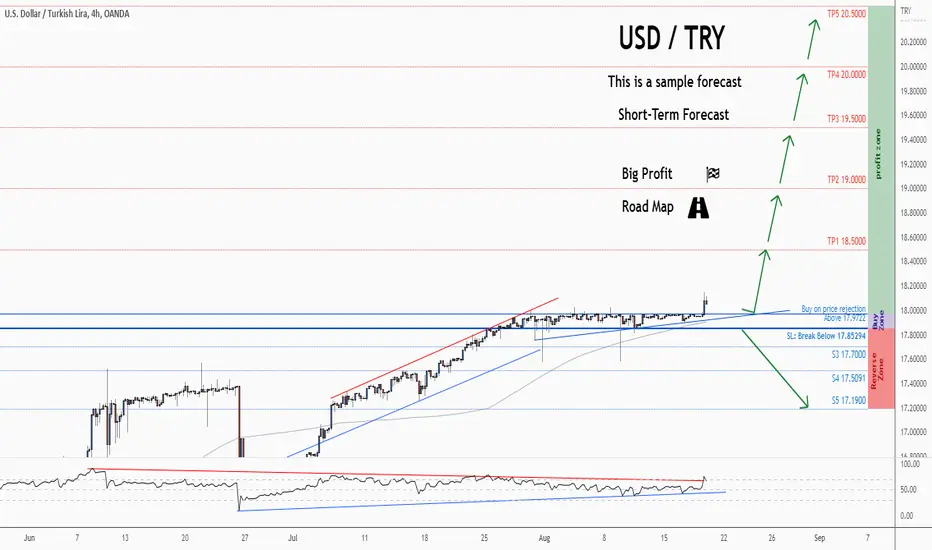
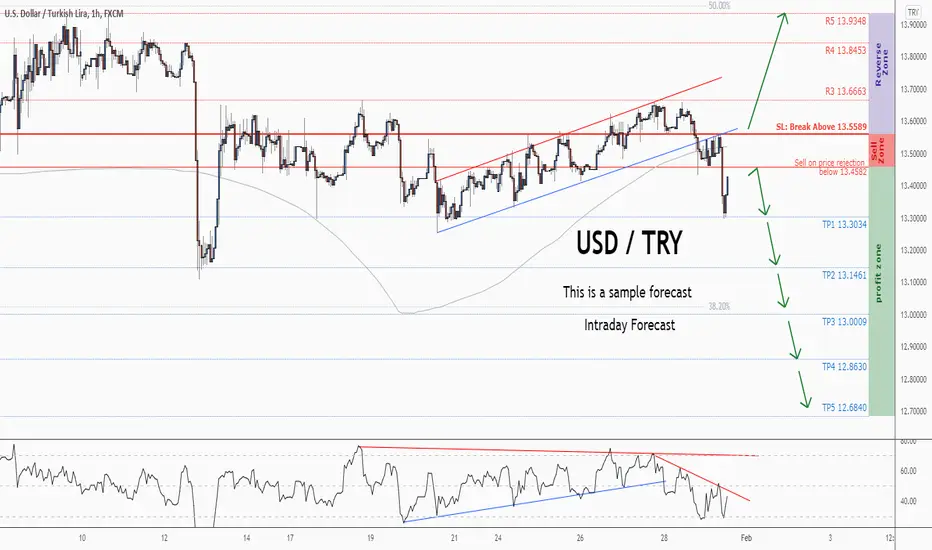
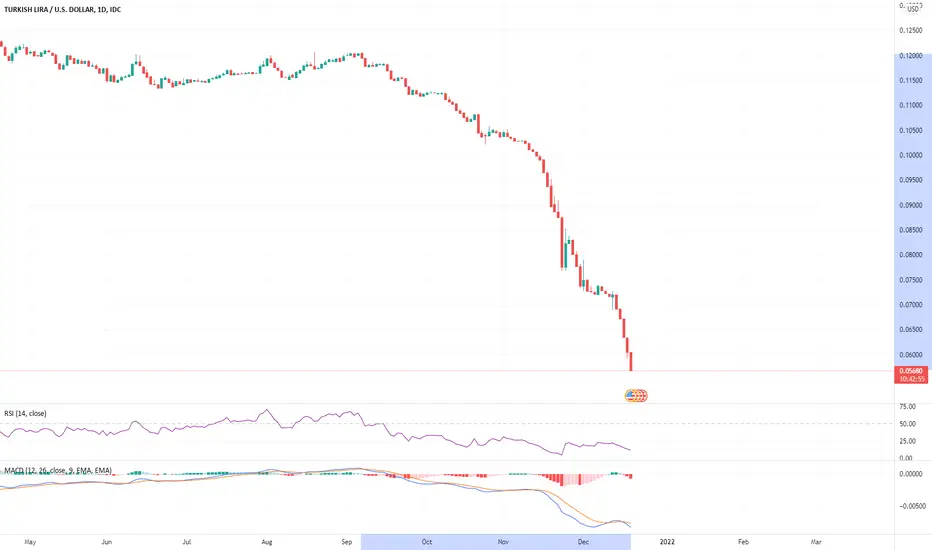
U.S. Dollar / Turkish Lira

No trades
No trades

Peers for comparison


Key data points


Volume
Previous close
Open
Day's range

Pair info


The US Dollar vs. the new Turkish Lira. A new version of the Turkish Lira was established in 2005 after the value of the old Lira fell to drastically low levels. The Turkish economy relies on the foreign cash looking for short term profits making the Lira subject to severe depreciation. Political conditions and EU economic issues have delayed Turkey's effort to join the Euro-Zone.

See all ideas 

Summarizing what the indicators are suggesting.
Oscillators
Neutral
Oscillators
Neutral
Summary
Neutral
Summary
Neutral
Summary
Neutral
Moving Averages
Neutral
Moving Averages
Neutral
Displays a symbol's price movements over previous years to identify recurring trends.

Frequently asked questions


Today, USD/TRY rate is 50.45874 TRY.

For broader market analysis, dive into the technicals on the USDTRY live chart and read the latest USDTRY news:
– Turkey - Factors to Watch on Nov 18
– Turkey - Factors to Watch on Nov 11
– Turkey - Factors to Watch on Nov 9
Markets don't sleep, here's what's going on with USDTRY at the moment:
– Turkey - Factors to Watch on Nov 18
– Turkey - Factors to Watch on Nov 11
– Turkey - Factors to Watch on Nov 9

See more updates in real-time with our News Flow.
The safest way to trade USDTRY is through a reliable broker. Create an account, fund it, and place a buy order.

You can trade USDTRY directly from TradingView:
– Choose a broker: Explore our supported trading partners and pick one that fits your needs
– Compare options: View available brokers side by side to evaluate fees and features
– Connect your account: Open Supercharts, click "Trade", select your broker, and log in
– Start trading: Place orders without leaving the chart

Tip: If you're new to trading, try paper trading first — it lets you practice strategies in real market conditions without risking funds.
It's worth checking USDTRY rate change for various periods to get the full picture:
– 1 day — +0.15%
– 1 week — +0.41%
– 1 month — +1.90%

USDTRY's all-time low was 0.00230 TRY (Nov 8, 1989), and its highest price is 50.44165 TRY (Nov 18, 2026). Track the dynamics with the latest forex news right on TradingView.
When trading USDTRY, one should keep in mind many factors.

First, analyze the fundamentals:
– Macroeconomic data: Inflation, GDP, employment, and other key indicators in the economies behind both currencies
– Central bank policy: Interest rate decisions and monetary policy from the respective central banks
– Market sentiment: Check what other traders anticipate
– News flow: Geopolitical events and economic releases

Then check technical ratings:
– Today — buy
– 1-week — buy
– 1-month — strong buy

Identify the trend, watch key levels (support and resistance), consider volatility and upcoming economic events. Then, you'll be closer to an informed decision.
USDTRY volatility measures how much the exchange rate fluctuates over time, i.e. how quickly and how strongly it moves up or down.

The current volatility rating is 0.19%.

What it means for traders:
– Higher volatility: Larger and faster price swings → higher risk and opportunity
– Lower volatility: More stable price movement → smaller trading ranges
– Market behavior: Volatility often increases during major economic news or central bank decisions

Volatility helps traders estimate risk and position sizing. It's also useful for adapting strategies to market conditions.

How to use volatility:
– Compare volatility across other currency pairs
– Combine with technical analysis (trends, support/resistance)
– Monitor economic events that may increase market movement
USDTRY is quoted as how many TRY (quote currency) it takes to buy one USD (base currency).

For example, if the pair trades at 1.50, it means 1 USD = 1.50 TRY.

What can influence the rate:
– Supply and demand: Driven by trade, investment flows, and speculation
– Economic data: Inflation, GDP, employment reports
– Central bank policy: Interest rates and monetary decisions

Follow these and more events in the Economic Calendar.