
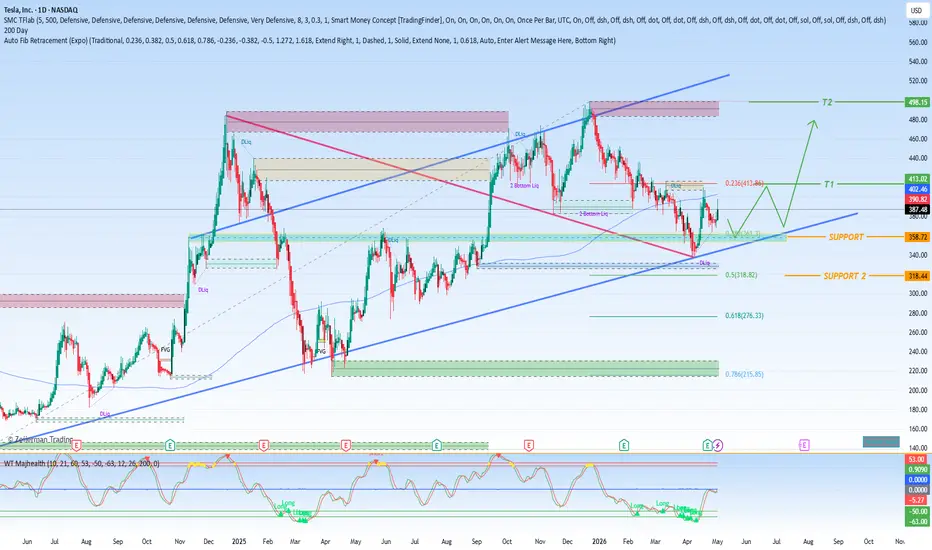
Shares of Tesla (NASDAQ:TSLA) rose by roughly 2% on Thursday after the company announced a significant milestone in the ramp-up of its electric Semi truck production, highlighting meaningful progress in its push into the commercial transportation sector.
According to the company, operations at its Nevada facility are now transitioning toward higher-volume manufacturing. This marks an important evolution from earlier phases that were limited to small-scale, pilot production runs. The shift indicates that Tesla is beginning to overcome some of the bottlenecks and technical challenges that have delayed the Semi program for years, moving closer to more consistent and scalable output supported by increased automation.
This development is seen as a key step in Tesla’s broader strategy to expand beyond passenger vehicles and establish a foothold in freight and logistics. The Semi has the potential to reshape parts of the trucking industry, particularly if it can deliver on promises of lower operating costs. For fleet operators, savings on fuel could be a major incentive—especially in an environment where oil and diesel prices remain relatively high.
Market analysts point out that rising diesel costs strengthen the financial argument for adopting electric trucks, as long-term savings could offset higher upfront investment. However, they also caution that challenges remain, including the need for widespread charging infrastructure, grid capacity, and the cost of electricity in different regions. These factors will likely play a critical role in determining how quickly electric trucks like the Semi gain traction in the commercial market.

면책사항
해당 정보와 게시물은 금융, 투자, 트레이딩 또는 기타 유형의 조언이나 권장 사항으로 간주되지 않으며, 트레이딩뷰에서 제공하거나 보증하는 것이 아닙니다. 자세한 내용은 이용 약관을 참조하세요.
면책사항
해당 정보와 게시물은 금융, 투자, 트레이딩 또는 기타 유형의 조언이나 권장 사항으로 간주되지 않으며, 트레이딩뷰에서 제공하거나 보증하는 것이 아닙니다. 자세한 내용은 이용 약관을 참조하세요.