Introduction to trailing stops
A trailing stop is a dynamic type of a stop-loss order. It helps you secure your profits when following a trend and limit losses when the market turns down.
CONTENTS:
What is a trailing stop
A trailing stop automatically moves a set distance behind your position as long as the price moves in your favor. It helps riding a trend without the need for manual position adjustment.
Once the trend reverses, the trailing stop freezes at its highest achieved level to secure your gains. If the price reaches this level, the trade automatically closes.
For example, if you buy a stock at $100 and the price rises to $120, a 5% trailing stop will follow the price up to $114 and freeze there, automatically locking in your profits if the market reverses.
How to set a trailing stop
When setting a trailing stop, finding the right distance is the key.
- If it's too tight — the position may close prematurely due to minor price fluctuations or regular market noise
For instance, you buy a stock at $100, and it rises to $120. You then set a trailing stop of 2%, meaning the stop price automatically adjusts to remain 2% below the highest price reached. At $120, the stop would be set at $117.60.
A routine pullback from $120 to $117.50 triggers the stop, closing the position. Shortly afterward, the stock resumes its upward move and eventually reaches $130, leaving you out of the trade.
- If it's too loose — the position may remain open for too long, leading to a significant loss of accumulated gains
For example, you buy a stock at $100, and it rises steadily to $130. You then set a trailing stop of 15%. At $130, the stop would therefore be at $110.50. The stock subsequently reverses and begins to decline. Because the trailing stop is positioned relatively far below the market price, the position remains open throughout much of the pullback. Eventually, the stock falls to $110.50, triggering the stop and closing the trade.
While the trade remains profitable, the final outcome is significantly less favorable than it appeared at the peak. Although the stock reached $130, representing a 30% gain from the $100 entry price, the trailing stop closes the position at $110.50, locking in a profit of 10.5%. As a result, $19.50 of the $30 unrealized gain, or 65% of the profits accumulated at the peak, is given back before the trade is closed.
How to place trailing stops
Make sure that your broker supports this order type. You can consult the detailed information on the compare brokers page.
Once you are connected:
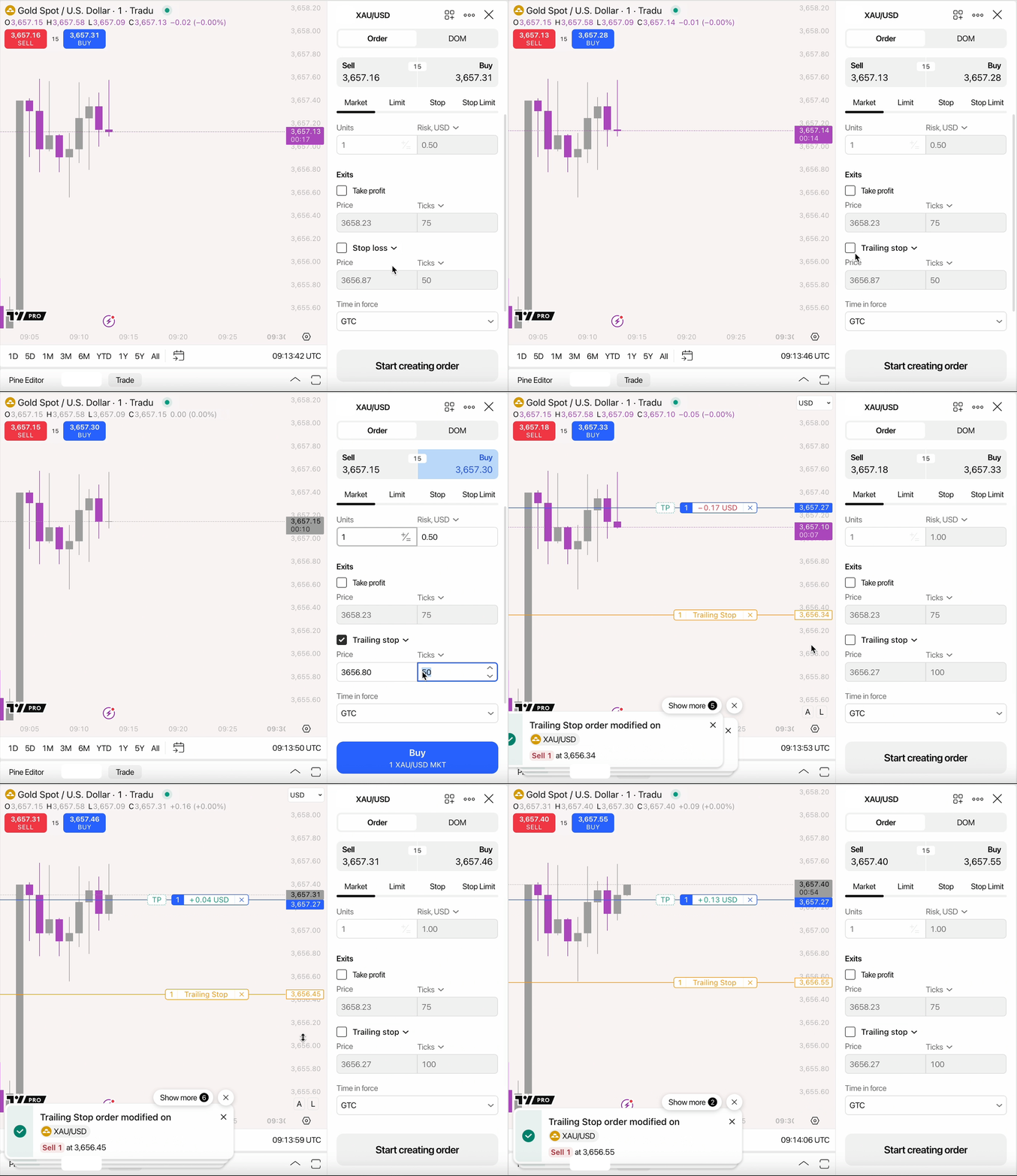
- Click the "Trade" button in the upper-right corner of Supercharts
- Select "Trailing stop"
- Specify the trailing distance
Trailing stops in a nutshell
Trailing stops can be particularly useful for trend trading. They may help you save most of your gains once trend reverses and prevent larger losses. However, you should carefully consider the placement, ensuring your setup aligns with the asset's volatility to truly maximize your returns.
Also read: