NIO Inc. (NIO, BUY)COVID Lockdowns Weigh on 2Q Guidance; Set to Recover in 2H
Maintain BUY and Decreasing PT to $35
NYSE:NIO
We are maintaining our BUY rating and decreasing PT to $35 (was $40) after NIO reported in line 1Q:22 revenue, with margins below expectations. With 1Q deliveries (25,768) preannounced, investors primarily focused on 1Q margin, 2Q guidance and 2H outlook. Vehicle margin declined to 18.1% in 1Q, down 310bps y/y and 280bps q/q, 136bps/86bps below Tiger/consensus, mainly due to increased battery cost and revenue mix shift. The company guided 2Q deliveries to 23,000 – 25,000, decreasing from 25,768 in 1Q, primarily due to supply chain disruptions caused by COVID. Despite the supply-side constraints, NIO's order intake reached a record-high in May, suggesting robust demand. 2Q vehicle margin should further decrease from 1Q, as battery cost, which peaked in April, is now linked to raw material price based on the new procurement agreement with the supplier. Although NIO increased prices by RMB 10K for all models in May, 2Q deliveries are still pre-price-adjustment vehicles. However,
as production recovers in 2H and battery raw material price declines, gross margin should start
to recover in 3Q. NIO will start delivering ET5 in September, and ES7 in August. NIO plans to
start delivering the mass-market brands in 2H:24.
Overall, beyond the temporary supply chain constraints, we see robust volume and margin recovery in 2H as NIO starts to deliver two new NT2.0 models (ET5 and ES7) with higher gross margins. Current valuation of 2.0x '23E sales is also attractive compared with TSLA's 7.2x. Maintain BUY.
Tencent Holdings Ltd. (700-HK, BUY)1Q Miss and COVID Likely Delays Recovery, but Easing Regulations Should Support Investor Sentiment; Maintain BUY and Decreasing PT to HK$400
HKEX:700
We are maintaining our BUY rating but decreasing PT to HK$400 (was HK$475) after Tencent reported 1Q earnings miss and implied continued macro challenges for 2Q. Domestic game revenue declined 1% y/y. Int'l game revenue grew 8% CC y/y (vs. +24% in 4Q, excluding one�time accounting adjustments), accounting for 24% (flat y/y) of total game revenue. Advertising revenue took the biggest hit from COVID lockdowns and declined 18% y/y (vs. -13% in 4Q). FinTech+Cloud growth also decelerated to +10% y/y (vs. +25% in 4Q). On the last earnings call, mgmt. indicated a recovery could happen in 2H. But given the prolonged lockdowns in some cities including Shanghai and the weakness in recent macro data, we think the recovery will be further relayed to 4Q. In 1Q, the company repurchased 8,864,400 shares for approximately HKD3,697 million.
Overall, while the operating environment will likely remain challenging in the near term, we believe that, with strong operating cash flow, Tencent is better positioned to take the opportunity to build around its long-term strategic areas such as int'l games, Video Accounts, and SaaS offerings. Moreover, while it will take time to see the benefits, the Chinese government is easing regulations for the digital economy, which should give investors more confidence in the sector
Pinduoduo, Inc.(PDD,HOLD)Strong Marketplace Drives 1Q Beat, butFacingNear Term Challenges
Maintain HOLD and$50 PT
NASDAQ:PDD
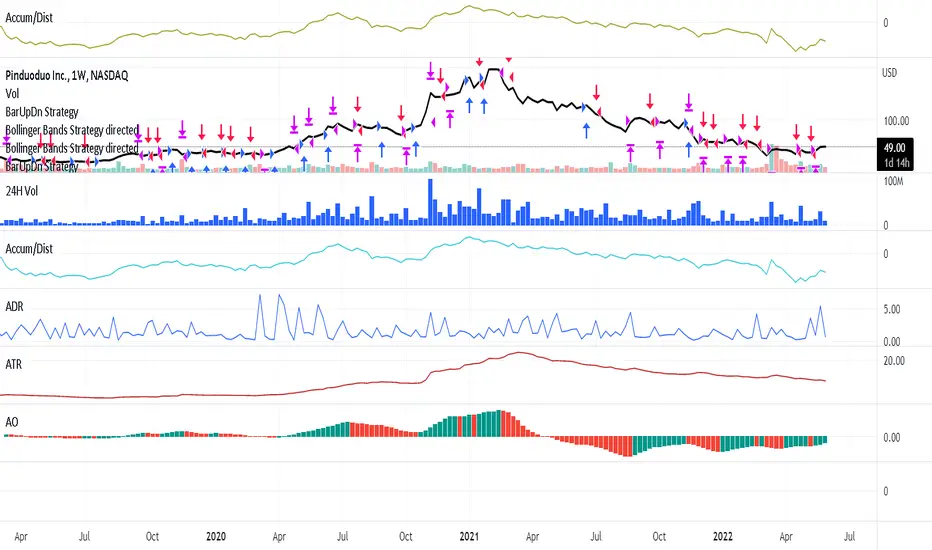
We are maintaining our HOLD rating and$50 price target after PDD beat 1Q revenue and profit estimates but implies potential revenue deceleration and a step up in expenses due to COVID. Active buyers reached 882M, adding 13Mq/q, improvingfrom+1M in 4Q, with MAUs also growing18M q/q to751M, after decreasing 8M in 4Q. But mgmt. notes that with the current scale, active buyer growth should inevitably slow down. Revenue, excluding 1P sales, increased39% y/y, accelerating10pts from 4Q,driven by 29% y/y growth of online marketing revenue (vs. +19% in 4Q) and 91% growth of transaction services revenue(vs. +108% in 4Q). 1Q Non-GAAP operating margin was 15.5%, lower than the all-time high of 30.8% in 4Q(note that 4Q profit benefited from a one-off rebate from a cloud service provider, which loweredGOGS and R&D expenses), but improved significantly from (-14.3%)in 1Q:21, primarily due to operating leverage from sales and marketing, while R&D increased modestly.The company reiterates plans to invest in agricultural, primarily in R&Dbut indicates it will take time to identify good projects and financial metrics are not KPIs. As usual, the company does not provide guidance for 2Q, but points out COVID lockdowns in cities including Shanghai, which should weigh on 2Q growth and might incur additional costs. Overall, PDD delivered a solid 1Q, with 3P revenue re-accelerating despite COVID disruptions since late March. However, we expect COVIDlockdowns to have a larger impact onPDD in 2Q given peers have more established logistics networks.
NASDAQ:PDD Alibaba (BABA, BUY) Solid F4Q; Now is the Inflection Point
We are upgrading our rating from HOLD to BUY and maintain our PT of $130 as F4Q results beat estimates and we see F1Q (June quarter) as the long-awaited inflection point for the company. CMR was flat y/y in F4Q (vs. -1% in Dec. quarter), despite a low-single-digit decline in GMV due to disruptions in supply chain and logistics in March. Cloud revenue grew 12% y/y, decelerating 8pts from F3Q due to macro weakness and COVID. Global AACs reached 1.31B, adding 30M sequentially, with 1B from China. Mgmt. indicates that June quarter will be more challenging as a result of COVID resurgence and lockdowns. In April, total revenue declined low-single-digit;China retail marketplace GMV declined low-teens due to supply chain and logistics disruptions, with May improving but still not fully recovered. Given the macro uncertainty, BABA is not providing revenue guidance for FY23. Repurchased 17.8M
ADSs for $2.0B during the quarter.
Despite the more challenging June quarter, we are upgrading BABA to BUY as we believe both revenue and profitability will bottom out and hit a long-awaited inflection point in the quarter. With government's stimulus policies kicking in and an easier comp, BABA's revenue growth and margin should start to improve in the 2H. In addition, BABA is trading at 11x CY23E earnings, significantly lower than the five�year-average of 22x. Although the stock's growth thesis has been muted since 2021, we see positive earnings revisions and valuation improvement in the coming quarters. NYSE:BABA Nio Is Now Down Over 50% From Its HighElectric vehicle investors are well aware that NYSE:NIO stock has had a tough 2021, in part because the company had no new models while rivals including NYSE:XPEV and NASDAQ:LI launched new or substantially revised vehicles. But with the ET5, the ET7's launch confirmed for March, and at least one more new Nio expected before the end of next year, 2022 is already shaping up to be a different story. That, and not the latest COVID variant, is what Nio investors should be focused on right now.
Shares of Nio set their all-time high back on Jan. 11, when they traded at $66.99. On this Tuesday, the stock is down over 50% from that all-time high.
What's more important, the company delivered 24,439 EVs in the third quarter of this year, doubling the number of EVs delivered during the same period last year. As of Nov. 30, cumulative deliveries of NIO’s three models have surpassed 156,000 vehicles.
On the other hand, NIO has already penetrated the European market, with Norway serving as a launching platform. Nonetheless, at the NIO Day, the company shared plans for further expansion overseas. The company plans to tap into Netherlands, Sweden, and Denmark in 2022, and by 2025, it plans to expand to more than 25 countries and regions globally. The business data will probably be better in 2022.
Is NIO set for a comeback? The stock is still valued higher than it's competitors in China, Li Auto and Xpeng, so it's possible it may continue to trade sideways for sometime. Massive Block Trades Hammered These StocksTencent Music NYSE:TME which is basically like Spotify NYSE:SPOT in China, plunged 33% on Friday. In addition, shares of Viacom NASDAQ:VIAC plunged 50% over the last week! What exactly is going on? Other big Chinese tech names like online tutoring and constant target of short sellers, GSX TechEd NYSE:GSX as well as Discovery NASDAQ:DISCA and Baidu NASDAQ:BIDU and video streaming giant NASDAQ:IQ also saw big declines. This price action is truly unprecedented, because all of these stocks, especially viacom, have large market caps and they didn't release any news during this time.
So the Wall Street Journal and Bloomberg have been reporting that major banks like Goldman Sachs NYSE:GS and Morgan Stanley NYSE:MS have been forcibly liquidating the holdings of big family office, called Archegos. Archegos is the family office of a famous investor, Bill Hwang. Apparently Deutsche Bank NYSE:DB and UBS were also serving as prime brokers to Archegos and were lending it cash and stocks. Before this crisis, it was estimated that Archegos was managing around 10 billion dollars.
The details are still murky and not a lot of information has come out, but apparently the forced selling in the aforementioned shares totaled 30 BILLION DOLLARS! media reports indicate (although we can't verify this) that Archegos was using complex swap arrangements to build up stakes of 10% or even more of some of these companies. One of the reasons the fund used swaps was probably so that it didn't have to file additional regulatory disclosures. Most importantly though is that it seems there was an immense amount of leverage in the strategy that Archegos was pursuing.
Only the bankers involved in this story really know what happened, but it's likely that some of the bets Archegos made (whether long or short we don't know) went sideways and the banks forcibly dumped his shares before they would be on the hook for the losses.
The sizes of some of these block trades were just astounding. The Wall Street Journal just reported that on Friday Morning Goldman Sachs sold 100 million shares of Tencent Music for 1.8 billion dollars and Morgan Stanley followed in the afternoon with 36 million more shares that sold for around 600 million dollars. That's some weight on the tape. There was also fierce selling of Viacom and the other aforementioned names last week.
It's likely that the banks were able to sell some part of these massive holdings to their other hedge fund clients, but a substantial amount were probably just dumped on the market at whatever price people were willing to take.
It's probable that these stocks will recover somewhat over the coming days, especially because the declines are attributable to forced selling.
Media reports indicate that the forced selling is mostly over, but anyone thinking about rushing into these discount stocks should consider that maybe this story isn't quite over yet.
Ehang Stock is Too Hot to TouchHas anyone seen this company Ehang? NASDAQ:EH This company is too cool. It's a Chinese company that manufacturers flying cars. We want to buy one.
TradingView really needs to start letting us post pictures and not just charts:( but basically Ehang manufactures and sells these flying cars that use dozens of helicopter blades to levitate. You've never seen anything like these "cars" or vehicles before, so I suggest you all check out their website to see some pictures www.ehang.com
As for the business case, besides transport and taxi functions, Ehang is marketing them to be used for firefighting and package delivery. They are working on their autonomous technology, so basically they want these "vehicles" to fly themselves.
So this company listed on Nasdaq in December 2019, and the shares listed at $12.5 dollars per share. Earlier this month, the shares were trading above $100 dollars, and went as high as $120 dollars per share.
But then a short report came out from this company called Wolfpack Research alleging all kinds of misdeeds at Ehang. You can check out the report here: wolfpackresearch.com
Please note, we at Tiger Brokers take NO side or judgement in this dispute between Wolfpack and Ehang and it should be noted that Ehang has disputed Wolfpack's allegations. WolfPack also previously went short Chinese online video platform iQiyi NASDAQ:IQ and that stock hasn't collapsed, so do your own research on this one.
Now Ehang has some pretty cool looking technology, and even after the recent fall after the short report, the stock is still up over 4X since it listed at the end of 2019. Right now Ehang has a market cap of $2.9 billion dollars and when you look at the financial reports, the valuation is certainly rich and investors are really excited about the firm's prospects.
In Q3 2020, which was the firm's last published financial report, they had about $10.4 million dollars in revenues and basically broke even with a net loss of about $150K USD, which was a marked improvement from Q2 2020 when revenue was around $5 million dollars and the loss was around $2.8 million dollars. The balance sheet doesn't look bad either and Ehang has about $35 million dollars in cash, cash equivalents, and short term investments.
Again, we take no opinion on the short report, but what potential traders NEED to pay attention to is the float of Ehang.
You see Ehang has about 54 million shares outstanding, but only 9.5 million are floating on the exchange, so with so few floating shares, the stock is normally pretty volatile. Yesterday 7.2 million shares were traded.
No matter which side you take, be careful with this one! Alibaba Stock is Looking Really Cheap Right NowNYSE:BABA is one of the world's leading Ecommerce companies in the world's largest consumer market. The company is growing super fast too. According to the Q4 earnings release they put out last week, they had about 900 million people on their online marketplaces each month!
In Q4 2020 revenue for Alibaba was 221 billion Chinese Yuan (CNY) or about 33 billion USD, which was up 37% year over year. Net income was 77 billion CNY or about 12 billion USD, up 27% year on year. Basically Alibaba is killing it and despite their massive size, they continue to grow really fast. Let's not forget, besides Ecommerce, the company also has major businesses in cloud computing (just like Amazon NASDAQ:AMZN ) and they also have China's number 2 market share food delivery business "Eleme" which is similar to Doordash NYSE:DASH
So how does it make sense for such a fast growing Ecommerce company to have a PE ratio of just 30?!? For reference, Amazon has a PE ratio of 79! Now of course Amazon's price might be a bit rich thanks to Jerome Powell and his big money printer, but should Amazon really have a PE that's almost triple that of Alibaba?
China's macroeconomy is growing much faster than America's, China's middle class (350 million plus) exceeds that of America's entire population. Also Alibaba's cloud revenue is soaring. It grew by 50% year over year in the last quarter to 16 billion CNY, about 2.4 billion USD and it just made positive EBITA for the first time. For comparison, Amazon's cloud business in Q4 grew its revenue by 28%. Of course Amazon is a great company: but there is a lot of risk there too, US interest rates are at record lows and lots of Pols down in Washington DC are talking antitrust.
Now of course everyone is freaking out because the Chinese Government delayed Ant Financial's IPO (Alibaba owns 33% of Ant) and the government is also investigating Alibaba for monopolistic practices. But seriously everyone needs to look through this, Ant will probably IPO in the future, and the anti-monopoly isn't really much to worry about either, apparently Alibaba was pressuring some of their merchants to not sell on competing platforms like NASDAQ:JD and Pinduoduo NASDAQ:PDD so even if this alleged practice at Alibaba stops, it doesn't really matter much to Alibaba. Chinese people are still gonna all sorts of things on Alibaba; the anti-monopoly investigation doesn't really matter and will probably just result in some minor changes at most.
Worth noting is Alibaba just sold five billion dollars of bonds yielding between 2.1% and 3.2%. These bonds are due between 20 and 40 years in the future, so if Investors really thought Alibaba was gonna go under, why would they accept such a low yield on such long term debt?
 Long
Long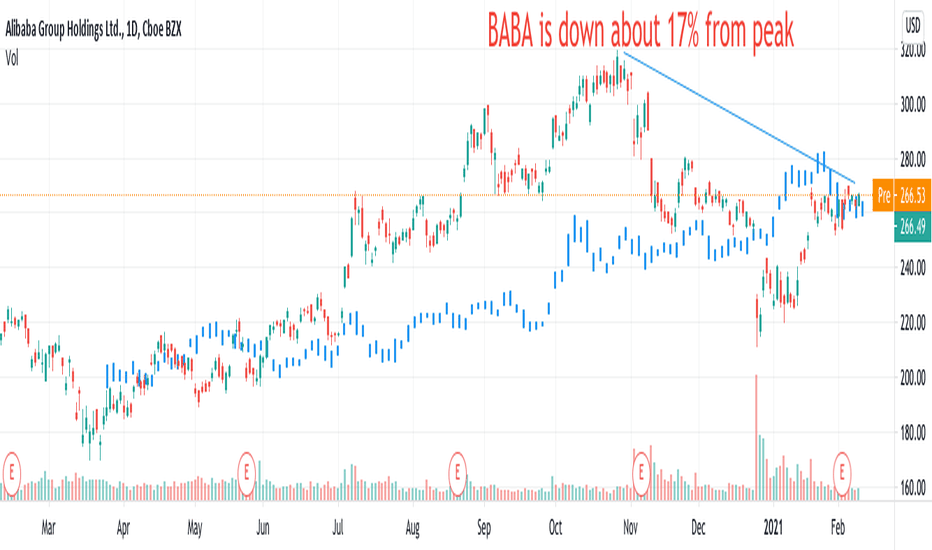
What is the Real Short Interest of GameStop?Who can't stop looking at Wall Street Bets these days? That site is hilarious.
After yesterday's tortured 30% selloff in GameStop, now there is a lot of speculation about what is going to happen today and what the real short interest is of NYSE:GME and other notable names.
So data analytics IHS Markit NYSE:INFO yesterday reported that they calculated that the short interest of GameStop had fallen radically to 39% yesterday, down from over 110% last week. The American financial media is reporting today that many hedge funds have been covering their shorts since yesterday, leading to a decline in the short interest.
However, who really believes this number? It's a bit suspicious isn't it? If you check with many brokers, THERE ARE NO STILL NO SHARES OF GAMESTOP AVAILABLE TO SHORT.
If GameStop short interest had really collapsed yesterday, then why aren't there ANY shares available to lend? Maybe, just maybe IHS Markit is wrong about what the short interest is! But this is an unproven allegation as its possible certain brokers have a pool of shares available to lend, however the lack of shares for lend at many brokers is certainly a point of note.
It's the same story with NYSE:AMC which also barely budged yesterday. But again, lots of US brokers have ZERO SHARES AVAILABLE OF AMC TO SHORT.
So GameStop and AMC are both selling off hard premarket today, around 20% each, but premarket has low liquidity, so if the real short interest is higher than is being reported by IHS, it's possible that another short squeeze could occur if the Reddit Army of Wall Street Bets focuses their efforts and buys in again en masse (it's also possible the stock could keep collapsing). According to media reports, Robinhood is still limiting trades of GameStop to a total holding of 20 shares per customer (as well as some other stocks like AMC), so if this changes, it could affect GameStop too.
Y'all probably also been hearing about a surge in the silver price and especially the most famous silver ETF AMEX:SLV This silver ETF surged 7% yesterday and it's selling off premarket, but the silver market is so much bigger than AMC, GameStop, and other hot names like NASDAQ:KOSS NASDAQ:BBBY NYSE:NOK NYSE:BB so it's highly unlikely the silver price and its most famous ETF are gonna move nearly as much as these stocks.
In conclusion, the battle over GameStop isn't necessarily over just yet.
This article is brought to you by Tiger Brokers, a leading online brokerage that has partnered with TradingView to provide US markets brokerage services to TradingView clients in Singapore and Malaysia. Tiger Brokers is a subsidiary of Nasdaq listed: NASDAQ:TIGR . Gamestop Will End in Tears; But Who Exactly Will Lose?NYSE:GME has been the craziest stock in the US market in recent weeks. What exactly is going on? Yesterday the stock went up 90% and aftermarket it went up another 40% to about $209 dollars per share. Before the open today, this is what investors should know:
The Stock started 2021 around $17-$18 USD per share. Since 2015, the stock has been slowly declining every year, because Gamestop is a bricks and mortar video game retailer in a world where Sony, Microsoft NASDAQ:MSFT , and other big video game developers are distributing their games via the cloud.
For years, short sellers have been making money on this stock as it's revenues and profits have been steadily declining since 2015:
In 2015, the company had $9.2 billion USD in revenues, but by 2020, total revenues had declined to $6.4 billion USD. Profits had also sharply declined from about $400 million USD in 2015 to a loss of about $460 million USD in 2020.
So why has the stock risen so much?
Basically, at the beginning of this year, major financial media outlets had noted that GameStop was the most shorted stock in the US markets and that the short interest was near 100%. One commentator on CNBC even stated "going into 2020, shorting GameStop was like shooting fish in a barrel."
BUT, forums started springing up on Reddit and other sites where large groups of retail investors started to challenge the shorts and bid up the price, in the hope that they could force the short sellers into a "SHORT SQUEEZE." What's a short squeeze? It's when the price of stock goes up so fast that the short sellers have to cover their losses by buying the stock as the price rises, causing the price to go up even higher. This happens because after selling short, the short seller has to buy back the shares at some point. If the price keeps rising, the short seller's broker will force them to buy back the shares that were sold short in order to limit losses. It already looks like there was a short squeeze yesterday, the question is whether the short squeeze will continue, or if Gamestop will fall back to earth.
So who are the shorts? The most famous are a bunch of Hedge Funds, most famously Melvin Capital. This fund is known for being spectacularly skilled at shorting, and backed by Point 72, that's Steven Cohen's family office and Citadel, the well known market maker and quant fund. Melvin is known as one of the biggest institutions shorting GameStop, but they are just one fund of many.
At the beginning of the year, according to media reports, Melvin had $12 billion in Capital, and last year the fund made 50% gain. But by this Monday it had lost 30% of its capital due to GameStop and other short positions surging in price.
Where do we go from here?
On Monday, GameStop closed at around $77 dollars. Yesterday it closed at $147 and it's up another 40% aftermarket. So Melvin is feeling the pain.
But, according to the Wall Street Journal, on Monday Melvin just got a $2.7 billion dollar cash injection from Citadel and Point 72 at these funds are trying to stabilize it. And the media is reporting that next week Melvin will probably get another $1 billion dollar cash injection.
There are two possible outcomes here:
1. The retail crowd might want to take some profits after the huge price runup. If this happens, the stock of GameStop could collapse and Melvin & Co. will get a big profit. Because at the end of the day, remember, Gamestop is a money losing company that doesn't have good prospects, and its present valuation is shall we say politely, "frothy."
2. The price keeps going up and Melvin and other funds are forced to cover their shorts at an immense loss. Or they are unable to cover the shorts at all because they lack sufficient capital. If this happens, the funds could lose everything, and even the brokers that manage their accounts could be on the hook for the losses. I n a worse case scenario it's a catastrophe for any institution involved.
What do you think will happen? Leave a comment! Now the reddit crowd is talking about movie theatre chain NYSE:AMC and retailer NASDAQ:BBBY
This article is brought to you by Tiger Brokers, a leading online brokerage that has partnered with TradingView to provide US markets brokerage services to TradingView clients in Singapore and Malaysia. Tiger Brokers is a subsidiary of Nasdaq listed: NASDAQ:TIGR ).
Just How Hot is the US Stock Market?It’s been stunning to watch the SP500 AMEX:SPY rise a staggering 70%+ since the lows of March 2020. As the market has risen, traders should also start to pay attention to aggregate exchange volumes to get an idea of where we are in this most aggressive of bull markets.
So AMEX:CBOE is the third largest US stock exchange after NASDAQ:NDAQ and the New York Stock Exchange, which is a subsidiary of Intercontinental Exchange NYSE:ICE . CBOE frequently publishes data about total trading volumes across all US exchanges and dark pools, both for total share volume and value traded.
When you look at the changes in the CBOE data over the past year, it’s absolutely staggering.
So just one year ago on January 27th, 2020, there were 8.2 billion shares traded in US markets, with an aggregate notional value of $410 billion dollars. And that’s just in one day.
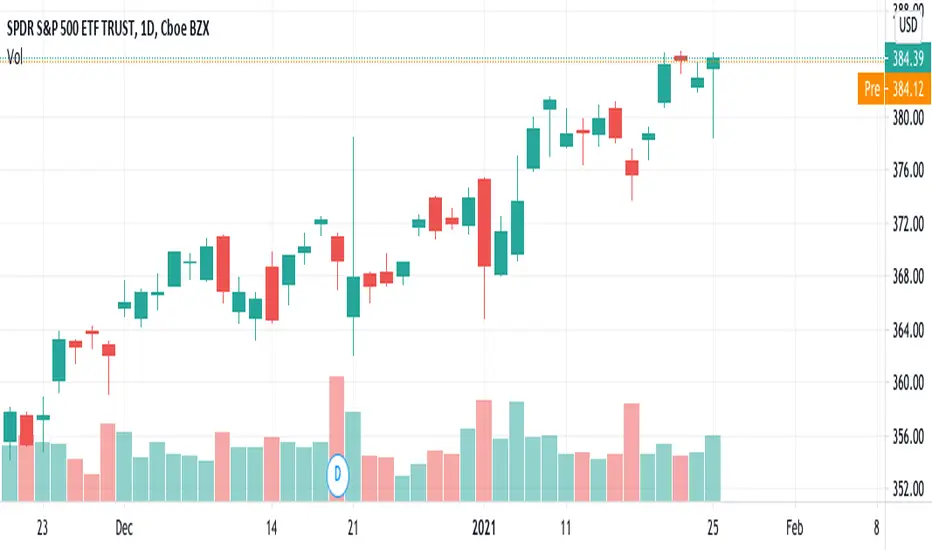
So what do the stats look like for 2021? Well, yesterday on January 25th, there were 16.6 billion shares traded with an aggregate notional value of $687 billion dollars. Wow, so there are about 100% more shares being traded now than just one year ago. For reference, yesterday there were about 178 million shares of Gamestop NYSE:GME traded! It’s also interesting to note that given these statistics, the average price of the shares being traded has declined over the past year.
What exactly is driving all of this trading? Well it’s a combination of factors, and you can’t just blame the Robinhood crowd, although it should be noted they have an impressive record recently. It's estimated by many media outlets that Robinhood has around 15 million accounts. Traditional brokerages like Fidelity and Schwab NYSE:SCHW have also seen a huge growth in accounts over the past year as we have all been stuck at home.
When you look beneath the hood of the US stock markets, besides just more trading from both Americans and foreigners, bigger margin loans and options are also driving increased trading activity.
Funds and individual investors alike are trading more with borrowed money. Aggregate margin loans are actually the highest they have ever been in history. In Jan 2020, total margin loans outstanding in the US was about $560 billion dollars. Now it’s over $720 billion. Risk on.
Options trading is also reaching records. According to the Wall Street Journal, there are now about 30 million call options being traded everyday. For the year 2019, the average was around 10 million call options per day. While it’s hard to say exactly, this options activity is definitely having an effect on the market because when investors purchase options, the bank or market maker selling them the options often has to purchase the stock in question to hedge their risk.
The US market is definitely pretty hot right now, but How could investors play it? Well if you want to trade stocks that are really fueling the rally, the AMEX:ARKK and AMEX:ARKG ETFs from early Tesla backer Cathie Wood are definitely some of the highest beta choices that invest across groups of global tech and healthcare stocks. The Nasdaq QQQ ETF NASDAQ:QQQ and SP500 ETF AMEX:SPY also have heavy weightings in some of the best performing tech stocks. The key difference is that QQQ is just the largest 100 Nasdaq listed non-financial stocks, so it’s more concentrated in tech compared to the SP500. QQQ has about 40% of its holdings in Apple NASDAQ:AAPL , Microsoft NASDAQ:MSFT , Amazon NASDAQ:AMZN , Tesla NASDAQ:TSLA , and Facebook NASDAQ:FB , but for the SP 500 ETF AMEX:SPY the proportion comprised by those 5 stocks is about 20%.
If you wanted to short the indices without directly selling short the ETFs, you could also purchase AMEX:SH or NASDAQ:SQQQ which are ETFs that short the aforementioned baskets of stocks included in the indices. Be careful SQQQ is 3X the inverse daily return of QQQ whereas SH is only 1X inverse. If you want to short the Nasdaq with less exposure, you could consider the AMEX:PSQ ETF, which is 1X inverse the daily return of the Nasdaq 100.
If you’re more cautious and don’t know where to put your money given high prices just about everywhere, you could look at mining companies which have been benefitting from inflationary concerns as well as a runup in metals prices due to all the copper, iron, and nickel that green energy companies like batteries and electric vehicle manufacturers have to purchase. Warren Buffet invested in major Canadian gold miner, Barrick Gold NYSE:GOLD , and investors could also invest in major global mining companies with big dividends like Rio NYSE:RIO , Vale NYSE:VALE , and BHP NYSE:BHP . Finally, for those who want to play the gold price, the iShares Gold Trust ETF AMEX:IAU from Blackrock NYSE:BLK which holds about 525 tonnes of gold bars in vaults in New York and London is probably the easiest, most cost effective and liquid choice, as the ETF’s management fee is just 0.25% per annum and tens of millions of shares are traded everyday.
This article is brought to you by Tiger Brokers, a leading online brokerage that has partnered with TradingView to provide US markets brokerage services to TradingView clients in Singapore and Malaysia. Tiger Brokers is a subsidiary of Nasdaq listed, UP Fintech Holding Limited (Nasdaq: NASDAQ:TIGR ).
Welcome To Tiger BrokersTiger Brokers is really excited to officially partner with TradingView and offer U.S. equity trading to all the traders in Singapore & Malaysia.
Tiger Brokers is a leading online brokerage that serves investors across Asia and beyond. We like to think of ourselves as a young, next generation fintech company. Tiger was founded in 2014, but we are already Nasdaq listed, have over 800 employees, and offices in Singapore, Hong Kong, New Zealand, Australia, the U.S., and China. We now have over 1 million client accounts and a total account balance of over $10 billion U.S. Dollars. Our community of traders is highly active, and in the third quarter of 2020, total securities trading volume for our company was $62.8 billion USD.
The stock of Tiger Broker’s Nasdaq listed parent company, UP Fintech Holding Limited (TIGR) is shown in the above chart.
We offer TradingView clients a wide range of trading features for U.S. equities, including shorting and margin financing.
So why should Singapore & Malaysia investors trade with Tiger? Let’s go over the reasons:
1. Trade as much as you want : Enjoy unlimited T+0 trades with Tiger.
2. No account minimum or hidden fees: You can fund your account with as much or as little as you want and start trading immediately. There are no hidden fees, like account maintenance fees.
3. High standards of compliance: When you open an account with Tiger, you will be depositing your funds at our Singapore licensed subsidiary, Tiger Brokers Singapore, which is regulated by the Monetary Authority of Singapore (MAS). All client funds are held in custody at DBS Bank in Singapore.
How to open an account?
Simply click the account opening link on TradingView and you will be directed to Tiger Brokers’ website where you will proceed with our online account opening. For those Singapore residents who use Myinfo for account opening, account approval will be completed within just a few minutes.
We have seamless account funding links in Singapore with DBS and other major banks for you to easily move your money in and out of your Tiger Brokers account.
Tiger Brokers offers a comprehensive multi-currency trading account; you may fund your account with Singapore dollars, U.S. dollars, or Hong Kong dollars. Relevant details for completing account funding are available in the client portal on Tiger’s official website at My Account > Deposit.
How to start trading
After you have funded your account on Tiger’s website you may login to TradingView and start trading! It’s that easy.
We support unlimited T+0 trading as well as short selling and margin trading. Maximum 4X intraday margin, and 2X overnight margin is allowed (risk control rules may apply).
We do look forward to trading with you and for any questions, please contact our customer service team listed in the Signature below this post.
Best,
The Tiger Brokers Team