Bearish Abandoned baby: how to spot a reversal at the top of an uptrend
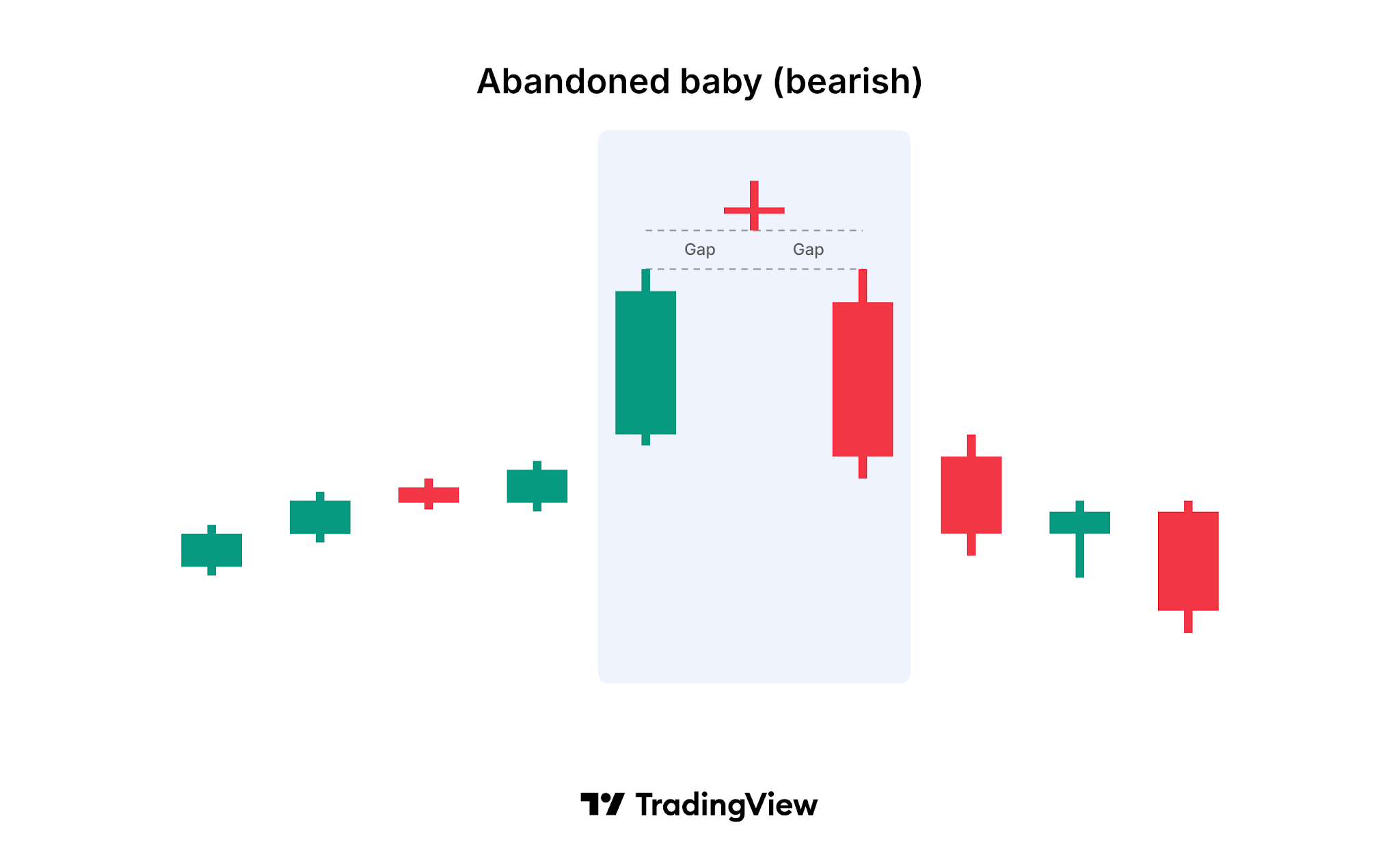
The bearish Abandoned baby is a three-candle reversal pattern that appears after an uptrend. A strong bullish candle is followed by a Doji that gaps above it, and then by a bearish candle that gaps below the Doji. The isolated Doji in the middle, "abandoned" by gaps on both sides, shows that buying momentum has stalled and sellers have taken over.
What does a bearish Abandoned baby look like?
The pattern forms over three consecutive candles:
- First candle: A long bullish (white or green) candle that continues the existing uptrend.
- Second candle: A Doji whose entire range, including its shadows, gaps above the high of the first candle.
- Third candle: A bearish (black or red) candle whose entire range gaps below the low of the Doji.
Because the shadows of the Doji do not overlap with the candles on either side, the Doji sits alone on the chart. This full gap is what separates the Abandoned baby from the more common Evening Doji star, where the shadows can overlap.
What does the pattern tell you?
The first candle shows that buyers are still in control. The gap up and the Doji that follows show indecision: prices opened higher, but neither side could push them further, and the session closed near where it opened. When the third candle opens below the Doji and closes lower, it shows that sellers have stepped in with enough force to leave the Doji stranded.
Taken together, the three candles describe a shift from optimism to hesitation to selling pressure. Many traders read this as a sign that the uptrend may be ending.
How reliable is the bearish Abandoned baby?
The Abandoned baby is considered one of the strongest reversal signals among candlestick patterns, but it is also rare. Full gaps on both sides of the Doji are uncommon in markets that trade around the clock, such as crypto and forex, where one session's close is usually the next session's open. The pattern appears more often in stocks and futures, where overnight gaps are common.
Traders usually look for extra evidence before acting on the signal:
- Prior trend: The pattern only has meaning after a clear uptrend.
- Volume: Higher volume on the third candle suggests stronger selling.
- Confirmation: A further decline on the next candle, or a close below the first candle's midpoint, adds weight to the reversal.
- Context: A pattern that forms near a resistance level or in overbought conditions, for example on the RSI, carries more weight.
What are the limitations of the pattern?
Like any candlestick pattern, the bearish Abandoned baby describes what has happened, not what will happen. The uptrend can resume after the pattern completes, especially in a strong market. Because the pattern is rare, there is also a risk of reading too much into a near-match, such as a Doji with a small overlap that does not meet the definition. Traders often combine it with stop-loss levels, for example above the high of the Doji, to limit losses if the reversal fails.
How to find the bearish Abandoned baby on TradingView
TradingView can detect this pattern for you on any chart:
- Built-in indicator: Open Indicators and search for Abandoned baby (bearish). The indicator marks each occurrence on the chart.
- All candlestick patterns at once: Add the All candlestick patterns indicator to see every supported pattern on one chart and choose which ones to display in its settings.
- Trend filter: In the indicator settings, choose how the prior trend is detected (based on SMA 50, or SMA 50 and SMA 200), or turn trend detection off.
- Alerts: Create an alert on the indicator to get notified when a new pattern forms.
Understanding the bearish Abandoned baby
The bearish Abandoned baby is a three-candle pattern made up of a long bullish candle, a Doji that gaps above it, and a bearish candle that gaps below the Doji. It signals a possible reversal from an uptrend to a downtrend. The pattern is rare and considered relatively strong, but traders still confirm it with volume, the next candles, and other indicators before acting on it.