

Key stats
Fund info
Home page
Inception date
Oct 10, 2007
Structure
French SICAV
Replication method
Physical
Primary advisor
Amundi Asset Management SAS (Investment Management)
ISIN
FR0010524777
FIGI
BBG002CV4B04
Identifiers
ISIN FR0010524777
The Sub-Fund's investment objective is to replicate the movements, positive or negative, of the MSCI ACWI IMI New Energy Filtered Index (the Benchmark),
Classification
What's in the fund
Exposure type
Producer Manufacturing
Utilities
Electronic Technology
Breakdown by region
Top 10 holdings
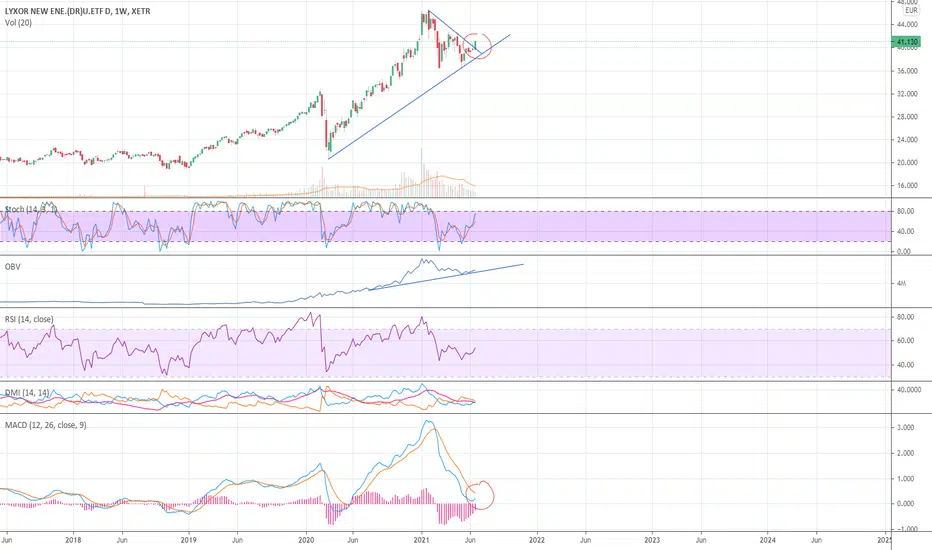
Great FutureEither the world decarbonizes or problems like Coronaviruses will be seen in the future like minor issues. The world's biggest asset manager BlackRock announced to place sustainability at the center of its investment approach...
Pension funds are restructuring their portfolios.
Long
See all ideas
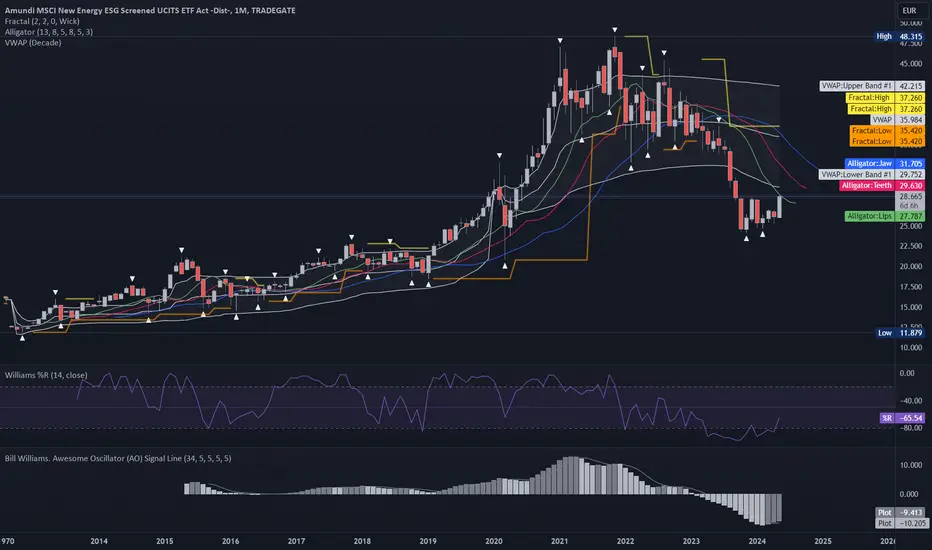
Displays a symbol's price movements over previous years to identify recurring trends.
Frequently asked questions
An exchange-traded fund (ETF) is a collection of assets (stocks, bonds, commodities, etc.) that track an underlying index and can be bought on an exchange like individual stocks.
LYM9 assets under management is 857.22 M EUR. AUM is an important metric as it reflects the fund's size and can serve as a gauge of how successful the fund is in attracting investors, which, in its turn, can influence decision-making.
Since ETFs work like an individual stock, they can be bought and sold on exchanges (e.g. NASDAQ, NYSE, EURONEXT). As it happens with stocks, you need to select a brokerage to access trading. Explore our list of available brokers to find the one to help execute your strategies. Don't forget to do your research before getting to trading. Explore ETFs metrics in our ETF screener to find a reliable opportunity.
LYM9 invests in stocks. See more details in our Profile section.
LYM9 expense ratio is 0.66%. It's an important metric for helping traders understand the fund's operating costs relative to assets and how expensive it would be to hold the fund.
No, LYM9 isn't leveraged, meaning it doesn't use borrowings or financial derivatives to magnify the performance of the underlying assets or index it follows.
Yes, LYM9 pays dividends to its holders with the dividend yield of 0.34%.
LYM9 shares are issued by SAS Rue la Boétie
LYM9 follows the MSCI ACWI IMI New Energy Filtered Index. ETFs usually track some benchmark seeking to replicate its performance and guide asset selection and objectives.
The fund started trading on Oct 10, 2007.
The fund's management style is passive, meaning it's aiming to replicate the performance of the underlying index by holding assets in the same proportions as the index. The goal is to match the index's returns.