Trend Line Break
Part 9 Trading Master Class With Experts Common Mistakes Beginners Make
Trading without understanding Greeks
Buying cheap OTM options
Over-leveraging
Averaging losing trades
Ignoring volatility
Trading every day
Holding losing positions till expiry
Revenge trading
Depending on tips
Ignoring market structure
Part 6 Learn Institutional Trading How Volatility Impacts Options
Volatility (IV) is one of the biggest influencers.
High Volatility
Premiums become expensive
Good for sellers
Risky for buyers
Low Volatility
Cheap premiums
Good for buyers
Limited premium for sellers
Traders forecast volatility using:
India VIX
Historical price behavior
Events (Budget, Elections, Results)
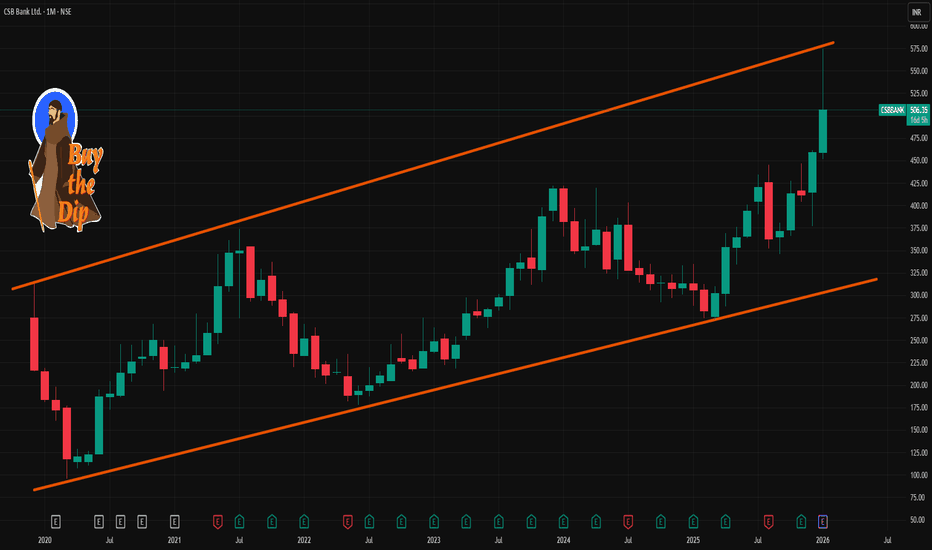
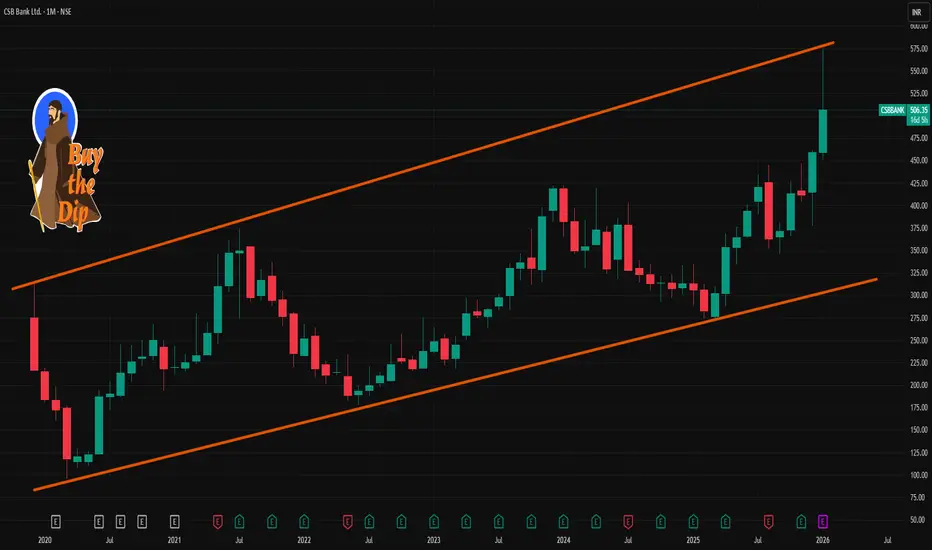
CSBBANK 1 Month Time Frame 📌 Last Closing / Recent Price (delayed data)
• Around ₹505–₹520 range recently, showing strong short‑term price action.
🔍 Short‑Term (1‑Month) Key Levels
📈 Resistance Levels
These are levels where price may face selling pressure in short‑term moves:
R1: ~₹514–₹518 – first resistance zone.
R2: ~₹530–₹532 – next broader resistance if rally continues.
R3: ~₹543–₹557 – higher resistance area in 1‑month horizon.
Tactical View: Break above ~₹532–₹543 could signal continuation to higher short‑
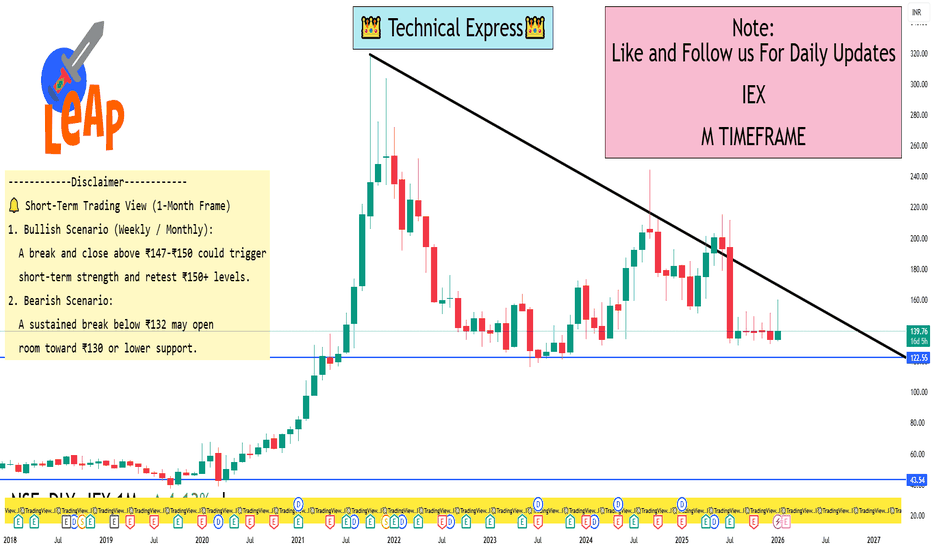
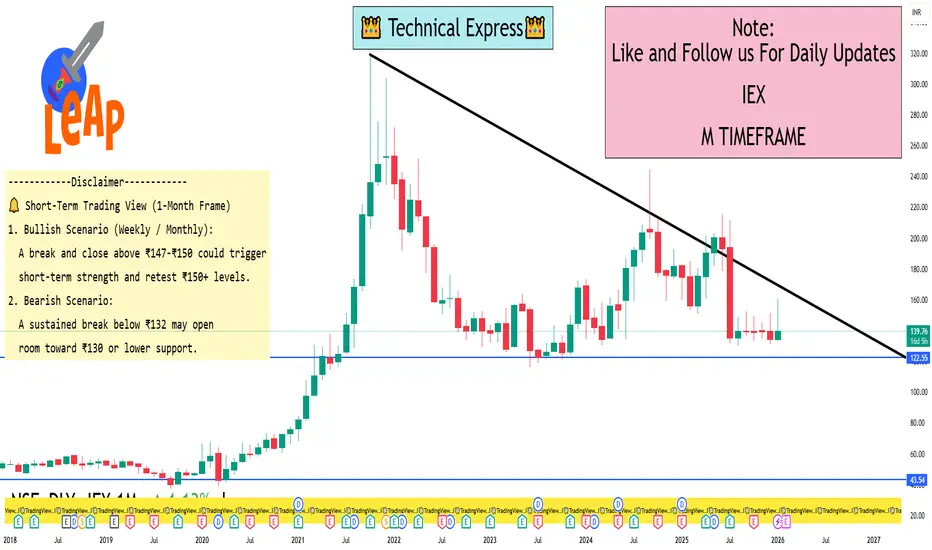
IEX 1 Month View 📊 Current Price Context (Recent 1-Month)
• Latest available quote (as of Jan 9, 2026 close): ~₹138 – ₹140.
📈 1-Month Technical Levels (Short-Term)
Key Resistance Levels (Upside)
These are levels where price may face selling pressure:
₹144 – ₹145 — Immediate resistance zone near recent moving average / pivot cluster.
₹147 – ₹150 — Secondary resistance around recent swing highs.
₹150 + — Broader psychological resistance zone; breakout above this could signal short-term bullish shift.
📉 Ke
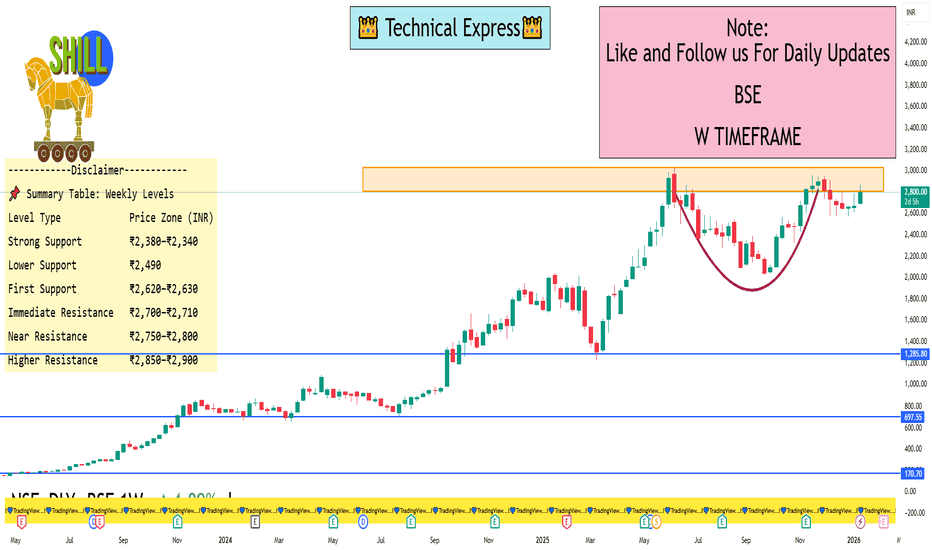
BSE 1 Week View📊 Current approximate price: around ₹2,800–₹2,830 on NSE at latest close.
📈 Weekly Time-Frame Key Levels
🔥 Resistance Levels (Upside Zones)
Immediate weekly resistance: ~₹2,700–₹2,710 — first hurdle above current price on weekly candles.
Next resistance: ~₹2,750–₹2,800 zone — if weekly closes above ₹2,700 area, bulls target this.
Higher breakout area: ~₹2,850–₹2,900 — next range of selling interest above the prior highs.
💡 So weekly up move usually needs a weekly candle close above ~₹2,700
Event-Driven Earnings TradingStrategies, Risks, and Market Dynamics
Event-driven earnings trading is a specialized trading approach that focuses on capitalizing on stock price movements triggered by corporate earnings announcements. Earnings releases are among the most powerful and predictable market events, often causing sharp price movements, volatility spikes, and changes in investor sentiment. Traders who understand how markets react before, during, and after earnings announcements can identify opportunities that are l
Part 4 Learn Institutional Trading Why Traders Use Options?
✔ Leverage
Small capital, large exposure.
✔ Hedging
Protect portfolio from fall using put options.
✔ Income Generation
Sell options to earn premium regularly.
✔ Flexibility
Strategies for bullish, bearish, neutral, high-volatility or low-volatility conditions.
✔ Risk Management
Loss control using spreads and combinations.
Part 3 Learn Institutional Trading 1. How Option Buyers Earn Money
Option buyers profit when:
Price moves strongly in their direction
Volatility increases
Time to expiry is sufficient
The worst-case scenario is losing 100% of premium.
2. How Option Sellers Earn Money
Option sellers profit when:
Market remains sideways
Time decay reduces premium
Volatility drops
Price stays below (for call) or above (for put) the strike
Option selling is preferred by institutions because:
Premium income is consistent
Probability of p
Part 2 Ride The Big Moves Understanding Market Conditions for Options
A. Trending Market
Best for option buyers (long calls/puts).
B. Sideways Market
Best for option sellers (iron condor, short strangle).
C. High Volatility
Best for straddles/strangles.
D. Low Volatility
Best for spreads and premium selling.
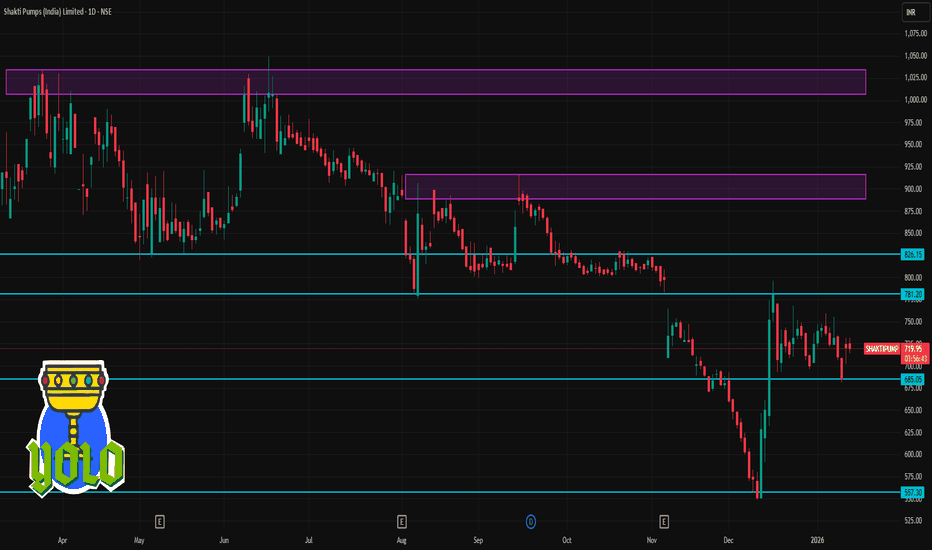
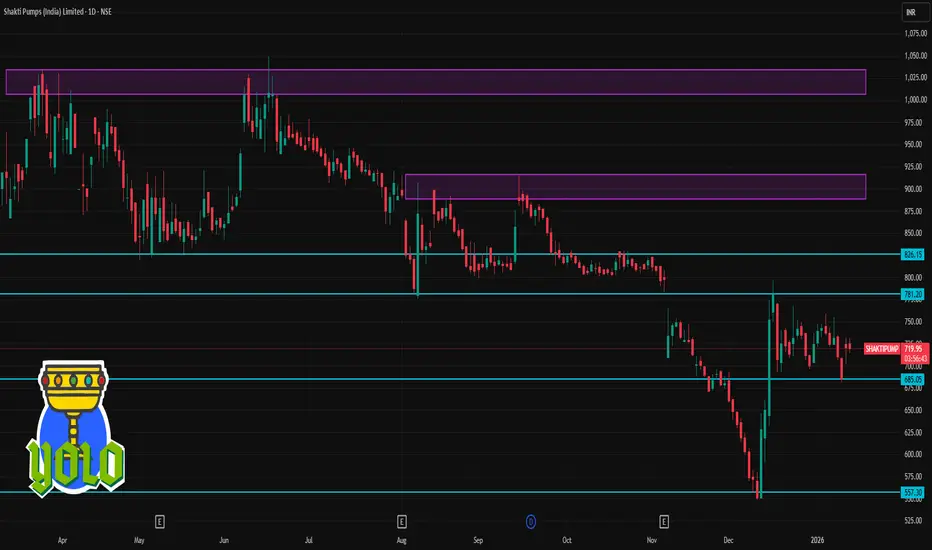
SHAKTIPUMP 1 Day Time Frame 📌 Current Daily Pivot & Price Levels (1D Timeframe)
🔁 Pivot Reference
Daily Pivot: ~₹716.9
(central reference for intraday sentiment)
📈 Resistance Levels (Upside)
1. R1: ~₹727.8 – first resistance zone on the daily frame
2. R2: ~₹745.5 – next resistance above recent reaction highs
3. R3: ~₹756.4 – extended resistance zone for bullish continuation
Key Points:
Breaking above R2 ~₹745–₹756 with good volume suggests strength and continuation.
Above ₹756, focus shifts to higher intra‑week levels.
Indian Stock Market: The Pulse of India’s Economic GrowthStructure and Foundation of the Indian Stock Market
The Indian stock market primarily operates through two major exchanges: the Bombay Stock Exchange (BSE) and the National Stock Exchange (NSE). The BSE, established in 1875, is Asia’s oldest stock exchange, while the NSE, launched in 1992, revolutionized trading with its fully electronic platform. Together, these exchanges ensure transparency, liquidity, and efficient price discovery for thousands of listed companies across sectors.
At the hea
BUY TODAY SELL TOMORROW for 5%DON’T HAVE TIME TO MANAGE YOUR TRADES?
- Take BTST trades at 3:25 pm every day
- Try to exit by taking 4-7% profit of each trade
- SL can also be maintained as closing below the low of the breakout candle
Now, why do I prefer BTST over swing trades? The primary reason is that I have observed that 90% of the stocks give most of the movement in just 1-2 days and the rest of the time they either consolidate or fall
Trendline Breakout in INFOBEAN
BUY TODAY SELL TOMORROW for 5%
Part 1 Support and Resistance Understanding the Greeks
Greeks help traders understand how option prices behave.
1. Delta
Measures how much an option premium changes with a ₹1 change in underlying.
Call Delta: +0.1 to +1.0
Put Delta: –0.1 to –1.0
Higher delta = more sensitive.
2. Gamma
Measures how delta changes as price moves.
High gamma = rapid premium movement.
3. Theta
Measures time decay.
Buyers suffer from theta
Sellers benefit from theta
Near expiry, theta is very high.
4. Vega
Measures sensitivity to vo
Part 1 Intraday Master Class How Options Work: Buyer vs Seller
Option trading is essentially a contract between two participants:
Option Buyer (Holder)
Option Seller (Writer)
1. Role of the Option Buyer
The buyer pays a premium and gets rights:
Buy (Call Buyer)
Sell (Put Buyer)
Buyers have:
✔ Limited Risk
✔ Unlimited Profit Potential
✔ No Obligations
If the market doesn’t move favorably, a buyer can simply let the option expire.
Maximum loss = premium paid.
2. Role of the Option Seller
Sellers take on obligatio
Part 12 Trading Master Class With ExpertsKey Terms Every Option Trader Must Know
Understanding certain terms is crucial before moving forward.
2.1 Strike Price
This is the pre-defined price at which the buyer can buy (call) or sell (put) the underlying asset.
2.2 Expiry Date
Options have a limited life. They expire weekly or monthly. For example:
Nifty & Bank Nifty: weekly + monthly expiry
Stocks: monthly expiry
After expiry, options lose all their time value.
2.3 Premium
This is the price you pay to buy an option.
Think of i
HAL 1 Week Time Frame 📈 Current Price Snapshot (Live / Latest)
HAL price: ~₹4,460 – ₹4,480 per share (India NSE) — trading range today.
1-week return: ~slightly negative/neutral movement.
🔎 Short-Term Technical Levels (1-Week Time Frame)
📍 Immediate Resistance Levels
✔️ R1: ~₹4,550 – ₹4,555 — first resistance zone where price may stall.
✔️ R2: ~₹4,620 – ₹4,625 — medium hurdle, key for bullish continuation.
✔️ R3: ~₹4,950 – ₹5,000 — strong supply area (major breakout zone).
📉 Support Levels
✔️ S1: ~₹4,430 – ₹4,440
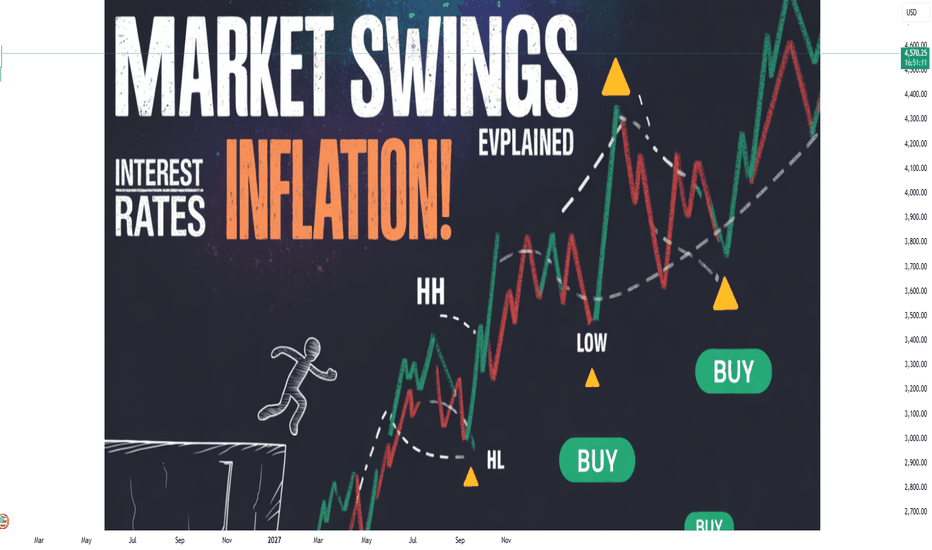
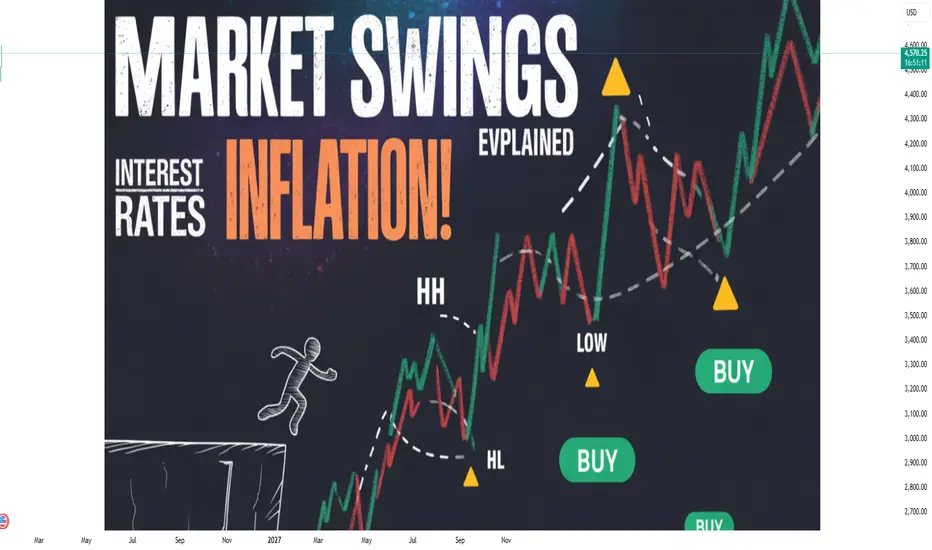
Market Swings in an Era of Inflation and Interest RatesUnderstanding Market Swings
Market swings refer to significant short- to medium-term fluctuations in asset prices across equities, bonds, commodities, currencies, and alternative investments. These swings can be triggered by economic data releases, central bank announcements, geopolitical events, or shifts in investor sentiment. While markets are inherently forward-looking, they are also highly sensitive to uncertainty. Inflation and interest rates introduce uncertainty because they affect both
Part 10 Trade Like Institutions Options Expiration and Exercise
Options have a finite life, expiring on a predetermined date. They can be exercised:
American Options: Can be exercised any time before expiration. Common in stocks.
European Options: Can only be exercised on the expiration date. Common in indices and ETFs.
Settlement:
Physical delivery: Underlying asset is delivered upon exercise.
Cash settlement: Profit/loss is settled in cash, common in index options.
Part 7 Trading Master Class With Experts Why Trade Options?
Options are popular due to their flexibility and strategic advantages:
Leverage: Options allow traders to control large amounts of the underlying asset with a smaller investment. This amplifies potential gains.
Hedging: Investors can use options to protect their portfolios against adverse price movements.
Speculation: Traders can bet on market direction, volatility, or time decay, potentially earning significant profits.
Income Generation: Selling options, particularly co
Part 6 Learn Institutional Trading Key Terminologies in Options Trading
Before diving into strategies and mechanics, it’s crucial to understand some foundational terms:
Underlying Asset: The security on which the option is based (e.g., stocks, indices, commodities, currencies).
Strike Price (Exercise Price): The price at which the option holder can buy or sell the underlying asset.
Expiration Date (Maturity): The date on which the option contract expires.
Premium: The cost of purchasing the option, influenced by intrinsic an
Part 4 Learn Institutional Trading What Are Options?
At its core, an option is a financial derivative contract that gives the buyer the right, but not the obligation, to buy or sell an underlying asset at a predetermined price (known as the strike price) on or before a specific date (the expiration date). Unlike buying the asset outright, purchasing an option requires paying a premium, which is the cost of acquiring the right conveyed by the option.
Options are broadly classified into two types:
Call Option: Gives the holder t