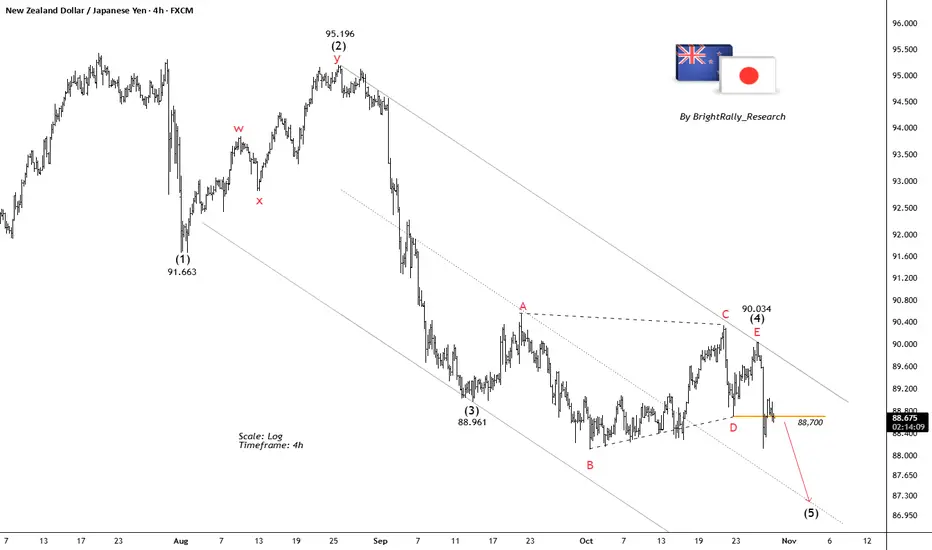
NZDJPY: Bearish Wave (5) Could Target Lower LevelsNZDJPY is showing a potential bearish Elliott Wave structure on the 4H chart, with price facing rejection near the descending trendline. Wave (4) may be complete, suggesting a possible continuation into bearish Wave (5).
Key support is at 88.70. A confirmed break below this level could open the way
New Zealand Dollar / Japanese Yen
No trades
No trades
Peers for comparison
NZDJPY Strong Bearish Momentum Turned OnThe JPY is showing increasing strength, while NZDJPY currently looks like one of the weakest pairs in the Forex market.
The daily chart has finally broken down from the long-standing accumulation box, confirming a bearish structure. Ideally, we would wait for a retracement back into the broken supp
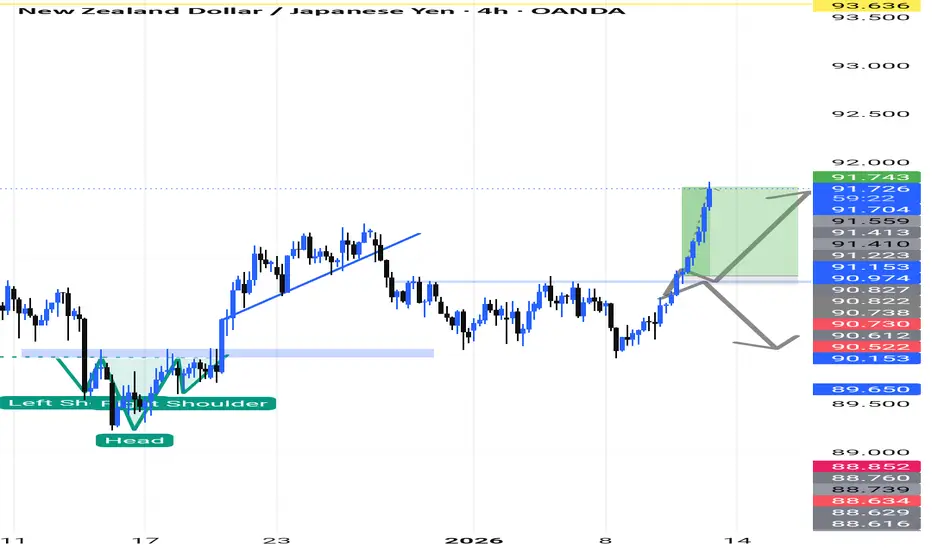
NZDJPY - Consolidation May Be Fueling the Next RallyNZDJPY on the daily chart still looks structurally bullish despite the recent consolidation near the highs. After the strong rally from the 85.35 low, the price pushed into the resistance area and has since been moving sideways inside a tightening structure. Instead of seeing a sharp rejection, th
NZDJPY | Multi-Timeframe OutlookMonthly – Bullish, but Not Explosive
On the monthly chart, price retested a key flip level and rejected strongly to the upside. The last candle was bullish, but it failed to close above the previous month’s high. So the bias leans bullish, but it’s not aggressive momentum yet. We’re trading comforta
BUY NZDJPY📈 NZD/JPY – Buy Setup (Swing Trade)
✅ Scenario: Buying on pullback in bullish structure
Entry: 92.867
Stop Loss (SL): 92.161
Take Profit (TP1): 94.50
Take Profit (TP2): 96.00
📊 Risk–Reward
→ RR ≈ 1 : 4.48
✔ Bullish factors:
Yen softness relative to other currencies.
Technical breakouts above key re
NZD/JPY – Buy Entry Points📈 NZD/JPY – Buy Entry Points (Structured Plan)
Since you prefer clear trading levels, here is a clean buy setup plan.
🟢 1️⃣ Aggressive Buy (Trend Continuation)
Condition: Price holding above short-term support
Entry: 92.534 (on small pullback)
Stop Loss: 91.937
Target 1: 93.70
Target 2: 94.20
NZDJPY – Imbalance + Liquidity Sweep + Mean Reversion SetupNZDJPY recently took out a major liquidity level around 90.907, sweeping the equal lows resting below that zone. This sweep created a fake breakout of structure, indicating that the downside move was engineered to capture liquidity rather than continue lower.
After the liquidity grab, price immedia
See all ideas
Displays a symbol's price movements over previous years to identify recurring trends.
Frequently asked questions
Markets don't sleep, here's what's going on with NZDJPY at the moment:
– JP Morgan favour short CAD, long JPY
– An unlikely pair made the two worst-performing major currencies
– AUD, NZD, CAD popping higher vs. USD
See more updates in real-time with our News Flow.
– JP Morgan favour short CAD, long JPY
– An unlikely pair made the two worst-performing major currencies
– AUD, NZD, CAD popping higher vs. USD
See more updates in real-time with our News Flow.
The safest way to trade NZDJPY is through a reliable broker. Create an account, fund it, and place a buy order.
You can trade NZDJPY directly from TradingView:
– Choose a broker: Explore our supported trading partners and pick one that fits your needs
– Compare options: View available brokers side by side to evaluate fees and features
– Connect your account: Open Supercharts, click "Trade", select your broker, and log in
– Start trading: Place orders without leaving the chart
Tip: If you're new to trading, try paper trading first — it lets you practice strategies in real market conditions without risking funds.
NZDJPY is a minor currency pair (also known as a cross pair), meaning it includes two major currencies but doesn't involve the US dollar.
What it means for traders:
– No USD exposure: Reflects the relative strength of two non-USD economies
– Lower liquidity than major pairs: Generally traded less than major currency pairs, but still widely available
– Potentially wider spreads: Trading costs may be higher than for major pairs
What to keep in mind about cross pairs:
– Region-focused moves: Often influenced by economic data and monetary policy in the two regions involved
– Direct currency comparison: Useful for comparing currencies without the influence of the US dollar
– Different volatility profile: May behave differently from major pairs, especially during regional events
Track rate movements on the NZDJPY chart and follow the latest forex news to stay informed.
NZDJPY is quoted as how many JPY (quote currency) it takes to buy one NZD (base currency).
For example, if the pair trades at 1.50, it means 1 NZD = 1.50 JPY.
What can influence the rate:
– Supply and demand: Driven by trade, investment flows, and speculation
– Economic data: Inflation, GDP, employment reports
– Central bank policy: Interest rates and monetary decisions
Follow these and more events in the Economic Calendar.