Debasement Trade returns as banks raise Gold targets Billionaire investor Ray Dalio has urged investors to reduce exposure to bonds and hold more gold, alongside “a bit” of Bitcoin, as concerns around the so-called “debasement trade” return to markets.
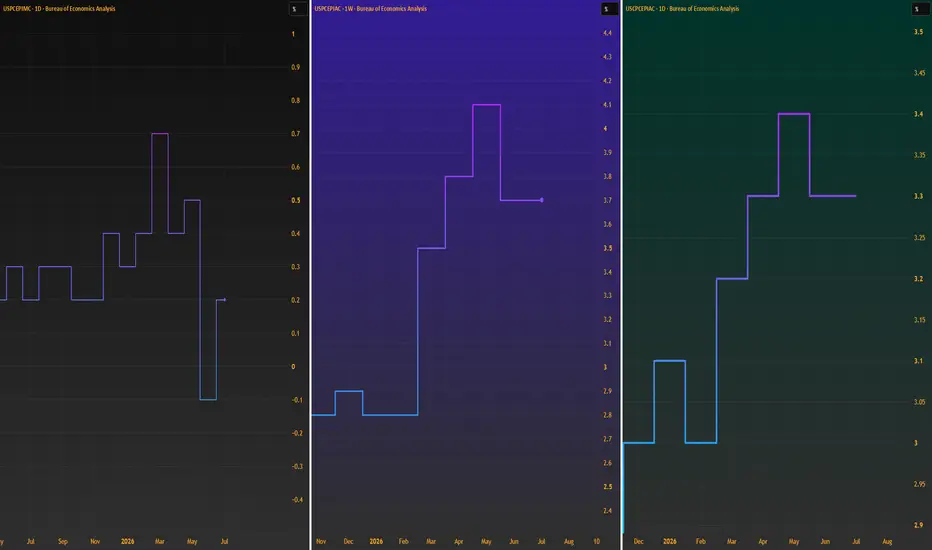
The idea is that rising government debt, persistent inflation and monetary expansion could weaken the long-term value of the U.S. dollar, increasing demand for assets such as gold.
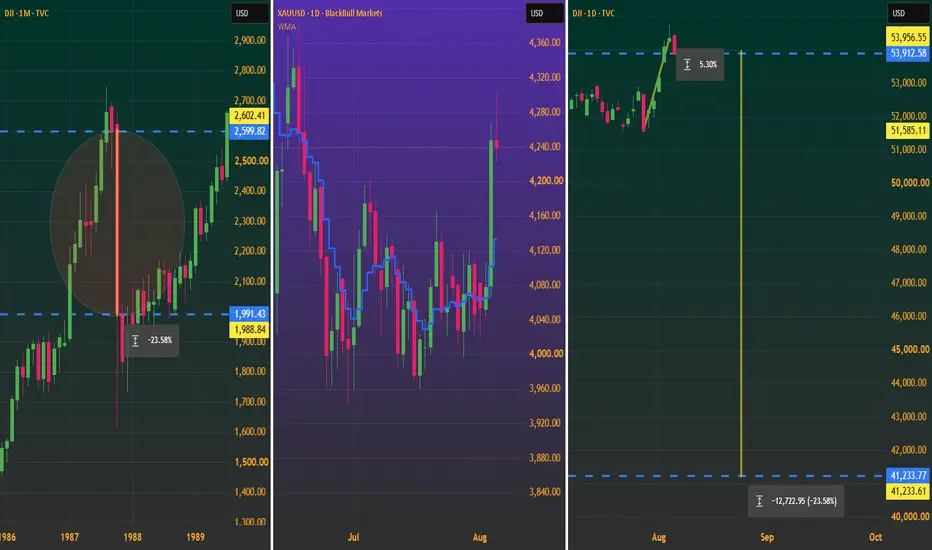
The precious metal briefly traded as high as $4,696 an ounce on Tuesday, its highest level in more than three months. Gold has now gained around 15% in August alone.
And some of Wall Street’s largest banks think the rally has further to go.
Citi raised its zero-to-three-month gold price target to $4,800 an ounce this week, while maintaining a six-to-12-month target of $5,000. JPMorgan is also watching the $5,000 level, but believes gold could get there considerably sooner. The bank said cooler inflation data, combined with a market unconvinced by Fed Chair Kevin Warsh’s messaging, could see gold approach $5,000 within days rather than months. Would Traders Pay $100,000 a Month for Trump’s Posts?Trump Media & Technology Group, the parent company of Truth Social, released its second-quarter results last week. And one part of the report deserves a little more attention.
Launched on August 1, Truth API provides paying customers with priority access to President Trump’s Truth tweets. According to Reuters, subscriptions can cost up to $100,000 per month.
----------------------------------------------------------------------------------------------------------------
Why would anyone pay that much for social media posts?
Bear in mind, Trump doesn’t only post culture war hysteria. He also regularly uses Truth Social to announce or comment on tariffs, foreign policy, individual companies, energy policy and other subjects capable of moving financial markets.
The most obvious customers for the API are high-frequency trading firms, which may value even small timing advantages in receiving information.
----------------------------------------------------------------------------------------------------------------
Since the launch of the service on August 1st, Trump has Truth tweeted about the following major market moving topics:
• Retaliatory compensation sought from Iran (Aug 11) truthsocial.com
• Rolling back Endangered Species Act in order to open up land for oil and natural resource exploitation. (Aug 5) truthsocial.com
• The delay in the continuation of attacks on Iran (Aug 2nd) truthsocial.com
• Suggesting that Venezuela becomes the 51st state of the USA (Aug 2nd). truthsocial.com
• Suggests the invasion/ annexation of Greenland by the US (Aug 2nd) truthsocial.com
----------------------------------------------------------------------------------------------------------------
But I also wouldn’t be surprised if companies outside the trading industry are purchasing subscriptions.
Companies including Meta and Apple have already contributed substantial sums to Trump-related projects, so $100,000 a month would hardly be an extraordinary expense, particularly if a company believed there was value in maintaining a good relationship with the President.
In this respect, I’m surprised that TMTG revealed in its earnings report that only ~10 companies have so far signed up for Truth API. The actual wording is the strangely specific “more than ten customer agreements”. Eleven, perhaps?? Either way, TMTG has not revealed any of the companies using this service yet.
----------------------------------------------------------------------------------------------------------------
There is an obvious market-integrity question here, which has now attracted legal action.
The Intercept Media and the Freedom of the Press Foundation have sued Trump, arguing that the service is unconstitutional because it turns presidential communications into a paid product. Their case argues that official government information should not be made available on preferential terms to customers paying the President’s private company.
The case may also eventually reveal exactly which companies are paying for access.
Could Hormuz Become the Strait of Trump? Speaking on Friday, President Donald Trump said the Strait of Hormuz could soon become U.S. territory. Obviously speculating that it would be called "the Strait of Trump" is a little in jest, but we all know how much he loves to slap his name on things.
“Pretty soon, I’ll be declaring the Hormuz Strait a territory of the United States,” Trump said, while urging Americans to accept higher gasoline prices amid the conflict.
Iran rejected the claim, maintaining that the Strait “has been Iranian, is Iranian, and will remain Iranian,”.
The rhetoric comes as Treasury Secretary Scott Bessent said the U.S. is preparing economic measures against Iran “that have never been seen,”.
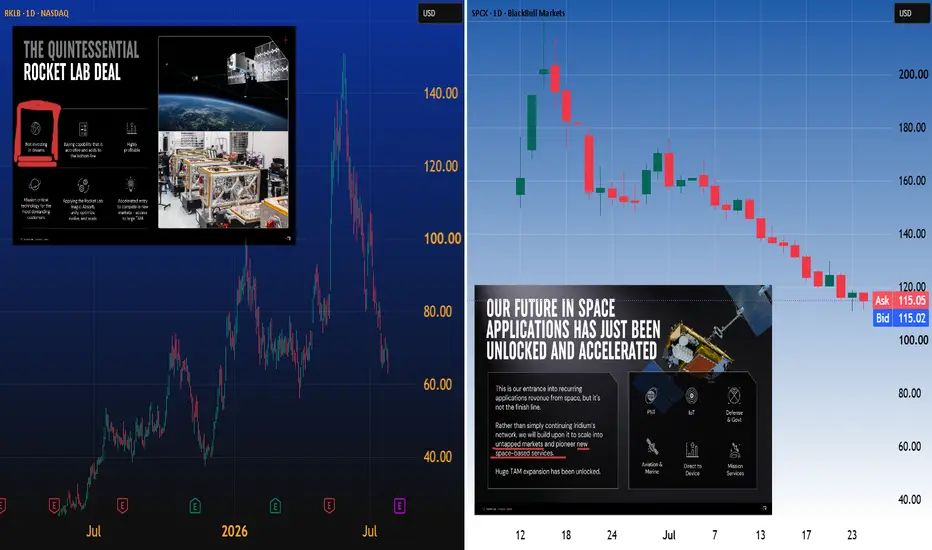
Bessent has not revealed exactly what those measures will involve, but Reuters reports that the options could target Chinese refiners buying Iranian crude and Chinese banks processing Iranian transactions. "Not Investing in Dreams": Rocket Lab's Subtle Dig at SpaceX?On page 10 of the presentation announcing Rocket Lab’s (NASDAQ: RKLB) acquisition of Iridium Communications (NASDAQ: IRDM), released June 29, 2026, there’s a line that reads like a dig at SpaceX (NASDAQ: SPCX):
“Not investing in dreams.”
I’ve taken this as Rocket Lab highlighting the practicality of the acquisition while also making fun of SpaceX’s mission to “extend the light of consciousness to the stars” and establish a colony on Mars. Has a company ever put out a more pretentious and unrealistic mission, and been rewarded by the market like SpaceX? (SpaceX has since tumbled to below its IPO price, so there is a tiny slither of justice in the world, I guess). Maybe it’s all just marketing, but to me the mission statement suggests an unseriousness with SpaceX. Sure, they can pull off some incredibly practical feats (and even this I’m proly underselling), but this unseriousness is just another red flag with the company (in addition to Musk’s voting rights, Musk’s nazi salutes, and SpaceX acquiring XAI and the social media platform X just weeks before the IPO).
If you cannot tell already, I believe Rocket Lab looks and feels like the better investment just for being more realistic (while still being highly ambitious). But I want to scrutinise this assertion by diving deeper into something found on the last page of that same Iridium presentation, which potentially suggests there are new practical sources of revenue:
“Rather than simply continuing Iridium’s network, we will build upon it to scale into untapped markets and pioneer new space-based services.”
That was as much detail as Rocket Lab provided in the presentation, so we reached out for something a little more specific.
First, I was interested in what they believe to be the “untapped markets,” how they discovered these markets, and why they were more suited to tap them than Iridium was before the acquisition. This was Rocket Lab’s practical-based response:
<<
Initially, we believe they have a few underappreciated growth drivers in the form of;
Next Generation PNT, both as reliable redundancy to GPS for marine and aviation, which is even more valuable in the context of GPS-denied conditions (think of Russian jamming GPS in Ukraine…), as L-Band based PNT is less vulnerable to jamming vs GPS.
Primary and back-up in-cockpit and maritime emergency comms.
Direct-to-Device (think IoT applications given the L-band vs mobile cellular broadband that Starlink and AST and others are going after). Iridium has discussed what they’ve been working on to upgrade the satellites on orbit to support the mobile 3GPP standard.
>>
Secondly, I was interested in the “new space-based services.” The hope was that Rocket Lab was not making fanciful claims about some (ultimately unattainable) sources of revenue, like we might expect from SpaceX. With a quick scan of the below you’ll see that Rocket Lab is scoping out plans for military and non-military services. Nothing too fanciful yet. This is what they had to say about this:
<<
Longer-term, one of the important capabilities this deal brings is our ability to pitch next gen secure gov comms services, not completely unlike what StarShield is offering around the world. It has been a relatively clear-cut pitch with regard to Rocket Lab being an established solutions provider that can make robust satellite hardware, and has the ability to provide prioritized launch for those satellites, but we don’t have the heritage in operating a global high-reliable comms constellation, so that is the missing or “trust us” part of the pitch. With Iridium, we’d be able to compete more convincingly against something like Starshield in bringing all the pieces with decades of heritage. That said, this deal brings some of the likely necessary spectrum, but not all, but definitely checks the box from the network operations credentials and infrastructure perspective, including established ground-stations around the world with regulated landing rights, etc.
Beyond that, we’re holding other longer-term new space-based services closer to our vest. It doesn’t require a lot of squinting to think of space based capabilities suited to support various modes of autonomy, earth observation, and location based services. More to come on this front. It isn’t that Rocket Lab is necessarily better at discovering these new applications, but rather we believe we’re better positioned to efficiently exploit opportunities given our vertically integrated end-to-end capabilities, and the efficiency will manifest itself in the lower cost and shorter timelines to deploy the space infrastructure to enable and deliver these new capabilities.
>>
From the Desk of M.O
Additional research and stock news at blackbullresearch.substack.com
6 events traders are watching this week Volatility may increase across equities, indices, currencies, and bond markets with several major announcements concentrated across the week.
The Federal Reserve, Bank of England and Bank of Japan are all due to announce policy decisions, with rates widely expected to remain unchanged. Traders will closely follow Fed Chair Kevin Warsh’s press conference for guidance on the outlook for interest rates.
The decisions could affect the US dollar, British pound and Japanese yen, alongside gold, government bonds and indices including the US 500, UK 100 and Japan 225.
Earnings season will also remain in focus. Microsoft and Meta report on Wednesday, followed by Amazon and Apple on Thursday.
Major European companies including AstraZeneca, LVMH, Unilever, L’Oréal and Hermès are also scheduled to release results. In Asia, Samsung will report quarterly earnings. The results could influence individual shares as well as the NASDAQ 100, UK 100, France 40 and the KOSPI.