Will the Koruna Survive the New Neutral Normal?Macroeconomics and Economics
The Czech National Bank recently raised its main interest rate to 4%. Analysts now call this baseline the new neutral normal. Policymakers confront stubbornly high core inflation alongside an uncomfortably weak exchange rate. Concurrently, national economic expansion re
CZECH KORUNA / EURO
No trades
No trades
Peers for comparison
Can the Czech Koruna Outmaneuver Eurozone Weakness?The EUR/CZK currency pair stands at a pivotal crossroads in 2026. Diverging central bank policies and shifting European trade corridors drive its trajectory. Understanding the mechanics of the euro against the Czech koruna is vital for global investors. Let us examine how EUR/CZK dynamics influence
EUR/CZK Analysis: Czech Koruna Defies Eurozone PressuresThe Czech Koruna currently displays remarkable resilience against the Euro. In February 2026, the EUR/CZK pair hit significant resistance levels. While the Eurozone faces stagnant growth, the Czech economy leverages high interest rates. Investors now prioritize the Koruna for its yield and structura
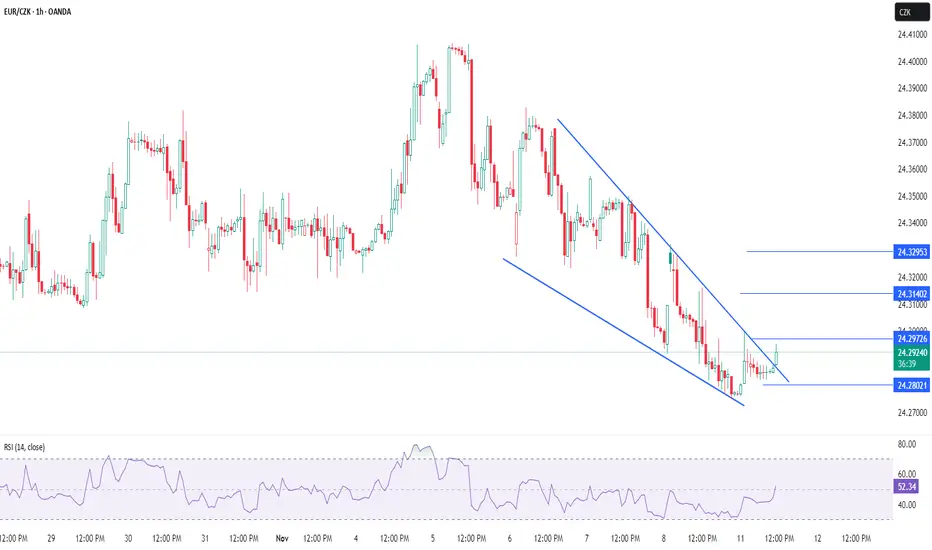
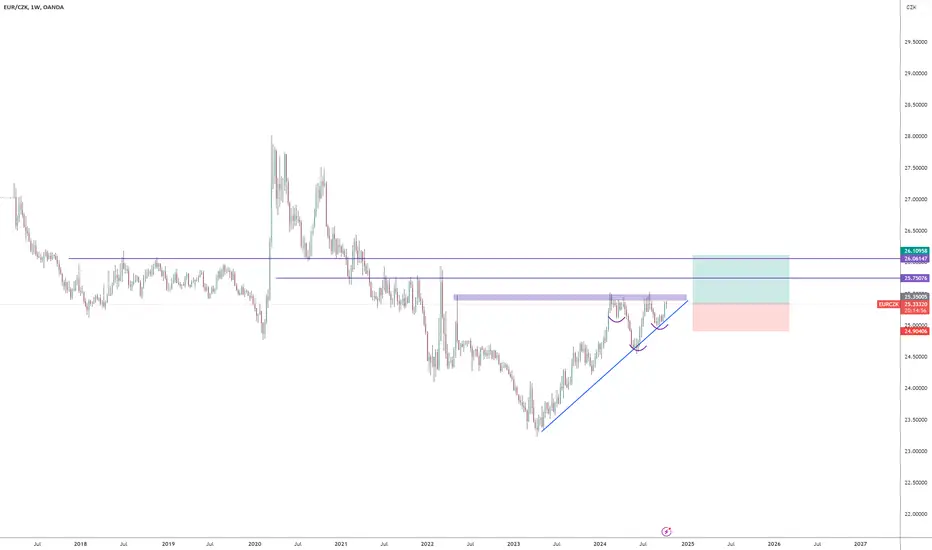
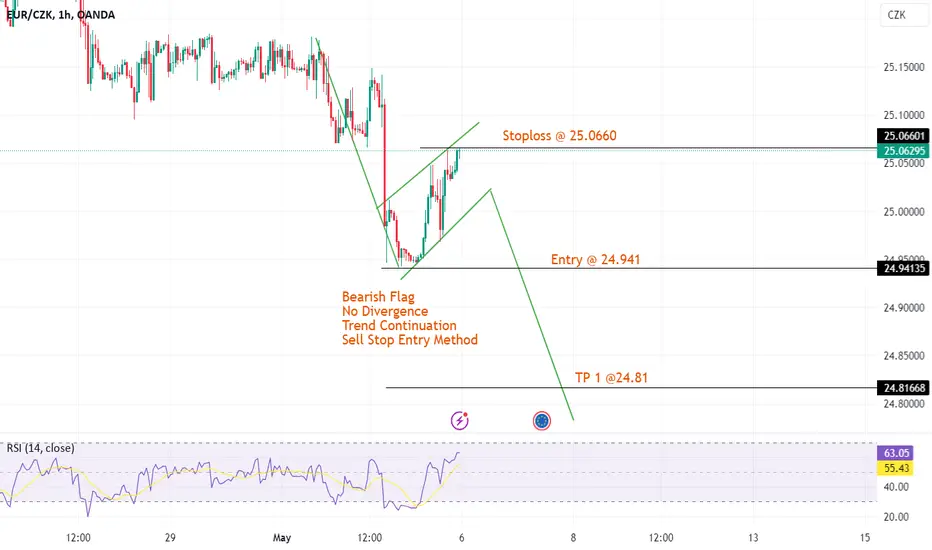
EURCZK Long TradeCAPITALCOM:EURCZK Long Swing trade, with my back testing of this strategy, CAPITALCOM:EURCZK have bullish volume
This is good trade.
Don't overload your risk like Greedy gambler!!!
Be Disciplined Trader, what what you can afford.
Use proper risk management
Looks like good trade.
Lets monitor.
See all ideas
Summarizing what the indicators are suggesting.
Oscillators
Neutral
Oscillators
Neutral
Summary
Neutral
Summary
Neutral
Summary
Neutral
Moving Averages
Neutral
Moving Averages
Neutral
Displays a symbol's price movements over previous years to identify recurring trends.
Frequently asked questions
Today, CZK/EUR rate is 0.040959 EUR.
For broader market analysis, dive into the technicals on the CZKEUR live chart and read the latest CZKEUR news:
– Euro Market Open: Sentiment sullied as Fed officials push back on an incoming pivot, NFP looms
– Euro Market Open: Mixed trade as the Wall St. rally stalled, crude retains OPEC+ gains
– Euro Market Open: Overnight sentiment remained strong but Europe is seen lower after a strong close
Markets don't sleep, here's what's going on with CZKEUR at the moment:
– Euro Market Open: Sentiment sullied as Fed officials push back on an incoming pivot, NFP looms
– Euro Market Open: Mixed trade as the Wall St. rally stalled, crude retains OPEC+ gains
– Euro Market Open: Overnight sentiment remained strong but Europe is seen lower after a strong close
See more updates in real-time with our News Flow.
The safest way to trade CZKEUR is through a reliable broker. Create an account, fund it, and place a buy order.
You can trade CZKEUR directly from TradingView:
– Choose a broker: Explore our supported trading partners and pick one that fits your needs
– Compare options: View available brokers side by side to evaluate fees and features
– Connect your account: Open Supercharts, click "Trade", select your broker, and log in
– Start trading: Place orders without leaving the chart
Tip: If you're new to trading, try paper trading first — it lets you practice strategies in real market conditions without risking funds.
It's worth checking CZKEUR rate change for various periods to get the full picture:
– 1 day — −0.13%
– 1 week — −0.30%
– 1 month — −0.24%
CZKEUR's all-time low was 0.033580 EUR (Feb 17, 2009), and its highest price is 0.043540 EUR (Jul 21, 2008). Track the dynamics with the latest forex news right on TradingView.
– 1 day — −0.13%
– 1 week — −0.30%
– 1 month — −0.24%
CZKEUR's all-time low was 0.033580 EUR (Feb 17, 2009), and its highest price is 0.043540 EUR (Jul 21, 2008). Track the dynamics with the latest forex news right on TradingView.
When trading CZKEUR, one should keep in mind many factors.
First, analyze the fundamentals:
– Macroeconomic data: Inflation, GDP, employment, and other key indicators in the economies behind both currencies
– Central bank policy: Interest rate decisions and monetary policy from the respective central banks
– Market sentiment: Check what other traders anticipate
– News flow: Geopolitical events and economic releases
Then check technical ratings:
– Today — strong sell
– 1-week — sell
– 1-month — buy
Identify the trend, watch key levels (support and resistance), consider volatility and upcoming economic events. Then, you'll be closer to an informed decision.
CZKEUR volatility measures how much the exchange rate fluctuates over time, i.e. how quickly and how strongly it moves up or down.
The current volatility rating is 0.14%.
What it means for traders:
– Higher volatility: Larger and faster price swings → higher risk and opportunity
– Lower volatility: More stable price movement → smaller trading ranges
– Market behavior: Volatility often increases during major economic news or central bank decisions
Volatility helps traders estimate risk and position sizing. It's also useful for adapting strategies to market conditions.
How to use volatility:
– Compare volatility across other currency pairs
– Combine with technical analysis (trends, support/resistance)
– Monitor economic events that may increase market movement
CZKEUR is quoted as how many EUR (quote currency) it takes to buy one CZK (base currency).
For example, if the pair trades at 1.50, it means 1 CZK = 1.50 EUR.
What can influence the rate:
– Supply and demand: Driven by trade, investment flows, and speculation
– Economic data: Inflation, GDP, employment reports
– Central bank policy: Interest rates and monetary decisions
Follow these and more events in the Economic Calendar.