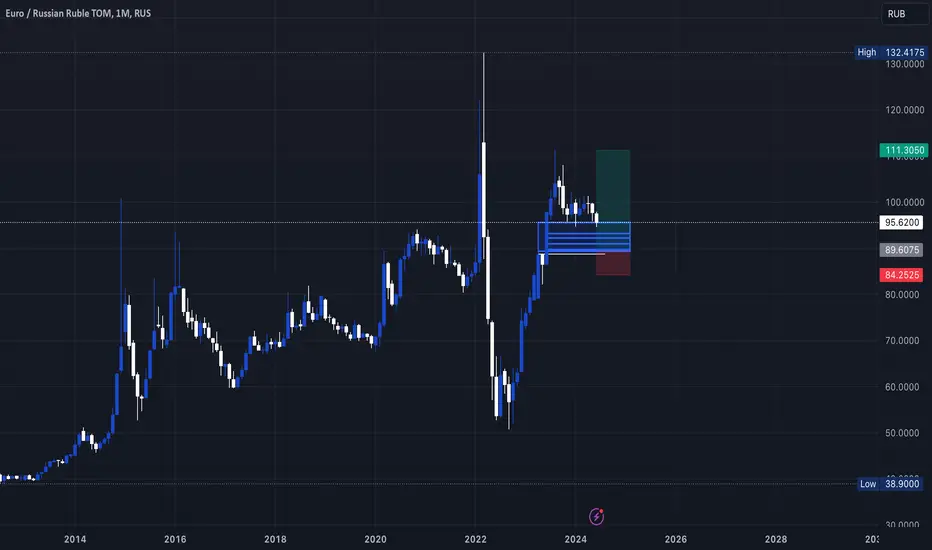
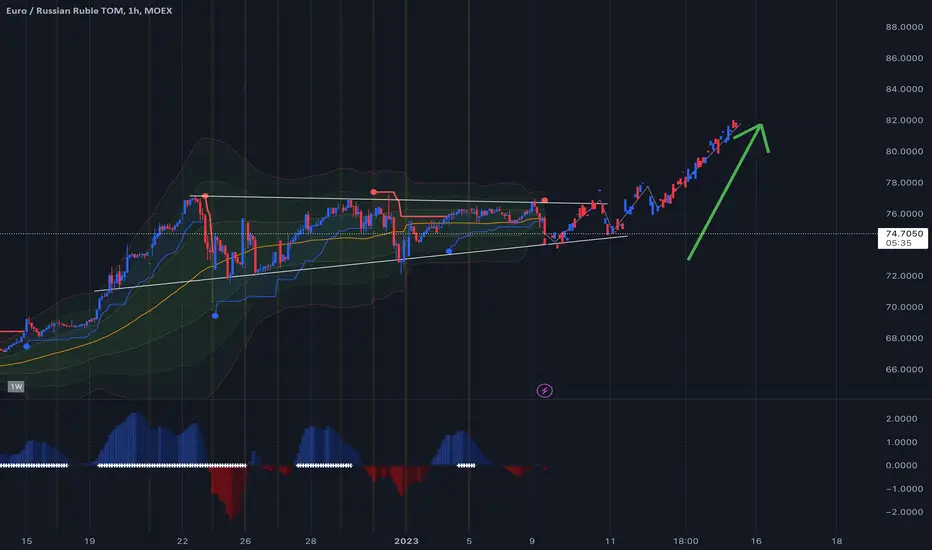
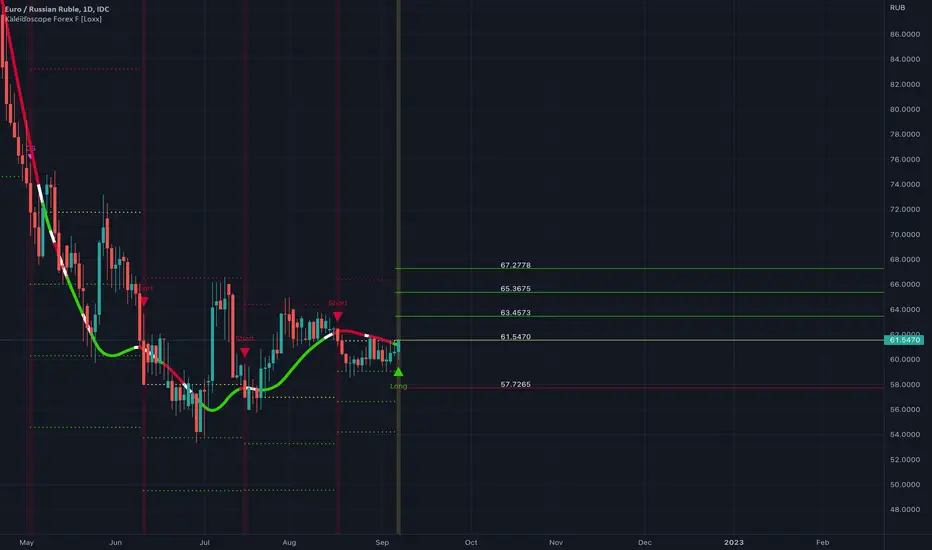
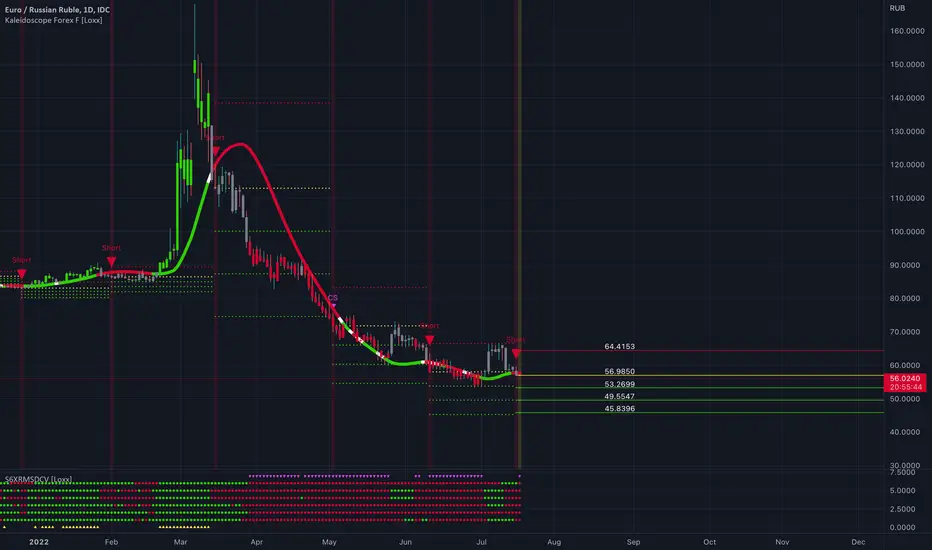
The Euro vs. the Ruble. This is a pair representing two contradicting economies in Europe. The Euro, which is the second most traded currency in the world, is considered to be very stable and safe. The Ruble, which is the world’s first decimal currency, is considered to be more volatile due to its dependence and sensitivity to crude oil prices.
The safest way to trade EURRUB is through a reliable broker. Create an account, fund it, and place a buy order.
You can trade EURRUB directly from TradingView: – Choose a broker: Explore our supported trading partners and pick one that fits your needs – Compare options: View available brokers side by side to evaluate fees and features – Connect your account: Open Supercharts, click "Trade", select your broker, and log in – Start trading: Place orders without leaving the chart
Tip: If you're new to trading, try paper trading first — it lets you practice strategies in real market conditions without risking funds.
It's worth checking EURRUB rate change for various periods to get the full picture: – 1 day — +1.18% – 1 week — +2.79% – 1 month — −2.35%
EURRUB's all-time low was 13.0100 RUB (Sep 14, 1998), and its highest price is 168.1890 RUB (Mar 7, 2022). Track the dynamics with the latest forex news right on TradingView.
When trading EURRUB, one should keep in mind many factors.
First, analyze the fundamentals: – Macroeconomic data: Inflation, GDP, employment, and other key indicators in the economies behind both currencies – Central bank policy: Interest rate decisions and monetary policy from the respective central banks – Market sentiment: Check what other traders anticipate – News flow: Geopolitical events and economic releases
Identify the trend, watch key levels (support and resistance), consider volatility and upcoming economic events. Then, you'll be closer to an informed decision.
EURRUB volatility measures how much the exchange rate fluctuates over time, i.e. how quickly and how strongly it moves up or down.
The current volatility rating is 1.41%.
What it means for traders: – Higher volatility: Larger and faster price swings → higher risk and opportunity – Lower volatility: More stable price movement → smaller trading ranges – Market behavior: Volatility often increases during major economic news or central bank decisions
Volatility helps traders estimate risk and position sizing. It's also useful for adapting strategies to market conditions.
EURRUB is quoted as how many RUB (quote currency) it takes to buy one EUR (base currency).
For example, if the pair trades at 1.50, it means 1 EUR = 1.50 RUB.
What can influence the rate: – Supply and demand: Driven by trade, investment flows, and speculation – Economic data: Inflation, GDP, employment reports – Central bank policy: Interest rates and monetary decisions

 Long