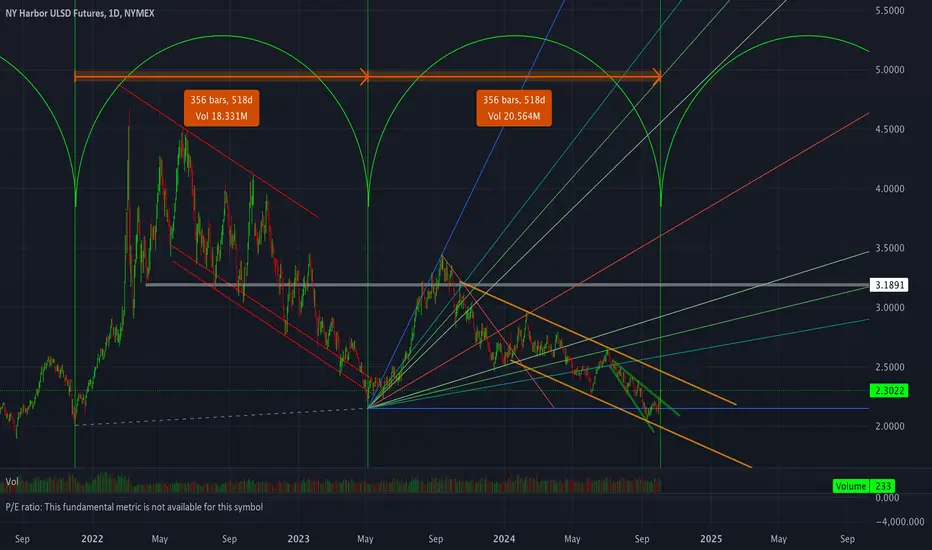
Gulf Coast ULSD (Argus) FuturesGulf Coast ULSD (Argus) FuturesGulf Coast ULSD (Argus) Futures

Gulf Coast ULSD (Argus) Futures

No trades
No trades

Peers for comparison


Contract highlights


Volume
Open interest
Contract size
42000
Front month
AJX2026

See all ideas 

Summarizing what the indicators are suggesting.
Oscillators
Neutral
Oscillators
Neutral
Summary
Neutral
Summary
Neutral
Summary
Neutral
Moving Averages
Neutral
Moving Averages
Neutral
Displays a symbol's price movements over previous years to identify recurring trends.

Frequently asked questions


AJ1! volume is the number of futures contracts traded over a given period. The current volume is 0.00.

This metric helps you understand market activity and liquidity:
– Higher volume indicates strong interest and easier trade execution
– Lower volume may signal weaker participation and wider spreads

Traders often use volume to confirm trends and identify potential reversals. Track more movements on the AJ1! chart.
When to sell AJ1! futures depends on your strategy, risk tolerance, and market conditions. Traders often consider reducing or closing positions when:
– Profit targets are reached: Locking in gains after a favorable price move
– Technical signals weaken: Trend reversals, resistance levels, or bearish indicators emerge
– Expiration approaches: Some traders close or roll positions ahead of Dec 2, 2026 to maintain exposure in a later contract and avoid settlement
– Market conditions change: Shifts in macro trends, seasonality, or market sentiment may affect the outlook

Selling is often part of a broader trading and risk management plan rather than an attempt to time the market perfectly.
One way to gain exposure to AJ1! is through a broker that offers futures. Before trading, make sure you understand how the product works and the risks involved.

You can trade AJ1! directly from TradingView:
– Choose a broker: Explore our supported trading partners and pick one that fits your needs
– Compare options: View available brokers side by side to evaluate fees and features
– Connect your account: Open Supercharts, click "Trade", select your broker, and log in
– Start trading: Place orders directly from the chart

Tip: If you're new to trading, try paper trading first — it lets you practice strategies in real market conditions without risking funds.
No single indicator can determine whether to buy or sell AJ1! futures contracts. The right decision depends on market conditions, risk tolerance, and your trading strategy.

Here are a few factors to consider:
• Technical rating — buy: A summary of signals from multiple technical indicators that can help assess current market conditions.
• Seasonality: Historical price patterns that may recur due to factors such as production cycles, demand trends, or market behavior.

For a broader view, consider these metrics alongside price action, market news, and fundamental data.
The nearest expiration date for AJ1! is Dec 2, 2026.

Futures contracts expire on predetermined dates. As expiration approaches, many traders roll positions into the next contract to maintain exposure to the market.

Key metrics to watch near expiration:
• Volume and liquidity: Trading activity often shifts to the next contract month
• Open interest: Falling open interest may signal positions being closed or rolled forward
• Forward curve: Differences between contract prices can help identify market structure, including contango and backwardation

Explore the AJ1! chart to monitor active contracts and contract-month activity.
Open interest is the total number of active futures contracts that have not been closed or expired. For AJ1!, the current open interest is 0.00.

Traders use open interest to assess trend strength and market participation:
– Rising price + rising open interest: New money is entering the market, trend may be strengthening
– Rising price + falling open interest: Positions are being closed, trend may weaken
– Falling price + rising open interest: Increasing short positions, bearish pressure may build
– Falling price + falling open interest: Positions are closing, trend may be losing momentum

Open interest is most effective when combined with volume and price action — track both on the AJ1! chart for deeper insight.