EURTHB Eyes Lagarde’s SpeechYesterday Recap
Yesterday, EURTHB closed at 38.27 in the Thai market. Meanwhile, Eurozone inflation increased from the previous month but came in slightly below expectations, while Core CPI declined, reflecting easing underlying inflationary pressures.
Fundamental 18/9/26
Key Events Today | Forec
Forex market
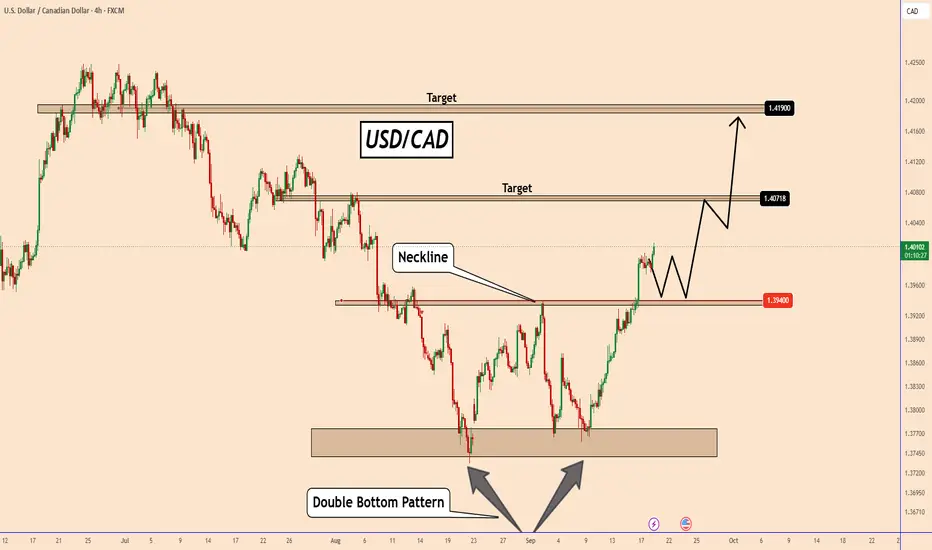
USDCAD: Double Bottom Breakout Targets 1.4070 and 1.4190USDCAD: Double Bottom Breakout Targets 1.4070 and 1.4190
USDCAD has formed a double bottom pattern around the 1.3750–1.3780 support zone and has now broken above the 1.3940 neckline.
The breakout suggests that the recovery could continue, with the former neckline at 1.3940 now acting as an import
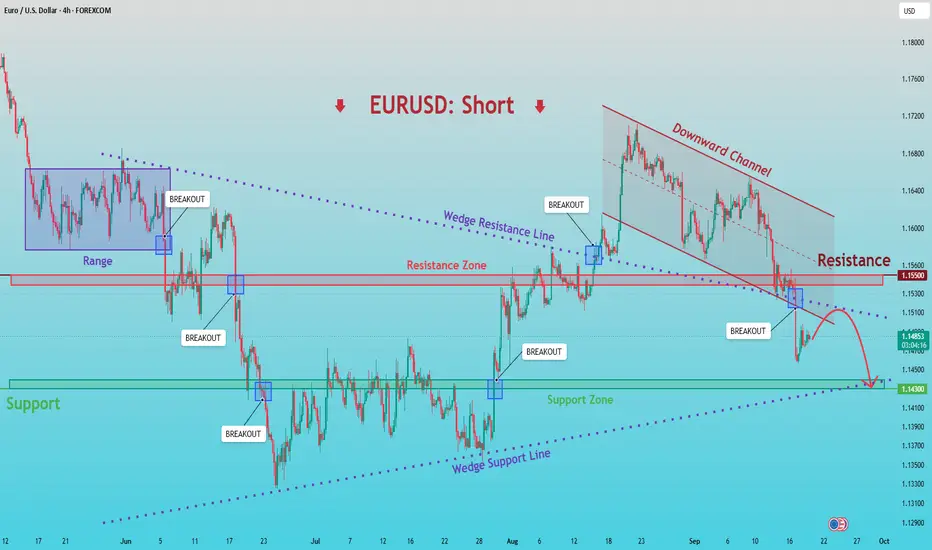
EURUSD: Wedge Structure Regain Control, 1.1430 in FocusHello everyone, here is my breakdown of the current EURUSD setup.
Market Analysis
EURUSD previously traded inside a range and wedge structure before breaking lower and shifting bearish. Price then entered a downward channel, where multiple breakouts above the Resistance Zone were rejected and pri
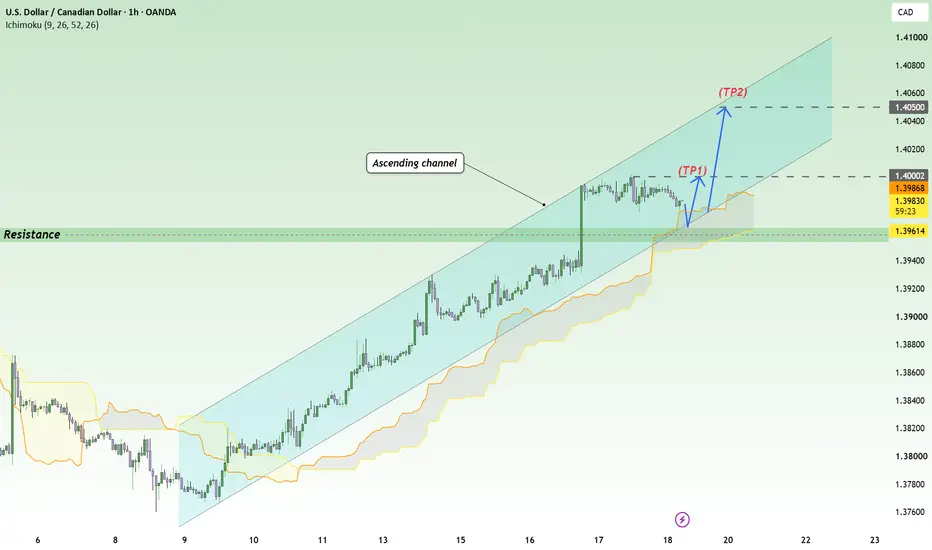
USDCAD – Buyers Still Have the AdvantageUSDCAD continues to hold a relatively strong structure. After the sharp move toward 1.4000, price has avoided a deeper selloff and is now consolidating just above the breakout area. From my perspective, buyers still have the upper hand.
From a macro perspective, the U.S. dollar continues to bene
EURGBP Bullish Recovery | Range Resistance Test (2H)
EURGBP has recovered from the lower part of the ascending channel and is now approaching a well-defined resistance zone near 0.8610–0.8620. Price is holding above the recent support area, while the channel structure keeps the recovery setup in focus.
🟦 1st Support Objective: 0.8520–0.8530
🟦 2nd Su
EURUSD | Bearish Continuation & Downside Potential SetupEURUSD | Bearish Continuation & Downside Potential Setup
Fundamental View
EURUSD is facing renewed selling pressure as markets increasingly expect the Federal Reserve to raise interest rates at this week’s September 15–16 meeting. A Reuters poll showed 85% of economists expecting a 25-basis-point
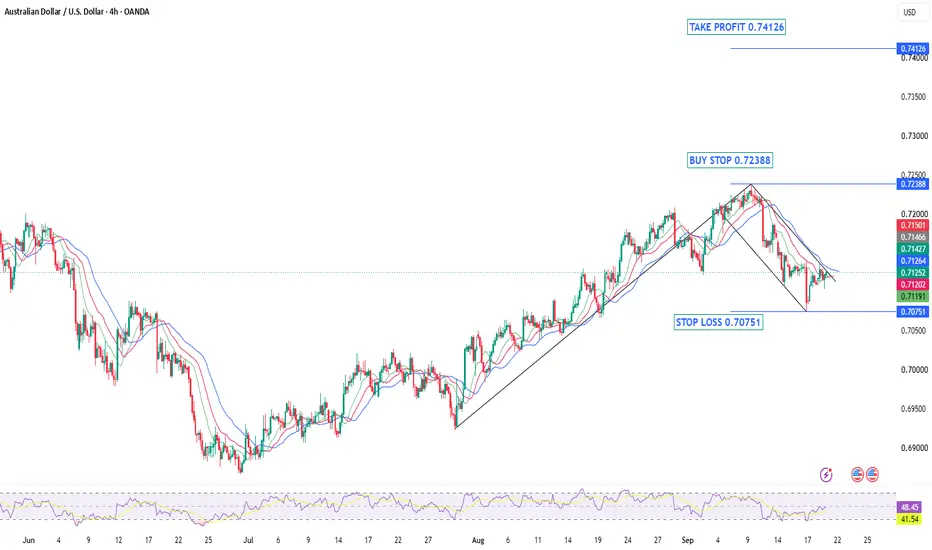
AUDUSD — Bullish Flag Breakout SetupAfter months of bearish pressure that dominated the first half of the year, AUDUSD has made a remarkable recovery. Since mid-July, the pair has been carving out a textbook bullish structure — printing a clean series of Higher Highs and Higher Lows — a classic sign that buyers are firmly in control a
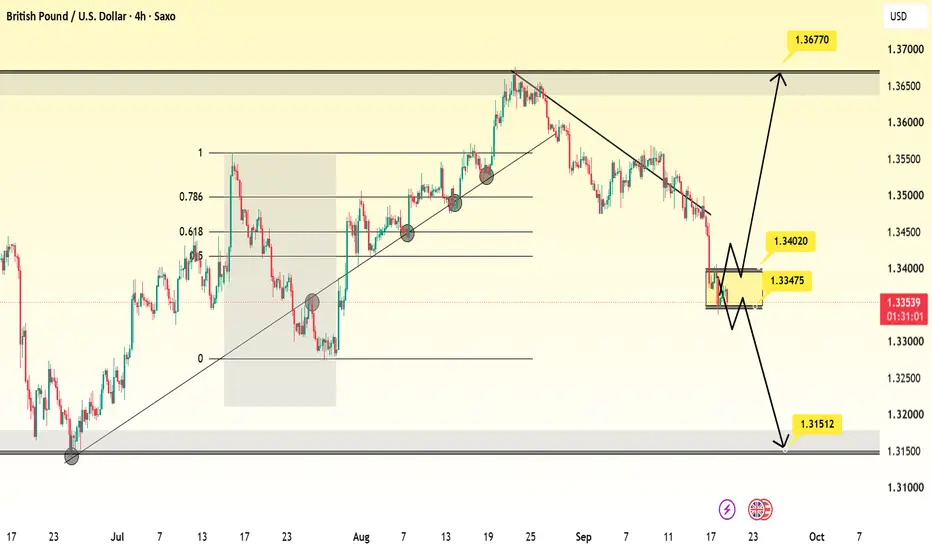
GBPUSDGBP/USD is trading near 1.33577 as it consolidates inside the decision range between 1.33475 and 1.34020 on the 4h chart.
The first scenario (Bullish) forecasts a breakout above 1.34020, followed by a retest before pushing upward toward the primary target near 1.36770.
The second scenario (Bearish
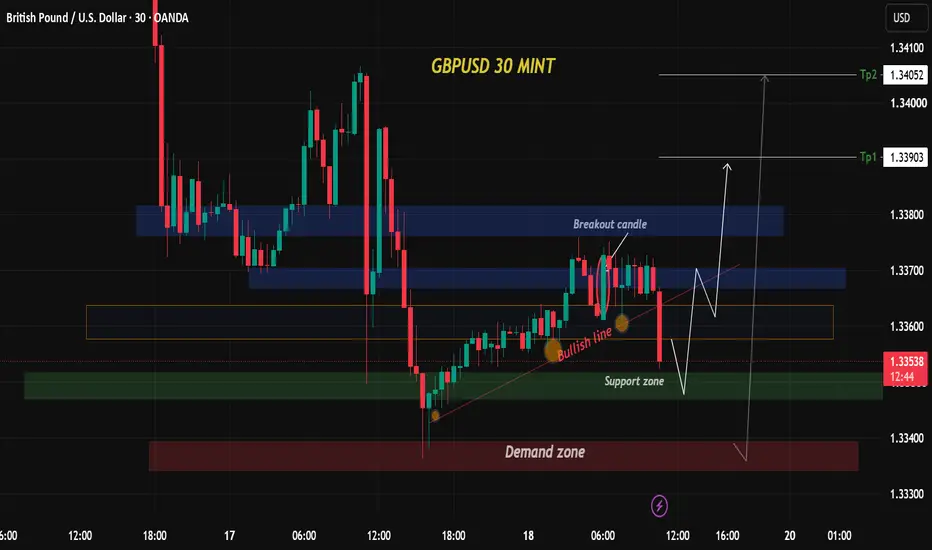
GBPUSD MARKET ANALYSISGBPUSD is currently showing a short-term recovery structure after the recent bearish move. Price has reacted from the lower support/demand area around 1.3340–1.3350, where buyers stepped in and helped push the pair higher.
The chart is now testing the 1.3360–1.3370 area, which is an important short
See all popular ideas
Rates
| - | - | - | - | - | - | - | ||
| - | - | - | - | - | - | - | ||
| - | - | - | - | - | - | - | ||
| - | - | - | - | - | - | - | ||
| - | - | - | - | - | - | - | ||
| - | - | - | - | - | - | - | ||
| - | - | - | - | - | - | - | ||
| - | - | - | - | - | - | - |
Frequently asked questions
Forex (foreign exchange) is a global market for trading currencies. Unlike stock markets, the forex market doesn't have any physical location, yet it's the most liquid market worldwide.
In forex, leverage is the use of "borrowed" money (usually from a broker) to invest in a currency. It helps traders open larger positions and gain greater exposure to the forex market. For example, with 100:1 leverage, a trader can control $100,000 in currency with just $1,000 of their own capital.
While leverage amplifies potential profits, it also increases potential risks, so it's crucial to understand and manage it properly, as it directly impacts the risk-reward ratio of trades.
The forex market operates 24 hours a day during the trading week, with activity peaking across three major sessions:
- Tokyo session: 19:00 – 4:00 ET (often overlaps with the Sydney session: 17:00 – 2:00 ET)
- London session: 15:00 – 0:00 ET
- New York session: 8:00 – 17:00 ET
This round-the-clock schedule reflects the global nature of forex, enabling traders in all time zones to participate and helping maintain high market liquidity throughout the week.
- Tokyo session: 19:00 – 4:00 ET (often overlaps with the Sydney session: 17:00 – 2:00 ET)
- London session: 15:00 – 0:00 ET
- New York session: 8:00 – 17:00 ET
This round-the-clock schedule reflects the global nature of forex, enabling traders in all time zones to participate and helping maintain high market liquidity throughout the week.
A forex chart is a visual tool that shows how one currency moves in relation to another over a set period. The exchange rate is plotted on the vertical axis, while time runs along the horizontal axis.
Different chart types — like line, bar, and candlestick charts — can help you analyze a currency pair’s performance.
Explore our knowledge base to learn more about chart types and how to read them effectively.
Different chart types — like line, bar, and candlestick charts — can help you analyze a currency pair’s performance.
Explore our knowledge base to learn more about chart types and how to read them effectively.
In forex, spread is the difference between sell price (bid) and buy price (ask) of a currency. Basically, spread is a transaction fee traders pay to exchange the currency — brokers sell a currency for more money they bought it for, and buy it from traders for less money they're going to sell it for later, thus forming the spread.
Spreads can be wider or tighter with traders usually preferring the latter — tight spreads make a currency more affordable. Note that spreads can widen during periods of high volatility or low liquidity.
Currencies are typically traded through forex brokers, so it’s important to choose one that fits your trading style and goals. With TradingView, you can trade directly from the chart — take a look at our list of integrated brokers to find the one that best fits your strategy.
Before you start, it's crucial to do your research: perform technical analysis on the chart or dive into fundamental analysis with the Economic calendar. Evaluate risks, and test your strategy.
Major are pairs in which currencies are paired with the US dollar. There are seven major pairs that that account for about three quarters of the whole forex market: EURUSD, USDJPY, GBPUSD, AUDUSD, USDCAD, USDCHF, NZDUSD. See the full list of major pairs equipped with helpful data for a deeper analysis.
Minor currency pairs (also known as cross pairs) are currency pairs that don’t include the US dollar — for example, EURGBP or JPYAUD.
Explore the full list of minor pairs with key data to uncover new trading opportunities.
The Economic Calendar is a versatile tool that can help in the research of vaious assets, including currency pairs. As forex is a global market with millions of traders from around the world, macroeconomic events, as well as reports from certain countries, can easily influence the currency rates. For example, inflation reports, shifts in countries' balance of trade play a great role in the forex market's dynamic.
You can track all the important events in TradingView Economic Calendar. There you will learn about economic indicators and what they can affect; you can compare actual and historical data and see the divergence from the forecast to better understand trends. All this can help you design more event-driven strategies that will easily adapt to changes in the forex market.
An exchange rate shows the value of one currency relative to another. For example, when we say that EURUSD rate is 1.14856 USD, it means that it wouild take 1.14856 USD to buy 1 euro.
Track USDJPY, GBPUSD, and other currency pairs on TradingView, and compare their live performance with our cross-rates tool.
Any market may be profitable if a reliable strategy and thorough analysis are at play. But there are a few advantages of the forex market that many traders see:
- Liquidity. Forex is the most liquid market, meaning you can quickly sell your assets with no complications
- Leverage. It allows traders to open larger positions on the market with potentially larger profits
- Volatility. Forex trading volumes can be extremely large, which leads to volatility, and more volatility means more opportunities. It also means more risks, so stay informed
- 24-hour trading. Forex market is open 24 hours a day during the week, which gives traders more space for maneuver
- Liquidity. Forex is the most liquid market, meaning you can quickly sell your assets with no complications
- Leverage. It allows traders to open larger positions on the market with potentially larger profits
- Volatility. Forex trading volumes can be extremely large, which leads to volatility, and more volatility means more opportunities. It also means more risks, so stay informed
- 24-hour trading. Forex market is open 24 hours a day during the week, which gives traders more space for maneuver
It’s always best to test your forex trading skills before entering live markets. With Paper Trading on TradingView, you can practice strategies in real time — just click the Paper Trading icon in the trading panel and start experimenting. You can also try the Bar Replay feature to simulate past price movements and refine your approach.
Forex exchange rates are largely driven by a country’s economic performance and political stability. Strong growth and low inflation typically boost a currency’s value, while political unrest or high inflation can cause it to weaken as investors look for safer or more profitable options.
Market sentiment also plays a key role, reacting to news and expectations around economic policy. On top of that, central banks may intervene directly to influence exchange rates, adding further complexity.
To stay ahead in any market conditions, use tools like the Economic Calendar, forex news, and technical analysis to guide your strategy.
Market sentiment also plays a key role, reacting to news and expectations around economic policy. On top of that, central banks may intervene directly to influence exchange rates, adding further complexity.
To stay ahead in any market conditions, use tools like the Economic Calendar, forex news, and technical analysis to guide your strategy.