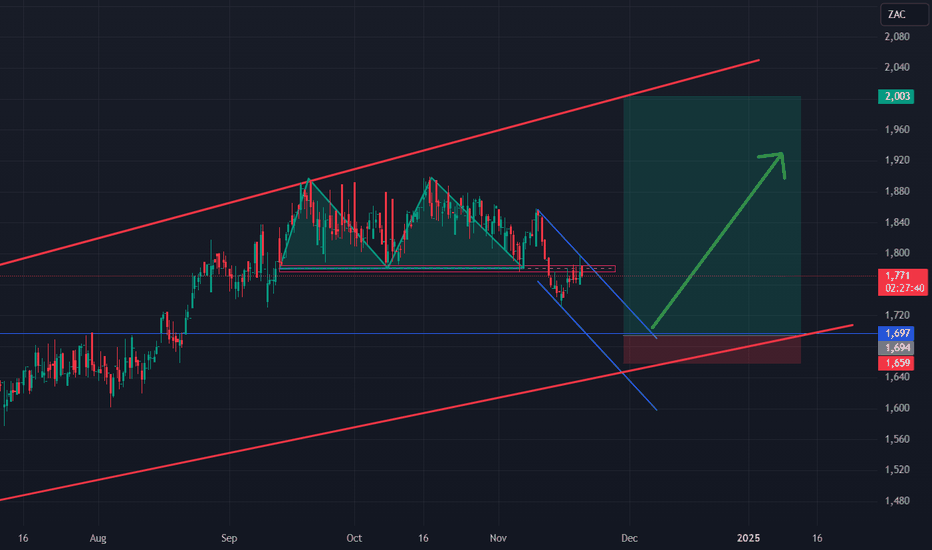
Our opinion on the current state of NAMPAK(NPK)Nampak (NPK) is Africa's largest packaging company with interests in South Africa and ten other African countries. About 60% of its turnover comes from South Africa, but only 36% of its trading profit. The rest of Africa accounts for 59% of trading profit and only 31% of turnover. The company also has small interests in the UK and Ireland. It produces four kinds of packaging products - plastics, metals, paper, and glass. The great preponderance of its trading profits come from metals - which consists mainly of beverage cans.
Nampak has been able to remove R3,5bn (US$265m) of surplus cash from Zimbabwe, Nigeria, and Angola. Importantly, management appears to have the ability to re-patriate profits from the various African countries where it operates. It has halted its strategy of expanding into Africa after writing down its businesses in Angola and Nigeria by R3bn. COVID-19 and the fall in the oil price have impacted on its results in Nigeria and South Africa.
It is also benefiting from the news that it will not need to sell assets or do a rights issue to pay back debt of just under R6bn. The announcement that it would raise R1,35bn through a rights issue to reduce debt caused the share to fall 30%. The rights offer was reduced from R2bn to R1,5bn and shareholders finally gave permission to raise up to R1bn on 30th June 2023.
On 20th April 2023 the CEO, Eric Smuts, resigned with immediate effect and was replaced by Phil Roux. In its results for the six months to 31st March 2024 the company reported revenue up 7% and headline earnings per share (HEPS) of 5 393.9c per share compared to headline loss of 11 027.3c in the previous period. The company said, "Despite declines in revenue in DivFood and Bevcan Angola, Metals recorded a 6% increase in revenue boosted by growth achieved with Bevcan South Africa, while Plastics and Paper posted 9% and 10% increases in revenue respectively."
In an update on 1st October 2024 the company said, "In September 2024 the group successfully concluded the refinancing of the group, utilising a significantly simplified funding structure, inclusive of only a minor foreign debt component. The Standard Bank of South Africa financed the transaction in full."
On 16th May 2024 the company announced that it had sold its entire Nigerian operation for $68,5m. In a trading statement for the year to 30th September 2024 the company estimated that HEPS would be between 3100c and 3500c compared with 39004,6c in the previous period. This caused the share price to drop sharply.
The share remains in an upward trend, but it is a volatile commodity share. Our opinion on the current state of PURPLE(PPE)Purple Group (PPE) is a dynamic player in the financial services industry, offering accessible trading and asset management services with a focus on affordability for private investors. Its three core divisions:
1. Easy Equities: Known for democratizing access to the stock market, it allows small investments at minimal costs, such as just 64c for a R100 transaction. This division has attracted a significant base of first-time investors, with 150,000 active accounts.
2. Emperor Asset Management: This segment provides professional fund management services for clients seeking a managed investment approach.
3. GT247: A platform focused on derivatives trading, catering to more experienced or specialized traders.
In May 2023, Purple Group completed a rights issue to raise R105m, offering shares at a substantial discount to their recent trading price. This move was supported by key shareholders and aimed at strengthening the company’s capital base.
The financial results for the year ended 31st August 2024 showed impressive growth, with a 45.1% increase in revenue and a recovery to headline earnings per share of 1.77c, from a previous loss of 2.05c per share. Key performance metrics included:
- A 24.8% increase in client assets to R58.2 billion.
- A 10.4% rise in active retail clients to nearly 1 million accounts.
- Revenue growth of 51.5% in the Easy Equities segment.
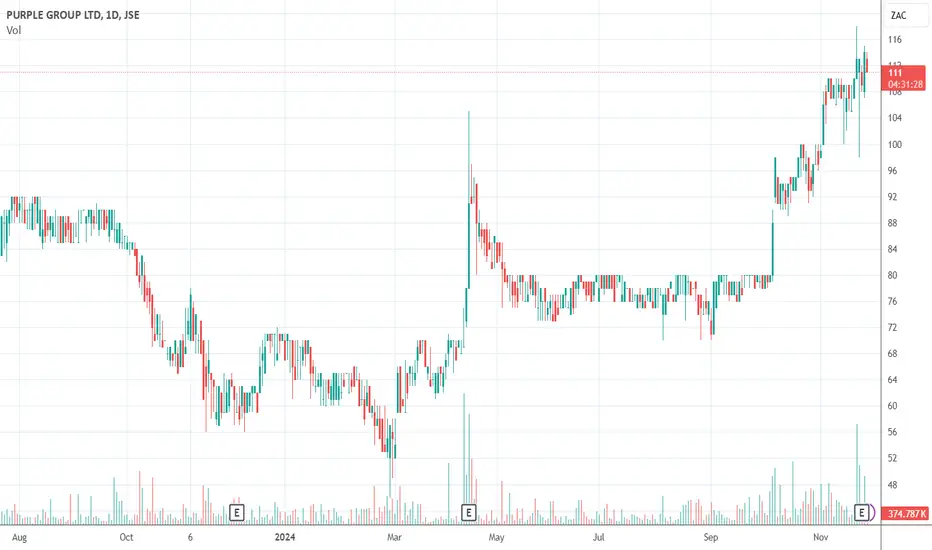
The share has been well-traded, with over R1 million worth of shares changing hands daily on average. Technically, the share price had declined after forming a "double top" at 340c in early 2022, but began a strong rally in March 2024. A breakout through its 65-day moving average on 4th March 2024 at 66c marked the start of its upward momentum, reaching 113c recently. This suggests continued potential for further growth.
Given your investment interests, do you want further insights on Purple Group’s market positioning, or would you like guidance on technical or fundamental analysis? Let me know how I can assist you further! Our opinion on the current state of STEFSTOCK(SSK)Stefanutti (SSK) is a South African construction company which offers roads and earthworks, marine construction, concrete structures, bulk pipelines, piling, geotechnical services, open pit contract mining, affordable housing, mine residue disposal, and other services. It operates in sub-Saharan Africa and the United Arab Emirates (UAE).
The company is considering further down-sizing to match its falling order book, and this will mean retrenchments. The share price has fallen from its high of 2650c in November 2007 to current levels around 56c. The company is not paying dividends. Construction is always a risky investment in South Africa. Much will depend on the progress of the South African economy and the availability of construction work from the government.
This share is probably going to continue its long-term downward trend for the foreseeable future. We consider it to be a poor investment even as a speculation. In July 2020, Stefanutti was accused by Eskom of being overpaid R1bn for work done on Kusile - which the company denies.
In a restructuring plan, the company is selling non-core assets and plant and equipment and trying to obtain further funding of R430m to counter the impact of COVID-19. The company is engaging in a restructuring plan which involves the sale of non-core assets, securing additional short-term funding of R430m, and cutting costs.
The company is technically insolvent, and we think that this company may well be following many of its peers in the construction industry into consolidation or business rescue if the current restructuring does not work.
In its results for the six months to 31st August 2024, the company reported revenue up 2% and headline earnings per share (HEPS) of 13,23c compared with a loss of 22,41c in the previous period. The company said, "Capital repayments of R13 million and R37 million were made in March 2024 and July 2024 respectively, reducing the loan to R947 million. The loan bears interest at prime plus 3,7%."
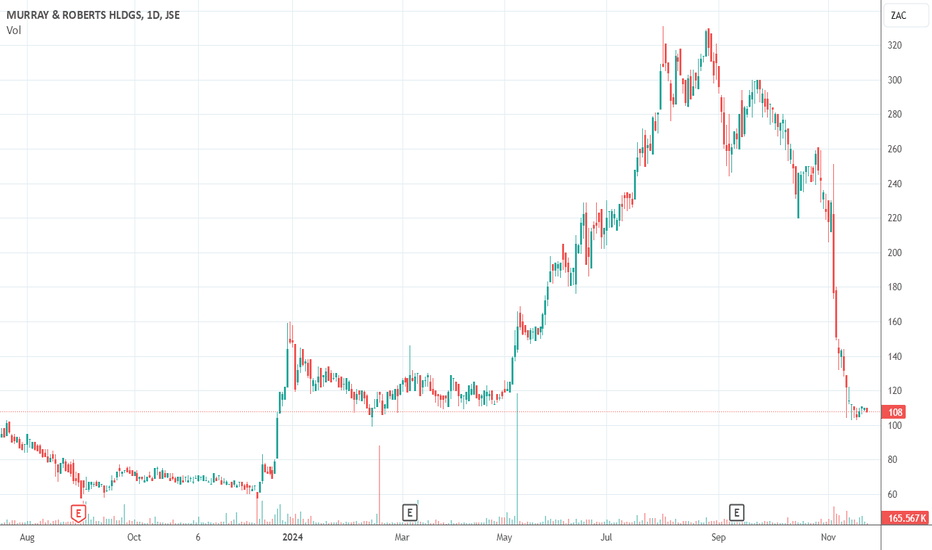
Technically, the share entered a new upward trend in June 2024 and was added to the Winning Shares List (WSL) on 22-6-24 at 146c. It has subsequently risen to 467c. Our opinion on the current state of M&R-HLD(MUR)Murray and Roberts (MUR) is a large South African construction company which has suffered from the sub-prime crisis and then the slump in construction spending following the 2010 World Cup. This brought the share down from a massive double-top formation at around R100 per share to a low below R5 in May 2020.
The company has been consolidating and reducing costs. It has transformed itself into a "...multinational engineering and construction Group focused on the natural resources market sectors..." with three primary business platforms - underground mining, oil & gas, and power & water.
On 27th March 2023, the company announced that it had sold its Australian operations (65% of Insig Technologies) for A$1, disposing of A$7m in liabilities. On 8th December 2023, the company reported that it would be able to reduce its debt from R2bn in April 2023 to R350m as a result of "Cementation Canada Inc's recently renewed banking facility agreement with a Canadian bank will provide for Cementation Canada to pay CAD40 million."
In its results for the year to 30th June 2024, the company reported revenue of R13,5bn, up from the previous year's R12,5bn, and an attributable loss of R138m. The company's net asset value fell to 350c per share, down from the previous year's 407c. The company said, "Reduced diluted continuing headline loss per share 24 cents (FY2023: 71 cents loss) - Net cash, including advance payments and working capital improvements R0,4 billion (FY2023: R0,3 billion net debt)."
In a trading statement for the six months to 31st December 2024, the company estimated that HEPS would fall by at least 20%. This announcement caused the share price to enter a new downward trend. MUR remains a relatively risky penny stock with high debt levels.
On 15th July 2024, the company announced that it had won a $200m multi-year contract in Latin America. However, on 22nd November 2024, the company's board of directors stated that the company met the Companies Act definition of being "financially distressed" and that the best way forward was to enter into business rescue. Accordingly, trading in the company's shares has been suspended on the JSE. M
Our opinion on the current state of NOVUS(NVS)Novus (NVS) is South Africa's largest printing company with 11 printing plants. Until recently, it had the monopoly contract to do all of Media24's printing. With effect from 1st April 2018, that contract was reduced to roughly 58% of Media24's printing, and the price paid by Media24 for printing was also reduced.
The company appointed a new CEO, Neil Birch, who has decided in the short term to abandon the company's acquisitions and focus on consolidating the business and improving its operating performance. The board may also look to sell the company's tissue business. The company has a level 4 BEE status but will need to improve that to become more competitive.
On 12th August 2022, the company announced that it would acquire 75% of Pearson South Africa.
In its results for the six months to 30th September 2024, the company reported revenue up 3,3% and headline earnings per share (HEPS) of 59,36c compared with 28,77c in the previous period. The company said that the improved profits were due to "...an improvement in the profitability of the Print Segment and profits from derivative instruments held in Mustek Limited ("Mustek"), within the Packaging Segment."
Technically, the share price fell steadily since listing in March 2015 until March 2021. Then it began to move up, and it currently trades just above its NAV (728,27c). We suggested waiting for a convincing break up through a 65-day moving average before investigating further. That happened on 8th October 2020 at 88c, and the share has since moved up to 760c.
The share trades about R1,5m worth of shares a day, which makes it practical for private investors. The share was added to the Winning Shares List (WSL) on 5th June 2024 at 524c. It has subsequently moved up to 760c. Our opinion on the current state of VISUAL(VIS)Visual International Holdings (VIS) is a small, cash-strapped property development company operating in the Cape Town area. The company announced on 2nd July 2018 that publication of its financial results would be delayed. At that time, it was anticipated that the financials would be published before the end of July 2018. As a result of this delay, trading in the share was suspended by the JSE.
Visual's flagship asset is the Stellendale Development near Kuilsriver, consisting of 2000 residential units. It is in the process of negotiating the sale of Stellendale.
In its results for the six months to 31st August 2022, the company reported revenue unchanged and a headline loss per share of 0.72c compared with 0.95c in the previous period. The company has a negative net asset value (NAV) of -3.63c per share.
In its results for the year to 29th February 2024, the company reported revenue down 0.6% and headline earnings per share (HEPS) of 3.3c compared with a loss of 1.78c per share in the previous period.
In a trading statement for the six months to 31st August 2024, the company estimated that it would make a headline loss of 0.93c per share compared with a loss of 0.63c in the comparable period.
In our view, this share is of little or no interest to private investors, and there are far better property shares available on the JSE. However, it is interesting to see how the shares are faring now that they have resumed trade. At best, this is a very thinly traded penny stock whose 3c price can only be based on the value of its remaining assets and its listing.  Long
Long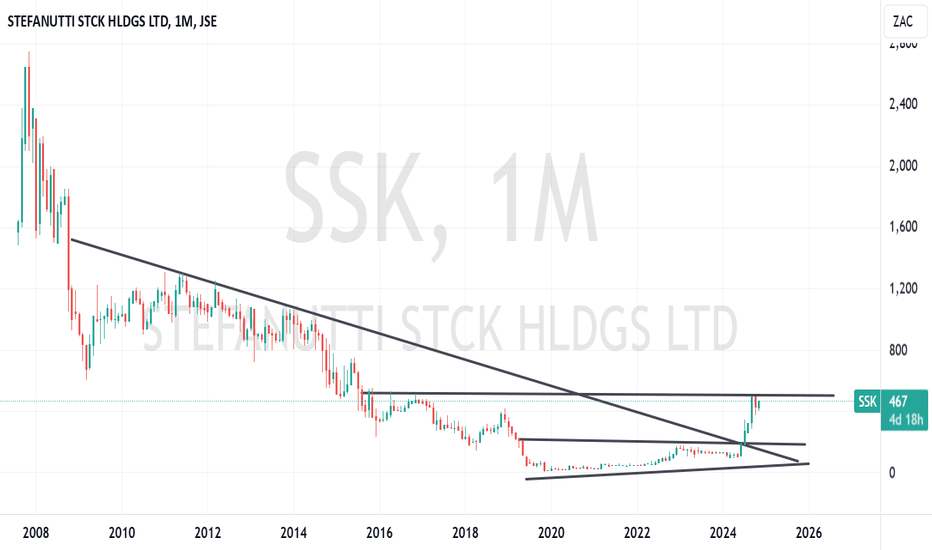
 Long
Long
Our opinion on the current state of LESAKA(LSK)Previously known as Net1 UEP Technologies, Lesaka is listed on the Nasdaq and the JSE (LSK). It is a provider of fintech products in a number of countries. Its universal electronic payment system (UEPS) uses biometrically secure smart cards that operate in real-time but offline, which allows users to enter into transactions at any time.
In its results for the year to 30th June 2024, the company reported revenue up 11% and a net loss of R326.1m compared with a loss of R629.2m in the previous period. The company said, "Fundamental earnings per share (a non-GAAP measure) of $0.06 (ZAR 1.06), improved ZAR 3.72, compared to a fundamental loss per share of $0.15 (ZAR 2.66) in FY 2023. Merchant Division revenue increased 12% in ZAR to $498.3 million (ZAR 9.3 billion), and Segment Adjusted EBITDA increased 4% in ZAR to $33.4 million (ZAR 624.1 million)."
In an update on the 1st quarter to 30th September 2024, the company reported revenue of R2.6bn and a loss of 126c per share. The company said, "Net loss, including $1.7 million (ZAR 30.0 million) of one-off Adumo transaction costs, improved 23% in ZAR, to a net loss of $4.5 million (ZAR 81.0 million) in Q1 2025."
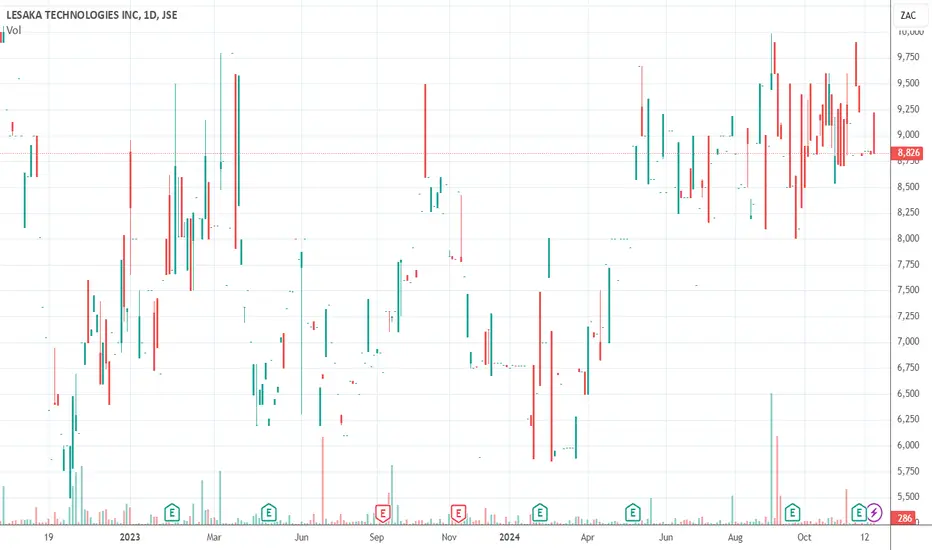
The share trades R69,000 worth of shares on average every day, and there are days when there is no trade at all.
On 5th December 2023, the company announced that Chris Meyer would step down as CEO in February 2024. On 6th February 2024, the company announced that it had acquired Touchsides, a distributor of alcohol to shebeens and informal taverns.
On 2nd October 2024, the company announced the acquisition of the fintech company, Adumo, for R1.67bn in cash and shares. On 20th November 2024, the company announced that it had acquired the prepaid electricity submetering and payments business, Recharger, for R507m. Our opinion on the current state of AMEAfrican Media Entertainment (AME) is a company which specialises in running radio stations and whose revenue comes principally from advertising on those stations. It has four divisions:
(1) Algoa, which broadcasts from the Garden Route to the Wild Coast,
(2) OFM, which broadcasts in the Free State, North-West province, Northern Cape, Southern Gauteng, and Northern Natal,
(3) United Stations, which sells and creates advertising material for the radio stations, and
(4) Radio Heads, which offers media planning and buying, creative strategy and copy-writing, and syndicated programming.
AME acquired Moneyweb and a share of Classic FM. The company said, "On 30 September 2019 Classic FM South Africa (Pty) Ltd was placed under voluntary business rescue."
In its results for the year to 31st March 2024, the company reported revenue up 8% and headline earnings per share (HEPS) up 63%. The company said, "The group generated cash from operating activities of R64,9 million (March 2023: R43,5 million), paid tax of R15,3 million (2023: R11,6 million), spent R5,4 million (2023: R6,3 million) on capital expenditure and paid dividends of R33 million (2023: R28,7 million) to its equity holders and non-controlling interest holders. The group also repurchased 212 600 shares (2023: 701 775 shares) during the period which resulted in a cash outflow of R6,9 million."
In a trading statement for the six months to 30th September 2024, the company estimated that HEPS would increase by between 16% and 25%.
The share trades an average of R43,000 per day, which makes it barely practical for a small investment. Its portfolio of radio stations has relatively small, specialised audiences. Moneyweb has battled for years to produce significant profits. Our opinion on the current state of MOMMET(MTM)Momentum Metropolitan (MTM) is a JSE- and Namibian-listed insurance company, formed through the merger of Momentum and Metropolitan in December 2010. The company provides a wide range of short- and long-term insurance products and financial services. It was the first insurance company to achieve level 1 BBBEE status. However, it has been scaling back its African operations by closing its businesses in Mozambique, Mauritius, Zambia, Tanzania, and Swaziland.
At the time of the merger, the combined entity held 24% of South Africa's life insurance market. This has since declined to 17%. The company faced substantial challenges during the COVID-19 pandemic, paying out nearly R4 billion in death claims in Q1 2021 due to the second wave—three times the expected amount. In response to the pandemic, it has also reduced its office space requirements, adapting to the increased prevalence of remote work.
Recent Developments:
1. Leadership Change: Jeanette Marais assumed the role of CEO on 30th September 2023, succeeding Hilgard Meyer.
2. Results for the Year to 30th June 2024:
- Headline earnings per share (HEPS): Increased by 39%.
- Return on embedded value: Achieved 13.3%.
- Operating profit: Rose 31%, from R2.755 billion to R3.608 billion.
- Momentum Retail saw a decline in operating profit due to lower market variances and increased expenses.
3. Update for the 3 Months to 30th September 2024:
- Recurring premium income: Up 8%.
- Assets under management (AUM): Increased 17% to R280 billion.
- Operational performance was supported by satisfactory new business performance across most units. Improving economic indicators have started to positively affect business results.
Technical and Valuation:
- The share began its upward movement in May 2024, and it was added to the Winning Shares List (WSL) on 24th July 2024 at 2402c. It has since risen to 3000c.
- It trades on a price-to-earnings (P:E) ratio of 10.05 and offers a dividend yield (DY) of 3.33%.
- The share appears reasonably priced at current levels and is likely to benefit from further economic improvements and strong operational performance.
Momentum Metropolitan is well-positioned for growth, with improving business fundamentals and an attractive valuation. Its gradual recovery in market share and increased operational efficiency under new leadership make it a compelling long-term investment. Our opinion on the current state of REINET(RNI)Reinet (RNI) is an investment holding company with its main asset being a 2.12% stake in British American Tobacco (BAT), valued at approximately $1.8 billion, which constitutes about 31% of its net asset value (NAV). This is a significant reduction from 85% a decade ago, primarily due to the decline in BAT's share price as the tobacco industry faces increasing regulatory challenges, particularly in the US.
The US Food and Drug Administration's potential regulatory changes on menthol cigarettes and the global trend of declining cigarette sales in developed markets have contributed to BAT's declining valuation. However, BAT continues to deliver solid dividends, driven by growth in emerging markets where tobacco demand remains relatively strong.
Diversification and Portfolio:
1. Pension Insurance Corporation (Penscorp): Reinet holds a 46% stake in Penscorp, now representing 36.8% of its portfolio. This has grown in prominence as BAT's contribution has declined.
2. Private Equity Investments: Private equity holdings now account for around 15% of Reinet's portfolio, contributing to its diversification strategy.
3. Compound Growth: Since March 2009, Reinet's portfolio has achieved a compound annual growth rate of 8.8%.
Financial Performance:
- For the six months ending 30th September 2024, Reinet reported an NAV of 3625 euro cents per share, up from 3089 euro cents a year earlier.
- The company stated that it has no direct exposure to geopolitical risks such as Russia, Ukraine, or the Middle East and has been minimally affected by interest rate fluctuations or inflation.
Technical Performance:
- The share price fell sharply from its high of R343 in February 2020, hitting lows in January 2021.
- A clear upward break through its long-term downward trendline occurred on 16th September 2019 at R270 per share.
- The share has since recovered strongly and is now trading at R480.31.
Outlook:
- The BAT announcement of a GBP25 million write-down on its US operations recently impacted Reinet, reflecting BAT's ongoing challenges. However, Reinet's diversification into other asset classes, particularly Penscorp, has helped offset BAT's declining value.
- As a rand-hedge investment, Reinet is sensitive to fluctuations in the rand. Prospective investors should assess the rand's future trajectory before investing.
Reinet remains a diversified holding with a steady track record and benefits from its balanced exposure to high-dividend assets like BAT and growth-focused assets like Penscorp and private equity investments. However, its reliance on BAT, despite diversification, makes it partially exposed to the challenges in the tobacco industry. Our opinion on the current state of NASPERS-N(NPN)Naspers (NPN) is Africa's largest company and an international giant in social media, gaming, and IT. Its primary asset is a 73% stake in Prosus (PRX), which owns 26% of Tencent, a Hong Kong-listed company providing social media services and gaming in China. Tencent dominates the Chinese market with 10 of the top 20 mobile applications, reaching over 1.1 billion users.
Key Developments and Structure:
1. Capital Structure: Naspers' archaic dual-share structure gives significant control to the 907,128 unlisted "A" ordinary shares, each carrying 1,000 times the voting power of the 438.3 million listed "N" shares. This structure remains a major concern for institutional investors, contributing to the discount in the share price relative to its intrinsic value.
2. Key Investments: Aside from Tencent, Naspers has interests in e-commerce and operates in 120 countries. Key investments include:
- Letgo: Acquired an additional $500 million stake, cementing its presence in the American classifieds market.
- South African Operations: Retained Takealot, Mr. D Food, PayU, and Autotrader.
3. Listing of Prosus: In 2019, Naspers listed Prosus on Euronext in Amsterdam to house its international assets. This move reduced Naspers' rand exposure and established Prosus as Europe's largest consumer internet company.
4. Growth Drivers: Tencent continues to be the main revenue driver, especially during the pandemic when online gaming surged. Naspers has also seen growth in its e-commerce businesses.
Financial Performance:
- For the year ending 31st March 2024, Naspers reported:
- Revenue up 8%.
- Core headline earnings up 88% to $2.1 billion, driven by improved e-commerce profitability and Tencent's performance.
- Headline earnings from continuing operations increased by $1.2 billion to $1.4 billion.
- Debt Position:
- Net debt: $737 million.
- Cash and equivalents: $14.6 billion.
- Interest-bearing debt: $15.4 billion.
- Undrawn revolving credit facility: $2.6 billion.
- Trading Update:
- For the six months to 30th September 2024, Naspers estimated HEPS to increase by 125%-132% due to improved profitability and lower impairment charges.
Technical Analysis:
- Since October 2022, Naspers' share price has staged a recovery. Between March 2023 and April 2024, it moved sideways but then broke to new highs.
- It has surpassed its all-time high of R4090 reached on 21st November 2017, signaling strong upward momentum.
Outlook:
- Naspers is under-priced at current levels, considering its robust growth, strong financial position, and dominance in key markets like Tencent. However, its dual-share structure and exposure to regulatory risks in China remain points of concern.
- The company's diversification through Prosus and consistent growth in e-commerce offer long-term upside potential. Our opinion on the current state of PPCPPC is a major producer of cement, aggregates, ready-mix, lime, limestone, and fly-ash in Africa, with a production capacity of 11.5 million tons across eleven cement factories in South Africa, Botswana, the DRC, Zimbabwe, Rwanda, and Ethiopia. It also operates the Mooiplaas quarry, the largest aggregates producer in South Africa, and has twenty-six batching plants in South Africa and Mozambique.
Key developments:
1. Financial Resilience: PPC has successfully re-negotiated its lending agreements, avoiding the need for a highly dilutive rights issue. However, it has not paid dividends for five years. It recently announced a special dividend of 33.5c per share following the sale of its 51% stake in Cimerwa, its Rwandan operation.
2. Carbon Tax Impact: The carbon tax introduced in 2019 costs PPC between R100m and R120m annually, potentially reducing its competitiveness against foreign imports unless tariffs are increased.
3. Geographic Diversification: PPC is focusing on growth in other African markets to offset challenges in the South African construction sector, which has suffered from a lack of government projects.
4. Government Support: PPC is benefiting from South Africa's "localisation" policy, mandating government projects to purchase locally produced cement.
5. Cost Management: In its results for the six months to 30th September 2024, PPC reported revenue down 4.2% but a modest improvement in HEPS to 22c from 20c in the previous period. The company attributed this to strong cost discipline and price growth despite lower sales volumes.
6. Debt Reduction: PPC has reduced its debt by 20% and conducted a R200m share buy-back program, bolstering its financial position.
Outlook: PPC's focus on cost control, debt reduction, and localisation policies should provide a buffer against industry challenges. The company is well-positioned to benefit from South Africa's government of national unity (GNU), which is expected to stimulate infrastructure projects, as well as from falling interest rates.
Technical Analysis: Since October 2022, PPC shares have been in an upward trend, driven by improved financial performance and investor confidence. This trend is expected to continue as the company capitalizes on local and regional growth opportunities. However, the over-supply in the cement industry remains a challenge. Our opinion on the current state of PROSUS(PRX)Naspers (NPN) spun off Prosus (PRX) on 11th September 2019, listing it on the Euronext in Amsterdam to hold its international assets, including Tencent, Mail.Ru, and other internet brands. Naspers retains a 73% stake in Prosus, while 25% is free float. This listing mitigates rand risk, making Prosus a rand-hedge investment that benefits from rand weakness. As Europe’s largest consumer internet company, Prosus's primary asset is a 26% stake in Tencent, a Hong Kong-listed company with over 1.1 billion users across its top 10 mobile applications in China. Tencent, however, remains exposed to Chinese regulatory challenges, particularly in gaming.
Prosus operates across classifieds, payments, fintech, food delivery, e-tail, and travel, serving 1.5 billion people in 89 markets. The company has been diversifying its revenue streams while managing risks associated with its heavy reliance on Tencent.
Recent developments include:
- May 2022: Tencent announced a sharp decline in profits, adversely affecting Prosus shares.
- June 2022: Prosus launched an open-ended share buyback program, funded partly by selling Tencent shares. This move boosted the share price.
- October 2022: Prosus shares fell after Chinese President Xi Jinping’s re-election, raising concerns over regulatory pressures.
In its March 2024 results, Prosus reported an 11% increase in revenue and an 84% rise in core headline earnings, highlighting the impact of its share repurchase program, which reduced the free-float share count by 21% and generated $30 billion in value for shareholders.
In its September 2024 trading statement, Prosus estimated a 112% to 122% rise in headline earnings per share (HEPS), attributing the growth to improved profitability and lower impairment charges.
Technical Analysis: Since November 2023, the Prosus share has been trending upwards. It remains undervalued at current levels, with robust financial performance and a strong buyback program contributing to investor confidence. The share's rand-hedge characteristics and diverse portfolio further strengthen its appeal. However, investors should remain cautious of Chinese regulatory risks tied to Tencent. Our opinion on the current state of SIRIUS(SRE)Sirius (SRE) is a real estate investment trust (REIT) listed on the JSE and the London Stock Exchange (LSE), focusing on office, manufacturing, and warehousing properties in Germany. The company owns 141 assets valued at approximately €2 billion, making it a significant player in the European property market.
Before the COVID-19 pandemic, Sirius was benefiting from the recovery of the German economy, and it continues to exhibit strong management and growth as a rand-hedge investment. The company has formed a joint venture (JV) with AXA Investment Managers, where AXA holds a 65% stake, and Sirius retains 35%. The JV, named "Titanium," acquired five business parks from Sirius for €168 million, representing a 19% premium to their book value. This partnership is expected to help Sirius double its asset value over two years.
In its results for the six months to 30th September 2024, Sirius reported a 14.5% increase in funds from operations and a loan-to-value (LTV) ratio of 30.5%. However, headline earnings per share (HEPS) declined by 1.7%. The company stated, "With nearly €300m of cash and a healthy net LTV ratio of 30.5%, we have significant sufficient firepower to act opportunistically and make earnings accretive acquisitions as they arise."
From a technical perspective, Sirius had been in a downward trend until a convincing upward break occurred on 17th November 2022 at 1622c. The share subsequently rose to 2396c before appearing to enter a new downtrend.
At current levels, Sirius trades on a price-to-earnings (P/E) multiple of 13.85, making it one of the most highly rated REITs on the JSE. While this valuation underscores investor confidence, it also renders the share potentially vulnerable to market corrections. As a rand hedge, Sirius offers diversification and exposure to the German property market, but investors should remain cautious of valuation levels and the broader economic environment. Our opinion on the current state of TELKOM(TKG)Telkom (TKG) historically served as the government-controlled provider of fixed-line telephone services in South Africa. With the rise of mobile networks, Telkom was compelled to subsidize competitors like Vodacom, MTN, and Cell-C through termination rates, which have since been phased out. Over two decades, Telkom CEO Sipho Maseko estimated that these subsidies amounted to R70 billion. Today, Telkom remains 41% government-owned, with an additional 11.9% held by the Government Employees Pension Fund (GEPF), though it operates as an independent entity divided into five divisions:
1. **Open Serve**: South Africa's largest wholesale connectivity provider.
2. **Telkom Consumer**: The leading supplier of broadband internet, with a growing mobile network.
3. **Yellow Pages**: Advertising and marketing services for local businesses.
4. **BCX**: An ICT solutions company operating in Southern Africa.
5. **Swiftnet**: Formed in 2018 to house Telkom's masts, towers, and property interests. In March 2024, Telkom sold Swiftnet for R6.75 billion to reduce debt.
Telkom's shift from fixed-line to mobile connectivity is a central aspect of its restructuring efforts. In its results for the six months to 30th September 2024, Telkom reported a 1.9% increase in revenue but a 1.8% decline in headline earnings per share (HEPS). The company attributed its performance to "next-generation broadband offerings," supported by continued investment in its networks.
Technically, Telkom's share price fell from highs of around R98 in June 2019 to approximately R15.00 in March 2020. Since then, it has been moving sideways and downwards, but the latest results have triggered a new upward trend. However, the company carries high debt levels relative to its market capitalization, which poses a risk for investors.
In our view, while Telkom faces challenges in navigating a difficult economic environment and stiff competition, its strategic investments in broadband and the sale of non-core assets like Swiftnet are positive steps. The company is gradually finding a new direction, but it remains a risky investment due to its debt and competitive pressures. Our opinion on the current state of WEBBUYCAR(WBC)WeBuyCars was separately listed on the JSE on 11th April 2024, following its unbundling from Transaction Capital (TCP) to raise capital and shield it from TCP's challenges in the taxi division. The company has 417.2 million shares in issue, which began trading at around R20 per share, giving it a market capitalisation of just over R8.5 billion. The free float is approximately 57.5% of its issued shares, with notable institutional participation.
In its results for the year to 30th September 2024, the company reported a 16.5% increase in revenue but a 62.6% decline in headline earnings per share (HEPS). The drop in HEPS was due to a once-off R45 million listing cost and the de-recognition of a R425 million call option. Buying and selling volumes increased by 17.8% and 16.4%, respectively. The company stated, "WeBuyCars is well-positioned to benefit from lower interest rates, higher levels of consumer confidence, an improvement in new vehicle sales volumes, and cost efficiencies driven by economies of scale."
Core headline earnings rose by 23.4%, while core HEPS increased by 9.9%. Despite its current P/E ratio of 43.18, which seems high, the share has potential for steady growth over time. It was added to the Winning Shares List (WSL) on 3rd May 2024 at 2085c and has since increased to 3960c. While the valuation may appear stretched, the company must grow into the high expectations set by investors. Our opinion on the current state of CAFCA(CAC)Previously operating under the name RECM Calibre, Goldrush is engaged in Bingo, Limited Payout Machines (LPM), and Retail Sports Betting. The company has shown improved financial performance and operational growth, particularly in its gaming operations.
In its results for the six months ending 30th September 2024, the company reported a 25.9% increase in net asset value (NAV) to 1540 cents per share and headline earnings per share (HEPS) of 113.77 cents, compared with a loss of 243 cents in the prior period. The company noted, "Total Gross Gaming Revenue for the six months was R902.5 million, 5% up from last year. Food and beverage revenue, which is only associated with our Bingo premises, reduced by 15% to R34.2 million as some restaurant areas were outsourced to specialist operators. The gross profit of the gaming operations increased by 2% to R522.8 million, and Goldrush repaid R34 million of its bank debt."
Since the listing of Goldrush, trading volume has significantly increased, with the share now trading approximately R137,000 in value daily. The rising share price suggests accumulation and growing investor interest. While it is still early days, these developments indicate that the share has the potential to become a strong performer over time. Our opinion on the current state of CORONAT(CML)Previously operating under the name RECM Calibre, Goldrush is engaged in Bingo, Limited Payout Machines (LPM), and Retail Sports Betting. The company has shown improved financial performance and operational growth, particularly in its gaming operations.
In its results for the six months ending 30th September 2024, the company reported a 25.9% increase in net asset value (NAV) to 1540 cents per share and headline earnings per share (HEPS) of 113.77 cents, compared with a loss of 243 cents in the prior period. The company noted, "Total Gross Gaming Revenue for the six months was R902.5 million, 5% up from last year. Food and beverage revenue, which is only associated with our Bingo premises, reduced by 15% to R34.2 million as some restaurant areas were outsourced to specialist operators. The gross profit of the gaming operations increased by 2% to R522.8 million, and Goldrush repaid R34 million of its bank debt."
Since the listing of Goldrush, trading volume has significantly increased, with the share now trading approximately R137,000 in value daily. The rising share price suggests accumulation and growing investor interest. While it is still early days, these developments indicate that the share has the potential to become a strong performer over time. Our opinion on the current state of GOLDRUSH(GRSP)Previously operating under the name RECM Calibre, Goldrush is engaged in Bingo, Limited Payout Machines (LPM), and Retail Sports Betting. The company has shown improved financial performance and operational growth, particularly in its gaming operations.
In its results for the six months ending 30th September 2024, the company reported a 25.9% increase in net asset value (NAV) to 1540 cents per share and headline earnings per share (HEPS) of 113.77 cents, compared with a loss of 243 cents in the prior period. The company noted, "Total Gross Gaming Revenue for the six months was R902.5 million, 5% up from last year. Food and beverage revenue, which is only associated with our Bingo premises, reduced by 15% to R34.2 million as some restaurant areas were outsourced to specialist operators. The gross profit of the gaming operations increased by 2% to R522.8 million, and Goldrush repaid R34 million of its bank debt."
Since the listing of Goldrush, trading volume has significantly increased, with the share now trading approximately R137,000 in value daily. The rising share price suggests accumulation and growing investor interest. While it is still early days, these developments indicate that the share has the potential to become a strong performer over time. Our opinion on the current state of RMBRand Merchant Bank Holdings (RMH) is a company that transitioned from owning a 34.1% stake in FirstRand to focusing primarily on property investments since 2016. Established 41 years ago by GT Ferriera, Laurie Dippenaar, and Paul Harris, RMH listed on the JSE in 1992 and later spun off Rand Merchant Investment Holdings in 2011. RMH Property's portfolio includes stakes in Atterbury (27.5%), Propertuity (34.1%), and Genesis (40%). Following the sale of its FirstRand stake, RMH has been repositioned as a property-focused entity.
On 9th April 2021, RMH declared a special dividend of 80 cents per share, resulting from the decision not to proceed with the Bucharest development.
In its results for the six months ending 31st March 2024, RMH reported a headline loss of 2.9 cents per share and a 24% decline in net asset value (NAV) to 76.7 cents per share. The company stated, "RMH’s net asset value decreased from R1 449 million as at 30 September 2023 to R1 068 million as at 31 March 2024. This was predominantly as a result of the underlying net asset value of Atterbury Property Holdings Proprietary Limited (Atterbury) remaining static, the payment of the special dividend of R327 million in January 2024, and the further decrease in Divercity’s fair value following the repurchase of RMH’s interest for R50 million on 12 April 2024."
In a trading statement for the year ending 30th September 2024, RMH estimated that its NAV would decline by between 27% and 46%. The company has also recently changed its financial year-end from March to September.
Technically, the share price has been challenging to analyze due to its recent divestments but has entered an upward trend. The current share price remains significantly below the company's NAV, suggesting it could represent good value at current levels.  Long
Long