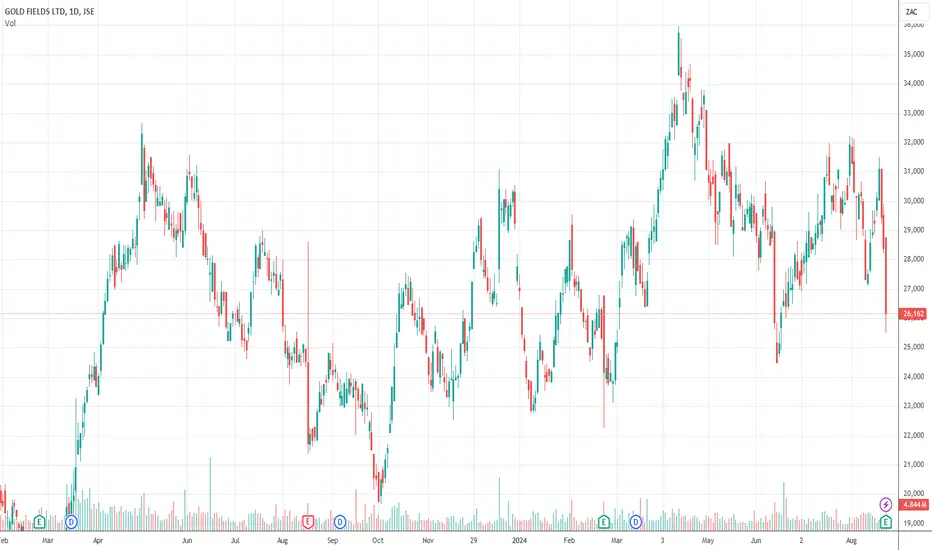
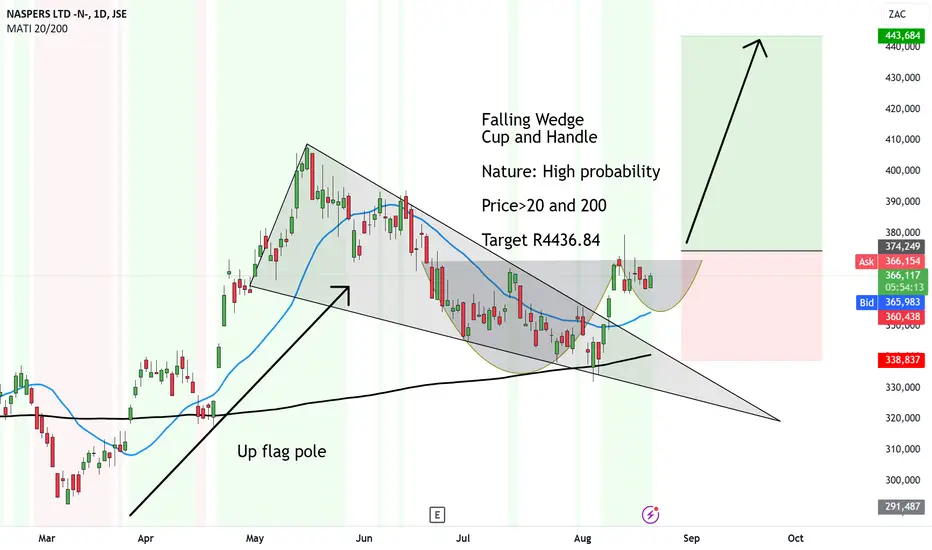
Our opinion on the current state of GFIELDS(GFI)Gold Fields (GFI) is a relatively high-cost international gold mining house with a single mine in South Africa, South Deep. Acquired by Gold Fields in 2006, South Deep has struggled to achieve profitability, with the company investing a total of R32bn (R22bn for the purchase and R10bn for development) over the past 14 years. Brett Kebble famously described South Deep as "The world's most expensive long drop..." due to its challenges, being 3 kilometres deep and technically complex. Despite these difficulties, South Deep holds the second-largest unmined gold resource in the world, which is why Gold Fields continues to invest in it.
Gold Fields is collaborating with an independent power producer (IPP) to build a 50MW power project in South Africa. Additionally, the company has invested $502m over the past two years to ensure that its international operations, particularly at Damang and Gruyere, would sustain a production of 2 million ounces annually for the next decade. Recent developments at South Deep have led to a reduction in costs by R800m and a decrease in capital expenditure by R400m.
The company is also focused on bringing the new Salares Norte gold mine in Chile into production. On 11th July 2022, Gold Fields announced that it would list on the Toronto Stock Exchange and adopt a dividend policy of paying between 30% and 45% of profits. The protracted investment in South Deep is beginning to pay off, with output expected to increase by approximately 25% over the next four years. On 12th August 2024, Gold Fields announced the acquisition of the remaining 50% of Osisko Mining for $1.57bn (R29bn).
In its results for the six months ending 30th June 2024, the company reported a 20% decline in attributable production, down to 918,000 ounces. The all-in sustaining costs were $2060 per ounce, while earnings per share (EPS) dropped by 22% to 40c (US), compared with 51c in the previous period. The company noted that "Group performance in H1 2024 was impacted by weather-related events and operational challenges at some of our assets."
Technically, the share is very volatile and subject to fluctuations in the international price of gold, but it has been in an upward trend over the past five years. It remains a volatile commodity play. Our opinion on the current state of GRINDROD(GND)Grindrod (GND) is an international freight and financial services company operating in twenty-eight countries. In mid-June 2018, Grindrod unbundled and separately listed its loss-making shipping division, Grinship (GSH), which accounts for the significant drop in the share price at that time. The company is now focused on its two remaining divisions—freight and financial services. Grindrod owns the North-South railway line from Beitbridge to Victoria Falls and operates port terminals in Richards Bay, Natal, Walvis Bay, Namibia, and Maputo. The company is optimistic about the growth potential of its financial services division, which comprises about 30% of its business, with a focus on engaging its retail banking division with small and medium-sized businesses.
However, the conflict in northern Mozambique poses a challenge for Grindrod, along with the flooding in Natal that resulted in the suspension of five of their sites for several weeks. In its results for the six months ending 30th June 2024, the company reported revenue down by 1% and headline earnings per share (HEPS) flat. The company stated, "Port of Maputo grew its own handled volumes by 18% to 6.9 million tonnes underpinned by strong demand for chrome. Grindrod's dry bulk terminals handled 8.4 million tonnes. Richards Bay volumes rebounded to 1.6 million tonnes for the period, reflecting a 20% growth on prior period. Ships agency and clearing and forwarding businesses achieved strong headline earnings growth of 38% on the back of a higher customer base and port calls. This growth was, however, dampened by the continuing negative impact of logistics constraints on the container handling depot throughput and transport resulting in the overall logistic earnings growth of only three percent."
Technically, the share completed a rising triple-bottom and has risen off this base into a new upward trend. It was recommended to wait for an upward break through its long-term downward trendline before considering a buy. That break occurred on 15th July 2020 at a price of 340c. The share has since moved up strongly to 1512c, representing a gain of 344% in just over four years. Grindrod should benefit directly from the recovery in the global economy and the steady rise in international trade. We believe that this share still represents value. Our opinion on the current state of HARMONY(HAR)Harmony (HAR) was historically considered South Africa's most marginal gold mine until it effectively brought the Mponeng gold mine into operation. The development of Mponeng and its processing plant is expected to cost approximately US$2.8 billion, and Harmony currently lacks its share of the required capital, around R20 billion. In 2021, the company purchased Mponeng gold mine for R4.2 billion. Mponeng is the world's deepest mine, presenting all the challenges associated with ultra-deep level mining. Harmony is also making strides in renewable energy, with a 30MW solar park under construction in the Free State and plans to build an additional 80MW of green power.
On 6th October 2022, Harmony announced its agreement to purchase 100% of the Eva copper project in Australia for R4.1 billion. While Harmony remains a volatile and risky gold producer, these recent acquisitions, particularly the Eva project, could significantly shift its strategic direction, potentially moving it out of a sole focus on precious metals. The Eva project is not expected to commence production for another three years but is projected to add 260,000 ounces of gold and 1.7 billion pounds of copper to Harmony's reserves.
In its results for the six months ending 31st December 2023, Harmony reported a 14% increase in gold production and an 8% decline in the rand, leading to an 18% increase in the average price received. This resulted in a 226% increase in headline earnings per share (HEPS) and a declared dividend of 147c per share. The company highlighted the approval of the Mponeng extension project, which will extend the mine's life from 7 to 20 years and increase margins. Additionally, the Hidden Valley mine generated operating free cash flow of R1,769 million (US$95 million), driven by excellent recovered grades.
In an update on the nine months ending 31st March 2024, the company reported an 8% increase in recovered underground grades to 6.16 grams per ton and a 10% increase in gold production. Gold revenue increased by 26%, thanks to a 17% rise in the rand price of gold. Harmony also reported having net cash of R1.544 billion. On 3rd April 2024, the company announced the signing of a wage deal with all of its unions for the next five years.
On 19th June 2024, Harmony confirmed that it would meet its production, grade, and cost guidance for the year ending 30th June 2024, citing exceptional operating free cash flow generation due to improved recovered grades, a higher rand gold price, and sustained operational excellence. Further, on 24th August 2024, the company announced that it would comfortably meet its cost guidance for the 2024 year, with total production expected to exceed the FY24 guidance of 1,550,000 ounces (48,210kg), and all-in-sustaining costs projected to come in below R920,000/kg.
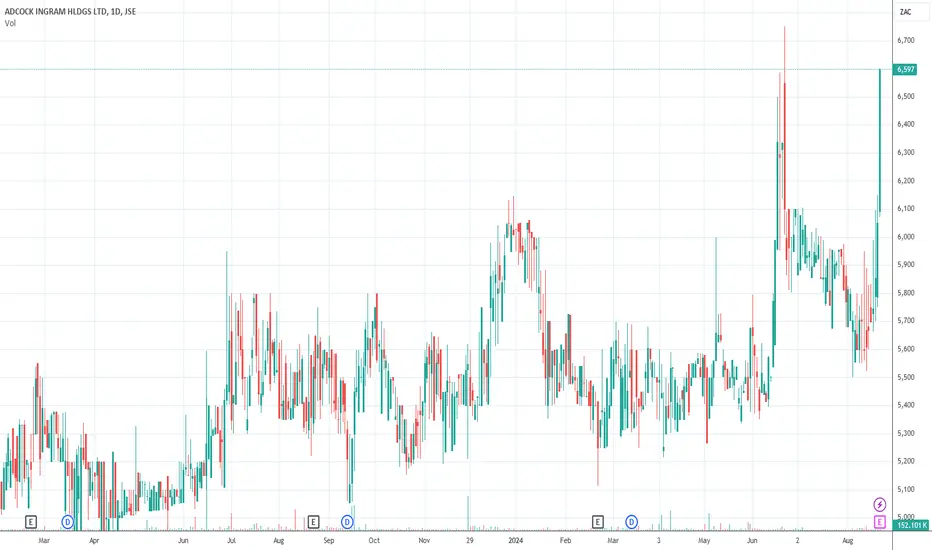
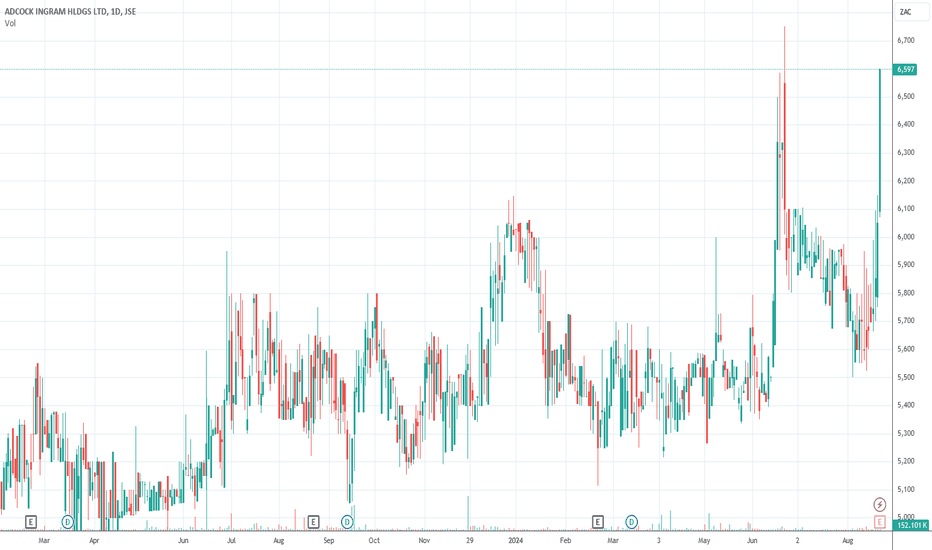
Technically, the share is in a strong upward trend, making it a play on the gold price and the rand/US dollar exchange rate. Our opinion on the current state of ADCOCK(AIP)Adcock (AIP) is a leading supplier of pharmaceuticals to both the private and public sectors in South Africa, with diversification into India and other sub-Saharan countries. The pharmaceutical industry in South Africa is heavily influenced by the government's "single exit price" (SEP) mechanism, which determines the price for each type of medicine. In 2019, Adcock was only permitted to increase its prices by 1.3% on regulated medicines. This "cost-plus" pricing approach limits the company's ability to generate significant profits by pricing at market rates, and it also makes the company vulnerable to fluctuations in the strength of the rand, particularly since some ingredients are imported.
To secure government contracts for supplying medicines, Adcock has achieved level 1 B-BBEE empowerment status for its continuing operations. Bidvest holds a controlling interest in Adcock (50.1%) and effectively controls its board of directors. Bidvest has been attempting to sell this interest to a Black empowerment entity but has faced challenges, as no potential buyers have sufficient capital to acquire the share for R4.8bn. In response to the constraints imposed by the SEP mechanism, Adcock is exploring diversification into unregulated products, such as baby care products, to reduce its reliance on the regulated pharmaceutical market.
In its results for the year ending 30th June 2024, Adcock reported revenue growth of 6% and headline earnings per share (HEPS) growth of 10%. The company attributed its success to a strong trading performance coupled with excellent cost control, which facilitated double-digit HEPS growth. Additionally, strong cash generation allowed the company to return value to shareholders, including the repurchase of 6 million shares and a 10% increase in dividends.
Technically, the share had been in a long-term downward trend that ended in September 2021. A breakout above the long-term downward trendline occurred on 3rd September 2021 at a price of 4548c, and since then, the share price has risen to 6596c. Given its defensive nature and current valuation, with a P:E ratio of 10.7, Adcock appears to be a solid investment for private investors. A
Our opinion on the current state of CASHBIL(CSB)Cashbuild (CSB) is the largest retailer of building materials and related hardware in Southern Africa, focusing primarily on the home improvement market. In the context of the currently depressed economies in the region, much of the company's growth has been driven by the opening of new stores. This strategy positions Cashbuild to survive the economic downturn and benefit from any general recovery in Southern Africa's economic conditions.
In its results for the six months ending 24th December 2023, the company reported a revenue increase of 2%, while headline earnings per share (HEPS) decreased by 20%. The company's net asset value (NAV) fell by 16% to 7757c per share. The company noted that revenue from stores that existed prior to July 2022 (312 stores) increased by 1%, and its nine new stores contributed an additional 1% to growth. However, the gross profit margin decreased slightly from 25.3% to 24.7%, with selling price inflation at 3.2% by December 2023 compared to the previous year.
In a subsequent update on the third quarter ending 31st March 2024, the company reported a 3% increase in revenue, with the nine new stores again contributing 1% growth. Selling inflation during this period was 2.4%. By the fourth quarter ending 30th June 2024, Cashbuild reported a 4% revenue increase compared to the same quarter of the previous year. For the full financial year, existing stores contributed a 3% revenue increase, while the 12 new stores added 1% growth.
In a trading statement for the 53 weeks ending 30th June 2024, Cashbuild estimated that HEPS would decrease by between 20% and 30%. Technically, the share experienced a steady downward trend from March 2018, bottoming out at R120 per share in March 2020. It subsequently rose to R337 in February 2021 before beginning another downward trend, with the current price around R164. The stock is now trading at a P:E ratio of 15.19 and offers a dividend yield of 3.2%.
Cashbuild is widely regarded as an extremely well-managed company, well-positioned to capitalize on any future improvement in local economic conditions. However, it operates in a tough and highly competitive industry, and even at current levels, it may still appear a bit expensive. Our opinion on the current state of GTCSA(GTC)GTC is a property group operating in Central and Eastern Europe with a diverse portfolio of properties in key cities such as Warsaw, Bucharest, Budapest, Belgrade, Sofia, and Zagreb. The company manages forty-seven office buildings and six retail properties with a gross lettable area (GLA) of 829,000 square meters, valued at approximately 2,35 billion euros. GTC is listed on both the Warsaw Stock Exchange (WSE) and the JSE.
In its results for the six months ending 30th June 2024, GTC reported rental revenue up 3%, with occupancy at 86%. The company's loan-to-value (LTV) ratio stood at 48,2%. The company noted that while the direct impact of the war in Ukraine on its operations has not been material, the situation remains highly volatile. GTC is monitoring developments closely and analyzing potential impacts on both individual projects and its long-term investment plans.
However, the share is extremely thinly traded on the JSE, making it impractical for private investors to engage with this stock.  Long
Long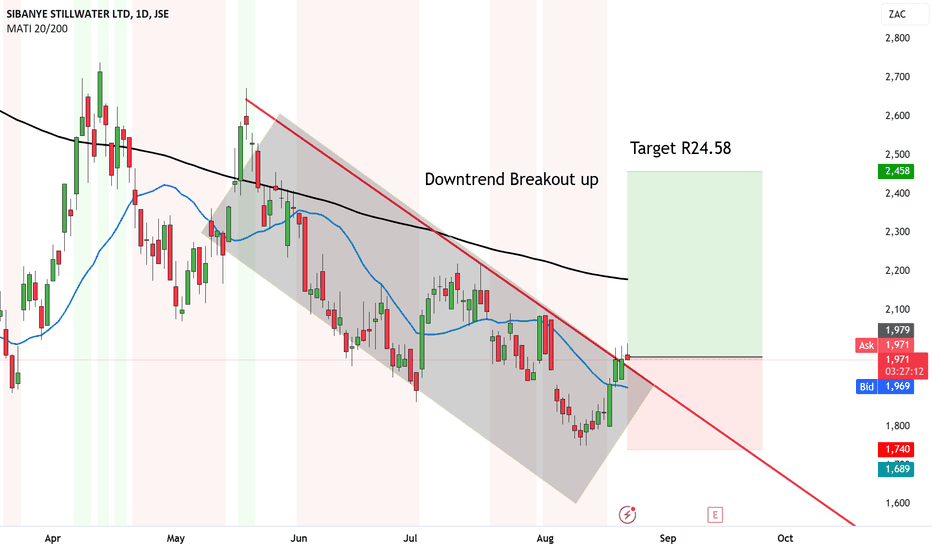
Our opinion on the current state of JUBILEE(JBL)Jubilee Metals Group (JBL) is a diversified metals recovery company that specializes in re-processing mine waste and surface materials. It is dual-listed on the London AIM market and the JSE's Alt-X. The company has operations in South Africa, the UK, Madagascar, and Australia, and is involved in a joint venture in Zambia to produce lead, zinc, and vanadium. Jubilee primarily produces platinum group metals (PGMs) and chrome, with its primary asset being a 63% stake in the Tjate project. The Tjate project is believed to contain the world's largest undeveloped block of platinum ore, with an estimated potential of 65 million ounces located on the Western Limb of the Bushveld Igneous Complex.
In recent years, Jubilee has shifted its focus towards a smelting and beneficiation strategy as a means of generating cash flow. The company is currently investing around R154 million to consolidate its PGM retreatment business by acquiring a reprocessing plant and some tailings dumps. This investment includes the purchase of a chrome processing operation and 1.8 million tons of tailings from PlatCro Minerals. Jubilee is a low-cost producer, but it is subject to the fluctuations of the platinum and base metals markets.
In its results for the six months ending 31st December 2023, the company reported an 18.4% increase in revenue, with PGM production up 11.2% and chrome production up 7.4%. The company highlighted that its Zambian copper operations are showing strong growth, driven by investments in expansion projects, with expectations for a further sharp increase upon completion of upgrades to the Roan copper concentrator.
In an update for the three months ending 31st March 2024, Jubilee reported a record monthly production of chrome at 408,710 tons, up from 381,114 tons in the second quarter. However, PGM production was down 3.6% year-to-date. The company emphasized that it is well-positioned to continue its growth trajectory, demonstrating operational excellence, resilience, and adaptability.
In a quarterly update for the fourth quarter, Jubilee reported that copper units produced were up by 51.7%. The company also announced the completion of the construction and commissioning of the Roan Front-End Module in July 2024, with the production of the first copper concentrate being reported on 12th August 2024.
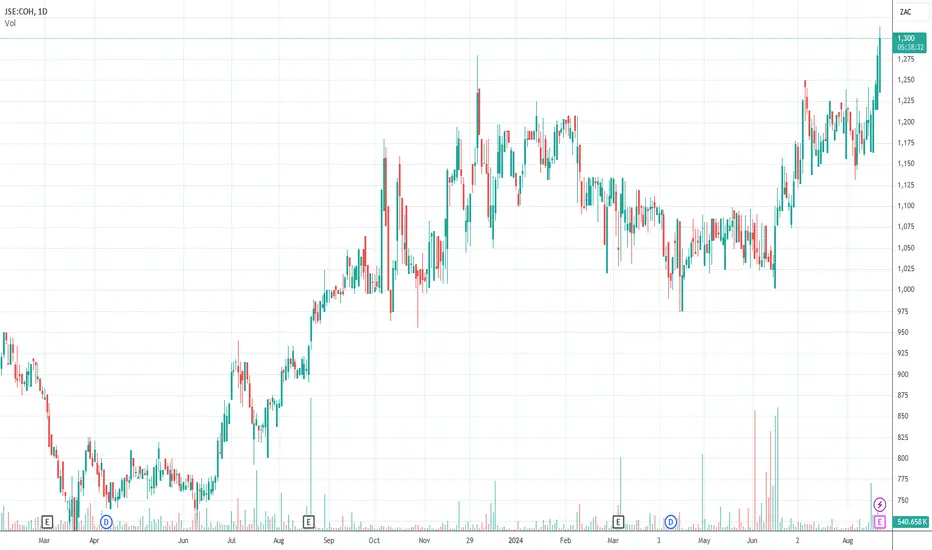
In our view, Jubilee Metals Group offers a potentially attractive option in the mining sector, though it remains highly volatile and risky. We recommend waiting for a clear break up through the share's long-term downward trendline before considering an investment. Our opinion on the current state of CURRO(COH)Curro (COH) is a private education group focused on building and operating schools from early childhood development up to matric. The company is a spin-off from PSG, which holds 17.2% of Curro. The group capitalized on the declining quality of government education in South Africa since 1994, leading to rapid expansion as it built and acquired more schools. Curro's tertiary education division was unbundled on 3rd October 2017 and separately listed on the JSE as Stadio (SDO).
At its peak on 30th December 2015, Curro achieved one of the highest price:earnings (P:E) ratios on the JSE at 245, driven by high expectations for its growth potential. However, the company has since faced challenges, including a decline in pupil numbers and increasing financial pressure on parents to pay school fees. The company responded by impairing the value of its schools by R202 million and increasing its bad debts provision.
On 1st March 2022, PSG announced it would be unbundling its 63.6% holding in Curro into the hands of PSG shareholders, aiming to unlock value for its shareholders. Curro has also been involved in legal actions with the City of Johannesburg to prevent its schools from being classified as businesses for the purpose of municipal rates. The company won this legal battle on 2nd March 2023.
In its results for the six months to 30th June 2024, Curro reported an 8.3% increase in revenue and a 16.2% rise in headline earnings per share (HEPS). The average number of learners increased slightly by 0.5% to 72,758. The company stated that total school fee revenue grew by 6.8%, driven by the modest increase in learner numbers and an average annual fee increase of 6.0% per learner. Ancillary revenue saw a strong 17.2% increase compared to the previous period.
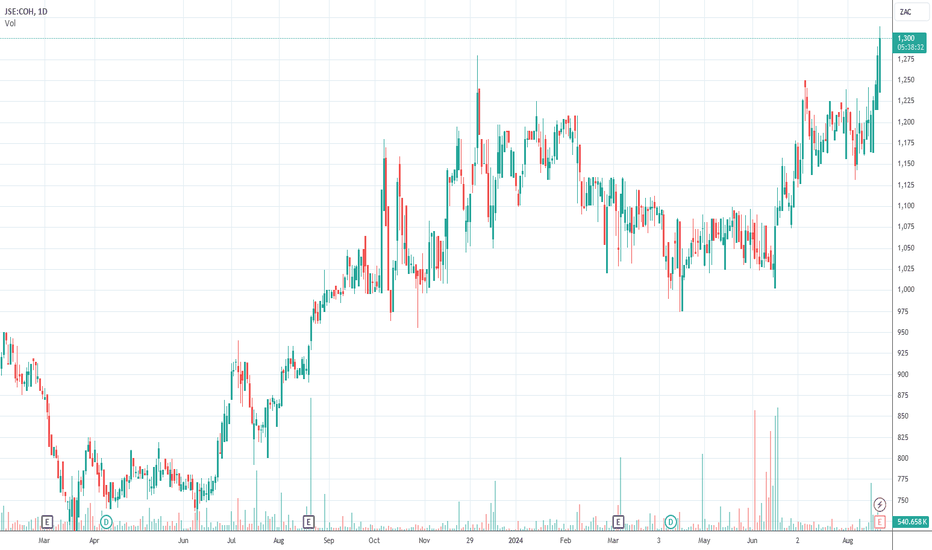
Technically, Curro's share is in a strong upward trend. Education is generally considered a sound investment because parents typically pay school fees in advance, which reduces the working capital requirements for education companies. However, the sector is capital-intensive, as each school requires substantial infrastructure investment, which adds to the financial risk. C
Our opinion on the current state of BLUETEL(BLU)Blue Label Telecoms (BLT) is a company that specializes in selling secure tokens of value, such as airtime, starter packs, and electricity. A significant part of its operations has been influenced by its 45% stake in Cell-C, acquired in September 2016. The acquisition, which cost R7.55 billion, including R3.9 billion paid through the issuance of 272 million shares, has had a substantial impact on Blue Label's financial performance due to the challenges faced by Cell-C.
Cell-C's financial troubles became evident when S&P Global Ratings downgraded its debt to CCC- from CCC+ in April 2019, citing an "unsustainable" capital structure. With Cell-C's debt levels reaching R8.9 billion, nearly three times Blue Label's market capitalization (less than R3 billion), the situation became a significant concern. However, on 25th August 2021, Blue Label announced that it had secured new financing for Cell-C. Further, on 22nd September 2022, the company disclosed a R1.03 billion recapitalization of Cell-C, increasing its stake in the telecom to 49.5%, which positively impacted Blue Label's share price.
Despite these challenges, Blue Label has managed to achieve positive cash flows and benefited from the sale of its 3G handset division, which helped reduce its debt levels. In its results for the six months ending 30th November 2023, the company reported a 23% decline in revenue and a 22% drop in headline earnings per share (HEPS). The company attributed this decline mainly to a R119 million decrease in contributions from the Comm Equipment Company (CEC), though other group entities saw a R19 million increase compared to the prior period.
In a trading statement for the year ending 31st May 2024, Blue Label estimated a HEPS increase of between 73% and 77%. The company explained that, excluding the positive contributions of R66 million in the current year and the negative contributions of R523 million in the comparative year (primarily due to the Cell-C recapitalization transaction), core headline earnings declined by R312 million (34%) from R925 million to R613 million.
Technically, Blue Label's share price had been in a downward trend until it broke through the trendline on 29th February 2024 at 360c. Since then, the share price has risen to 505c, marking a gain of 40% in under six months. Our opinion on the current state of DRDGOLD(DRD)DRDGOLD (DRD) is the JSE's oldest listed company, having been listed in 1895. The company is now focused on gold surface treatment operations, which have an all-in sustaining cost of extraction of just over R627,247 per kilogram. This compares favorably to the average received gold price of R917,996. DRDGOLD's operations involve re-treating surface dumps that still contain traces of gold, which can be profitably extracted using modern methods.
One of the main benefits of this type of operation is that it is far less risky than traditional underground gold mining. It has significantly less union exposure and avoids the high costs and operational difficulties associated with underground mining. The life and grade of the operations, and thus their profitability, are precisely known. However, the share tends to be volatile as it is heavily influenced by the current price of gold. Despite this volatility, DRDGOLD has a debt-free balance sheet and generates strong free cash flows.
In a notable deal, Sibanye swapped out its surface dumps for an additional 265 million DRD shares, increasing its shareholding to 38%. On 10th January 2020, Sibanye further increased its stake to 50.1% at a cost of R1,086 million. The CEO of DRDGOLD, Niel Pretorius, has expressed interest in joining up with other tailings projects on the West Rand to create a massive unified re-processing operation. The company is also investing in renewable energy by building a 20MW solar and battery facility.
In its results for the year ending 30th June 2024, DRDGOLD reported revenue up 14% and headline earnings per share (HEPS) up 4%. However, gold production and sales were down 5%, while cash operating costs increased by 20% in rands. The company stated, "We are now positioning to bring on stream by the financial year ending 30 June 2028 ("FY2028") a combination of reclamation sites designed to lift tonnage throughput to 3 million tonnes per month, and gold production to just over 6 tonnes per annum."
Technically, the share reached a high of 2458c on 9th May 2023 before entering a downward trend. It broke up through its long-term downward trendline on 3rd July 2024 at 1673c, indicating a new upward trend. However, it remains a volatile commodity share subject to fluctuations in the international gold price. Our opinion on the current state of SPURCORP(SUR)Spur (SUR) is a well-known franchisor with 701 fast-food restaurants. In South Africa, it has 559 restaurants, with 80% of them able to trade during load-shedding, and it also has branches overseas. About two-thirds of its sales in South Africa come from Spur Steak Ranches, with the remaining balance coming from a variety of franchise brands that the company has acquired over the years. These include John Dory, Panarottis, and more recently, RocoMamas and Hussar Grill. It appears that while the traditional Spur brand has seen a plateau in interest, newer acquisitions like RocoMamas and Hussar Grill are attracting South African consumers who are looking for fresh dining experiences.
This share is closely tied to consumer spending, which has been under pressure in recent years. The company is experimenting with meal kits that can be delivered and eaten at home, which could be a potential growth area. Notably, the outgoing CEO, Pierre van Tonder, left the company with no debt, which is a key reason it has not needed to undertake a rights issue.
On 27th July 2023, the company announced that it had acquired 60% of Doppio Zero, Pizza e Vino, and Modern Tailors for an undisclosed amount. In its results for the year ending 30th June 2024, Spur reported revenue up 14,1% and headline earnings per share (HEPS) up 11,4%. The company attributed the revenue growth to improved franchised restaurant turnovers and increased sales from the manufacturing and distribution division, which grew by 9,9% (8,7% excluding Doppio Collection). Sales growth in the retail company stores was a robust 119,5%, positively impacted by the contribution from the Doppio Collection restaurants.
The share looks reasonably valued and has broken strongly through its long-term downward trendline following the latest results. After reaching a low of 1240c on 7th September 2020, following the COVID-19 crisis in March 2020, the share has now recovered to 3450c. It was added to the Winning Shares List (WSL) on 8th August 2023 at 2488c, so it is up over 40% in just over a year.  Short
Short
Our opinion on the current state of NEPIROCK(NRP)Nepi-Rockcastle (NRP) is a R124bn real estate investment trust (REIT) that operates more than 56 shopping malls across nine Central and Eastern European countries, with significant operations in Poland (24%), Romania (35%), Slovakia (9%), Bulgaria (8%), Croatia (5%), and Hungary (11%). The share experienced a significant drop alongside the rest of the Resilient group following the release of the 360ne report in January 2018, falling from a high of R217 in December 2017 to as low as R99 in November 2018. The COVID-19 pandemic further impacted the share price, driving it down to under R55 in March 2020. Since then, it has recovered to around R103,06.
The company's total portfolio is valued at 6,3 billion euros (R124bn), making it the largest property share on the JSE. On 1st February 2022, Nepi-Rockcastle announced it had to pay 30 million euros following a civil judgment by the Arbitral Tribunal in Poland.
In its results for the six months ending 30th June 2024, the company reported net income up 13,5% and headline earnings per share (HEPS) up 3,56%. The vacancy rate was low at 2,7%, and the loan-to-value (LTV) ratio was 32,2%. The company noted that property operating expenses decreased by 3,3% between H1 2023 and H1 2024, driven by lower energy costs and operational efficiencies. The recovery rate improved from 93% to 94%. Additionally, the group maintained a strong liquidity position of almost €1.3 billion as of 30th June 2024, consisting of cash and cash equivalents of €672 million and undrawn available credit facilities of €620 million.
Technically, the share has shown a convincing recovery from the pandemic and has been in a strong upward trend since 1st November 2023. We still regard it as good value at current levels and expect the upward trend to continue. Our opinion on the current state of SASOL(SOL)Sasol (SOL) is a massive international chemicals and energy company with roots in the oil-from-coal technology developed during the apartheid era in South Africa. About 50% of the company's profits are directly linked to the oil price. It has two main growth areas: its 50% stake in an ethane cracker plant in Louisiana, America, known as the "Lake Charles Chemical Project" (LCCP), and its development of gas resources in Mozambique. Sasol was awarded two new licenses in Mozambique to explore for gas in an onshore development of approximately three thousand square kilometers, which could significantly add to its existing gas projects in the Rovuma province.
One area of concern for Sasol is that it is the biggest producer of greenhouse gases in South Africa and on the JSE. It is listed as one of the 100 fossil-fuel companies worldwide that contribute to more than 70% of greenhouse gases. The company remains under international pressure to address its carbon emissions effectively. After the impact of COVID-19, the share made a dramatic recovery, which was brought to an end by the decline in commodity prices, especially oil.
On 7th April 2024, the company announced that the Minister of the Environment, Barbara Creecy, had upheld its appeal against a decision by the national air quality officer that might have put the continued activity at its Secunda oil-from-coal plant at risk. Sasol operates six coal mines, which deliver 10 million tonnes of thermal coal feedstock to its operations at Secunda and Sasolburg, as well as for the export market.
In its results for the year to 30th June 2024, the company reported a headline earnings per share (HEPS) decline of 66% and a 16% drop in its net asset value (NAV). This was mainly due to the R58,9 billion impairment of the Chemicals America Ethane value chain, a R5,3 billion impairment of Chemicals Africa, and a R7,8 billion impairment of Secunda. The company stated, "The business benefitted from a weaker R/US$ average exchange rate and a favorable rand oil price; however, constrained margins impacted negatively on our fuels and chemicals businesses. The financial results were further impacted by various operational challenges across the business."
Sasol remains a volatile commodity share in a long-term downward trend. We suggest waiting until it breaks up through its downward trendline before investigating further.  Long
Long
 Long
Long
 Long
Long
 Long
Long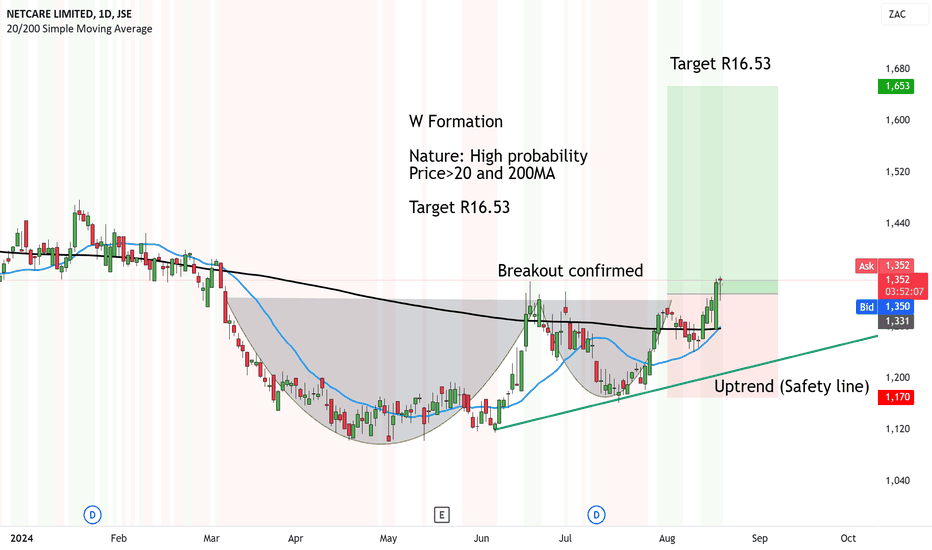
 Short
Short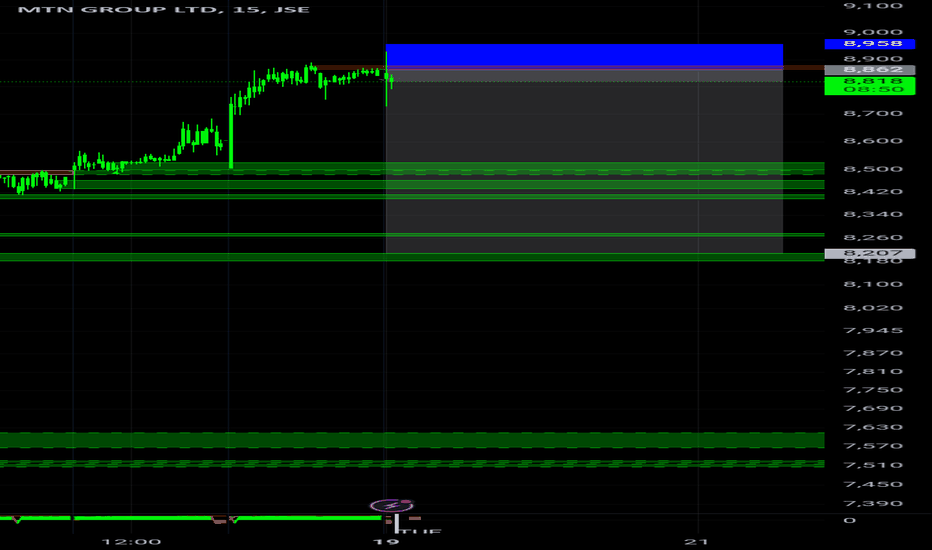
Our opinion on the current state of KAPKAP International Holdings (KAP) is a diversified industrial company that produces and markets timber, chemicals (PET and related chemicals), bedding, and car parts. It also has a logistics division. The acquisitions of Safripol and Hosaf were integrated into a polymers business under the Safripol name. The bedding division showed strong growth with new investment in infrastructure and manufacturing capability, while growth in the automotive parts division was muted. The company was 43% owned by Steinhoff, which has now divested completely. The renewal of the government's Automotive Production and Development Programme (APDP) until 2035 will be a boost for KAP's parts manufacturing business.
The timber division is ramping up after the lockdown, and demand for its products has remained buoyant. The automotive components division was severely impacted, and the post-lockdown recommencement has been slow. The bedding division was able to operate through the lockdown with strong demand for medical and agricultural needs. Polymers also operated throughout the lockdown. In a report on 20th April 2022 into the flooding in Natal, the company said, "The Company’s operations in the region have experienced some temporary operational and supply chain disruptions, which are in the process of being resolved."
In its results for the six months to 31st December 2023, the company reported revenue decreased by 2% and headline earnings per share (HEPS) down 36%. The company's net asset value (NAV) increased by 1% to 478c per share. The company said, "EBITDA decreased by 13% to R2.0 billion, while operating profit before capital items decreased by 17% to R1.3 billion, mainly attributable to Safripol." There was a 20% increase in finance costs due to higher interest rates. In a trading statement for the year to 30th June 2024, the company estimated that HEPS would decrease by between 0% and 8%.
Technically, the share made a low of 127c in March 2020 and subsequently made a cycle low of 201c on 10th October 2023. Since then, it has been trending up on improved international prospects. Obviously, the logistics problems at Transnet are having an impact. We think it may represent good value at current levels, but it is volatile. Our opinion on the current state of MASTDRILL(MDI)Master Drilling (MDI) is a South African company specializing in drilling exploration and other holes for the mining industry, and it has diversified into drilling for hydro-electrical projects and construction. The company has moved away from the South African mining industry and now provides services in North and South America, Europe, and elsewhere. It has developed a new horizontal drilling technology, or tunnel boring machine, which could revolutionize the mining industry worldwide. This technology enables the drilling of horizontal tunnels or tunnels that are inclined up or down by 12 degrees. It is much quicker and cheaper than the traditional blast and clear methods currently in use. At the moment, it requires three operators, but the company is working on a completely automated remote-controlled version.
In its results for the year to 31st December 2023, the company reported revenue up 7.2% in dollars and headline earnings per share (HEPS) up 15.1% in rands. The company said, "Stable order book of USD288.3 million - Healthy pipeline of USD535.3 million - Dividend of 52.5 cents per share in ZAR terms declared, an increase from the 47.5 cents per share in 2022 - Cash generated from operating activities increased by 42.0% from USD25.0 million to USD35.5 million." In a trading statement for the six months to 30th June 2024, the company estimated that HEPS (in rands) would be between 1.9% lower and 18.1% higher than in the previous period. The company said, "These lower EPS for the current period were largely the result of non-cash adjustments deemed appropriate in the interim results."
It is now trading at about 50% of its net asset value (NAV) and on a price:earnings (P:E) multiple of 4.22, which looks like good value. We regard the company's horizontal drilling technology as a potentially disruptive technology in the mining industry, which extends the life of some mines and makes others viable again. So, while this is a risky share because it is linked to the commodities markets, it has the potential to offer strong growth because of the new technologies it has that could revolutionize the mining industry. In our view, this is an interesting company with the potential to perform well as its new horizontal boring machine gains traction.