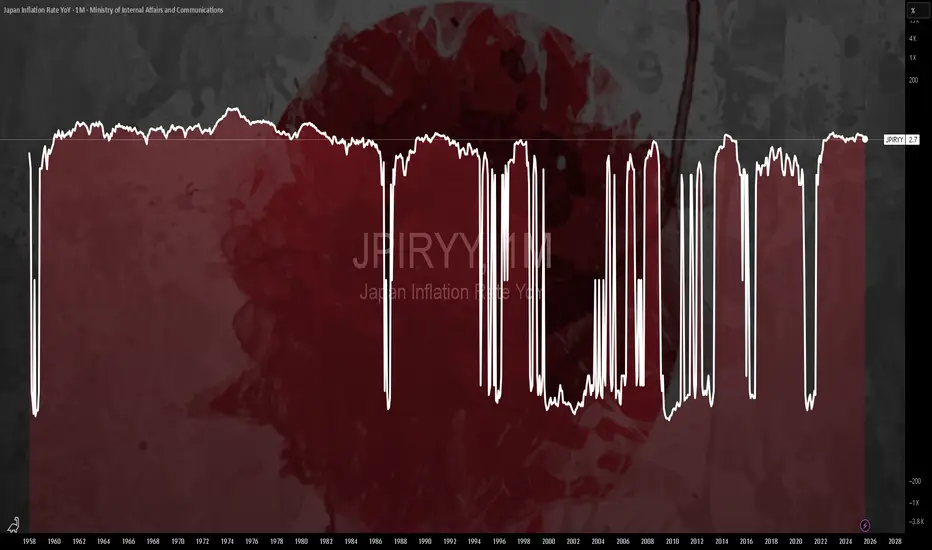
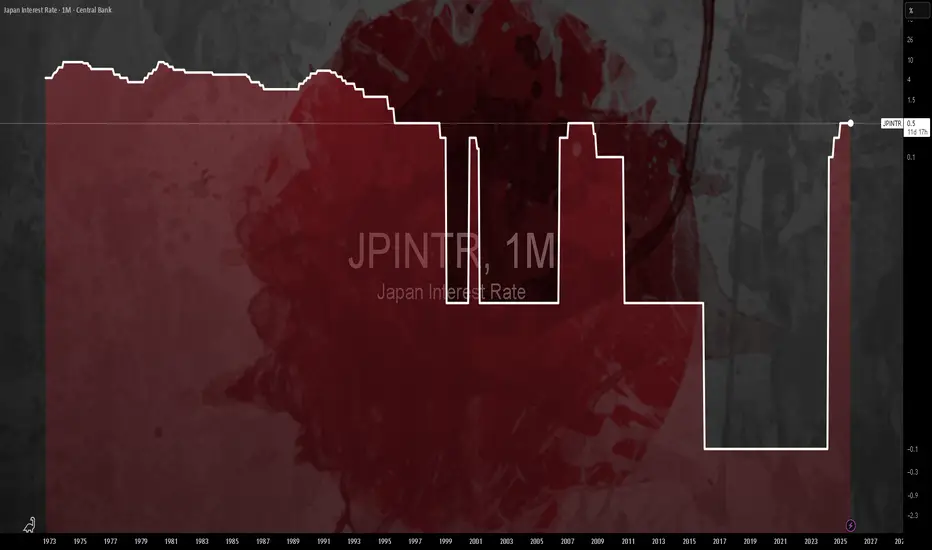
$JPIRYY -Japan Inflation Rate (August/2025)ECONOMICS:JPIRYY
August/2025
source: Ministry of Internal Affairs & Communications
-Japan's annual inflation rate eased to 2.7% in August 2025 from 3.1% in the previous month,
marking the lowest reading since October 2024.
Electricity prices fell much steeper (-7.0% vs -0.7% in July) due to government subsidies, and gas prices dropped (-2.7%) after being flat previously.
Education costs also continued to drop (-5.6% vs -5.6%). Price growth slowed for household items (2.0% vs 2.5%), healthcare (1.3% vs 1.5%), and recreation (2.3% vs 2.6%).
Inflation accelerated for housing (1.1% vs 1.0%), clothing (2.9% vs 2.8%), transport (3.0% vs 2.6%), communications (7.0% vs 6.4%), and miscellaneous goods (1.3% vs 1.2%).
On the food side, prices rose 7.2%, easing from July’s five-month peak of 7.6%, driven by the smallest gain in rice prices in eight months at 69.7%, amid Tokyo’s efforts to curb staple food costs. Core inflation also stood at 2.7%, matching market consensus and reaching a nine-month low.
Monthly, the CPI edged up 0.1%, holding steady for the third straight month.  Long
Long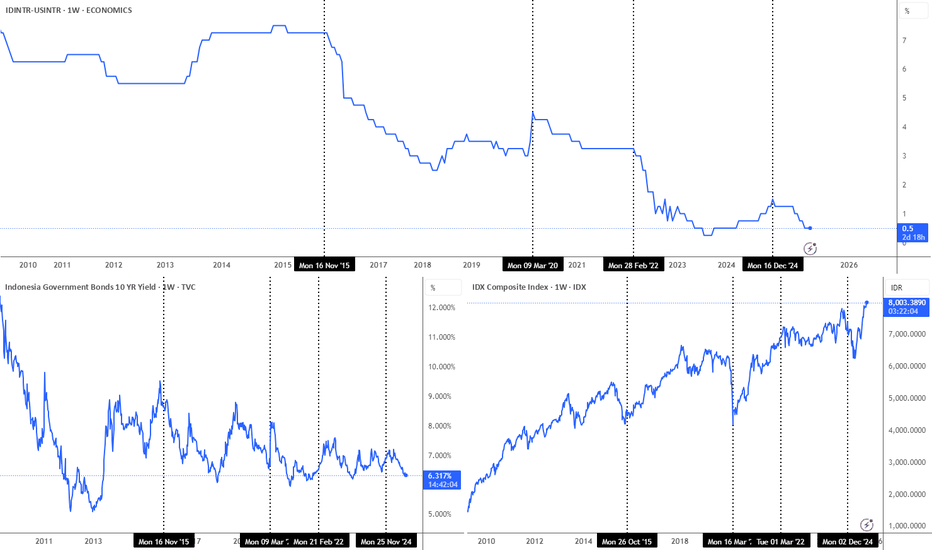
FOMC: Interest Rate Cut🏛️ Research Notes
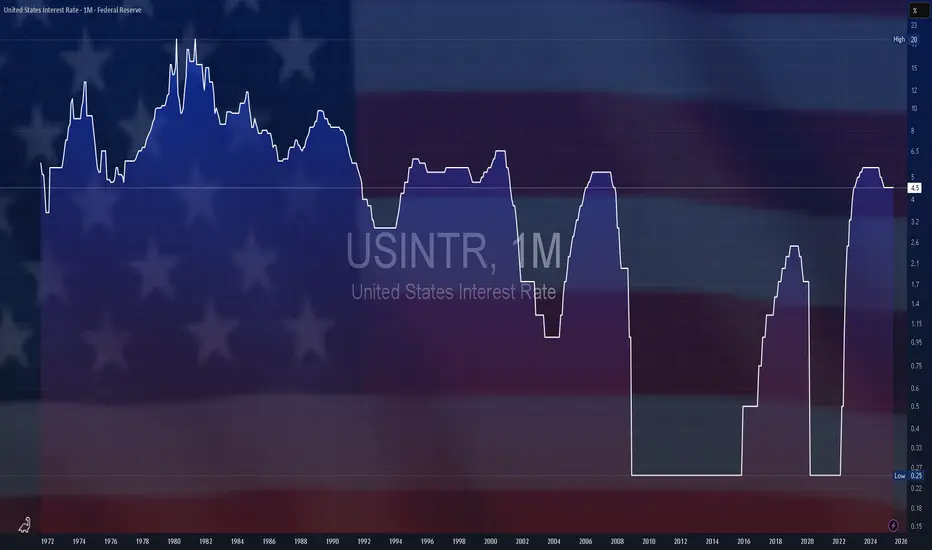
Based on Chair Powell's press conference from September 17 '25, the FOMC decided to lower the federal funds rate by 1/4 percentage point. Since I’ve chosen to expand my research to include economic performance, I want to document the reasoning behind this decision.
Dual Considerations
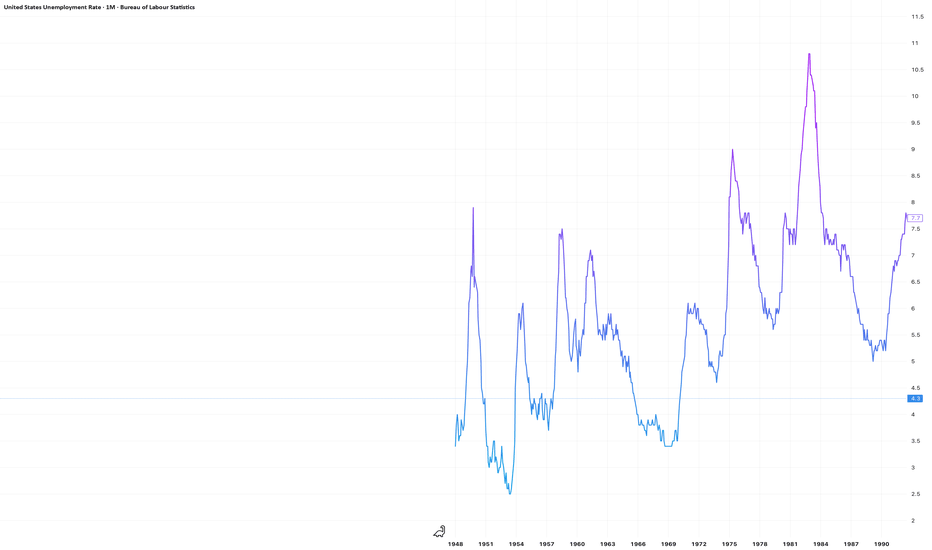
Employment: The labor market has softened. The unemployment rate edged up to 4.3%, job gains slowed significantly (to just 29,000 per month over the past three months), and downside risks to employment have increased.
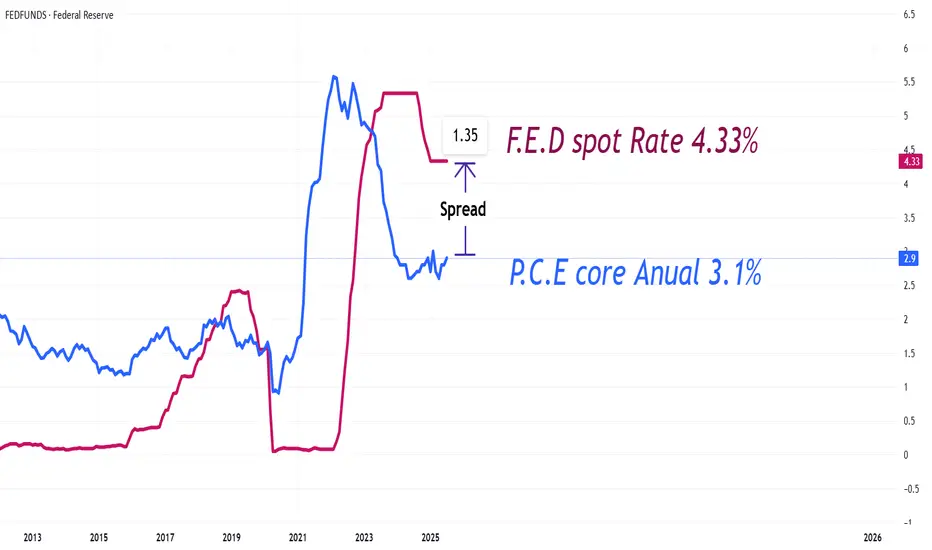
Inflation: Inflation remains elevated relative to the Fed’s 2% target. Total PCE inflation was 2.7% over the past 12 months, and core PCE was 2.9%. Recent tariff policies have also contributed to upward pressure on prices.
Shift in Risk Balance
The Fed noted that risks to employment are tilted to the downside, while risks to inflation are tilted to the upside. This creates a tension between the two parts of the dual mandate.
Given the increased downside risks to employment, the Committee judged it appropriate to ease monetary policy to support the labor market.
Economic Slowdown
GDP growth moderated to around 1.5% in the first half of 2025, down from 2.5% in 2024.
Consumer spending slowed, though business investment improved.
Housing activity remained weak.
Response to Evolving Conditions
The Fed aims to avoid letting a one-time price increase (e.g., from tariffs) become persistent inflation, while also supporting employment.
The rate cut is seen as a step toward a more neutral policy stance to better balance the competing risks.
The Fed remains data-dependent and is not committed to a preset policy path. The Fed cut rates primarily due to rising downside risks in the labor market, even though inflation remains above target. The decision reflects careful balancing between supporting employment and preventing inflation from becoming entrenched. The Big Fed Rate Cut Is Here. How Did Markets Do & What’s Next?“ Best we can do is 25bps ,” officials, probably, when they gathered to lower the federal funds rate. It wasn’t the 50 basis points some of you had expected. But you also didn’t expect to hear that two more trims are most likely coming by year end.
Let’s talk about that and what it means for your trading.
🎤 Powell Delivers
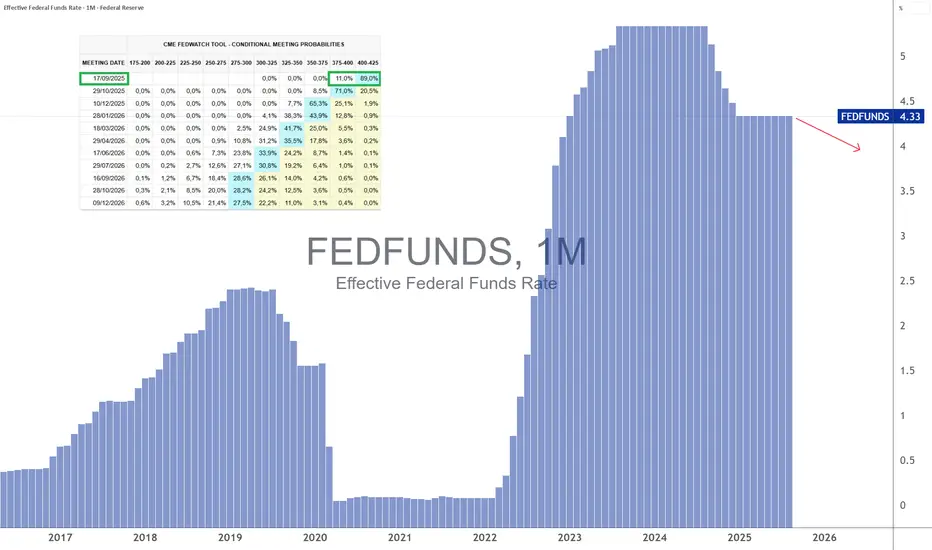
The Federal Reserve finally trimmed rates for the first time in nine months, cutting the federal-funds rate by 25 basis points to 4%–4.25%. This was hardly a surprise.
Markets had already fully priced in a quarter-point move. But the real twist was the Fed boss hinting at two more cuts this year. With just two FOMC meetings on the calendar, it’s pretty clear: unless something changes dramatically, traders should expect a cut at both.
The decision wasn’t unanimous. Newly minted, Trump-appointed Fed governor Stephen Miran wanted to go big or go home with a 50bps slash. Powell, though, balanced his message by saying risks to the labor market had grown while inflation was still running at 2.9% (way above target).
What does this mean? The Fed’s dual mandate of price stability and full employment is officially leaning toward protecting jobs at the risk of flaring up inflation.
💵 Dollar Takes a Dive
The immediate reaction was classic. A weaker dollar is the natural byproduct of lower rates, and the greenback obliged by sliding against major peers.
The FX:EURUSD pushed toward $1.19, its highest in four years, while the FX:GBPUSD tested $1.37 and the FX:USDJPY sank below ¥146.
For forex traders, this was textbook: lower yields make the dollar less attractive, especially compared to rivals with steadier or higher returns. But that was a reaction to the initial shock.
By early Thursday the dollar bounced back, because markets love to overreact before correcting, but the broader trend is still tilted bearish .
📈 Stocks: Buy the Rumor, Sell the News
Stocks were less enthusiastic. The S&P 500 SP:SPX hovered near flat, the Nasdaq Composite NASDAQ:IXIC slipped 0.3% for a second straight loss, and the Dow Jones TVC:DJI managed to buck the trend with a 260-point climb.
The takeaway? Traders had already bought the rumor of rate cuts, jammed their cash into equities, so when Powell delivered the expected 25bps, it wasn’t enough to light another fire.
The bigger hope lies in those promised future cuts, which could set the stage for another push higher – especially if Big Tech earnings hold up through the third quarter. (For the record, earnings season is almost here.)
Thursday's futures contracts were showing a big jump ahead of the opening bell with Nasdaq futures up by more than 1%.
🟡 Gold Shines, Then Stumbles
Gold OANDA:XAUUSD did what gold usually does when the Fed loosens policy: it powered up. Bullion was surfing on the high point of its all-time record of $3,700, before sliding back under $3,640.
What’s the logic behind rising gold prices and a falling dollar? In a low-yield environment, non-yielding assets like gold look more attractive, and a weaker dollar only sweetens the deal for overseas buyers.
Still, this week’s whipsaw reminded everyone that gold is no straight line up – momentum is there, but so are the bears guarding resistance.
🟠 Bitcoin Shrugs
Crypto was more muted. Bitcoin BITSTAMP:BTCUSD slipped 1.2% after the cut, dipping toward $115,000, only to bounce back above $116,000 the next morning.
For the orange coin, the Fed story is just background noise. Institutional inflows and ETF demand remain the key drivers, and traders are still gauging whether crypto wants to behave like a risk asset or play its “digital gold” role.
Still, the OG coin remains off its $124,000 record from mid-August , the market seems caught between consolidation and correction.
⚖️ The Balancing Act
The Fed’s challenge is clear: unemployment is rising, job gains are slowing , and payrolls have been revised lower for months.
At the same time, inflation has crept back up, with core prices still well above target. Cutting too much risks reigniting price pressures; cutting too little risks a labor-market slide that could snowball into recession.
Powell chose the middle ground – a modest 25bps – and teased with two more to calm investor nerves.
👀 What’s Next?
Markets now have a new playbook: watch every jobs report ECONOMICS:USNFP , every CPI ECONOMICS:USCPI release, and every Powell presser between now and December.
If job creation continues to cool, the Fed will likely follow through with the cuts. If inflation heats up, those cuts may get scaled back. And if both trends stall, expect chop – the dreaded sideways trade that tests everyone’s patience.
What can you do in this situation? One message is to stay nimble. The dollar’s longer-term weakness is reshuffling the forex space, gold is on the cusp of a breakout, and stocks remain in record territory. And crypto is doing its usual unpredictable mood swinging.
In a nutshell, Powell gave markets a gift in the form of liquidity, but as history reminds us, the Fed giveth and the Fed taketh away.
👉 Off to you : What’s your strategy in this market? Now that you have the cut (and two more likely on the way), are you bullish or bearish? Share your thoughts in the comments!
 Education
The Most Important Week of the Year-End for the Stock Market!We are finally here.
The Fed is expected to resume lowering the federal funds rate this Wednesday, September 17. Here is what will really matter on Wednesday:
• The magnitude of the rate cut (0.25% or 0.50%)
• The update of the Fed’s macroeconomic projections (its forecasts for inflation, employment, and also the path of interest rates)
• The trajectory ahead (for the end of 2025) of the federal funds rate
• Jerome Powell’s press conference, particularly his assessment of the timeframe for normalizing inflation with tariffs
After a summer of speculation, the US Federal Reserve (Fed) will unveil this Wednesday, September 17, a monetary policy decision that could redefine the trajectory of financial markets through year-end. This meeting is not a simple technical adjustment: it embodies all the tensions accumulated since Jerome Powell and the FOMC members paused their rate-cutting cycle last December. This may be the moment of the famous “pivot” investors have been waiting for since early 2025.
The underlying question is simple: will the Fed settle for a limited 25 basis point cut, or surprise with a more aggressive “jumbo cut”? The decision will not only concern the immediate level of rates but also the message sent to markets: the path of monetary policy for the remainder of 2025, consistency with inflation and employment projections, and above all, the balance of power among the 12 FOMC voting members. Recall that 7 votes out of 12 are needed to approve a rate cut, and Jerome Powell counts as only one vote among the 12.
In short, it’s not just a number but a trajectory of monetary policy. And it is this trajectory that will shape the year-end trend of risky assets in the stock market.
If Powell manages to open the door to clearer easing while remaining consistent with his latest macro forecasts, the market may finally gain the visibility it has been demanding. Otherwise, we risk staying in an uncertainty zone where every employment or inflation statistic reignites doubts. And in this game, the referee remains the same: the US 2-year yield. It is the US 2-year Treasury yield that best anticipates the upcoming path of the federal funds rate.
The S&P 500, the barometer of large caps, and the Russell 2000, more sensitive to domestic conditions, will hang on Powell’s words.
The Fed will update many macroeconomic data this Wednesday, but ultimately one factor will dominate: the “Fed Cut Path” – the number of rate cuts expected by year-end. This will be directly tied to the timeframe the Fed deems necessary to normalize inflation.
In short, the Fed’s decision on Wednesday, September 17, will shape the year-end stock market trend.
DISCLAIMER:
This content is intended for individuals who are familiar with financial markets and instruments and is for information purposes only. The presented idea (including market commentary, market data and observations) is not a work product of any research department of Swissquote or its affiliates. This material is intended to highlight market action and does not constitute investment, legal or tax advice. If you are a retail investor or lack experience in trading complex financial products, it is advisable to seek professional advice from licensed advisor before making any financial decisions.
This content is not intended to manipulate the market or encourage any specific financial behavior.
Swissquote makes no representation or warranty as to the quality, completeness, accuracy, comprehensiveness or non-infringement of such content. The views expressed are those of the consultant and are provided for educational purposes only. Any information provided relating to a product or market should not be construed as recommending an investment strategy or transaction. Past performance is not a guarantee of future results.
Swissquote and its employees and representatives shall in no event be held liable for any damages or losses arising directly or indirectly from decisions made on the basis of this content.
The use of any third-party brands or trademarks is for information only and does not imply endorsement by Swissquote, or that the trademark owner has authorised Swissquote to promote its products or services.
Swissquote is the marketing brand for the activities of Swissquote Bank Ltd (Switzerland) regulated by FINMA, Swissquote Capital Markets Limited regulated by CySEC (Cyprus), Swissquote Bank Europe SA (Luxembourg) regulated by the CSSF, Swissquote Ltd (UK) regulated by the FCA, Swissquote Financial Services (Malta) Ltd regulated by the Malta Financial Services Authority, Swissquote MEA Ltd. (UAE) regulated by the Dubai Financial Services Authority, Swissquote Pte Ltd (Singapore) regulated by the Monetary Authority of Singapore, Swissquote Asia Limited (Hong Kong) licensed by the Hong Kong Securities and Futures Commission (SFC) and Swissquote South Africa (Pty) Ltd supervised by the FSCA.
Products and services of Swissquote are only intended for those permitted to receive them under local law.
All investments carry a degree of risk. The risk of loss in trading or holding financial instruments can be substantial. The value of financial instruments, including but not limited to stocks, bonds, cryptocurrencies, and other assets, can fluctuate both upwards and downwards. There is a significant risk of financial loss when buying, selling, holding, staking, or investing in these instruments. SQBE makes no recommendations regarding any specific investment, transaction, or the use of any particular investment strategy.
CFDs are complex instruments and come with a high risk of losing money rapidly due to leverage. The vast majority of retail client accounts suffer capital losses when trading in CFDs. You should consider whether you understand how CFDs work and whether you can afford to take the high risk of losing your money.
Digital Assets are unregulated in most countries and consumer protection rules may not apply. As highly volatile speculative investments, Digital Assets are not suitable for investors without a high-risk tolerance. Make sure you understand each Digital Asset before you trade.
Cryptocurrencies are not considered legal tender in some jurisdictions and are subject to regulatory uncertainties.
The use of Internet-based systems can involve high risks, including, but not limited to, fraud, cyber-attacks, network and communication failures, as well as identity theft and phishing attacks related to crypto-assets.
Long 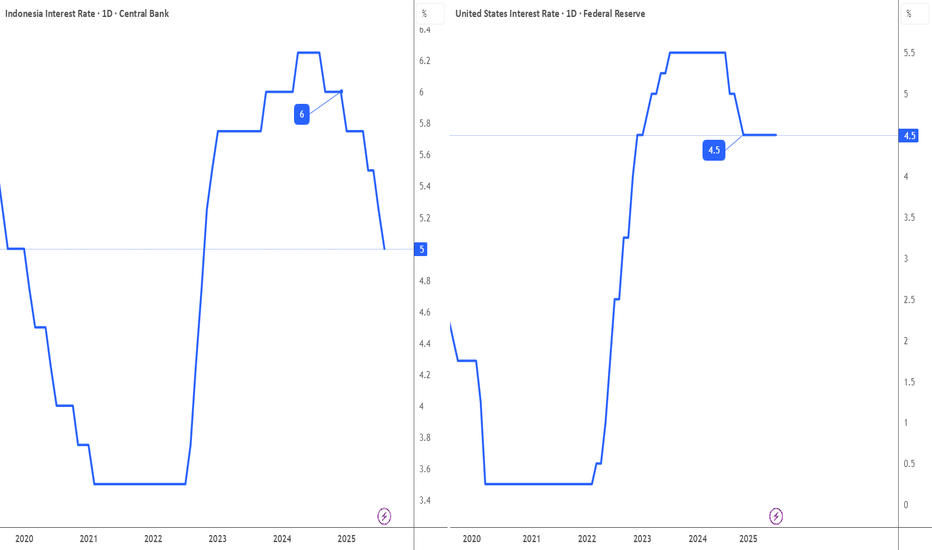
Cut the Noise: The Fed Is on Track for a September Rate CutI’m seeing a lot of wild takes floating around right now, things like a surprise rate hike or claims that QE is driving us into a crash. That’s pure noise, and complete nonsense. The facts are straightforward: QT is still ongoing, the Fed’s balance sheet has been unwound (anyone can fact-check that), and a rate cut on 9/17 is almost certain, most likely 25 bps, which would mark the start of a new easing cycle. The dot plots already show the range, and if you look at the chart comparing fed funds to the 3-month yield, it’s clear the Fed is actually late to cutting. JP had also hinted that the easing would have already begun had the Tariffs (taxes) not kicked off. I will not torture you readers with more tariff information but let's also be clear, tariffs are simply a tax. They are transitory by nature, now uncertain , and already priced in. “Liberation day” is behind us, and those expecting some massive equity washout because of tariffs are months late. Even Powell himself hinted that easing would have begun earlier if not for the tariff overhang. I’ll spare you a deep dive into tariff mechanics, but the bottom line is they are temporary tax distortions, not permanent anchors on growth. Likewise they are not permanent catalysts of inflation. We likewise know tariffs were impacting select products like apparel, textiles, automobile parts and some technology significantly more than other sectors & products.
On top of that, we’ve had bearish ISM manufacturing data , the transportation sector showing the weakest $/mile in memory (related to the cost variables), and consecutive soft jobs numbers. Those arguing that inflation is resurging are ignoring the Fed’s dual mandate: employment and inflation. Right now, employment stress is outweighing inflation risks, and Main Street is hurting. The market, being forward-looking , knows this.
In a K-shaped recession, debt-dependent sectors are under real strain, while high-margin, scalable sectors like technology continue to grow and deliver true earnings. That’s why the bull market in equities, crypto, and gold is still intact and mainstreet remains suffering.
We will get out of the recession and back into growth mode, and other sectors will see earnings improvement. All the while, crypto is an emerging market and will most likely rise a great deal, and Gold will still continue to pump. Briefly I will mention that I recently saw a bloomberg chart exhibiting central banks now holding more gold than US Treasuries - and we must realize this is yet another sign that most likely Treasury yield will be dropping. This is coupled with a weak dollar which was no surprise as the dollar was so weak in the initial trump administration as well. The logic someone could argue is that weaker dollars leads to more exports, less imports. Long 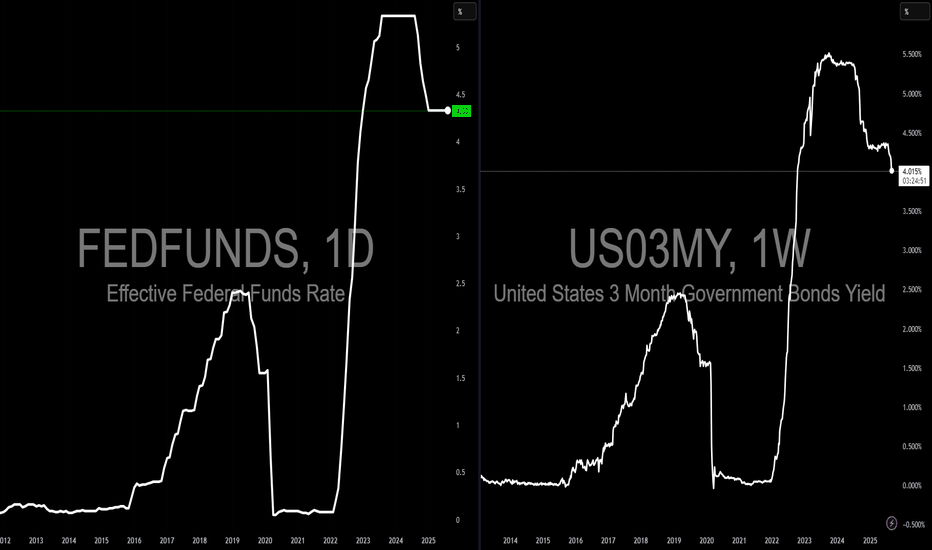
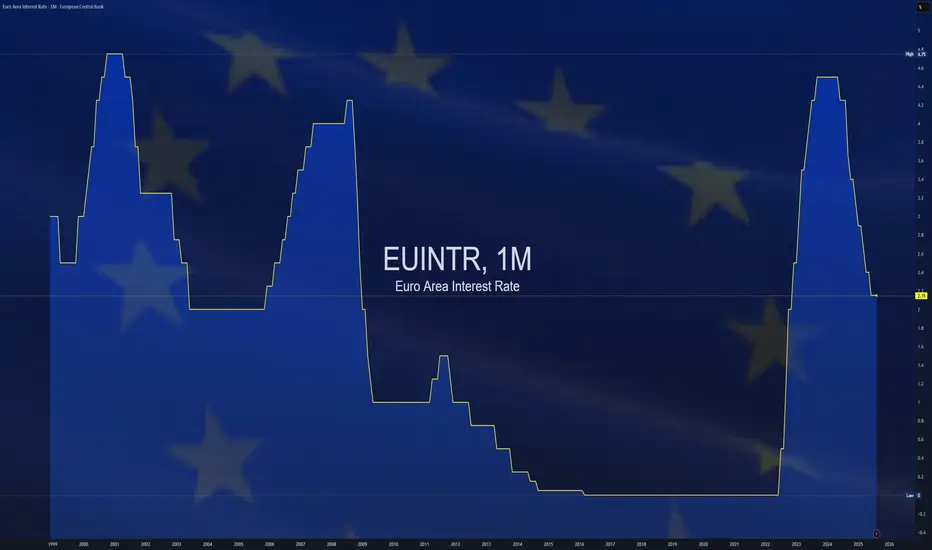
$EUINTR - Unchanged Rates (September/2025)ECONOMICS:EUINTR
September/2025
source: European Central Bank
- The European Central Bank kept its three key interest rates unchanged, with the deposit facility at 2.00%, the main refinancing rate at 2.15%, and the marginal lending rate at 2.40%, as expected.
Inflation remains close to the 2% medium-term target, and the outlook is broadly unchanged from June.
New staff projections see headline inflation averaging 2.1% in 2025, easing to 1.7% in 2026 before rising slightly to 1.9% in 2027.
Core inflation (excluding food and energy) is expected at 2.4% in 2025, 1.9% in 2026, and 1.8% in 2027.
Growth is projected at 1.2% in 2025 (up from 0.9%), slowing to 1.0% in 2026, and recovering to 1.3% in 2027.
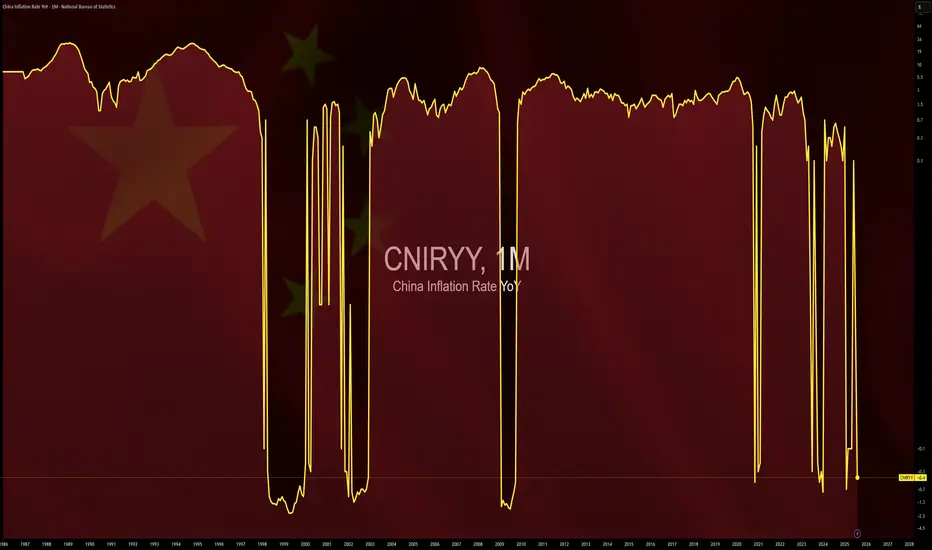
The Governing Council reaffirmed its determination to anchor inflation at 2% in the medium term, emphasizing a cautious, meeting-by-meeting, data-driven approach. $CNIRYY - China CPI (August/2025)ECONOMICS:CNIRYY
August/2025
source: National Bureau of Statistics of China
- China’s consumer prices dropped 0.4% yoy in August 2025, after being flat in the previous month and missing market expectations of a 0.2% fall.
It was the fifth time of consumer deflation this year and the sharpest pace since February.
Food prices slumped (-4.3% vs -1.6% in July), logging the steepest fall in nearly four years, with broad-based decreases across categories and a sharper drop in pork prices, due to ample supply, lower production costs, and weak demand.
In contrast, non-food inflation quickened (0.5% vs 0.3%), supported by Beijing’s ongoing consumer goods subsidies, with increases in housing (0.1% vs 0.1%), clothing (1.8% vs 1.7%), healthcare (0.9% vs 0.5%), and education (1.0% vs 0.9%).
Meanwhile, transport costs shrank but at a slower pace (-2.4% vs -3.1%). Core inflation, which excludes food and energy, rose 0.9% yoy, the highest in 18 months, after a 0.8% gain in July.
On a monthly basis, CPI was flat, below forecasts of 0.1%, following a 0.4% increase in July. FED, Certain Rate Cut on September 17We recently provided an analysis on the possible courses of action by the Federal Reserve (FED) starting from Wednesday, September 17, and until the end of the year.
Three major figures were still due before the September 17 FED meeting: the NFP report, a PPI, and a CPI. The NFP report has been released and its message is unequivocal, making a 0.25% (25 bps) rate cut by the FED on Wednesday, September 17, almost certain.
Even better, the probability of a “jumbo FED cut” has risen to 10%, meaning a 50 bps (0.50%) rate cut.
How did we get here?
1) Four consecutive disappointing NFP reports and an unemployment rate near the FED’s alert threshold
The U.S. jobs report (NFP), published on Friday, September 5, is weak overall:
Unemployment rises to 4.3% of the U.S. labor force, while the FED’s macroeconomic alert threshold is 4.4%
In absolute terms, the number of unemployed has reached a record since early 2021
Four consecutive months with fewer than 100,000 net job creations, unseen since the 2020 pandemic crisis
As for wage growth, it continues its downward trend, which should eventually allow inflation to decline again (once tariffs are factored in)
2) For the FED, the specter of stagflation looms — the worst macroeconomic scenario for a central bank
Will Jerome Powell’s FED and the FOMC be able to lower the federal funds rate starting from Wednesday, September 17? The answer is yes.
The accelerating deterioration of the U.S. labor market significantly raises the probability of a U.S. recession. The upcoming rate cut by the FED could even be considered too late, since rising unemployment generally signals that the economy has already been slowing sharply for many months.
U.S. core inflation remains around 3% due to tariffs, but the state of employment makes a more neutral federal funds rate necessary. Hence, the probability of FED action on September 17 is close to 100%.
3) This week, PPI and CPI inflation are the dominant fundamentals
In conclusion, the probability of FED action could still evolve this week with the updates of U.S. inflation via PPI and CPI.
DISCLAIMER:
This content is intended for individuals who are familiar with financial markets and instruments and is for information purposes only. The presented idea (including market commentary, market data and observations) is not a work product of any research department of Swissquote or its affiliates. This material is intended to highlight market action and does not constitute investment, legal or tax advice. If you are a retail investor or lack experience in trading complex financial products, it is advisable to seek professional advice from licensed advisor before making any financial decisions.
This content is not intended to manipulate the market or encourage any specific financial behavior.
Swissquote makes no representation or warranty as to the quality, completeness, accuracy, comprehensiveness or non-infringement of such content. The views expressed are those of the consultant and are provided for educational purposes only. Any information provided relating to a product or market should not be construed as recommending an investment strategy or transaction. Past performance is not a guarantee of future results.
Swissquote and its employees and representatives shall in no event be held liable for any damages or losses arising directly or indirectly from decisions made on the basis of this content.
The use of any third-party brands or trademarks is for information only and does not imply endorsement by Swissquote, or that the trademark owner has authorised Swissquote to promote its products or services.
Swissquote is the marketing brand for the activities of Swissquote Bank Ltd (Switzerland) regulated by FINMA, Swissquote Capital Markets Limited regulated by CySEC (Cyprus), Swissquote Bank Europe SA (Luxembourg) regulated by the CSSF, Swissquote Ltd (UK) regulated by the FCA, Swissquote Financial Services (Malta) Ltd regulated by the Malta Financial Services Authority, Swissquote MEA Ltd. (UAE) regulated by the Dubai Financial Services Authority, Swissquote Pte Ltd (Singapore) regulated by the Monetary Authority of Singapore, Swissquote Asia Limited (Hong Kong) licensed by the Hong Kong Securities and Futures Commission (SFC) and Swissquote South Africa (Pty) Ltd supervised by the FSCA.
Products and services of Swissquote are only intended for those permitted to receive them under local law.
All investments carry a degree of risk. The risk of loss in trading or holding financial instruments can be substantial. The value of financial instruments, including but not limited to stocks, bonds, cryptocurrencies, and other assets, can fluctuate both upwards and downwards. There is a significant risk of financial loss when buying, selling, holding, staking, or investing in these instruments. SQBE makes no recommendations regarding any specific investment, transaction, or the use of any particular investment strategy.
CFDs are complex instruments and come with a high risk of losing money rapidly due to leverage. The vast majority of retail client accounts suffer capital losses when trading in CFDs. You should consider whether you understand how CFDs work and whether you can afford to take the high risk of losing your money.
Digital Assets are unregulated in most countries and consumer protection rules may not apply. As highly volatile speculative investments, Digital Assets are not suitable for investors without a high-risk tolerance. Make sure you understand each Digital Asset before you trade.
Cryptocurrencies are not considered legal tender in some jurisdictions and are subject to regulatory uncertainties.
The use of Internet-based systems can involve high risks, including, but not limited to, fraud, cyber-attacks, network and communication failures, as well as identity theft and phishing attacks related to crypto-assets.
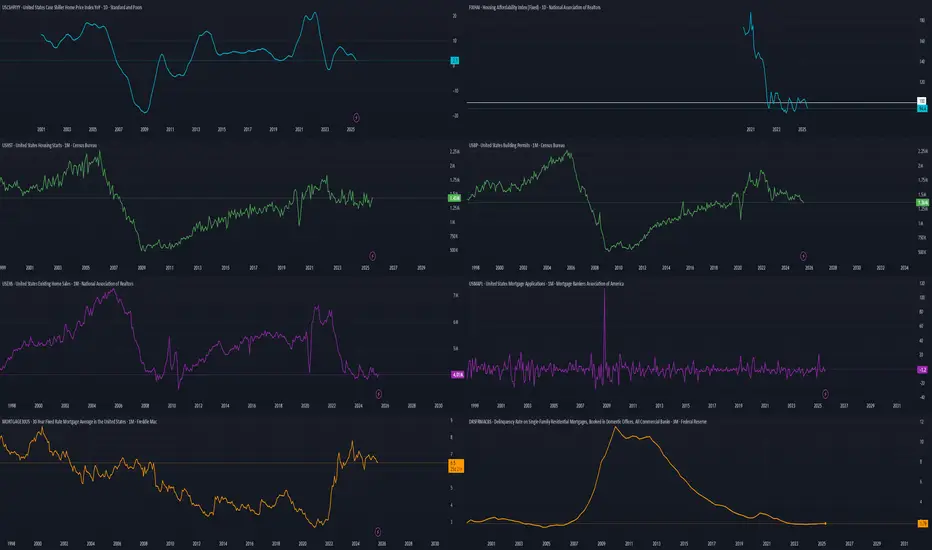
U.S. Housing DashboardU.S. Housing Market Dashboard. Grab the chart and study along!
Indicators used: USCSHPIYY, FIXHAI, USHST, USBP, USEHS, USMAPL, MORTGAGE30US, DRSFRMACBS
Row 1: Prices and affordability
Row 2: Supply
Row 3: Demand
Row 4: Financing conditions and mortgage stress
USCSHPIYY
Measuring : Case-Shiller Home Price Index (YoY)
Relevance : Benchmark measure of U.S. home price appreciation
Observe : Rising YoY = price inflation / tight supply; Falling YoY = correction risk
FIXHAI
Measuring : Housing Affordability Index (Fixed)
Relevance : Tracks if a median-income family can afford a median-priced home given current prices and mortgage rates
Observe : >100 = affordability is healthy; <100 = affordability stress
USHST
Measuring : Housing Starts
Relevance : Actual new residential construction activity, near-term supply
Observe : Growth = builder confidence; Decline = slowdown in new supply
USBP
Measuring : Building Permits
Relevance : Future housing pipeline, leading indicator of supply
Observe : Decline = pipeline drying up; Increase = expansion confidence
USEHS
Measuring : Existing Home Sales
Relevance : Resale activity, and demand in the housing market
Observe : Rising = strong demand/liquidity; Falling = frozen or weakening market
USMAPL
Measuring : Mortgage Applications
Relevance : Fast-moving gauge of homebuyer demand, reacts quickly to mortgage rate changes
Observe : Surges = buyers returning; Declines = affordability bite
MORTGAGE30US
Measuring : 30-Year Fixed Mortgage Rate
Relevance : Central financing cost, primary driver of affordability
Observe : Rising = demand slowdown; Falling = demand boost
DRSFRMACBS
Measuring : Delinquency Rate on Single-Family Residential Mortgages (Commercial Banks)
Relevance : Tracks financial stress in the housing market via late payments and defaults
Observe : Rising = cracks in housing/credit cycle; Falling = stability and healthier credit conditions
Education 
NFP report for Friday September 5 - DECISIVE!While the month of September on the stock market has seen the least favorable performance statistics, and the market is eagerly awaiting the Federal Reserve's (FED) monetary policy decision on Wednesday September 17, a decisive macro-economic figure is published this Friday September 5.
The US NFP report is updated during the trading session on Friday September 5, and is the last monthly report on US employment before the FED meeting on September 17.
1) No pivot, technical pivot, healthy real pivot, unhealthy real pivot: the choice the FED has to make on September 17 is a real headache
Tariffs have been in place since August 7 and have begun to affect US producer and consumer prices. US inflation will remain closer to the 3% than the 2% threshold for several months, and it will take some time for the situation to normalize, probably from the beginning of 2026.
The FED is therefore in an uncomfortable position, as it also has the task of ensuring full employment, and the situation of the US labor market has deteriorated in recent months. If the NFP report on the US labor market on Friday September 5 confirms this deterioration, the FED will have no choice but to make at least a “technical” pivot. A cut in the federal funds rate to adjust to the weak labor market and neutralize any out-of-control rise in the unemployment rate in good time.
2) The US labor market has been on a worrying trajectory for the past 3 months, and the FED's warning thresholds are not far off
For three months running, the number of net new jobs created in the USA has been insufficient to absorb the new arrivals in the labor force. This minimum threshold is set at 100K net job creations per month, and the consensus figure for Friday September 5 is still below this threshold.
As for the number of unemployed in the US, it could hit a new 4-year high with the Friday September 5 NFP report.
3) The elements of the NFP report for Friday September 5 should therefore make it possible to set for good the likelihood of monetary action by the FED on September 17
This Friday, the market will therefore be looking at three figures from this Friday's NFP report:
- Unemployment rate
- The number of net new jobs created
- Wage growth, the link between inflation and the labour market.
Any upward tick in the unemployment rate to 4.3% of the working population, or any figure below 100K for net job creation, will make the scenario of a US federal funds rate cut on Wednesday September 17 all but certain.
DISCLAIMER:
This content is intended for individuals who are familiar with financial markets and instruments and is for information purposes only. The presented idea (including market commentary, market data and observations) is not a work product of any research department of Swissquote or its affiliates. This material is intended to highlight market action and does not constitute investment, legal or tax advice. If you are a retail investor or lack experience in trading complex financial products, it is advisable to seek professional advice from licensed advisor before making any financial decisions.
This content is not intended to manipulate the market or encourage any specific financial behavior.
Swissquote makes no representation or warranty as to the quality, completeness, accuracy, comprehensiveness or non-infringement of such content. The views expressed are those of the consultant and are provided for educational purposes only. Any information provided relating to a product or market should not be construed as recommending an investment strategy or transaction. Past performance is not a guarantee of future results.
Swissquote and its employees and representatives shall in no event be held liable for any damages or losses arising directly or indirectly from decisions made on the basis of this content.
The use of any third-party brands or trademarks is for information only and does not imply endorsement by Swissquote, or that the trademark owner has authorised Swissquote to promote its products or services.
Swissquote is the marketing brand for the activities of Swissquote Bank Ltd (Switzerland) regulated by FINMA, Swissquote Capital Markets Limited regulated by CySEC (Cyprus), Swissquote Bank Europe SA (Luxembourg) regulated by the CSSF, Swissquote Ltd (UK) regulated by the FCA, Swissquote Financial Services (Malta) Ltd regulated by the Malta Financial Services Authority, Swissquote MEA Ltd. (UAE) regulated by the Dubai Financial Services Authority, Swissquote Pte Ltd (Singapore) regulated by the Monetary Authority of Singapore, Swissquote Asia Limited (Hong Kong) licensed by the Hong Kong Securities and Futures Commission (SFC) and Swissquote South Africa (Pty) Ltd supervised by the FSCA.
Products and services of Swissquote are only intended for those permitted to receive them under local law.
All investments carry a degree of risk. The risk of loss in trading or holding financial instruments can be substantial. The value of financial instruments, including but not limited to stocks, bonds, cryptocurrencies, and other assets, can fluctuate both upwards and downwards. There is a significant risk of financial loss when buying, selling, holding, staking, or investing in these instruments. SQBE makes no recommendations regarding any specific investment, transaction, or the use of any particular investment strategy.
CFDs are complex instruments and come with a high risk of losing money rapidly due to leverage. The vast majority of retail client accounts suffer capital losses when trading in CFDs. You should consider whether you understand how CFDs work and whether you can afford to take the high risk of losing your money.
Digital Assets are unregulated in most countries and consumer protection rules may not apply. As highly volatile speculative investments, Digital Assets are not suitable for investors without a high-risk tolerance. Make sure you understand each Digital Asset before you trade.
Cryptocurrencies are not considered legal tender in some jurisdictions and are subject to regulatory uncertainties.
The use of Internet-based systems can involve high risks, including, but not limited to, fraud, cyber-attacks, network and communication failures, as well as identity theft and phishing attacks related to crypto-assets.