
ETF市场

 做多
做多


目前美股不确定性的定义到底是什么?川帝厉害了,全屏AOE。其实他老人家4点后才公布关税政策就知道没有好果子。要是来个盘中熔断就难看了,当然要等到盘后。
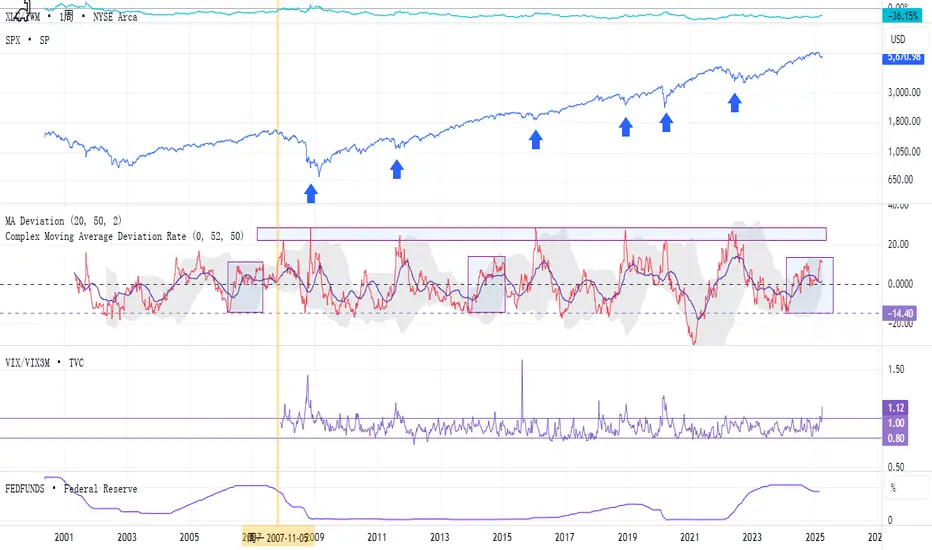
上次用XLU对比SPY,但好像用小盘股IWM更为适合,敏感度应该更高。效果真的更好。XLU/SPY没反应出新冠时期,但用XLU/IWM对比就有反应出来。
过去十几年,标普大第一个底部或主底部,XLU/IWM的52周标准差会在22以上。现在这标准差在11.56。我仍然觉得目前像上文讲的2006年4月到2007年2月两段时期。
然而,用XLU/IWM观察就多出一个可能性,而且还挺吓人的。就是黄线标准的2007年11月。当时标准差由中线直冲到22,标普当时就跌了18%。以目前川帝的政策,下跌20%或以上客观上的可能性也不少,但是我个人暂时仍是认为不多于15%的回调是较大可能性出现的结果。
而更吓人的是2007年11月之后大家都知道什么回事,再看最下方的联邦利率,与目前其实也很像。不过美联储当年是紧急降息,而现在关税虽恨,但有滞后性,所以美联储暂时并没有这操作空间。
再看VIX/VIX3M,之前讲过了,上破就可以简单看成为市场愿意对冲。有对冲某程度上就代表投资者没打算清仓大甩卖,仍愿意持仓。也就是说之后较大机会出现积极的抄底行为。
看2022年熊市,那时期VIM/VIM3M基本没走出0.8到1.0区间。就是说市场并没太对冲意欲。没货在手,就不用买保险,简单易懂。但目前VIX/VIX3M数值在1.10。这也是我改变2月时观点的原因之一。
现在其实我们要思考一个关键词,不确定性。到底现在这关键词的定义什么。不确定性指的是关税触发的后果,或指的是政策本身。若是前者,这不确定性将是一个长期的问号。关税的滞后性少则一个季度,多则要一年以上。
但若是后者,已经明码实价,非常清楚。而且川帝一开跑,就把跑车提到最高速。之后应该就不会有加速的可能了。其他车手也会全速开跑。然后就是到弯道时角力,开始减速看谁可以抢到有利位置。我觉得之后进入议价阶段可能性相当大,尤其关键是中美这次的博弈。估计一些缓和就对市场有很多正面作用。
所以这不确定性是前者的话,以一日尚未明朗,股市就不会反弹的逻辑。这可能要跌个一年半载才触底。这不就是2022年的熊市吗?我觉得可能性并不大。至少一点,2022年是加息周期,而现在则是降息周期。
要是后者,长远不敢打包票,但短期内就应该会见底。看2018年,中美来来回回,其实到最后什么都没改变。搞了一大轮,最后还是回到新高。要记得,2018年加了4次利息。再说一次目前是降息周期。也可以争论,这次不同,川帝这次是地图炮。但我们回想过去大大小小的回调,不都说这次和上次不一样,但到了最后交易行为不都一样嘛。
我觉得市场会把不确定性定义为后者。然后会期待川帝会讨价还价,然后期待美联储降息。所以要留意非农后的反应。如果报告差,而市场认为是好消息的话,市场应该就是把不确定性定义为后者。能不能新高,我不敢讲,但我比较相信短期出现回调底部,然后市场开始爬那个什么wall of worry。我觉得痛苦之墙对于基金管理机构比较贴切。
现在我认为这次出的一脚应该是短期最低点,相信不低于5200,再之后可能就是higher low。然后6到18个月就应该真的要深度回调。现在暂时是这个剧本。当然以目前百年不遇的关税恐,跌到4800以下,客观上有较可能性。但重申一次,我仍觉得是不多15%的回调。所以这一脚,开始接货。最期待是AMD到75。当然要留后手,不能一次把子弹打光。仓位控制比任何策略都重要。
暂时这样,等被川帝的关税大棒锤脸。

标普回调或许已接近尾声上次提到修改之前对标普的观点,由一个较大概率下跌20%以上的深度回调改为五成机会出现,另一半就是V型反弹,或高低脚反弹。
过了两个星期,通过用XLU对比SPY,现在我更偏向这次属于一般性的回调,并且已经接近尾声。估计这一脚是短期最后一跌,然后标普继续缓步上涨,术语上称为Climbing the wall of worry。下次再出现更深的回调可能至少在6个月之后。
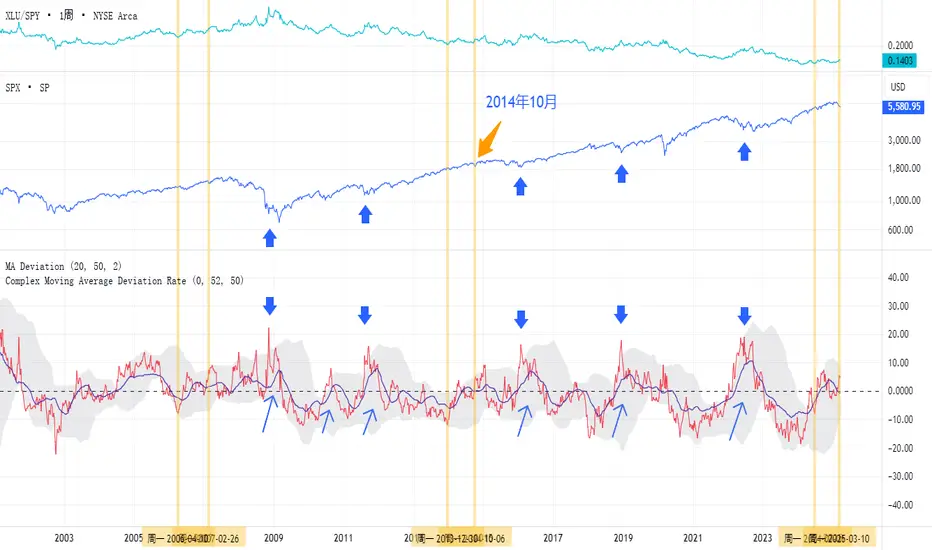
首先用XLU对比SPY,输入XLU/SPY就可能看到两者间的对比。当XLU上涨速率大于SPY时,曲线就会上升。就表明某段时期公用股表现明显由于其他标普成分股。基本认知就是说这段时期投资者处于对风险谨慎的时候。
XLU对比SPY的曲线不重要,核心永远是标准差。用52周标准差检视XLU/SPY,会发现由2008年之后,当关键大回调出现,XLU/SPY的52周标准差会达到16%以上。就是说XLU/SPY当下的数值比过去52周均值高出16%。这就能看出这段时期投资者行为的变化。
现在这数值在5.06,目测要到16以上起码要到八九月。也不排除两三周能达到16,但几率我觉不得高。然后看过去历史,当标普出现大幅回调的前奏,全是这标准差接近布林带下轨,然后一口气上穿布林带上轨。而不是像现在徘徊中线的活动形态。
以现在这标准差的行迹看,我觉得更像用黄线标注的两段时期,分别是2006年4月到2007年2月,以及2014年1月到2014年10月。上文就表示目前从图表和外部背景都跟2014年10月很相似。要是目前真能和这两段时期对上号,那么未来6到18个月,标普就真迎来一次大回调。
我觉得这标准差已经很大程度透露投资者的行为。想象一下开车遇上黄灯时,你是减速停下,或是加速通过。我相信大部分人是后者,然后直到见到实在的红灯出现在眼前才会乖乖踩刹车。人就是这样,总想着能先过一个路口就算一个。
我觉得现在川普政策和宏观数据只是黄灯警号。投资者会一边绷紧神经,一边期待川帝有些正常逻辑的行为,以及下半年他的减税政策,然后就是美联储对经济出问题时的保底行动。
总结,由一月开始认为是深度回调,修改为两周前的深度回调和一般例行回调各一半机会。到这周修正为较大机会是一般性的回调。当然,我给予的几率并没有科学严谨的计算支持,只是用几率形式表达我的看法。到最后还是有机会一直回调下破5000点。但我觉得应该从图表中找出较大机会的一边来押注。2月从图表中找出标普要开始跌,然后腾出大量现金。现在从图表看到机会也应该一以贯之。

 做多
做多


游戏ETF 启动前已经有仓位了止盈了
大得趋势向上,目前在回撤寻找支撑。缺少小级别得突破和二次测试,需要耐心等待1小时级别得横盘与突破,成交量需要验证-供应得减少(目前还没看到)
按照楔形上破,至少看1.63
预计1.083-1.24之间震荡,等待JOC放量突破+2次测试

地缘政治动荡会引发黄金飙升至 6,000 美元吗?在全球力量的推动下,黄金这一传统避险资产正迎来变革时期和前所未有的机遇。最新分析表明,地缘政治紧张局势、宏观经济变动以及市场心理变化的结合,可能会将黄金价格推至历史新高。投资者和政策制定者正在见证一个全新的金融环境,其中战略决策和国际冲突正在重塑传统的经济模式。
地缘政治不稳定已成为推动黄金上涨的关键因素。从中东持续动荡到中国可能入侵台湾的风险,全球经济格局正在发生深刻变化。半导体供应链中断的可能性,加上不断升级的地区紧张局势,促使各国央行和机构投资者大量购买黄金,以对冲市场不确定性并降低对传统法定货币的依赖。
随着各国央行调整外汇储备、重新评估经济战略,黄金日益被视为战略性资产和金融稳定的基石。宏观经济压力进一步增强了黄金的吸引力。通胀趋势、预期的降息以及美元走弱,共同营造了黄金价格上涨的理想环境。这种对贵金属的转向,反映了全球贸易、权力格局和财政政策的更广泛转变。
在这种背景下,黄金价格达到 6,000 美元并非投机,而是全球经济深刻结构性变化的反映。对于专业人士和投资者来说,理解这些动态至关重要,以便在日益交织的地缘政治和经济力量之间寻找机会。当前的挑战在于洞察这些转变的影响,并思考它们将如何重新定义全球财富保值的格局。
 做多
做多 做多
做多
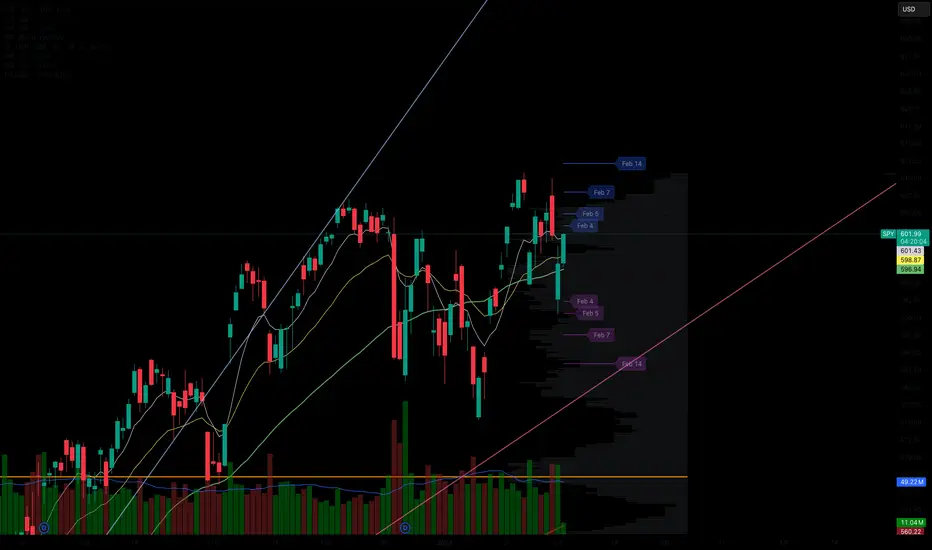
NVDX 17以上都是适合做空的位置 CES发布过后考虑做空 NASDAQ:NVDA 利好兑现即是利空
同时考虑到周四周五美联储&非农数据
考虑做空 CBOE:NVDX
同时做多波动率 TVC:VIX
NASDAQ:NVDA 目前149 最高153左右
短期看到140-144
长期仍然看好


《权力的游戏》:中世纪的映射与权谋的狂欢 "Game of Thrones": A of Power Struggles我必须假定各位都看过《冰与火之歌》才能愉快地开始。今天的主题是先问个问题:你觉得这部剧最让你震惊的是什么?很多人说,这部剧里的主角没有不死之身,简直是匪夷所思。这话不全对,主角自然不会退场,真正匪夷所思的事是你根本不知道谁是主角,因此观众喜欢的角色都有可能会死,多任性啊。
马丁大叔曾跟观众开玩笑,他说:“你们每催更一次,我就杀死一个史塔克的。”回到最让人震惊的桥段这个问题上,我会选“血色婚礼”那场戏。在这一集中,史塔克家族里一大群我们认为重要的角色,甚至包括未出世的孩子,被宴会主人尽数屠杀,手段残暴,毫无人性,而观众也毫无心理准备。
英国历史上有两个类似事件,叫做“黑色晚餐”和“葛伦克屠杀”。“黑色晚餐”发生在1440年,苏格兰国王邀请道格拉斯伯爵到爱丁堡城堡参加晚宴。宴会结束时,随着一只野猪头颅被抬出,宴会主人的杀手们心领神会,将在场客人屠杀殆尽。第二个故事发生在200多年后,苏格兰的坎贝尔部落进犯格伦科峡谷。峡谷的主人姓麦当劳,虽然两家世代为仇,麦当劳家族还是献上了好酒好菜。酒足饭饱后,坎贝尔家族却杀进主人家,38人被屠杀,老弱妇孺无一幸免。
要知道,欧洲自古有个叫“待客法则”的习俗,在剧中被称为“宾主权利”,意思是说在主人和客人共同享用面包和盐这个仪式之后,宾主双方都暂时不可加害对方,而违反了宾主权利的人要永生遭受诅咒。几百年过去了,这两段故事被马丁大叔改头换面写成了“血色婚礼”,遭受世人的唾骂。在著名的网站IMDb上,这一集得到了人类电视剧历史上最高的评分。而剧中的这首悦耳又阴森的曲子《卡斯特梅的雨季》,大概也是人类历史上最不适合婚礼的乐曲吧。
除了情节让人震惊外,这个处处是典故的电视剧简直就是考据爱好者的狂欢节。有没有发现剧中故事的发生地点,这个名叫维斯特洛大陆的地方,很像英国?你可以看一下微信文章里的视频,看到英国和爱尔兰的地图了吧?现在把爱尔兰岛上下旋转180度接到英格兰的下面,再对照一下维斯特洛的地图,相似度90%吧?
还没完。你看剧中绝境长城的位置,相应在英国地图上跟它相同位置的地方,也就是英格兰的北方,真的有一座抵御北方野蛮民族的“哈德良长城”,在电影《亚瑟王》中多次出现。有没有留意到在剧中的北方(临冬城和长城等地),画面总是灰暗无光的色调,而南方的君临城都是阳光明媚,一派温暖富庶的样子?这确实是英国的南方相对更近北方在方方面面都有差距,比如文化、经济甚至口音。剧中君临城的皇室都讲着南方式的高雅英语,而北方史塔克家族的人大都操着一口浓重的北方口音。不过有趣的是,同为北方人,史塔克家的大女儿珊莎的口音却很轻。这也好理解,如果一个意图展现腔调优雅的美女,张口却是一口粗犷的土腔,那也太让人跳戏了。
你可能会留意到更多隐藏的典故。剧中的先民指的是凯尔特人,而安达尔人就是后来居上的盎格鲁撒克逊人。剧中有七大王国,在历史上盎格鲁撒克逊人也确实建立过并存的七个王国。还有一个七国中虚构的“七神崇拜”,它的神学基础是“七位一体”,这跟现实中的基督教很相似,因为后者强调的“三位一体”(圣父、圣子、圣灵)。英语叫“Trinity”,在英语系国家,以此命名的学院都是一等一的学术机构。
北方的铁群岛人很像维京人,南边的多恩,它的风俗、地理和人的外貌跟西班牙类似。高庭象法国封建制度,布拉佛斯商业发达酷似威尼斯。君临城呢,一方面它的政治地位很像伦敦,不过中世纪时伦敦规模尚小,因此它又像控制东西方交通咽喉的君士坦丁堡,也就是今天的伊斯坦布尔。
还有一点,从地图上看,维斯特洛跟英国很相似,但它的面积之大,公路交通这么发达,又像古罗马帝国。这种似是而非让历史爱好者无比着迷。还有亚洲。你看龙母嫁的那个靠马上民族,作战勇猛,很像匈奴人、突厥人和蒙古人。在历史上,这三个所谓的来自东方的野蛮民族曾经洗劫欧洲三次,差点改变欧洲乃至整个全球历史的发展方向。
剧中角色更是影射了诸多中世纪的历史人物。饮食无度、好色荒淫的国王劳勃·拜拉席恩颇有亨利八世的影子。亨利八世的父亲亨利七世曾在法国流亡多年,后来在法国人的帮助下杀回英国登上王位,建立了都铎王朝,是不是有点像龙妈的故事套路?
英国历史上还有一个出身贫贱的人物,他为人诡计多端,见风使舵,却一路官运亨通,当过财政大臣,进入了权力最高层。这是不是很像剧中的“小指头”?这位历史人物叫托马斯·克伦威尔。
前面那首阴惨惨的歌曲,讲的是老狮子泰温·兰尼斯特将一个家族彻底赶尽杀绝的故事。他阴鸷恶毒,但又算治国有方,因此酷似金雀花王朝的爱德华一世,历史留名“苏格兰之锤”。并且,兰尼斯特家族的王室徽章也是狮子。
有人说“小恶魔”提利昂跟莎士比亚笔下的图尔王理查三世颇为相似,也就是金雀花王朝最后一位国王,传说相貌奇丑。不过我倒觉得提利昂在丑陋的外貌下却善良睿智。而想真正明白两大家族对战这条主线,就必须要知道这个故事里最大的典——英国历史上的玫瑰战争。历史里的两大家族叫做Lancaster and York,电视剧里叫做Lannister and Stark。长达30年看不到头的尔虞我诈、血腥厮杀,说起这漫长的血腥和阴暗,还有什么能超过欧洲中世纪呢?
不过所谓“中世纪”,其实也是一个模糊的概念。The Middle Ages, refers to the period of time between the 5th century and the 15th or 16th century,也就是从西罗马帝国灭亡,到文艺复兴和大航海时代来临前这1000年左右的时间。除了血腥和阴暗,中世纪还有三个最容易想到的名词:城堡、贵族、骑士。但中世纪早期的城堡不过是建在山岗上的小木塔,仅作防护之用,英文中叫Keep,所以剧中国王的红堡叫Red Keep。而那种宫廷风格的城堡Castle要到13世纪以后才广泛出现。这种小木塔阴暗狭小,居住体验极差。但不管怎样,城堡能让它的主人完美控制周围的一大片土地。用最白话的语言说,最初拥有城堡的地主在这片土地上自给自足,随后实力逐渐变大成了贵族,而城堡就成了权力中心。在城堡的周围往往还能形成一个商业活跃的集镇。
城堡主人的诺大家业自然要传给儿孙。而为了保证家族的财产完整,家产就不能兄弟姐妹评分,因此出现了长子继承制。其他的孩子要通过家族联姻或者成为骑士等方式自谋生路。
除了城堡,还能怎样保护贵族的资产?骑士!今天我们提到骑士精神,似乎是一个大大的褒义词,因为对女子彬彬有礼的那股体面劲儿。要不然广告里那个喝着某种饮料并说自己“活出了骑士风范”的男子怎么会如此动人?不过在中世纪早期,所谓骑士不过是武装暴徒。剧中的御林铁卫、守卫魔山,还有那个半张脸被自己亲哥烧烂的猎狗,他们一言不合就杀人,而且手段残忍。这些一点骑士风度都没有的杀手是战争机器的人设。如果骨子里并不是嗜血残暴、人格扭曲,反倒不会被贵族垂青。
在电视剧中,铁王座上坐着的是地位最高的国王,下面七个公国的领主效忠于他。全都是虚伪的表面服从。在大领主的下面又有若干宣誓效忠的小贵族。但不论大小,在各自的领土上,他们都是权力无边的“山寨王”。这些就是勾勒西方封建社会最粗糙的线条。
你看,虽然翻译为“封建”的中国封建,与欧洲人中世纪的所谓Feudalism相去甚远。在这部剧中,还有种种中世纪的生活场景,比如喝啤酒:酒馆里、饭桌上、聊天时,人人都手持大杯,各个都酗酒如命的样子。其实,那个叫麦芽酒,并非啤酒。在蒸馏技术发明之前,它的度数极低。当时欧洲卫生条件差,水源常被污染,而有杀菌功效的麦芽酒就成了一般人家的日常饮用品。但君临城里的皇族,他们华丽的酒杯中盛满的却是葡萄酒。要知道,在非传统葡萄产地的英、德等国,人们更习惯喝啤酒,而法国、意大利等国盛产葡萄,人们偏好红酒。中世纪时,葡萄酒保存时间短,所以能在非葡萄产地消费得起葡萄酒,那就是地位的象征了。
中国不太一样。中国百姓也用开水,以避免饮用水不洁。而要显示地位的人,会拿着百姓省着都不够吃的口粮酿造白酒,那是中国土豪古典的奢侈方式。
其实,长达千年的中世纪并不是“黑暗”一个词就可以精准概括的。它的一面是科学落后、战争肆虐、教会钳制、思想饥荒和瘟疫横行。但同时,城市发展、财富聚集、人口增长、教育普及、宗教改革、学术进步。牛津大学和剑桥大学就建立于此时。总之,从中世纪开始,人类开始探索更大的未知世界,在表面的混沌之中孕育着呼啸而出的现代欧洲文明。
美国历史学家本内特和克里斯特合著的书籍《欧洲中世纪史》,用通俗的语言严谨地讲述了中世纪的这两面。
当然,《权力的游戏》不等同于中世纪,但它选取了中世纪最具代表性的历史作为框架,虚构和绘制了一副瑰丽的画面,含沙射影、揉合混搭,讲述方式精彩、背景精彩。当然,最精彩的是故事本身。一个好的故事,往往既是一个故事的终点,又是更多好故事的指路牌。
权力的游戏:金融与投资视角分析
Game of Thrones: A Financial and Investment Analysis Perspective
宏观经济环境分析
Macroeconomic Environment Analysis
经济周期
Economic Cycles
维斯特洛大陆经历着典型的经济周期波动,"凛冬将至"不仅是气候预警,更是经济衰退的隐喻。漫长夏天带来的繁荣与即将到来的严冬萧条,展现了完整的经济周期。
The continent of Westeros experiences typical economic cycles. "Winter is Coming" serves not only as a climate warning but as a metaphor for economic recession. The prosperity of the long summer and the approaching winter depression demonstrate a complete economic cycle.
货币政策
Monetary Policy
铁金库(铁群岛银行)作为维斯特洛的中央银行角色,其债务政策直接影响全境经济。兰尼斯特家族作为主要债权人,通过债务杠杆控制王室,展示了货币政策对政治的深远影响。
The Iron Bank (Bank of Braavos) functions as Westeros's central bank, its debt policies directly affecting the continent's economy. The Lannisters, as major creditors, control the crown through debt leverage, demonstrating monetary policy's profound impact on politics.
商业模式分析
Business Model Analysis
传统行业
Traditional Industries
1. 封建地产信托(各大家族)
核心业务:土地管理和农业生产
收入来源:农民税收和资源开发
风险因素:气候变化和战争威胁
2. 军事防御服务(守夜人)
商业模式:公共服务的特许经营
成本结构:高固定成本,人力密集
可持续性挑战:人才招募和资源匮乏
新兴产业
Emerging Industries
1. 龙妈的颠覆性创新
核心竞争力:龙类资产
市场策略:快速扩张和垄断
增长瓶颈:资源控制和管理难度
2. 小指头的金融创新
业务模式:高频交易和信息套利
风险管理:政治对冲和多元化投资
核心优势:信息不对称利用
投资组合管理
Portfolio Management
资产配置策略
Asset Allocation Strategies
1. 兰尼斯特模式
核心策略:高杠杆运营
风险偏好:激进型
投资重点:政治影响力
2. 史塔克模式
核心策略:价值投资
风险偏好:保守型
投资重点:可持续发展
风险管理
Risk Management
1. 政治风险
对冲策略:联姻投资
风险分散:地理多元化
黑天鹅事件:红色婚礼(政治并购失败案例)
2. 市场风险
系统性风险:凛冬来临
非系统性风险:家族内讧
风险控制:情报网络建设
ESG投资分析
ESG Investment Analysis
环境因素
Environmental Factors
气候变化风险(长夜来临)
自然资源管理(森林和矿产)
可持续发展挑战
社会因素
Social Factors
人力资本管理(学士培养)
社会稳定性(平民动乱)
利益相关者关系
公司治理
Corporate Governance
继承制度(长子继承制)
权力制衡(小议会制度)
信息透明度
投资启示
Investment Insights
1. 多元化投资的重要性
权力、资源、人才的均衡配置
地理位置多样化
政治关系网络建设
2. 风险管理的关键性
建立完善的情报系统
保持充足的流动性储备
制定危机应对预案
3. 长期投资视角
注重可持续发展
建立品牌价值(家族声誉)
培养核心竞争力
结论
Conclusion
《权力的游戏》展现的不仅是政治斗争,更是一部完整的投资与金融教科书。从中我们可以学到资产配置、风险管理、公司治理等现代金融的核心概念。各大家族的兴衰成败,印证了金融市场的基本规律:分散投资、控制风险、保持流动性、注重长期价值。
Game of Thrones demonstrates not just political struggles but serves as a comprehensive textbook of investment and finance. It teaches core concepts of modern finance including asset allocation, risk management, and corporate governance. The rise and fall of great houses validate fundamental market principles: diversification, risk control, liquidity maintenance, and focus on long-term value.
I Must Assume Everyone Has Watched *Game of Thrones* to Begin This Conversation Happily
Today’s theme begins with a question: what shocked you the most in the series? Many people say that the protagonists in this show do not have plot armor, which is quite astonishing. But that’s not entirely accurate. Protagonists don’t simply exit the stage. The truly shocking thing is that **you don’t even know who the protagonist really is**, meaning that any character the audience loves could die at any moment—how whimsical is that?
George R.R. Martin once jokingly told the audience, “Every time you ask me when the next book is coming out, I kill a Stark.” Back to the question of the most shocking scene—I would pick the “Red Wedding.” In that episode, a large number of characters we thought were important in House Stark, including even an unborn child, were brutally massacred by their hosts. The methods were cruel, completely devoid of humanity, and the audience was utterly unprepared.
There are two similar events in British history known as the “Black Dinner” and the “Massacre of Glencoe.” The Black Dinner occurred in 1440, when the King of Scotland invited the Earl of Douglas to a feast at Edinburgh Castle. At the end of the banquet, a boar’s head was presented, signaling to the killers among the hosts to slaughter all the guests. The second event happened over 200 years later when the Campbell clan attacked the MacDonalds in Glencoe Valley. Although the MacDonalds—despite generations of enmity—offered food and hospitality, the Campbells slaughtered 38 members of the MacDonald clan after their meal, sparing neither the elderly nor women and children.
It’s important to know that in Europe, there was a long-standing custom known as *dike asyl* (translated in the show as “guest right”), which meant that after the host and guest shared bread and salt, neither party could harm the other. Violating this custom cursed the perpetrator for eternity. Centuries later, George R.R. Martin repackaged these historical events as the “Red Wedding,” earning the hatred of audiences worldwide. On the renowned website IMDb, this episode received the highest rating in the history of television. The hauntingly beautiful yet sinister song “The Rains of Castamere,” featured in this episode, might be the most inappropriate piece of music ever played at a wedding.
Beyond its shocking plot, the show, filled with references and historical allusions, is a paradise for history enthusiasts. Have you noticed that the continent of Westeros, where the story takes place, resembles Britain? If you look at the video linked in the WeChat article, you’ll see the maps of Britain and Ireland. Now, rotate Ireland 180 degrees and attach it to the southern part of England, then compare it to the map of Westeros—it’s about a 90% match!
It doesn’t stop there. Look at the location of the Wall in the show; its counterpart on the map of Britain is in the same place—northern England—where you’ll find Hadrian’s Wall, which was built to defend against northern barbarian tribes. It’s been featured in movies like *King Arthur*. Have you noticed that scenes set in the North (Winterfell and the Wall) always have gloomy, dim lighting, while King’s Landing in the South is bathed in warm sunlight, radiating wealth and prosperity? This reflects the real-life disparity between southern and northern Britain in terms of culture, economy, and even accents. In the show, the royal family in King’s Landing speaks a refined southern English, while members of House Stark in the North have thick northern accents. However, intriguingly, Sansa Stark, the eldest Stark daughter, has a rather light northern accent. This makes sense—if a character meant to embody grace and elegance speaks in a rough accent, it would be jarring.
You might notice even more hidden historical references. The First Men in the show symbolize the Celts, while the Andals represent the Anglo-Saxons who followed. Westeros has seven kingdoms, mirroring the historical Heptarchy of the Anglo-Saxons. The Faith of the Seven in the Seven Kingdoms resembles Christianity, specifically its doctrine of the “Seven-faced God,” a nod to the Christian Trinity (Father, Son, and Holy Spirit). In English, this is called the Trinity, and in English-speaking countries, institutions named after it are typically elite academic institutions.
The Ironborn of the North resemble the Vikings, while Dorne in the South, with its customs, geography, and people’s appearance, evokes Spain. The Reach resembles the feudal systems of France, and Braavos, with its thriving commerce, is reminiscent of Venice. King’s Landing is politically akin to London, but given that medieval London was relatively small, it also resembles Constantinople, controlling East-West trade routes.
Another detail: although Westeros resembles Britain in shape, its vast size and advanced road system are more akin to the Roman Empire. This mix of similarities fascinates history buffs endlessly. Let’s not forget Asia: Daenerys Targaryen’s Dothraki, a horse-based warrior culture, bears a strong resemblance to the Huns, Turks, and Mongols. Historically, these so-called barbarian tribes from the East ravaged Europe three times, nearly changing the course of global history.
The characters in the series also parallel many figures from medieval history. King Robert Baratheon, with his gluttony and debauchery, resembles Henry VIII. Henry VIII’s father, Henry VII, spent years in exile in France before returning with French support to claim the throne and establish the Tudor dynasty—doesn’t that sound like Daenerys Targaryen’s storyline?
There was also a historical figure in England who, though of lowly origins, was cunning, opportunistic, and rose to great power as Chancellor, eventually joining the highest echelons of authority. Doesn’t this sound like Littlefinger? This historical figure was Thomas Cromwell.
That gloomy song mentioned earlier tells the story of Tywin Lannister’s complete annihilation of another family. Tywin, with his ruthless cunning yet effective governance, mirrors Edward I of the Plantagenet dynasty, nicknamed the “Hammer of the Scots.” Additionally, the sigil of House Lannister—a lion—matches that of the Plantagenets.
Some compare Tyrion Lannister to Shakespeare’s portrayal of King Richard III of the House of York, known for his alleged deformities. However, I think Tyrion’s wit and kindness beneath his outward imperfections make him distinct. To truly understand the central conflict between the Lannisters and the Starks, one must know about the greatest inspiration behind this story: the Wars of the Roses. Historically, the two rival houses were the Lancasters and the Yorks; in the show, they’re the Lannisters and the Starks. This 30-year-long series of betrayals and bloody conflicts is the epitome of medieval Europe’s endless strife.
The term “Middle Ages” itself is rather vague. The Middle Ages refers to the period between the 5th and the 15th or 16th centuries, from the fall of the Western Roman Empire to the dawn of the Renaissance and the Age of Exploration. While often associated with bloodshed and darkness, the Middle Ages also evoke three iconic terms: castles, nobility, and knights. Early medieval castles were mere wooden keeps built on hills for protection, offering little in terms of comfort. The Red Keep in the series derives its name from this. The grand stone castles we associate with the medieval period only became common after the 13th century.
These castles, though initially crude, allowed their owners to dominate large swathes of land. In simple terms, the landowners with castles began as self-sufficient landlords, gradually growing into powerful nobles, with their castles becoming centers of power. Around these castles, bustling towns often emerged.
The noble estates naturally passed down through inheritance. To ensure family wealth remained intact, inheritance typically followed primogeniture (the eldest son inherited everything). Other siblings had to secure their futures through marriage alliances or knighthood.
Knights were another means of protecting noble wealth. Today, we view chivalry as a virtue, emphasizing courtesy, particularly towards women. However, in the early Middle Ages, knights were nothing more than armed thugs. The Kingsguard, the Mountain, and the Hound in the series—men who kill with impunity—are more realistic depictions of early knights. Only those inherently brutal and twisted in character could attract the attention of noble patrons.
In the series, the Iron Throne is occupied by the supreme ruler, to whom the lords of the seven kingdoms pledge allegiance. However, this allegiance is superficial at best. Beneath the great lords are vassal nobles, all of whom act as “mini kings” within their domains. These power structures crudely outline the feudal system of medieval Europe.
The term “feudalism,” as used in the West, differs significantly from the Chinese concept of “封建.” The show also depicts medieval life in many other aspects. For instance, the pervasive drinking of ale: in taverns, at feasts, or during casual conversations, everyone seems to be constantly drinking. In reality, what they drank was more akin to malt liquor, not modern beer. Before distillation was invented, the alcohol content was quite low. Due to poor sanitation, water sources were often contaminated, so this malt liquor served as a safer daily beverage. Meanwhile, the royal families of King’s Landing drank wine from elegant goblets. In non-traditional wine-producing countries like England and Germany, beer was more common, while wine was favored in France and Italy. In the Middle Ages, wine had a short shelf life, so consuming wine in non-wine-producing regions was a status symbol.
China, on the other hand, addressed unclean water by boiling it for tea. To showcase their wealth, the Chinese elite brewed strong liquors using precious grains, an extravagant display of opulence.
The Middle Ages, lasting about a thousand years, cannot be accurately described by the single term “dark.” They were characterized by scientific stagnation, rampant warfare, ecclesiastical control, intellectual famine, and plagues. Yet, they also saw urban development, wealth accumulation, population growth, educational progress, religious reform, and intellectual advances. Oxford and Cambridge Universities were both established during this time. From the Middle Ages onward, humanity began to explore unknown worlds, and beneath the surface chaos lay the seeds of modern European civilization.
The book *A History of Medieval Europe* by American historians Bennett and Hollister provides a detailed and accessible exploration of both sides of the Middle Ages.
Of course, *Game of Thrones* is not equivalent to the Middle Ages, but it uses some of the most representative aspects of medieval history as its framework, blending and reimagining them into a spectacular tapestry. Its storytelling is brilliant, its background even more so. And, of course, the most brilliant part is the story itself. A good story is often both the endpoint of one narrative and the signpost to many others.


FXI 未来能突破 55.00美元 吗 ?FXI:中国股市的代表性ETF,停滞了15年
在我们看来,FXI 作为中国股市最具代表性的ETF,反映了15年的停滞,这一现象与同期中国经济的显著增长形成鲜明对比。自2008年5月以来,FXI多次尝试突破55.00美元的水平,但均未成功,其相对高点如下:
2008年5月: 55.00美元
2015年4月: 52.85美元
2018年1月: 54.00美元
2021年2月: 54.53美元
与此同时,自2008年10月以来,ETF似乎在20.00美元附近形成了支撑位,以下为重要低点:
2008年10月: 19.35美元
2022年10月: 20.87美元
2024年1月: 20.86美元
关键点位:33.73美元
目前,FXI正试图突破33.73美元,这对应于斐波那契回撤的0.382水平。该计算基于2021年2月54.53美元的相对高点,以及2022年10月(20.87美元)和2024年1月(20.86美元)的低点。
在2024年10月,价格曾短暂突破这一水平,并伴随着高成交量,达到了**0.50(37.70美元)**的水平。然而,这一走势持续时间较短,缺乏后续支撑。
关键问题
FXI能否在未来几天内以强势突破33.73美元(0.382)?如果突破,将能否触及以下关键斐波那契水平?
37.70美元(0.50)
41.67美元(0.618)
47.32美元(0.786)
54.53美元(1.00)
虽然FXI距离突破55.00美元的阻力位仍有一段距离,但如果从20.86美元的低点持续上涨,这可能标志着历史性趋势的转变,挑战过去15年来抑制其价格的天花板。
我们的观点仅供教育用途,不应被视为购买建议。在进行任何投资之前,请咨询您的财务顾问。

 做多
做多
a50 4-5周时长的看空1 前期跌幅太少,撑着上证的主要力量,同样的看看2000 创业板的幅度
2 里面那些大权重不便宜了,卖高买低,或者清仓
3 低位放量才更吓人,现在还没出这么一下
时间看10月头或者九月下旬
 做空
做空 做多
做多
 做多
做多
全球石油需求是能源市场稳定的关键吗?在全球能源市场复杂多变的格局中,石油需求问题仍然是一个**核心问题**。受到地缘政治紧张局势、OPEC+生产策略和经济动态的共同推动,全球石油需求是一幅复杂的图景。它深刻影响着能源市场的未来。
地缘政治事件,尤其是在中东地区的事件,历来是石油价格波动的重要驱动因素。近期紧张局势的升级再次强调了地缘政治稳定与全球石油供应之间微妙的平衡。随着地缘政治风险上升,石油价格随之上涨,影响了投资于石油的投资者,例如美国石油基金(USO)的投资者。**(USO是追踪美国轻质原油价格的交易所交易基金)**
然而,地缘政治因素只是整个拼图的一部分。石油输出国组织(OPEC)及其盟友OPEC+在调节全球石油供应方面发挥着关键作用。他们的生产决策,往往受到经济因素和地缘政治因素的影响,可以显著影响油价,并进而影响全球石油需求。
除了地缘政治紧张局势和OPEC+的动态之外,经济因素也在塑造全球石油需求方面发挥着重要作用。全球经济的周期性特征影响着能源消耗。在经济增长期,石油需求往往增加,而在经济衰退期,需求则可能减少。
地缘政治风险、OPEC+策略和经济因素的相互作用,构成了全球石油市场复杂而动态的环境。理解这些复杂的关系对于那些希望在石油行业中抓住机遇的投资者来说至关重要。
 做多
做多

芯片处于一个日线下的中后段,耐心等周先买点从年初到现在不像其他板块内部它是由一个上涨段的,其他板块是5月份就直接a下来了,芯片的5-7月是可以玩的。
现在处于9段的最后1或2段。
处着周线区间后下去打个低点,是否新低不一定。
最好是没新低,那就是周线2买的可能(那时候看指标在0轴上面还是下面,如果是下面那就是日线的)
看好10.1后昔年有一段驱动向上的机会
 做空
做空 做多
做多