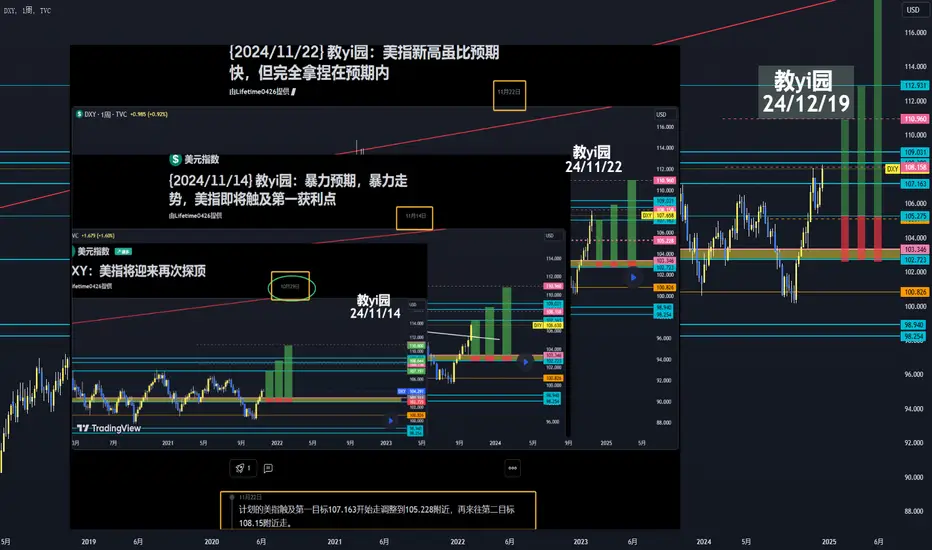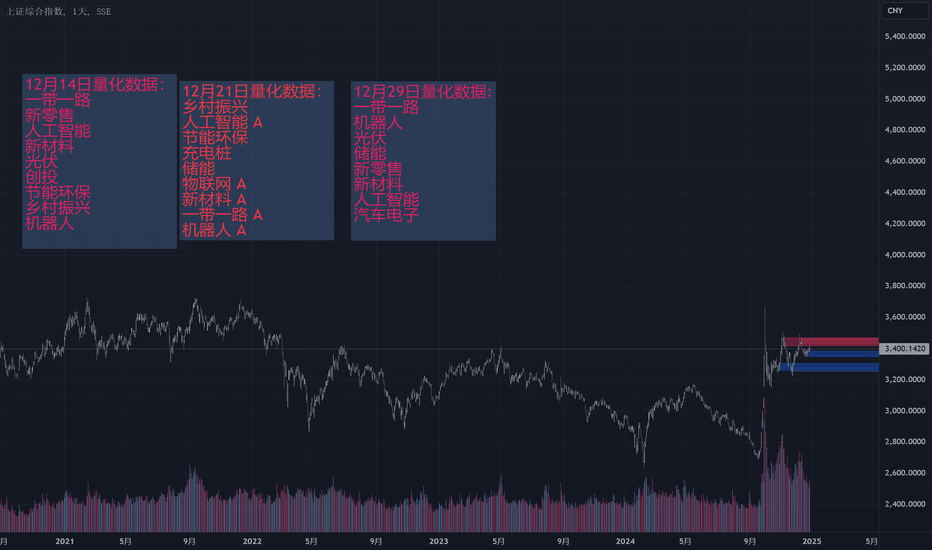
 做多
做多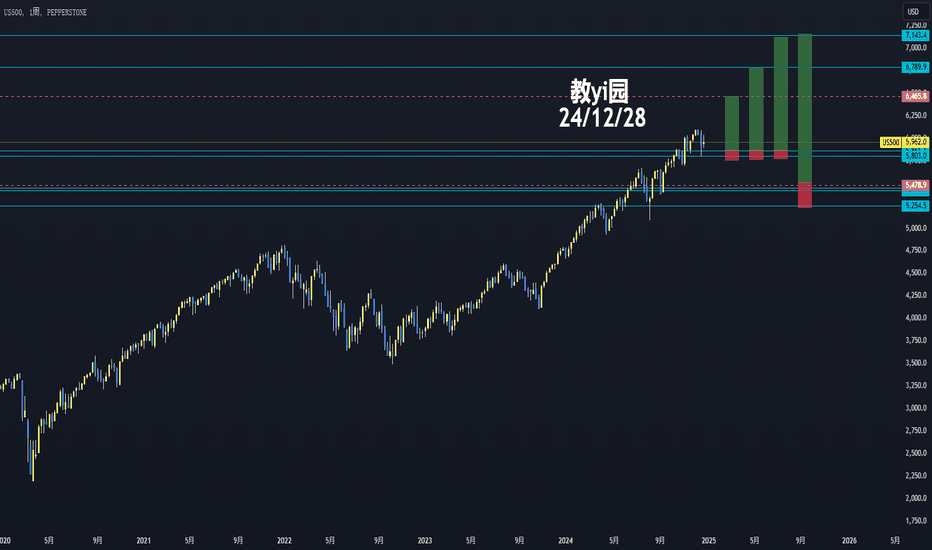
做多 
 做多
做多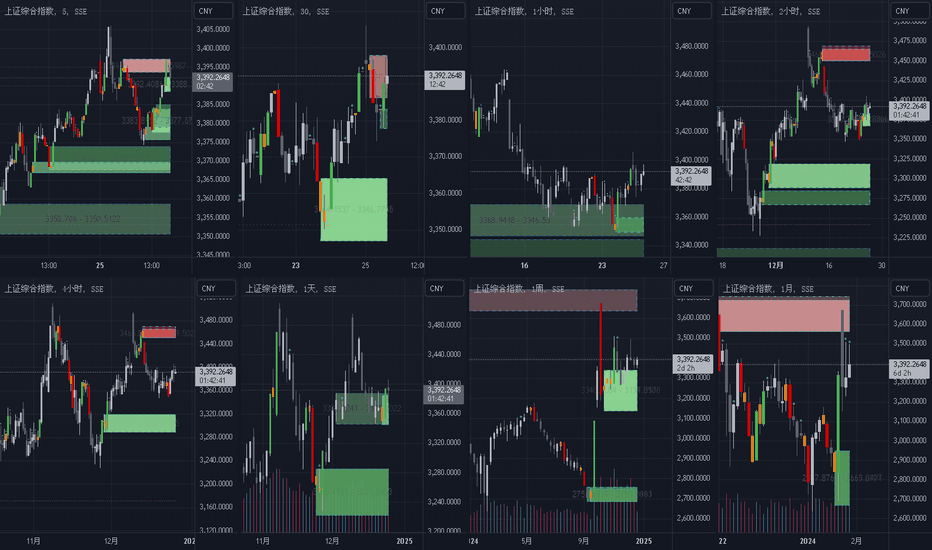
这波牛市上证指数先看到7800点The Shanghai Composite Index reached 7,800 point根据这波牛市上阵指数先看到7800点
在当前全球经济背景下,中国的宏观经济数据和股市表现成为了投资者关注的焦点。特别是在人民币大幅贬值已在强阻力区岌岌可危和特朗普二次上台(大概率对经济环境进行手术刀式改革)全球经济复苏的双重驱动下,中国股市的牛市特征愈发明显。本文将结合宏观经济和成交量技术面对此进行分析,并预测上证指数有望先达到7800点。
从宏观经济角度看,中国经济的韧性和增长潜力是支撑股市上涨的重要基础。近年来,尽管全球经济面临诸多挑战,但中国成功控制了本土疫情,成为唯一保持经济正增长的主要经济体。这不仅提升了国内外投资者对中国市场的信心,也吸引了大量资金流入。此外,中国外贸的强劲表现也进一步增强了市场对中国经济前景的乐观预期,最重要的一点就是货币量化宽松极可能会大放水(最直接影响股票市场的一环)。
在技术面分析方面,上证指数的走势同样呈现出积极的信号。从季线技术形态来看,当前的股市正在形成一个长达15年的上升三角形整理形态。这一形态的突破将是启动大牛市的明确信号。特别是当股市再次上攻紫色下降趋势线时,有望在3500点附近形成真正的突破。短线来看,虽然3550点附近可能存在一定的震荡,但整体上攻4200点的趋势不变。
进一步推算,基于2005-2007年6124点涨幅空间的对比,本轮牛市也有望实现类似的涨幅。如果按此计算,上证指数的目标点位将达到7815点,这与黄金分割目标点位相吻合。此外,考虑到互联网时代信息传播和交易速度的提升,本轮牛市的时间周期可能会相对缩短,有望在2026年国庆节前达到7800点。
综上所述,只是个人愚见,无论是从宏观经济数据还是从技术面分析来看,中国股市都呈现出强烈的牛市特征。投资者应密切关注市场动态,把握投资机会,但同时也需保持理性,注意风险防控。
According to this bull market, the index will first reach 7,800 points
Under the current global economic background, China's macroeconomic data and stock market performance have become the focus of investors. In particular, driven by the dual factors of the sharp depreciation of the RMB, which is already in a strong resistance zone, and the global economic recovery caused by Trump's second term (with a high probability of a surgical reform of the economic environment), the bull market characteristics of the Chinese stock market have become more and more obvious. This article will analyze this in combination with macroeconomic and trading volume technology, and predict that the Shanghai Composite Index is expected to reach 7,800 points first.
From a macroeconomic perspective, the resilience and growth potential of the Chinese economy are an important basis for supporting the rise of the stock market. In recent years, despite many challenges facing the global economy, China has successfully controlled the local epidemic and has become the only major economy to maintain positive economic growth. This has not only boosted the confidence of domestic and foreign investors in the Chinese market, but also attracted a large amount of capital inflows. In addition, the strong performance of China's foreign trade has further enhanced the market's optimistic expectations for China's economic prospects. The most important point is that monetary quantitative easing is likely to be released in large quantities (the most direct link affecting the stock market).
In terms of technical analysis, the trend of the Shanghai Composite Index also shows positive signals. From the perspective of the quarterly technical pattern, the current stock market is forming a 15-year ascending triangle consolidation pattern. The breakthrough of this pattern will be a clear signal to start a big bull market. In particular, when the stock market attacks the purple downward trend line again, it is expected to form a real breakthrough near 3500 points. In the short term, although there may be some fluctuations near 3550 points, the overall trend of attacking 4200 points remains unchanged.
Further calculation, based on the comparison of the 6124-point increase space from 2005 to 2007, this round of bull market is also expected to achieve a similar increase. If calculated in this way, the target point of the Shanghai Composite Index will reach 7815 points, which coincides with the golden section target point. In addition, considering the increase in information dissemination and transaction speed in the Internet era, the time period of this round of bull market may be relatively shortened, and it is expected to reach 7800 points before the National Day in 2026.
In summary, it is just my humble opinion. Whether from the perspective of macroeconomic data or technical analysis, the Chinese stock market has shown strong bull market characteristics. Investors should pay close attention to market trends and seize investment opportunities, but at the same time they also need to remain rational and pay attention to risk prevention and control. 做多 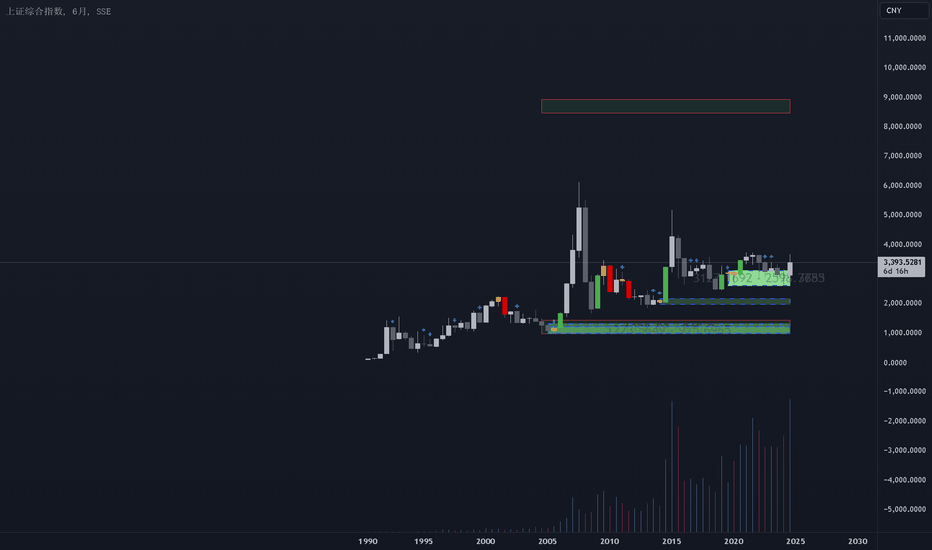
做多 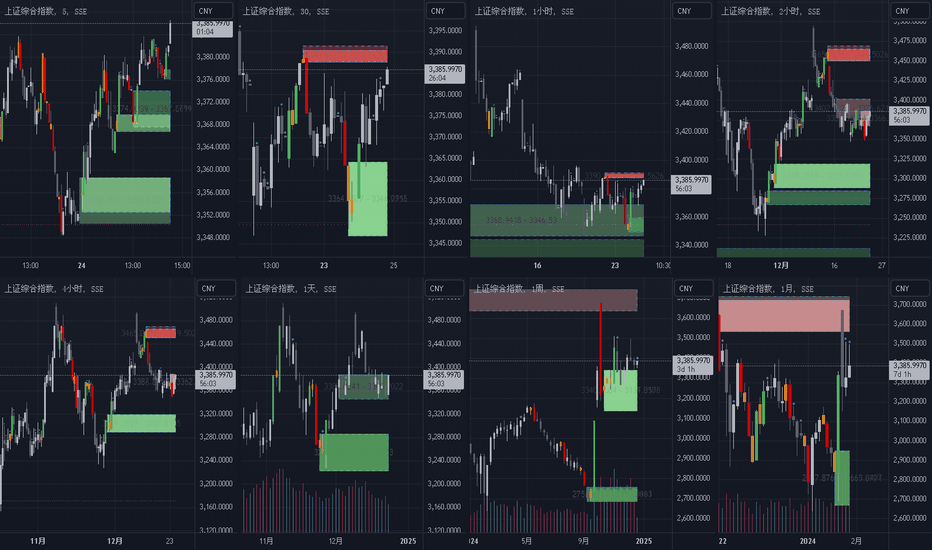
做多 

做空 
经济下行期的投资策略:基于伯南克大萧条理论的启示 The Great Depression Theory
本文根据前美联储主席、诺贝尔经济学奖得主伯南克巨著《大萧条》的研究分析,结合其核心经济观点。本人进行如下详细剖析(请勿转载):
①二级市场的强弱主要与以下几个因素有关:
1. 货币政策
宽松的货币政策,如降低利率、增加货币供应,会刺激投资需求,资金流入股市,推动股市上涨。
紧缩的货币政策则会抑制投资,资金流出股市,导致股市下跌。
2. 信贷市场
信贷扩张时期,企业和个人更容易获得贷款,资金进入股市推高股价。
信贷紧缩时期,贷款难度加大,资金流出股市,股价下跌。
3. 通货膨胀预期
通胀预期上升时,投资者倾向于配置实物资产如股票,推高股价。
通胀预期下降时,投资者减少股票配置,股价承压。
4. 经济增长前景
经济向好预期会提振企业盈利预期,吸引资金流入,股市上涨。
经济衰退预期则会打击企业盈利预期,资金撤离,股市下跌。
5. 市场信心
市场信心充足时,投资者风险偏好提高,资金活跃度高,股市向好。
市场信心不足时,投资者风险规避,资金活跃度低,股市低迷。
总之,宏观经济政策、信贷环境、通胀预期、经济前景、市场情绪等因素,共同影响着资金的流向,进而决定了二级市场的强弱。政策制定者需要综合平衡,避免极端,维护金融市场稳定。
②投资者应该从以下几个维度来应对经济下行期的投资:
1. 货币政策传导机制视角
伯南克强调货币政策通过信贷渠道影响实体经济
投资建议:
关注央行货币政策动向,特别是信贷投放力度
在货币宽松初期适度加仓金融、地产等高杠杆行业
警惕货币政策收紧时期的信用收缩风险
2. 债务-通缩螺旋理论
经济下行期债务违约上升导致通缩,通缩加重债务负担
投资建议:
避免高负债企业,选择现金流稳定、负债率低的公司
配置必需消费、医疗等防御性行业
关注政府债务刺激政策带来的投资机会
3. 金融加速器效应
资产价格下跌导致抵押品价值下降,进一步恶化融资环境
投资建议:
控制投资杠杆,保持充足流动性
分散投资组合,降低单一资产风险
逐步建仓,避免追涨杀跌
4. 预期管理理论
市场预期对经济走势有重要影响
投资建议:
关注政策信号和市场情绪变化
在悲观预期充分释放时逢低布局
避免跟随短期市场情绪剧烈波动
5. 系统性风险防范
金融体系的脆弱性可能放大经济冲击
投资建议:
优选具有核心竞争力的行业龙头
关注国家战略性新兴产业
配置部分黄金等避险资产
6. 长期视角
经济周期具有自我修复能力
投资建议:
保持长期投资思维,避免短期频繁操作
把握产业升级和结构转型机会
在市场底部区域分批建仓优质资产
核心要点:
1. 保持充足流动性,控制投资杠杆
2. 选择优质资产,注重风险防范
3. 把握政策和预期变化带来的机会
4. 维持长期投资思维,耐心等待市场修复
这些建议基于伯南克对大萧条的深入研究,强调了在经济下行期要特别注意防范系统性风险,同时也要把握政策和预期变化带来的投资机会。投资者需要在防守和进攻之间找到平衡,既要控制风险,也要为未来的市场反弹做好准备。
This article is based on the research and analysis of the book "The Great Depression" by former Federal Reserve Chairman and Nobel laureate in economics, Ben Bernanke, combined with his core economic views. I have conducted the following detailed analysis (please do not repost):
① The strength of the secondary market is mainly related to the following factors:
1. Monetary Policy
Loose monetary policies, such as lowering interest rates and increasing money supply, stimulate investment demand, drive funds into the stock market, and push up stock prices.
Tight monetary policies, on the other hand, suppress investment, cause funds to flow out of the stock market, and lead to stock market declines.
2. Credit Market
During periods of credit expansion, it is easier for businesses and individuals to obtain loans, and funds entering the stock market drive up stock prices.
During periods of credit tightening, loan difficulties increase, funds flow out of the stock market, and stock prices fall.
3. Inflation Expectations
When inflation expectations rise, investors tend to allocate physical assets such as stocks, pushing up stock prices.
When inflation expectations fall, investors reduce their allocation to stocks, putting pressure on stock prices.
4. Economic Growth Prospects
Expectations of a strong economy boost corporate earnings expectations, attract capital inflows, and drive up stock markets.
Expectations of an economic recession, on the other hand, dampen corporate earnings expectations, cause capital outflows, and lead to stock market declines.
5. Market Confidence
When market confidence is high, investor risk appetite increases, fund activity is high, and the stock market performs well.
When market confidence is low, investors are risk-averse, fund activity is low, and the stock market is sluggish.
In summary, macroeconomic policies, credit environment, inflation expectations, economic prospects, market sentiment, and other factors jointly influence the flow of funds, which in turn determines the strength of the secondary market. Policymakers need to balance comprehensively and avoid extremes to maintain financial market stability.
② Investors should approach investing during economic downturns from the following perspectives:
1. Monetary Policy Transmission Mechanism
Bernanke emphasizes that monetary policy affects the real economy through credit channels
Investment advice:
Pay attention to central bank's monetary policy stance, especially credit supply
Moderately increase positions in high-leverage sectors like finance and real estate during early monetary easing
Be cautious of credit contraction risks when monetary policy tightens
2. Debt-Deflation Spiral Theory
Rising defaults during economic downturns lead to deflation, which exacerbates debt burdens
Investment advice:
Avoid highly indebted companies; choose firms with stable cash flows and low debt ratios
Allocate to defensive sectors like consumer staples and healthcare
Look for investment opportunities from government debt stimulus policies
3. Financial Accelerator Effect
Falling asset prices decrease collateral values, further worsening financing conditions
Investment advice:
Control investment leverage and maintain ample liquidity
Diversify portfolios to reduce single-asset risks
Build positions gradually to avoid chasing ups and downs
4. Expectation Management Theory
Market expectations significantly influence economic trends
Investment advice:
Monitor policy signals and changes in market sentiment
Establish positions at lows when pessimistic expectations are fully released
Avoid following short-term volatile market emotions
5. Systemic Risk Prevention
Vulnerabilities in the financial system may amplify economic shocks
Investment advice:
Prefer industry leaders with core competitiveness
Focus on national strategic emerging industries
Allocate a portion to safe-haven assets like gold
6. Long-term Perspective
Economic cycles have self-correcting abilities
Investment advice:
Maintain a long-term investment mindset; avoid frequent short-term trading
Seize opportunities from industrial upgrades and structural transformations
Build positions in quality assets in phases near market bottoms
Key points:
1. Maintain sufficient liquidity and control investment leverage
2. Select quality assets with emphasis on risk prevention
3. Seize opportunities arising from policy and expectation changes
4. Maintain a long-term investment mindset and patiently await market recovery
These recommendations, based on Bernanke's in-depth study of the Great Depression, emphasize the importance of guarding against systemic risks during economic downturns while also seizing investment opportunities brought about by policy and expectation shifts. Investors need to find a balance between defense and offense, controlling risks while preparing for future market rebounds.