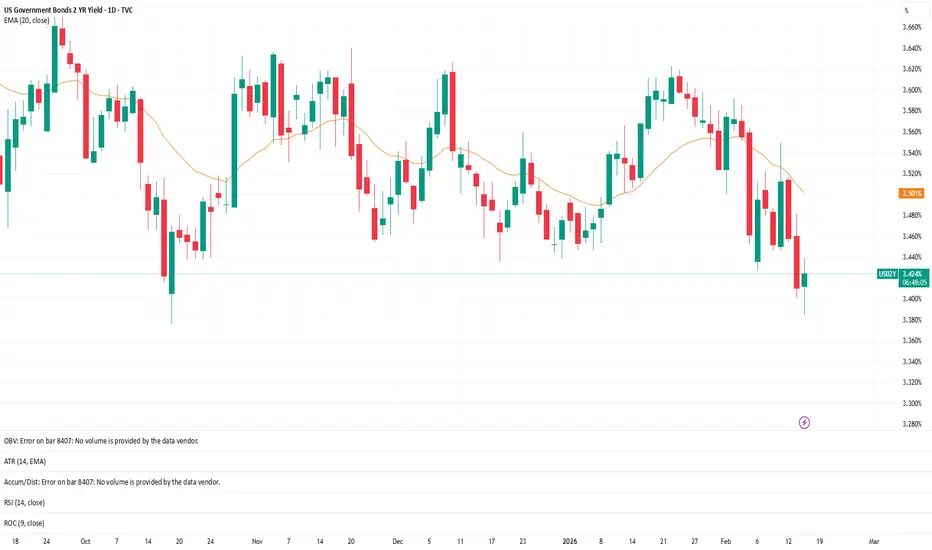
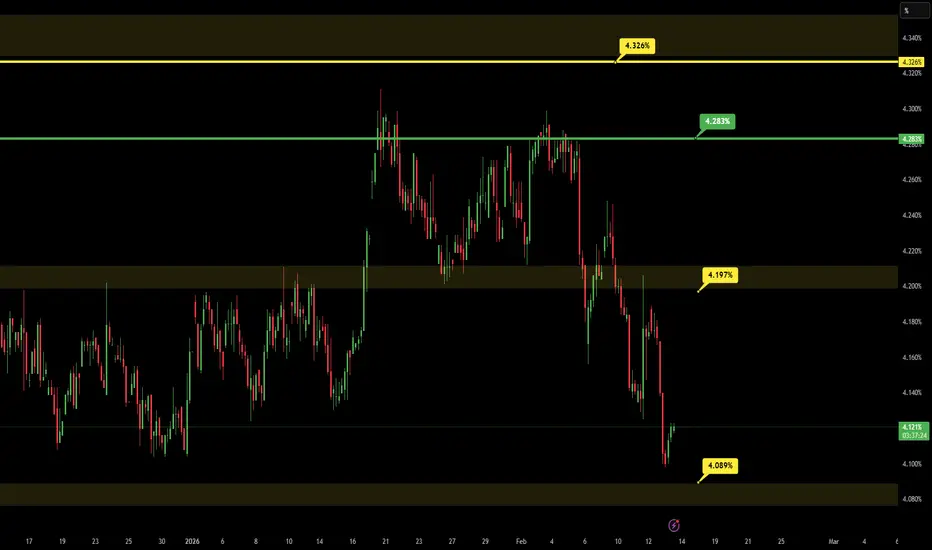
US 10Y TREASURY: Volatile on inflation riskMiddle East tensions, rising oil prices and weakening job market had a huge impact on 10Y US Treasuries during the previous week. There has been significant volatility, where yields sharply rose from 3,92% up to 4,18%, closing the week at 4,13%. Due to conflict in the Middle East, the price of oil was significantly increased, threatening a new wave of inflation across developed economies, but also in the US. This will make the Fed's decision to cut interest rates extremely difficult. If we add to that evidently weakening US jobs market, then we have the worst combination in the economy called stagflation - weak economic output and high inflation, an extremely difficult task for any central bank. Such a situation brings an additional layer of uncertainty among investors.
Volatility might continue also during the week ahead. Again on Friday important data will be released. The PCE data and JOLTs will be posted, which might bring additional nervousness to the market, especially if inflation shows persistence. In this sense, the 4,2% might easily be tested in the week ahead. On the opposite side, a short pull-back toward the 4,1% might be an option.
 Short
Short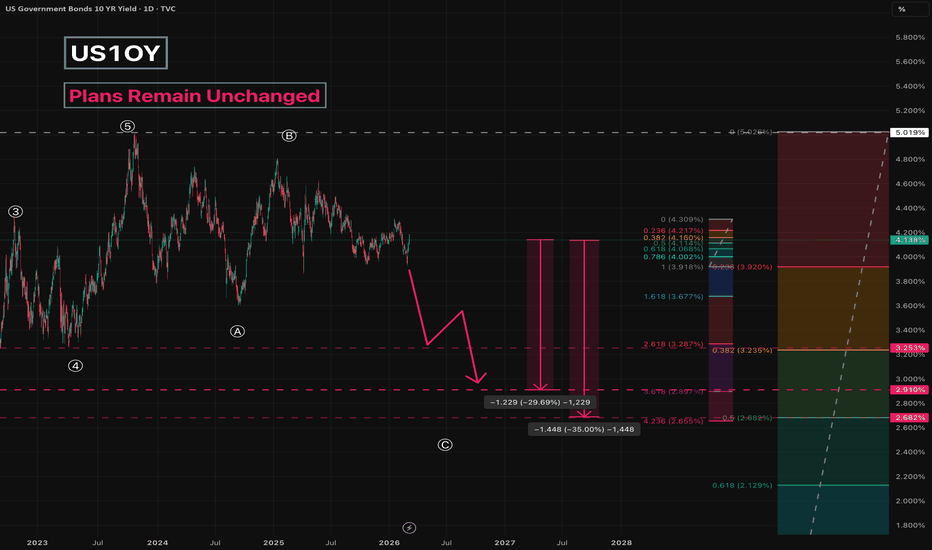
Long 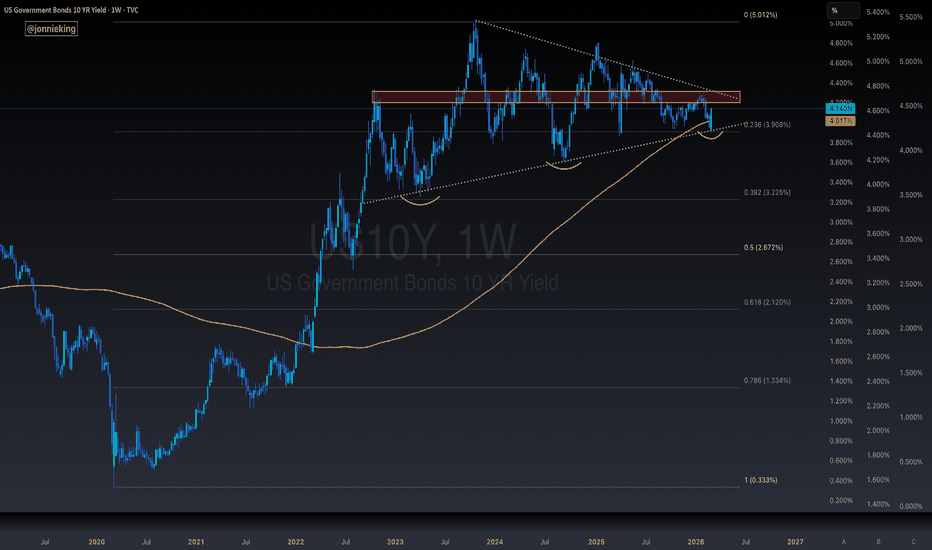
Short 
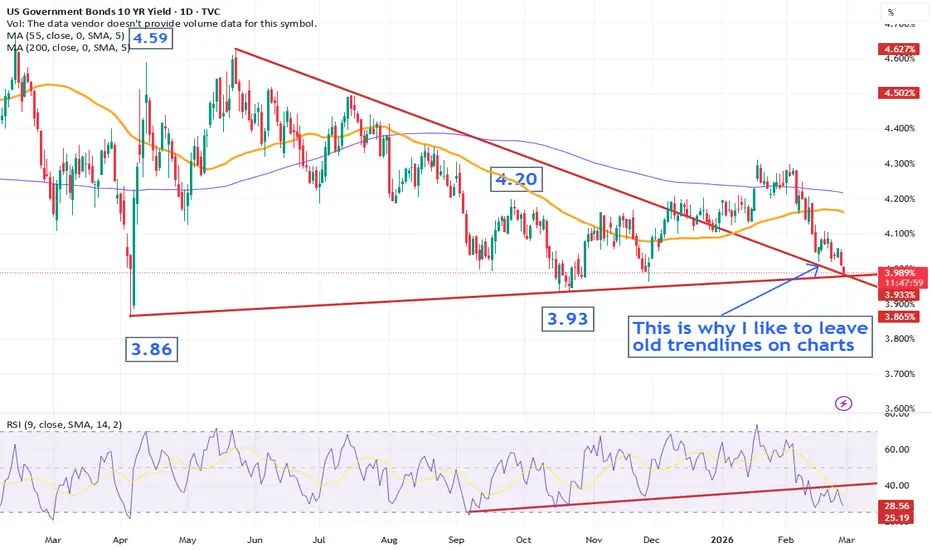
US 10Y TREASURY: Rising stagflation risk Although the 10Y US Treasury yields were holding ground above the 4% during the week, still, Friday's PPI data moved yields toward the lower grounds, closing the week at 3,96%, after reaching 3,94%. January PPI data came hotter than expected, with 0,5% surge for the month and 2,9% y/y. Core PPI reached 3,6% y/y. The cautious positioning of investors reflected expectations that hotter inflation data could reinforce the case for the Federal Reserve to keep rates steady, prompting some bond buyers to lock in existing yields. At the same time, markets were digesting recent economic signals, including stronger producer price pressures that could complicate the outlook for rate cuts.
After a sharp drop in yields during the last two days of the week, it could be expected some short reversal as of the start of the week. In this sense, the 4,0% could be tested for one more time. Still, it should be considered that Friday brings NFP data, which could bring volatility back also on the Treasury market. On the downside, the 3,93% level has been shortly tested on Friday, which is the lowest level from October last year. The next level to the downside could be 3,86% however, the probability for it is extremely low at this point. Depending on macro data, this level could be watched in a longer period of time, and certainly not for the week ahead.
Long 
Short 
Short 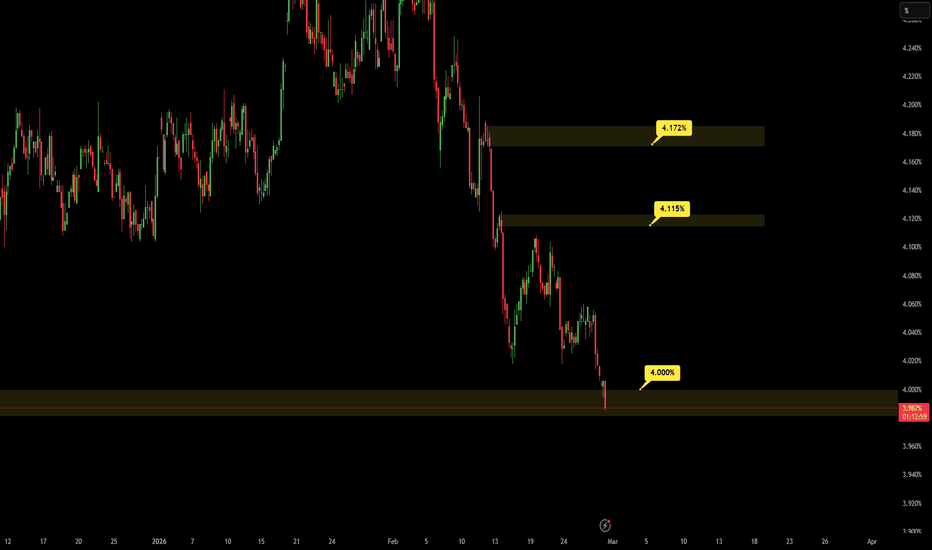
Education 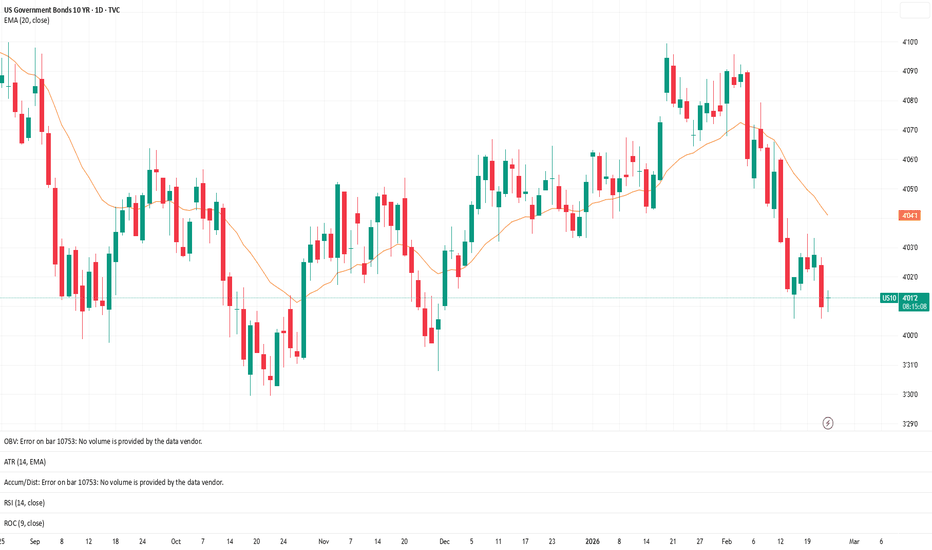
Sticky Yields, Quiet Alarms: (2026 Outlook, Ep. 1: US Treasury)Sticky Yields, Quiet Alarms: A Subtle Signal Markets Shouldn’t Dismiss (2026 Outlook, Ep. 1: US Treasury)
Welcome to the first installment of our 12-part Investment Theme Outlook for 2026. Over this series, we will dissect 12 critical financial instruments through both fundamental and technical lenses to help you navigate the year ahead. We begin with the “bedrock” of global finance: the US 10-Year Treasury Yield.
________________________________________
The Investment Theme Outlook for 2026: Episode 1
Episode 1: US Treasury 10-Year Yield – When the backbone of the world is flashing warning signals
To kick off our 2026 investment outlook, the first thing we must talk about is the US Treasury Market. The reason is simple but powerful: it is the largest financial asset market in the world and the place of the most professional, most rational players (compared with other markets). As a result, movement in this market are rarely random—they inevitably signal (imply) the direction of global financial markets.
________________________________________
1) 2026 macro backdrop: the stimulus trap
In 2026, the economy appears to be “good enough” and the labor market is resilient. But this is partly an illusion created by ongoing government stimulus. The consequences include:
• Sticky inflation: Inflation remains difficult to bring down. Reliance on QE and fiscal spending creates artificial (not genuine) demand, pushing prices higher due to excess liquidity in the financial system.
• Rising interest burden: A growing share of government revenue is diverted to interest payments, limiting how much the Fed can cut rates.
• A strong dollar, but yields stay high: Early on, the Fed has to keep a hawkish stance to attract demand for UST as demand structurally weakens. This supports the US dollar and keeps the 10-year yield elevated.
________________________________________
2) The Great Decoupling
Since 2024, an unusual phenomenon has persisted: the Fed started cutting policy rates in 2024, and inflation has fallen from its 9.1% peak in June 2022, yet the 10-year yield has refused to fall. Normally, the 10-year yield is driven mainly by policy rates and inflation expectations. If both have eased but yields remain high, it suggests the market is worried about something larger—credit and liquidity risk. That means Treasuries still face sell-off risk, and if concerns intensify, it could trigger another crash that turns into a crisis, since UST yields are a benchmark for many financial assets.
________________________________________
3) Signs of Treasuries being reduced in global reserve funds
Recent data indicate that the share of US Treasuries held in global foreign-exchange reserves (reserve funds) by central banks has continued to decline. This structural drop in demand is a key “headwind” that makes it harder for yields to fall (and may also explain why the Fed finds it difficult to cut aggressively—so as to sustain demand).
________________________________________
4) The “Dead Air” phenomenon in Treasury auctions
One of the clearest signs of weakening demand was the “Dead Air” moment during 20-year and 30-year Treasury auctions in early 2026—brief periods when bids temporarily disappeared in the world’s most liquid market. Even if short-lived, this havn't been occured before, it is a serious warning that confidence in the world’s safest asset is being shaken by saturation and dedollarization (reserve diversification).
________________________________________
5) The shift from QT to RMP (Reserve Management Purchases)
From late 2025 into early 2026, the Fed ended Quantitative Tightening (QT) and shifted to Reserve Management Purchases (RMP). However, this is not a return to QE to stimulate growth. Instead, the Fed is buying short-dated securities (T-bills) to keep banking-system liquidity sufficiently ample (“ample reserves”).
• Why it matters: By concentrating purchases in T-bills while leaving longer-dated bonds (such as 10- and 30-year) to rely on free-market demand, it becomes harder for long-end yields to fall and increases the risk of bear steepening (a steeper curve driven by higher long-term yields).
________________________________________
6) A changing investor base: from “official” to “private” and stablecoins
US Treasury ownership is shifting materially:
• Official sector (foreign central banks) gradually reducing holdings (dedollarization) and increasing gold allocations to lower geopolitical risk. While demand is shifting toward private sector like hedge funds and USD-stablecoin issuers, who become important marginal buyers of T-bills.
• Implication: These buyers are more price- and profit-sensitive than central banks. Even small volatility can trigger rapid selling, making the Treasury market more fragile.
________________________________________
7) The Interest Cost Trap
In 2026, the US budget faces one of the most concerning dynamics in history:
• The massive amount of debt create the hugt interest payment burden. Net interest outlays have surged to nearly match defense spending, or roughly 15–17% of government revenue, creating a debt spiral .
• Implication: The US is moving toward fiscal dominance, where fiscal constraints begin to pressure monetary policy. If the Fed keeps rates high for too long, interest costs could become destabilizing; but if the Fed cuts to help the government, inflation risks re-accelerating. This is a systemic risk.
________________________________________
8) Valuation through Real Yields and TIPS
Looking at real yields (inflation-adjusted yields), US real yields in 2026 remain high versus the 10-year average.
• Implication: High real yields suggest the market is worried not only about inflation, but also about a supply shock from heavy bond issuance. Looking at nominal yields alone may be insufficient—TIPS help reveal how much the world’s true financing cost is pressuring risk assets (such as tech stocks).
________________________________________
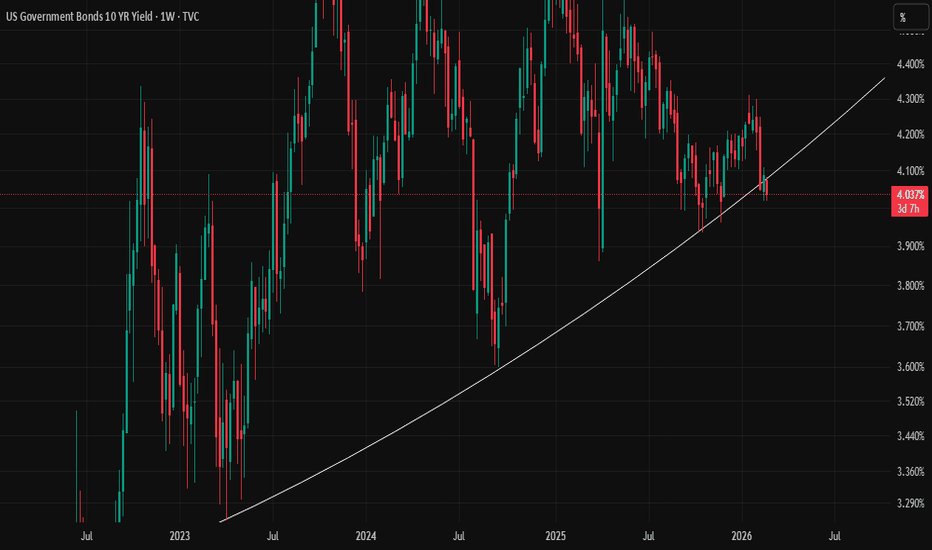
9) Technically
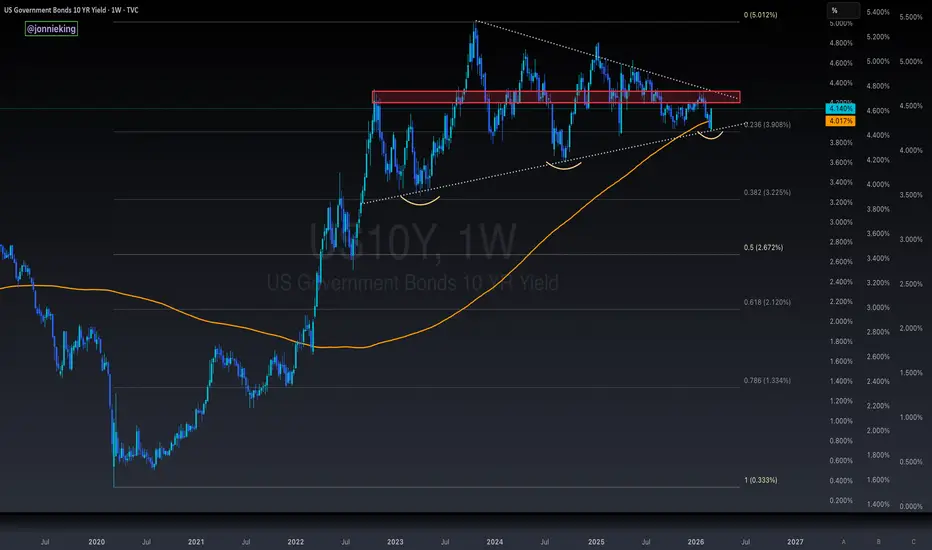
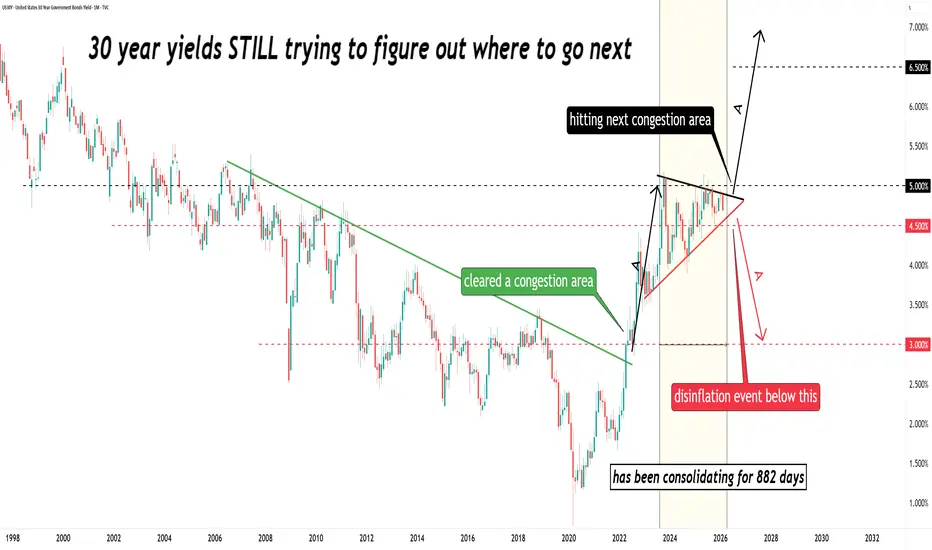
- The US 10-year Treasury yield has been trading sideways in a triangle formation for the past three years. Typically, once this pattern breaks out, it could move in strong trend.
- In terms of direction, breakouts often occur in the same direction as the trend prior to the triangle, an uptrend in this case. However, a downside break is also possible, depending on the underlying catalysts.
- If US10Y surges above 5.00%, it could trigger turbulence in the bond market and prompt front-running selling, as it may signal a severe credibility crisis in US assets.
- That said, US10Y could also continue range-bound as the Fed still manage the yield curve, even the Fed purchases are focused on short-term Treasuries.
________________________________________
Strategic conclusion (Technical & Fundamental Insight)
For 2026, the bond market is telling us that the era of cheap, low rates is over. Even if headline economic data looks fine, the underlying structure is increasingly fragile. Investors should be cautious about volatility spilling over from bonds into equities and other risk assets.
________________________________________
Next episode in the series
Next, we move to the next pillar of the financial system: the US dollar. How will a bond market with structurally weaker demand affect the dollar—before we move on to other currencies
US 10Y TREASURY: Steady despite hot PCEU.S. 10Y Treasury yields were mostly flat during the week, moving between 4,02% and 4,08%, where they closed the week. The highest weekly level was at 4,1% on US PCE data. The latest Personal Consumption Expenditures (PCE) report, the Federal Reserve’s preferred inflation gauge, came by 0,1pp hotter than expected, reinforcing the view that price pressures remain persistent and potentially keeping the Fed from cutting rates soon. On the other hand, the GDP Growth rate in Q4 significantly missed expectations with 1,4% q/q growth, compared with expected 3% q/q. These dynamics left yields relatively contained, reflecting investor caution amid uncertainty over future Fed action.
The week ahead does not bring currently significant US macro data, in which sense some stronger movements in 10Y yields are not expected. The market will continue to test the 4,1% level, with some modest move above this level, but nothing which could be treated as significant. Still, it should be considered that fragility is still active among investors due to high levels of uncertainty, especially within the field of geopolitics and trade-tariffs, and especially regarding highly mixed economic data which are not allowing investors to clearly perceive the next Fed move.
Short 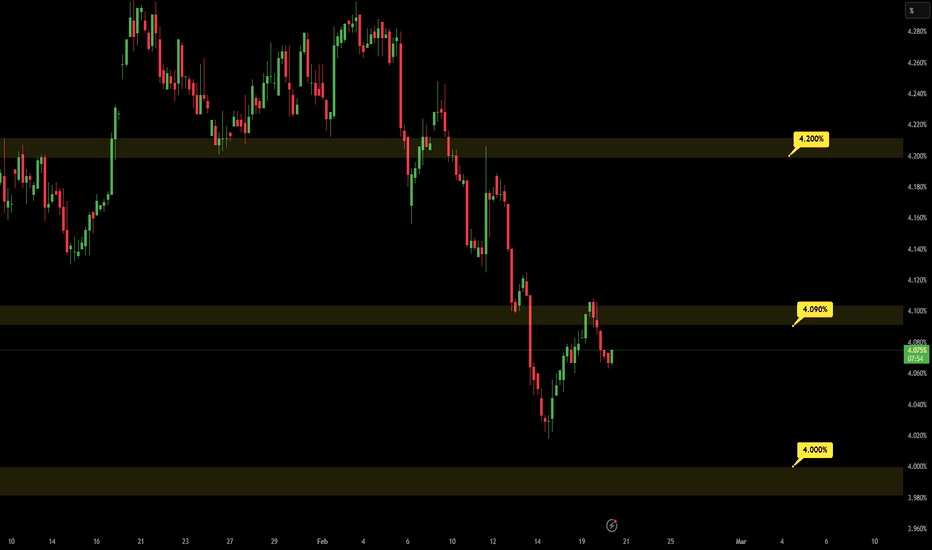
Short 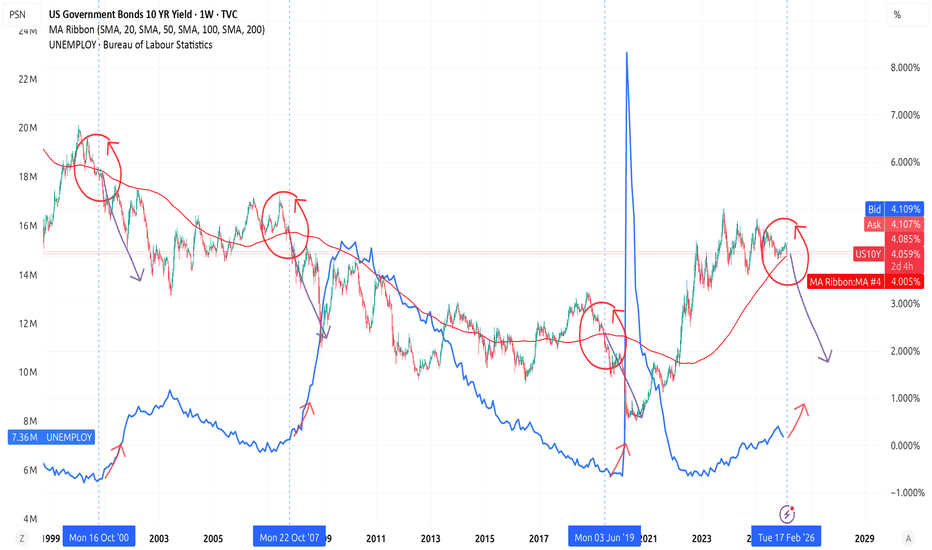
Education 
Short 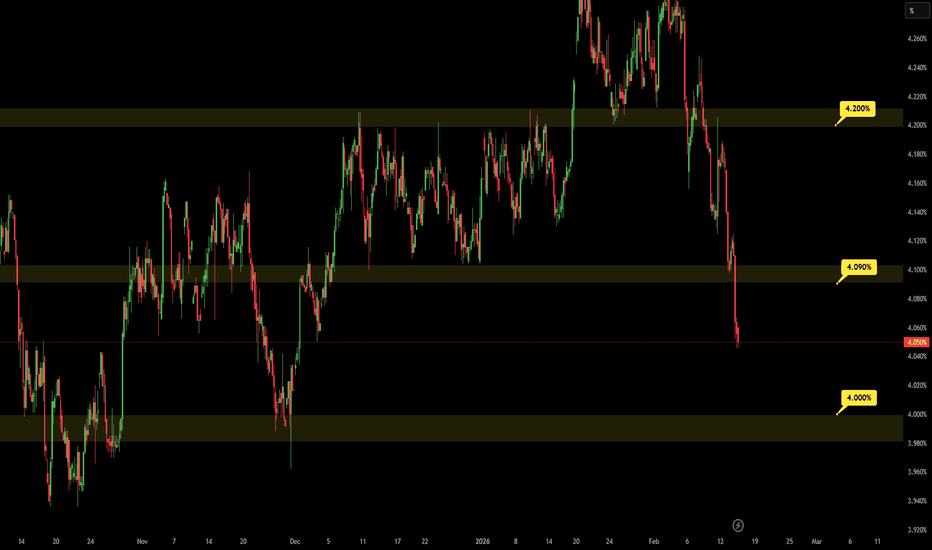
US 10Y TREASURY: False 4,2% breakoutDuring the previous week charts showed that the recent break from the 4,2% for the 10y yields was a false breakout. Actually, the released jobs and inflation data showed better than expected results, which pushed the yields toward the lower grounds. In technical analysis, the false breakouts usually lead to a strong push of price/yields, which also occurred in 10Y yields. Although the 10Y Treasuries started the week around the 4,2%, they are closing it at 4,05%.
The cooler inflation print reinforced expectations that the Federal Reserve may begin cutting interest rates later this year, boosting demand for longer-dated Treasuries and pushing yields down from recent highs. Traders also increased the odds of a June rate cut, pricing in more easing as inflation data undershot forecasts. Broader economic signals, including stronger labor market data earlier in the week, create a backdrop where bond markets are balancing inflation progress against resilient employment figures when setting yields. The drop in the 10-year yield reflects growing optimism about disinflation, even as markets await further key data, the PCE in the week ahead, for guidance on future monetary policy. Although Monday is a holiday in the US when markets will be closed, still some short reversal to the upside could be expected during the week ahead. In this sense, the 4,1% could be tested.
US10Y Daily priceaction and directional bias.US10Y is the yield on the U.S .10-year treasury notes government debt security maturing in 10 years that serves as a global benchmark for interest rates, reflecting investors expectations on growth ,inflation and federal reserve policy.
The US10Y represents the effective return investors demand to lend to united states government for a decade(10years).it moves inversely to bond prices, on technical, when yields are rising which signals stronger growth while falling yields indicates economic caution or safe-haven demand,US10y influences borrowing cost across mortgages, corporate bonds and loans
Coupon rate is the fixed annual interest paid on a bond's face value. For a Treasury note or bond, it's set at issuance and paid semi-annually until maturity.
Key Details
It's calculated as (annual coupon payments / par value) × 100; e.g., a 5% coupon on $1,000 par pays $50 yearly ($25 twice).
Unlike yield, which fluctuates with market price, the coupon remains constant—higher coupons trade at premiums when yields fall.
Bond prices and yields have an inverse relationship. When yields rise, prices fall, and vice versa, due to the fixed coupon payments relative to market rates.
Why Inverse?
Fixed coupons mean higher market yields make existing bonds less attractive, forcing sellers to discount prices for competitive returns.
Lower yields increase demand for higher-coupon bonds, driving prices above par (premium).
US10Y affect DAX40,the DAX40 is the German benchmark index of 40 major stocks, through global yield spillovers and capital flows.
When the US10Y is higher and bullish ,it strengthens the dollar index and pressure Eurozone borrowing, this makes U.S assets more attractive and weighing on European equities like the DAX40.
The US10Y bearish drop can be seen as supporting DAX by easing ECB policy constraints and boosting risk appetite.
So coming week trading US10Y along side DAX40.
the market structure of the US10Y is giving us a sell vibes and it could drop below 4.0% this month .
though we have an ascending trendline on daily that should serve as support to enable us get a retest and sell below 4.0% on possible breakout of trend.
#US10 #US10 #BONDS Short